 Bellingham Siding
 Siding in Cordata Has to Work Harder Than the Brochure Suggests
Cordata sits in north Bellingham, close enough to the water and the weather systems moving off the Salish Sea that homes here take a steady beating most inland siding products were never designed for. Salt-laden marine air, wind-driven rain that comes in sideways during winter storms, and long stretches of shaded, damp conditions that feed moss and moisture growth all add up over the years. A siding product that looks fine on a spec sheet in a dry climate can fail quietly here — swelling at the joints, holding moisture behind the surface, or losing its finish years before it should. This page is about one thing specifically: what it takes to do fiber cement siding correctly on a Cordata home, and why we only do it one way.
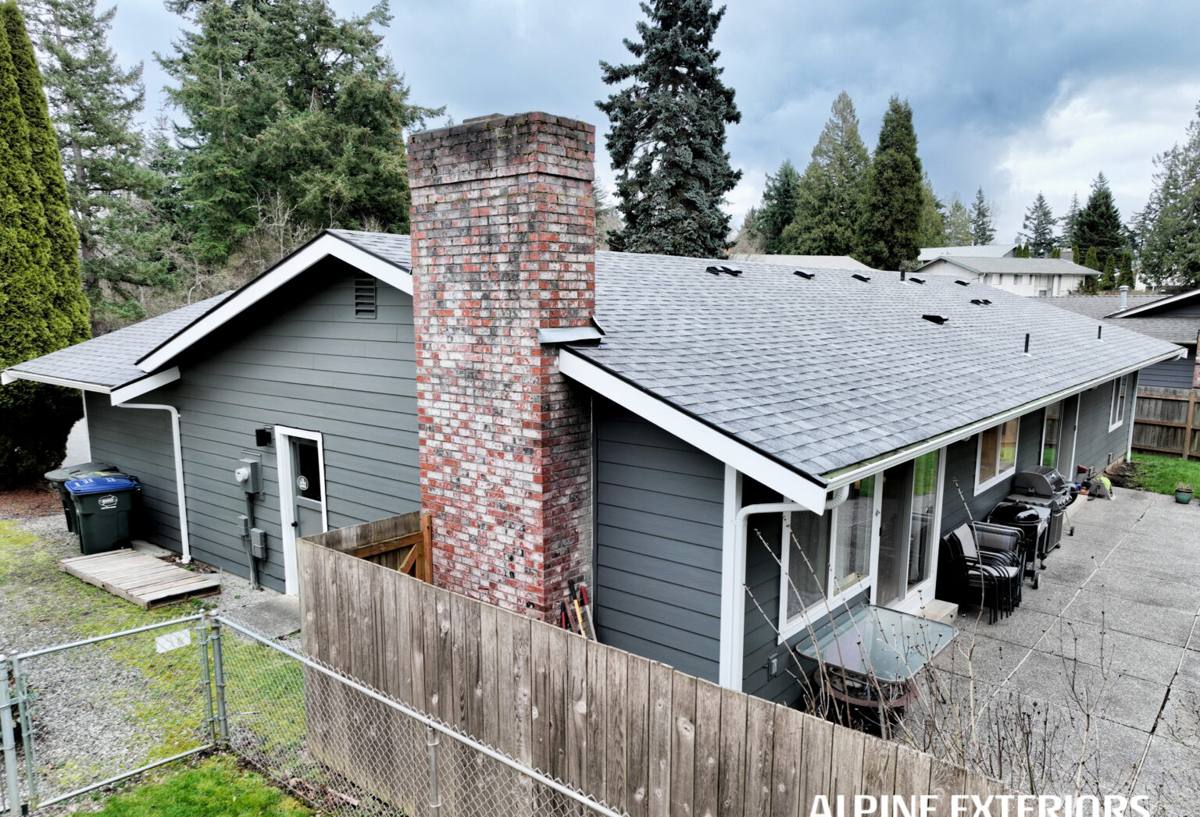
What Whatcom County Weather Actually Does to Siding
Salt Air and Corrosion
Even a few miles inland from Bellingham Bay, homes still pick up salt-bearing air off the Sound, especially during winter storm cycles when wind pushes moisture-laden air well past the shoreline. Salt exposure accelerates corrosion on fasteners, trim, and any exposed metal flashing, and it slowly degrades paint and finish coatings that weren't engineered to handle it. Over enough seasons, that shows up as chalking, fading, and eventually bare, unprotected substrate.
Driving Rain
Bellingham doesn't just get a lot of rain — it gets a lot of wind-driven rain, which behaves very differently than a straight-down shower. Wind-driven rain gets forced sideways and upward into laps, seams, and joints that a product installed for calm-weather conditions was never detailed to resist. Any gap in flashing, caulking, or lap coverage becomes an entry point, and once water gets behind siding it can sit there for weeks in our climate before things dry out.
The Long Moss Season
Whatcom County's combination of mild temperatures, heavy tree cover, and months of overcast, damp weather creates ideal conditions for moss, algae, and mildew to take hold on north-facing and shaded walls. This isn't just cosmetic. Moss and algae hold moisture directly against the siding surface for extended periods, which is exactly the kind of sustained dampness that breaks down products with weaker moisture resistance and shortens the life of paint finishes.
Why We Install Only James Hardie Fiber Cement
Our crew installs one siding system on Cordata homes: James Hardie fiber cement. We don't install vinyl, LP SmartSide, Cemplank, Allura, primed spruce, or cedar, and that's a deliberate standard, not a limitation of what we're capable of. Each of those alternatives has real trade-offs in a climate like this — vinyl can warp and doesn't stop moisture from getting behind it at the joints, engineered wood products depend heavily on perfect caulking and touch-up maintenance to keep moisture out of their wood-based core, and cedar requires an ongoing maintenance commitment (staining, sealing, and periodic replacement of weathered boards) that most homeowners underestimate when they first choose it.
James Hardie fiber cement is non-combustible, dimensionally stable in wet-dry cycling, and comes with a factory-applied ColorPlus finish that's baked on and warranted against fading and peeling — which matters directly here, because it's engineered to hold up against the UV and moisture cycling this region deals with. Hardie also builds region-specific product formulations (its HZ5 line is engineered for the wetter, moderate climates found throughout the Pacific Northwest), and backs installations with a strong, transferable limited warranty. We stand behind one system because we know exactly how it behaves over time in this exact climate, and we can install it to spec every single time.
What a Correct Installation Actually Involves
Fiber cement siding is only as good as the installation behind it. A huge share of the siding problems we get called out to inspect in Bellingham and Whatcom County trace back not to the product, but to shortcuts taken during installation — gaps in the water management details that don't show up until years later. On every Cordata job, our installation includes:
- A drainable weather-resistive barrier installed correctly behind the siding, so any moisture that does get past the surface has somewhere to go instead of sitting against the wall sheathing.
- Proper flashing at every window, door, and horizontal transition — the single most common failure point we find on older siding jobs in this area.
- Correct fastener placement and spacing per Hardie's published installation instructions, using the right fastener type for coastal, salt-exposed conditions.
- Manufacturer-specified lap and joint gaps, caulked with a high-quality, paintable sealant rated for exterior movement — not just butted tight, which traps moisture and cracks the finish.
- Clearance at grade and hardscape so the bottom edge of the siding isn't sitting in standing water or buried in mulch and soil, which is a common moisture entry point we see on homes with mature landscaping.
None of this is exotic. It's the manufacturer's own installation standard, applied consistently — which is exactly where a lot of siding jobs quietly cut corners.
Choosing the Right Hardie Product for a Cordata Home
James Hardie makes several siding profiles, and the right choice depends on the home's style, exposure, and how much of the wall sits in shade versus direct sun and wind. We walk through these options during the estimate rather than defaulting to one product for every house.
| Product | Best Suited For | Climate Consideration in Cordata |
|---|---|---|
| HardiePlank lap siding | Most single-family homes, traditional and modern styles | Wide lap coverage sheds driving rain well when installed with correct overlap and flashing |
| HardieShingle | Accent walls, gables, craftsman-style detailing | More seams than lap siding, so flashing and caulk quality matter even more in wind-driven rain |
| HardiePanel | Modern builds, board-and-batten looks | Vertical seams need battens or trim detailed to keep water from tracking down behind the panel |
| HardieTrim | Window, door, and corner trim | Pairs with any of the above to seal transitions where most water intrusion actually starts |
For shaded, north-facing elevations that hold onto moisture and moss longer through the year, we'll often also talk through color choice and trim detailing that make cleaning and maintenance easier down the road, since those walls do more work than the sunnier sides of the same house.
Our Process, Start to Finish
- Free on-site estimate. We walk the exterior, note existing moisture damage, trim condition, and any problem areas specific to sun and wind exposure on that particular lot.
- Product and color selection. We go over profile options, ColorPlus finish colors, and trim details suited to the home's style and exposure.
- Tear-off and inspection. Once old siding comes off, we inspect the sheathing underneath for rot or hidden moisture damage before anything new goes up — this step catches problems that are invisible from the outside.
- Weather barrier and flashing installation. This is the layer that does the real long-term work, and it's installed before a single piece of new siding goes on.
- Siding installation to manufacturer spec. Correct fastening, lap gaps, and caulking, following James Hardie's published installation guidelines.
- Final walkthrough. We review the finished work with the homeowner and confirm trim, caulking, and touch-up details before calling the job done.
Living With Fiber Cement in a Moss-Heavy, Salt-Air Climate
One advantage of correctly installed James Hardie siding is how little ongoing maintenance it actually demands compared to wood or engineered wood alternatives — but "low maintenance" isn't "no maintenance," especially with Cordata's shaded lots and long damp season. A simple annual routine keeps the finish looking right and catches small issues before they become expensive ones:
- Rinse siding down once or twice a year with a garden hose and soft brush, focusing on shaded, north-facing walls where moss and algae take hold first.
- Avoid pressure washers on siding joints and caulk lines — high-pressure water can force moisture behind the boards at exactly the seams you're trying to protect.
- Trim back tree branches and shrubs that keep siding shaded and damp for long stretches of the day.
- Check caulking at trim, windows, and joints annually, since caulk is the one component that wears out well before the siding itself does.
- Keep gutters clear so overflow isn't running directly down the siding face during heavy winter storms.
What a Cordata Fiber Cement Project Typically Costs
Every home is different, but the main factors that move the price on a Cordata siding job are consistent enough to walk through honestly up front, rather than leaving homeowners guessing:
| Cost Factor | Why It Matters |
|---|---|
| Home size and wall complexity | More corners, gables, and dormers mean more cutting, flashing, and labor time |
| Condition of existing sheathing | Hidden rot or moisture damage found during tear-off adds repair work before new siding goes up |
| Product profile chosen | Lap, shingle, and panel siding differ in material and labor cost |
| Trim and detail work | Craftsman-style trim packages and accent details add labor beyond a straightforward lap job |
| Access and site conditions | Tight lots, mature landscaping, or multi-story walls can affect scaffolding and staging needs |
We don't quote a job without seeing the house — anything else is a guess. A proper estimate walks the property, notes the real conditions, and gives a firm number based on what your home actually needs.
Why It Matters to Hire a Crew That Already Works in Cordata
Installation detailing that works in a dry inland climate isn't automatically right for a home dealing with Whatcom County's driving rain and salt air. A crew that regularly works Bellingham and the surrounding areas already knows which elevations take the worst of the weather, how local moisture patterns behave against a wall over a full year, and where past siding jobs in this area have gone wrong. That local, repeated experience shows up in the small decisions — flashing details, caulk selection, clearance at grade — that determine whether siding lasts twenty years or needs attention in five.
If you're weighing a siding replacement or new construction project in Cordata, we're happy to take a look at your home, walk through James Hardie's product options, and put together a straightforward, no-pressure estimate — just fill out the form below to get started.