 Bellingham Siding
 Siding Installation in Cordata: What North Bellingham Homes Are Up Against
Cordata sits in north Bellingham, close enough to Bellingham Bay and the Salish Sea that salt-laden air is a real factor in how exterior materials age, and far enough into Whatcom County's tree-covered terrain that shade, moisture, and moss are a year-round concern rather than a seasonal one. Homes here deal with a combination that's harder on siding than most homeowners realize: wind-driven rain that gets pushed sideways into wall assemblies during winter storms, salt air that accelerates corrosion on fasteners and trim, and long stretches of overcast, damp weather that keep exterior surfaces wet for days at a time. None of that is exotic for the Pacific Northwest, but it does mean that siding installation in Cordata isn't a generic job — it's a job that has to account for how water moves, how long surfaces stay wet, and what happens to a wall assembly over 20 or 30 winters in this specific climate.
A lot of the siding problems we get called out to inspect in this area didn't start as a product failure. They started as an installation shortcut — a missed flashing detail, a fastener pattern that didn't account for wind exposure, or trim that was caulked instead of properly flashed. The product matters, but in a climate like Whatcom County's, correct installation is what actually determines whether siding lasts.
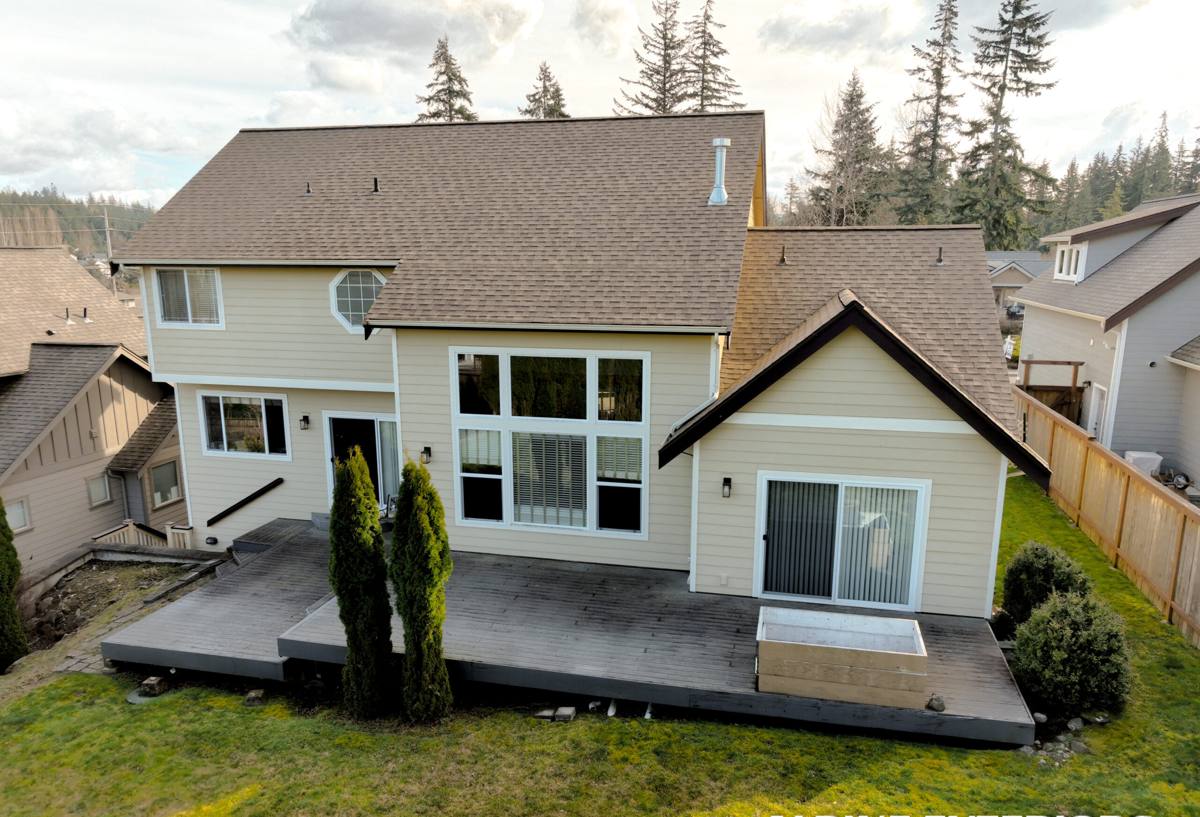
Why Correct Installation Matters More Than the Product Itself
Fiber cement siding is only as good as the wall assembly behind it. James Hardie engineers its products to handle Pacific Northwest moisture, but that engineering assumes the installer got the fundamentals right: a continuous weather-resistive barrier, properly lapped flashing at every horizontal joint and penetration, correct fastener spacing and depth, and clearances that let water drain and surfaces dry out between rain events. Skip any one of those steps and you can end up with moisture trapped behind siding that looks fine from the curb — which is exactly the kind of failure that shows up as rot, stains, or paint failure years down the road, long after the crew that installed it has moved on.
This is also why we don't treat siding installation as a one-size-fits-all process across our service area. A wall on a wind-exposed, west-facing elevation near open water gets more attention to flashing and sealant detail than a sheltered wall tucked under mature trees. In Cordata specifically, we look at how close a home sits to tree cover, which elevations catch the most driving rain, and whether previous siding or trim work left any gaps that need correcting before new siding goes up.
What a Correct James Hardie Installation Involves
Weather Barrier and Flashing
Before a single piece of siding goes up, the wall needs a continuous, correctly lapped weather-resistive barrier. Every window, door, and penetration gets flashed so water is directed out and away from the wall assembly, never trapped behind it. This is the step that's invisible once the job is done — and the step most likely to be shortcut by crews that don't specialize in fiber cement.
Fastening and Clearances
James Hardie publishes specific fastener type, spacing, and penetration requirements for each product line and exposure condition. Getting this wrong doesn't just affect appearance — it affects how the board handles moisture and movement over time. Ground clearance, roofline clearance, and clearance from decks and patios all matter too; siding installed too close to grade or to a hard surface stays wet longer and is more prone to moisture wicking.
Joints, Caulking, and Finish
Butt joints, corners, and trim intersections need to be treated correctly — not just caulked and painted over. James Hardie's ColorPlus factory-finished products reduce a lot of this risk because the color and sealant system is applied and cured under factory conditions, not on a ladder in variable Whatcom County weather. Where field-painted trim or cut edges are involved, those cut edges need to be primed and sealed before installation, not afterward.
Our Installation Process, Start to Finish
- On-site assessment. We walk the home, check the existing wall assembly and any current siding or trim for hidden moisture damage, and identify elevations that need extra attention based on sun, wind, and rain exposure.
- Tear-off and substrate check. Old siding comes off and we inspect the sheathing underneath. Any soft, stained, or rotted sheathing gets identified and addressed before anything new goes up — covering a compromised substrate just hides the problem.
- Weather barrier and flashing installation. A continuous, correctly lapped barrier goes on, with flashing detailed at every window, door, and penetration.
- Siding installation to manufacturer spec. James Hardie boards or panels are installed with the correct fastener pattern, spacing, and clearances for the specific product line and exposure.
- Trim, caulking, and finish detail. Joints and transitions are finished correctly, matching the ColorPlus system where factory-finished product is used.
- Final walkthrough. We review the completed job with the homeowner and explain basic care going forward.
Signs Your Cordata Home's Siding Needs Attention
Because a lot of siding failure happens behind the surface, it helps to know what to look for from the outside. A quick seasonal check can catch problems early enough to matter.
- Persistent moss or dark green-black staining that keeps returning within weeks of cleaning
- Soft or spongy spots when you press gently on siding or trim, especially near the bottom courses
- Paint that's bubbling, peeling, or failing in patches rather than evenly across a wall
- Visible gaps, cracks, or separation at butt joints, corners, or trim intersections
- Warping, buckling, or boards that no longer sit flat against the wall
- A musty smell near exterior walls inside the home, which can indicate trapped moisture
- Rust streaking from fasteners or trim, a sign of corrosion from long-term moisture and salt exposure
James Hardie Product Lines and What We Use in Cordata
James Hardie makes climate-engineered product lines, and we select based on a wall's actual exposure rather than defaulting to one product across an entire house.
| Product | Best suited for | Why it fits Cordata's climate |
|---|---|---|
| HardiePlank lap siding | Most wall areas, standard exposure | Proven durability against wind-driven rain and freeze-thaw cycling common in Whatcom County winters |
| HardiePanel vertical siding | Accent walls, gable ends, modern facades | Fewer horizontal joints reduce water entry points on exposed elevations |
| HardieTrim boards | Corners, window and door surrounds | Engineered to resist the moisture cycling that causes wood trim to rot |
| ColorPlus finish | Any exposed elevation, especially high-visibility walls | Factory-cured finish holds up better than field-applied paint against sustained damp weather |
For homes with direct exposure to open water, prevailing wind, or unobstructed rain, we lean toward HZ5-engineered product where James Hardie's zone system calls for it, paired with tighter flashing and joint detail. For more sheltered lots under tree cover, the priority shifts toward managing moss and prolonged dampness rather than wind-driven rain.
Cost Factors for a Cordata Siding Installation
Every project is different, but the same handful of variables drive most of the cost difference between jobs. We walk through these with homeowners during the estimate so there are no surprises.
| Factor | Why it affects cost |
|---|---|
| Substrate condition | Rotted or damaged sheathing found during tear-off needs repair before new siding goes on |
| Home size and wall complexity | More corners, gables, and trim detail mean more labor and material cuts |
| Product line and finish | Panel size, trim profile, and ColorPlus vs. field-painted finish all affect material cost |
| Exposure and access | Elevations with heavy tree cover, steep grade, or limited access can add time |
| Tear-off and disposal | Removing and hauling away old siding is a separate line item from new installation |
We give straightforward, itemized estimates rather than a single lump number, so homeowners can see exactly what's driving the price.
Why a Crew That Already Works in Cordata Matters
Installation quality depends on judgment calls that don't show up in a spec sheet — how much extra flashing detail a west-facing wall near open water actually needs, how tight to run clearances on a lot with heavy tree cover, which elevations in this specific pocket of north Bellingham take the worst of winter storms. A crew that's already worked houses in this neighborhood has seen how the local wall assemblies age, what previous siding generations got wrong, and what actually holds up over time in this exact combination of salt air, rainfall, and shade. That local pattern recognition is hard to substitute with a general specification, no matter how good the product is.
There's also a practical side to working locally: familiarity with Whatcom County and City of Bellingham permitting requirements, realistic scheduling around the region's wet season, and accountability that comes from being a crew homeowners in the area can actually reach after the job is done — not a name that shows up once and disappears.
Maintenance After Installation
James Hardie siding is low-maintenance compared to wood, but "low-maintenance" doesn't mean "no maintenance," especially in a climate that grows moss on almost anything left damp long enough. A yearly rinse to clear moss, pollen, and organic debris off siding and out of trim joints goes a long way. Keep an eye on caulking at joints and penetrations, since sealant is the one component that wears out well before the siding itself does. Trim back vegetation that's grown up against walls, since constant contact keeps siding wet and encourages moss growth. None of this is heavy work, but staying on top of it is what lets a correctly installed Hardie system reach its full service life in a climate like this one.
If you're planning a siding project in Cordata or elsewhere in north Bellingham, we're happy to walk your home, point out anything we see, and put together a straightforward, no-pressure estimate — just fill out the form below.