 Bellingham Siding
 Building Decks for South Hill's Terrain and Weather
South Hill sits above downtown Bellingham on sloped, often heavily treed lots, many with views out toward Bellingham Bay. That combination is great for a deck's sightlines but hard on a deck's structure. Hillside footings, shade from mature trees, and the salt air drifting up off the water all shape how a deck should be designed and built here — differently than a flat, open lot elsewhere in Whatcom County.
A deck built without those factors in mind will still look fine the first year or two. The problems show up later: soft spots where moss holds moisture against the boards, fasteners that streak with rust, or a ledger connection that was never properly flashed and has been feeding water into the rim joist the whole time. We build for what this neighborhood actually does to a structure over ten and twenty years, not just for how it looks on installation day.
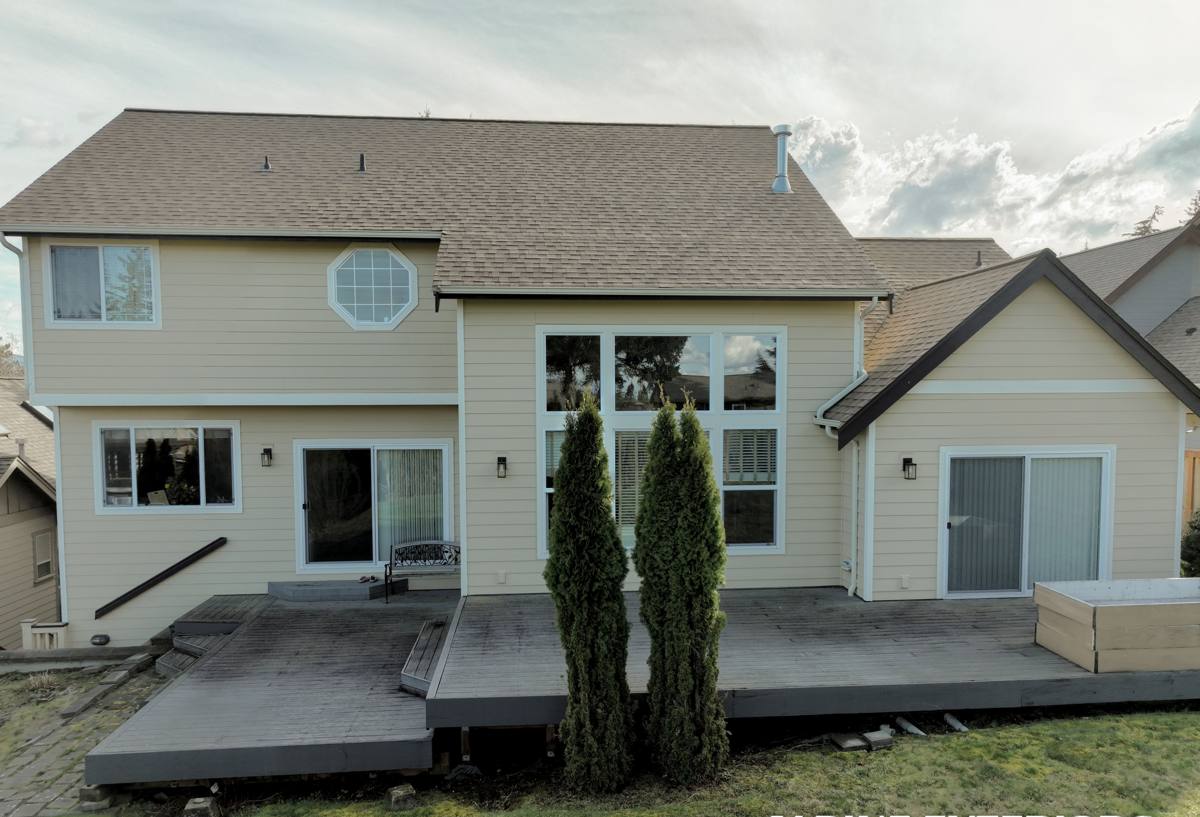
What South Hill Homes Need From a Deck
Whatcom County gets a long stretch of wet months, and South Hill's slopes and tree cover mean many decks sit partly shaded most of the day. Shade plus rain equals slower drying, and slower drying is what drives rot, moss growth, and mildew staining. A deck here needs to be built to shed water fast and dry out fast, not just to look good in a dry spell.
- Ledger boards flashed correctly where the deck meets the house — this is the single most common failure point on older decks in this area
- Joist spacing and decking gaps sized for drainage, not just fastener spacing
- Fasteners and hardware rated for coastal exposure, since salt air off the bay accelerates corrosion on standard hardware
- Footings sized and placed for sloped or uneven ground, not assumed flat
- Airflow underneath the deck so moisture doesn't sit trapped against joists and beams
The Parts of the Job That Actually Determine How Long a Deck Lasts
Ledger Flashing
Where a deck attaches to the house is the highest-risk connection on the entire structure. If the ledger board isn't properly flashed with the right overlap and a water-resistant barrier behind it, water works its way behind the ledger and into the house rim joist over time. On a shaded, rain-heavy lot like many in South Hill, that process happens faster than most homeowners expect, because the wood behind the flashing rarely gets a chance to fully dry between rain events.
Footings on Sloped Ground
Hillside lots need footings set to the correct frost depth and bearing conditions for the actual slope and soil at that spot, not a one-size answer copied across the deck. On a sloped yard, posts often end up at different heights, which means the framing has to be planned to keep the deck level and structurally sound without shortcuts at the tall end.
Fastener and Hardware Selection
Standard galvanized fasteners can start showing corrosion streaks within a few years in coastal-adjacent air. We use hardware rated for the exposure the deck will actually see, matched to whatever decking material is chosen, since mismatched metals can accelerate corrosion at the connection points.
Drainage and Airflow
Decking gaps, joist spacing, and under-deck ventilation all affect how fast the structure dries after rain. A deck that can't dry out between storms is a deck that's growing moss and hosting rot fungus on a timeline instead of an occasional problem.
Choosing a Decking Material for This Climate
There's no single right answer here — it depends on budget, how much shade the deck gets, and how much maintenance the homeowner wants to do. What matters is understanding the real trade-offs for a wet, shaded, coastal-adjacent lot rather than picking on looks alone.
| Material | How it handles South Hill's climate | Maintenance | Typical lifespan |
|---|---|---|---|
| Pressure-treated wood | Good if sealed and maintained; shaded areas need more frequent cleaning to stay ahead of moss | Annual cleaning, re-sealing every 1-2 years | 15-20 years with upkeep |
| Cedar | Naturally rot- and insect-resistant, but still needs sealing in wet shade to prevent graying and moss | Sealing every 1-2 years, periodic cleaning | 15-20 years with upkeep |
| Composite decking | Doesn't absorb water like wood, so it resists rot; still needs cleaning where moss and algae can grow on the surface film | Periodic washing, no sealing or staining | 25-30+ years, per manufacturer warranty |
| PVC decking | Fully resists moisture absorption; performs well in shaded, wet spots but can be more brittle in cold snaps | Periodic washing | 25-30+ years, per manufacturer warranty |
Composite and PVC cost more upfront but remove the annual sealing cycle, which matters most on decks that stay shaded and damp for long stretches. Wood costs less to install but only holds up if the maintenance schedule actually gets kept — something worth being honest with yourself about before deciding.
Moss, Algae, and Shade: South Hill's Recurring Problem
Tree cover is one of the things that makes South Hill's lots attractive, but shaded decking surfaces are exactly where moss and algae take hold fastest. Once moss establishes on a deck surface, it holds moisture against the boards constantly, which speeds up wood rot underneath and turns the surface slick and dangerous when wet. This isn't a defect in the deck — it's the predictable result of shade and rain, and it's manageable with the right board spacing, surface texture, and a basic cleaning routine.
We design decking layouts with drainage gaps sized to actually let water and debris pass through rather than collect, and we talk homeowners through a realistic cleaning schedule for their specific lot based on how much sun the deck gets through the year.
Building on a Slope
Many South Hill properties aren't flat, and a deck on sloped ground needs a different structural approach than a deck on level yard. Post heights vary, footing depths may need adjustment across the span, and the beam and joist layout has to account for the grade rather than assume uniform support. Done right, a sloped-lot deck also opens up the kind of elevated views this neighborhood is known for — but the structure underneath has to be engineered for the actual site, not adapted after the fact.
How We Approach a South Hill Deck Project
1. On-Site Assessment
We walk the actual lot — the slope, the shade pattern through the day, existing drainage, and how the deck will tie into the house — before recommending materials or layout.
2. Design and Permitting
Deck projects in Bellingham typically require a permit depending on size and height, and we handle that process as part of the job so the structure is inspected and code-compliant, not just built to look right.
3. Structural Build
Footings, framing, ledger flashing, and hardware selection all get handled to match the site conditions covered above — this is where a deck's real lifespan gets decided, well before the decking boards go down.
4. Decking, Railing, and Finish
Once the structure is sound, we install the chosen decking material and railing system, with attention to drainage gaps and any final sealing the material requires.
5. Walkthrough
We go over the maintenance schedule specific to the material chosen and the shade conditions on that particular lot, so there are no surprises in year two or three.
Keeping a South Hill Deck in Good Shape
- Sweep leaves and debris off the deck regularly, especially in fall — trapped debris holds moisture against the surface
- Clean shaded areas for moss and algae growth at least once or twice a year, more often on north-facing or heavily shaded sections
- Check the ledger flashing area periodically for any signs of staining or soft wood, which can indicate a water intrusion problem
- Re-seal wood decking on the schedule appropriate to the product, typically every 1-2 years
- Keep gutters and downspouts near the deck clear so roof runoff isn't dumping extra water onto or near the structure
- Inspect fasteners and hardware yearly for corrosion, particularly on decks with bay-facing exposure
Why It Matters to Hire a Crew That Knows This Neighborhood
South Hill's mix of slope, shade, and coastal-adjacent air isn't the same building challenge as a flat, sunny lot on the other side of town. A crew that already works this neighborhood knows where the moss problems tend to show up, how the shade patterns move through a given lot, and how to plan footings for grade changes without guessing. That familiarity shows up as fewer surprises during the build and a deck that's actually built for the conditions it will sit in for the next two decades, not just the day it's finished.
If you're considering a new deck or replacing one that's showing its age, we're happy to walk your property, talk through material options for your specific amount of shade and sun, and put together a free, no-pressure estimate. There's a form below to get that conversation started.