 Bellingham Siding
 Windows Built for Sunnyland's Climate, Not a Catalog
Sunnyland is one of Bellingham's older, established neighborhoods, and that means a lot of the housing stock still has its original windows or a round of replacements from decades past. Whatcom County's marine climate is hard on glass and frames in ways that don't show up in a sales brochure: salt-laden air drifting off Bellingham Bay, driving rain that hits window walls sideways during winter storms, and a moss season that stretches from fall through spring and never really gives wood, vinyl, or metal a chance to fully dry out. Windows here don't just need to look good. They need to shed water, resist corrosion, and keep performing after years of damp exposure.
A generic window sold for a dry-climate market is not the same product a Sunnyland home needs. Frame material, glazing, flashing detail, and installation sequence all matter more here than they would in a drier part of the country, and cutting corners on any one of them shows up as fogged glass, soft trim, or a drafty room within a few years.
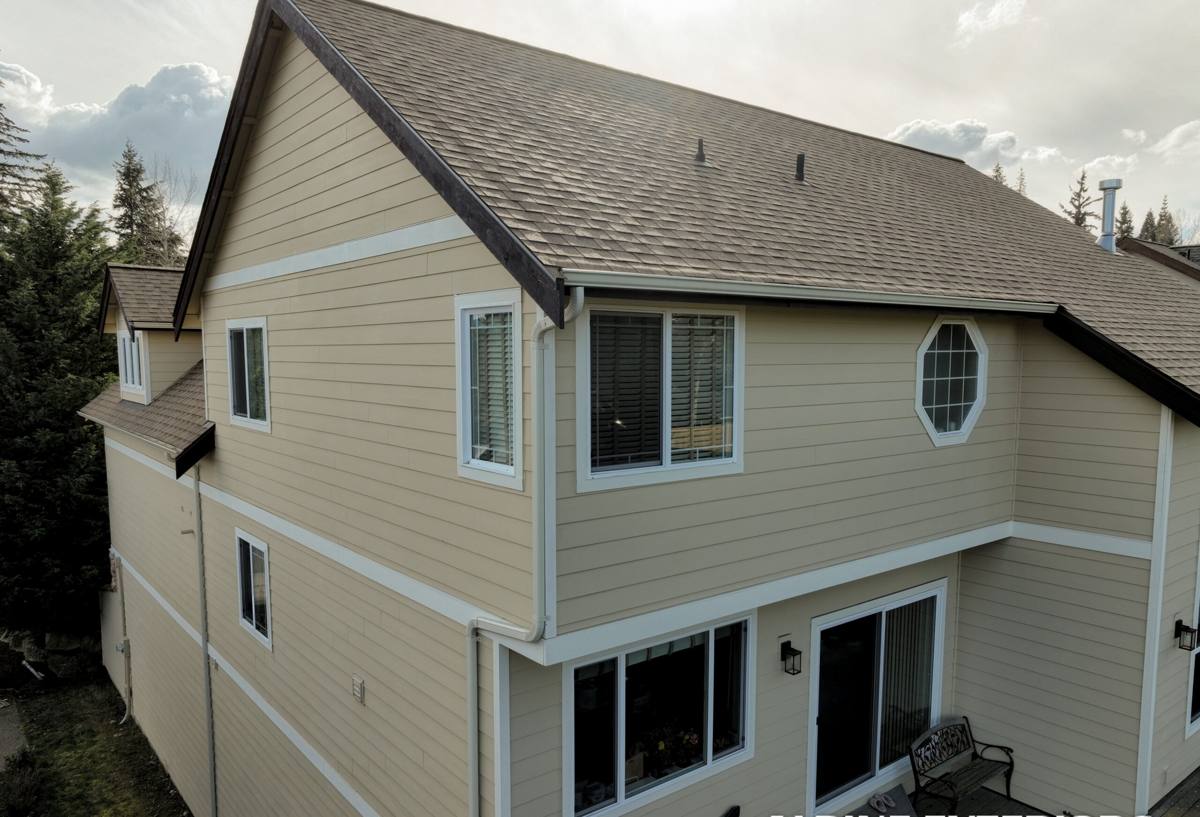
What Local Homes Actually Need From Their Windows
Moisture Management Comes First
In a climate where it can rain for days without a real break, the single biggest factor in a window's long-term performance is how well it manages water at the frame and the rough opening — not the glass itself. Poorly flashed windows let moisture track behind siding and into wall framing, where it can sit for months without drying, given our humidity and cloud cover.
Salt Air Accelerates Corrosion and Degrades Finishes
Even a few miles inland from the bay, airborne salt finds its way onto exterior surfaces. It accelerates corrosion on hardware, hinges, and metal cladding, and it breaks down cheaper finishes faster than a dry-climate warranty rating would suggest. Fasteners, weep systems, and cladding all need to be chosen with that in mind, not just the glass package.
Moss and Persistent Dampness
Moss doesn't just grow on roofs. It takes hold in window sills, tracks, and any horizontal or near-horizontal surface that stays damp — and in Whatcom County, that season runs long. Sills need a real slope to shed water, and sealants need to be rated for constant damp exposure, not just occasional rain.
What a Correct Installation Actually Involves
Most window problems we get called out to fix in Sunnyland aren't a bad window — they're a window that was installed without the right sequence of flashing, sealing, and insulating. A correct job, in our shop's standard, looks like this:
- Remove the old unit and inspect the rough opening and sill framing for hidden rot before anything new goes in
- Repair or rebuild any compromised framing rather than installing over it
- Install a sloped sill pan so water is directed outward, not toward the framing
- Layer flashing tape and building wrap in the correct shingle-style order — bottom first, sides next, top last — so water always sheds outward and down
- Set the window plumb, level, and square, then fasten per the manufacturer's structural requirements
- Insulate the gap between frame and rough opening with a compatible low-expansion foam, avoiding gaps or over-packing
- Seal the exterior with a sealant rated for sustained wet exposure, not a general-purpose caulk
- Finish interior trim and confirm smooth, even operation before we consider the job done
Skipping the sill pan or rushing the flashing order is the most common shortcut we see in this region, and it's almost always the reason a window that's only a few years old is already showing water staining or soft trim.
Choosing the Right Frame Material
There's no single "best" window material — the right choice depends on the home's exposure, the homeowner's maintenance appetite, and budget. Here's how the common options hold up under Bellingham's coastal, wet conditions:
| Material | Salt Air Resistance | Moisture Behavior | Maintenance |
|---|---|---|---|
| Vinyl | Good — won't corrode | Handles moisture well, no rot risk | Low — occasional cleaning |
| Fiberglass | Very good — highly stable | Excellent, minimal expansion/contraction | Low |
| Aluminum-clad wood | Good on the exterior face | Needs correctly sealed joints where clad meets wood | Moderate |
| Solid wood | Requires diligent upkeep | Attractive but vulnerable if finish fails | High — repainting/sealing on a schedule |
| Bare aluminum | Prone to corrosion near salt air over time | Conducts cold, prone to condensation | Moderate |
For most Sunnyland homeowners who want a long-term, low-maintenance window, we lean toward vinyl or fiberglass. For homes where matching an original wood-frame look matters — common in some of Sunnyland's older character homes — a well-detailed aluminum-clad wood window can work, but only with careful attention to how the cladding is sealed against the wood underneath, since that's the joint most likely to trap moisture if it's rushed.
Glass and Glazing: More Than Just "Double Pane"
Glazing package matters as much as frame material in our climate. A few things worth understanding before you choose:
Double vs. Triple Pane
Double-pane, low-E glass is the standard baseline and performs well for most homes. Triple-pane adds meaningful sound dampening and a bit more thermal performance, but the added cost isn't always justified unless the room faces a particularly noisy or exposed side of the house.
Condensation and Argon Fill
Interior condensation on a newer window usually points to a failed seal or an inadequate gas fill, not a design flaw in the glass itself. Argon- or krypton-filled units resist heat transfer better, which reduces the interior surface from getting cold enough to fog in our damp winters.
Low-E Coatings
A low-E coating tuned for a marine, mixed climate helps keep interiors comfortable without over-darkening rooms during the Northwest's already limited winter daylight — worth discussing with whoever measures your home, since the wrong coating can make a room feel dimmer than it needs to be.
Our Process, Start to Finish
- On-site assessment — we look at existing window condition, sill and framing health, and how each elevation of the house is exposed to wind-driven rain
- Material and glazing recommendation — based on that exposure, your maintenance preference, and budget, not a one-size-fits-all package
- Written estimate — clear line items, no vague allowances
- Scheduling around weather — we plan installation windows with realistic Whatcom County forecasts in mind, since an open rough opening needs a dry stretch to do the job right
- Installation — following the flashing and sealing sequence above, on every unit, every time
- Final walkthrough — we test operation, check seals, and confirm trim and finish before we call it complete
Signs Your Current Windows Are Already Failing
Because moisture damage develops slowly in this climate, many homeowners don't notice a problem until it's significant. Watch for:
- Fogging or condensation between the panes of glass (a sign the seal has failed)
- Soft, discolored, or spongy trim around the window frame
- Visible moss or persistent green staining on sills or frames
- Drafts you can feel even with the window fully latched
- Difficulty opening, closing, or latching that wasn't there before
- Peeling paint or bubbling finish on wood-framed units
- Musty smell near a window that isn't explained by anything else in the room
Any one of these is worth a look before it turns into a framing repair on top of a window replacement.
Cost Factors Worth Understanding
Every home is different, but the main variables that move a window project's cost are consistent:
| Factor | Why It Matters |
|---|---|
| Frame material | Vinyl is typically the most budget-friendly; wood and wood-clad cost more |
| Number of window openings | Straightforward — more units means more labor and material |
| Hidden framing repair | Rot found once old windows are removed adds time and material |
| Glazing package | Triple-pane and specialty low-E coatings add cost over standard double-pane |
| Window size and style | Large picture windows or custom shapes cost more than standard operable sizes |
| Access and elevation | Second-story or hard-to-reach openings take longer to stage safely |
We'd rather walk a homeowner through these factors honestly during the estimate than pad a number or leave surprises for later. A broad range for a full window replacement project on a typical home runs from a few thousand dollars for a handful of standard units to well into five figures for a whole-house project with premium materials — the estimate visit is where that gets narrowed down to your actual home.
Why a Crew That Already Works Sunnyland Matters
Window installation quality depends heavily on understanding the specific exposure a home faces — which elevation catches the worst of the driving rain, how close the property sits to salt air influence, and how long moss-friendly dampness lingers on that particular lot. A crew that already works in Sunnyland and the surrounding Bellingham neighborhoods has seen how the older housing stock here was originally built, what's typically hiding behind the trim on a home of a given age, and which details actually hold up through a full Whatcom County winter versus which ones look fine for the first year and fail by the third. That's not something you get from a national installer working off a generic spec sheet — it comes from doing this work, on homes like yours, in this exact climate, repeatedly.
If your windows are fogging, drafting, or just due for an upgrade, we're happy to come take a look. Reach out for a free, no-pressure estimate — we'll walk your home, explain what we see, and give you honest options with no obligation.