 Bellingham Siding
 Building Decks in Puget's Marine Climate
A deck in the Puget area of Bellingham doesn't live an easy life. It sits low to the ground, close to moisture, and exposed to a mix of salt-laden air off the water and the kind of driving, sideways rain that Whatcom County gets for months at a stretch. Add in a moss and algae season that can run from fall through spring, and you have a structure that's tested constantly — not just by weather events, but by the slow, steady grind of being damp more often than it's dry.
That's not a reason to avoid a deck. It's a reason to build one correctly the first time. Most deck problems we get called out to fix in this area aren't dramatic failures — they're slow ones. Fasteners that rusted from the inside out, ledger boards that trapped water against the house, or decking that looked fine on day one but never had a chance to dry between rain events. A deck built for this specific climate, in this specific neighborhood, avoids that slow failure pattern.
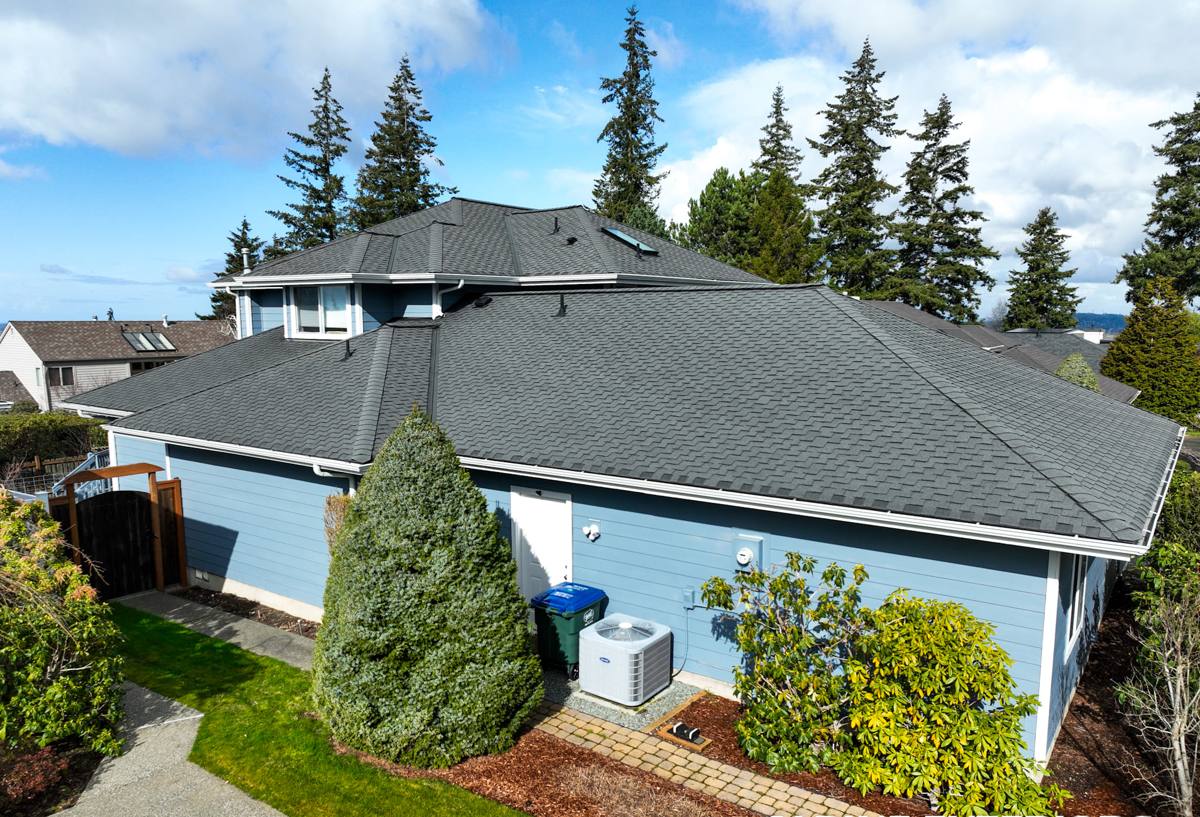
What Puget-Area Homes Need From a Deck
Homes in this part of Bellingham tend to deal with a few conditions together rather than one at a time: proximity to salt air, heavy seasonal rainfall, limited direct sun on north- and west-facing exposures, and surrounding tree cover that keeps decks shaded and slow to dry. Any one of these is manageable on its own. Combined, they mean a deck needs to be designed to shed water fast, resist corrosion, and survive long stretches without full sun exposure.
The three things we plan around first
- How fast the deck surface and framing can dry out after rain, given the site's sun and shade pattern
- Whether salt-influenced moisture in the air will accelerate corrosion on hardware and fasteners
- How water is directed away from the house at the ledger connection, since that's the single most common failure point on any deck
Choosing the Right Decking Material for This Climate
There's no universally "best" decking material — there's a best material for this site, this budget, and this owner's tolerance for maintenance. In a marine climate with a long moss season, the trade-offs between wood and composite decking are more pronounced than they'd be in a drier region.
| Material | How it handles this climate | Maintenance reality |
|---|---|---|
| Pressure-treated wood | Affordable and repairable, but absorbs moisture readily; needs to dry fully between rain events or it stays damp and grows moss/algae film | Annual cleaning and re-sealing; boards may need spot replacement over time |
| Cedar | Naturally rot-resistant and handles our humidity well, but is softer and more prone to surface graying and moss growth in shaded spots | Regular cleaning and periodic oiling or staining to hold its color and resist moss |
| Composite (capped) | Doesn't absorb water the way wood does, resists rot outright, and sheds surface algae more easily with routine washing | Occasional washing to prevent surface film buildup; no staining or sealing required |
| PVC decking | Fully synthetic, essentially immune to moisture damage and rot, performs well in constant damp conditions | Lowest maintenance of the group; periodic cleaning only |
We install all of these when they're the right fit for the project and the budget. What we won't do is recommend a low-cost wood package for a heavily shaded, low-airflow spot near the water without being upfront that it will need more attention than the homeowner might expect. That's a maintenance conversation we have honestly, before the build — not an upsell after the fact.
Fastener and hardware compatibility
Whatever decking material is chosen, the hardware underneath it has to match. Composite and PVC boards, wood species, and different fastener metals don't always play well together — some combinations accelerate corrosion or staining. We match fasteners, joist hangers, and flashing to the decking system being installed, not the other way around.
Framing and Substructure: The Part No One Sees
The decking surface gets all the attention, but the framing underneath is what determines whether a deck lasts 10 years or 30. In a climate this wet, we pay particular attention to a handful of details that are easy to skip and expensive to fix later.
Ledger board and flashing
Where the deck attaches to the house is the single most common source of hidden water damage on any deck in this region. Proper flashing — installed so water is directed away from the house framing rather than trapped behind the ledger — is not optional, regardless of decking material chosen above it.
Joist protection
Exposed cut ends and joist tops are where rot typically starts, even on treated lumber. We treat cut ends and use joist tape or equivalent protection on top of the framing so water doesn't sit against exposed wood fibers year-round.
Footings and post bases
Footings need to be sized and set below frost depth per local code, and post bases should keep wood posts elevated off concrete so they're not sitting in standing water after every rain. On sites with poor drainage, we address grading and drainage at the footing level before framing begins, not after.
Railings, Fasteners, and Corrosion in Salt Air
Salt air doesn't need to be constant or intense to cause corrosion — it just needs time, and in this part of Bellingham, it has plenty of it. Standard galvanized fasteners can start showing rust streaks and weakening well before a homeowner expects hardware issues. We use stainless steel or high-grade corrosion-resistant fasteners and connectors on decks in this area as a standard practice, not an upgrade option, because replacing hardware on a finished deck is far more disruptive than specifying it correctly the first time.
The same logic applies to railing systems. Aluminum and vinyl railing systems generally hold up well against salt-influenced moisture with minimal upkeep, while untreated steel components can become a recurring maintenance item. Cable railing systems look great but require hardware specifically rated for coastal or marine-adjacent exposure — we won't install cable rail hardware that isn't rated for this environment.
Moss, Algae, and Drainage — the Long-Term Reality
Moss and algae aren't a defect in a deck — they're a predictable outcome of shade, moisture, and time in this region, and every deck here will deal with them to some degree. The goal isn't to eliminate that reality; it's to build a deck that sheds water efficiently enough that moss growth stays manageable rather than becoming a slip hazard or trapping moisture against the boards.
Board spacing, surface texture, and airflow underneath the deck all affect how fast a surface dries and how much moss takes hold. A deck built low to the ground with poor airflow underneath will need more frequent cleaning than one with proper clearance. We factor airflow into the framing height and skirting decisions during design, not as an afterthought.
Our Deck Building Process
Every deck we build in the Puget area follows the same sequence, adjusted for the specific site conditions we find during the initial visit.
- On-site assessment of sun exposure, drainage patterns, and existing structure or grade issues
- Material and hardware recommendations based on the site's actual shade, moisture, and salt exposure — not a one-size-fits-all package
- Permit application and plan submission where required
- Footing and framing work, including ledger flashing and joist protection as standard practice
- Decking installation with fastener systems matched to the chosen material
- Railing, stair, and finish work
- Final walkthrough covering how to care for the specific materials installed
We don't skip steps to hit a lower price, and we don't pad the timeline with unnecessary ones. The sequence above is what a deck in this climate actually needs to hold up.
Permits and Local Considerations
Most decks above a certain height or attached to the primary structure require a permit through the local building department, and guardrail height, stair geometry, and footing depth are all governed by code that applies regardless of which contractor does the work. We handle the permit process as part of the project rather than leaving it to the homeowner, and we build to code minimums as a floor, not a target — especially on guardrail and stair details, which are the most common inspection issues on residential deck projects.
Site-specific factors like proximity to water, slope, or setback requirements can affect what's allowed on a given lot. These are worth confirming with the local building department early, and we factor them into the initial site assessment rather than discovering them mid-project.
Why Hire a Crew That Already Works in This Area
A deck contractor who mostly works inland or in drier parts of the state isn't necessarily going to under-build for this climate — but they may not default to the corrosion-resistant hardware, ledger flashing detail, or airflow-conscious framing that a crew working Puget and the surrounding Bellingham area treats as routine. Those details come from repetition: seeing what fails after a few wet seasons and building differently because of it.
We're not asking homeowners to take that on faith. It's a straightforward set of standards — corrosion-resistant fasteners, proper ledger flashing, framing that allows airflow underneath, and material recommendations that are honest about maintenance — applied consistently because the climate here doesn't give a deck much room for shortcuts.
If you're planning a new deck or replacing one that's showing its age, we're happy to walk the site with you and put together a straightforward, no-pressure estimate. Use the form below to get started.