 Bellingham Siding
 Edgemoor Decks Wear Differently Than Decks Inland
Edgemoor sits close to Bellingham Bay on wooded, elevated lots, and that combination is exactly what shortens a deck's real service life. It's not one problem, it's three showing up on the same structure at once: salt-tinged air moving off the water, heavy tree canopy that keeps large sections of decking shaded and damp for most of the year, and wind-driven rain that doesn't just fall on a deck, it drives sideways into railings, ledger boards, and any gap it can find. A deck built for a drier, more open lot somewhere else in Whatcom County can still fail early here simply because it was never detailed for this specific combination.
Salt Air Off the Bay
Proximity to the water means a steady low-level exposure to salt-laden moisture, even on days without an obvious storm. That exposure is hardest on metal: fasteners, joist hangers, and railing hardware corrode faster here than they would a few miles inland, and once a fastener starts failing, it's usually hidden under decking boards where nobody sees it until something moves underfoot.
Deep Shade and a Long Moss Season
Mature tree cover is part of what makes Edgemoor's lots desirable, and it's also what keeps decking surfaces and the framing underneath from ever fully drying out for large stretches of the year. Moss and algae take hold fastest on shaded, north-facing, or tree-covered sections, and it's not just cosmetic. A mossy deck surface is a genuine slip hazard, and moss holds moisture directly against the decking material, which accelerates rot in wood and can shorten the service life of lower-grade composite products too.
Wind-Driven Rain and Standing Water
Rain here often arrives at an angle, not straight down, which means it works its way under railings, into board gaps, and against the house at the ledger connection in ways a calmer climate wouldn't test. Combine that with shaded areas that dry slowly and you get spots on a deck that stay damp far longer than the rest of the structure, which is usually where we find the earliest structural problems on a tear-out.
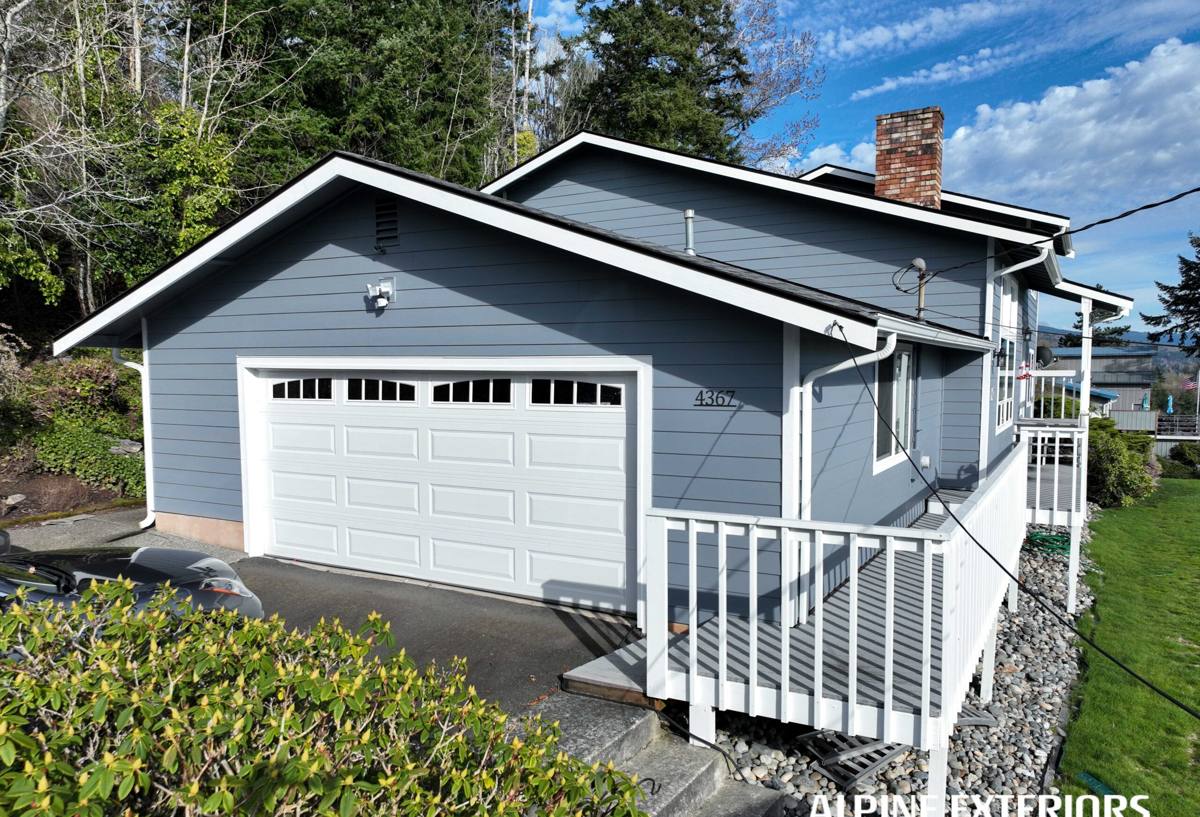
When Repair Stops Making Sense
Not every aging deck needs full replacement, but there's a point where patching individual boards or hardware just delays a bigger job instead of solving anything. We look at a few honest indicators:
- Soft, spongy, or visibly rotted framing members, especially around the ledger board or support posts
- Fasteners or hangers with heavy rust or corrosion, particularly on a deck more than 15-20 years old
- Decking boards that are cupping, splitting, or delaminating across large sections rather than isolated spots
- A ledger connection to the house that shows signs of past water intrusion into the wall behind it
- Footings or posts that have shifted, settled unevenly, or were undersized for the deck's actual load in the first place
- A deck that was never permitted or built to current code, which can complicate insurance, resale, or future additions
If the problems are structural or widespread rather than cosmetic, replacement is usually the more honest recommendation, and it's the only way to fully address hidden framing damage rather than building new decking on top of a compromised base.
Choosing Decking Material for a Shaded, Bay-Exposed Lot
Material choice matters more on a lot like Edgemoor's than it does on an open, sun-exposed property. Heavy shade changes how different products actually perform, regardless of what their marketing promises in a drier climate.
| Material | How It Handles Edgemoor's Conditions | Trade-Off |
|---|---|---|
| Pressure-treated wood | Affordable, but shaded, damp conditions accelerate rot and moss growth even with treatment | Needs regular cleaning, sealing, and closer long-term inspection than other options |
| Cedar | Naturally rot-resistant compared to standard lumber, but still absorbs moisture in prolonged shade | Requires ongoing staining or sealing to keep performing, which is easy to fall behind on |
| Capped composite | The cap layer resists moisture absorption and staining better than wood in shaded, mossy areas | Higher upfront cost; quality varies significantly between manufacturers |
| PVC decking | Fully synthetic, doesn't absorb moisture at all, generally the most resistant to a long moss season | Highest material cost; can feel and flex differently underfoot than wood-based composites |
We don't push one product on every homeowner. We'll tell you plainly how much shade your specific deck footprint actually gets, how that affects each material's real-world lifespan on your lot, and let you weigh cost against long-term maintenance with real information instead of a sales pitch.
What a Correct Deck Replacement Actually Involves
The decking boards are the part everyone sees, but they're not what determines whether a deck lasts. The structure underneath does that job, and it's where corners get cut on a rushed replacement.
Ledger Board and Flashing
The connection where the deck attaches to the house is the single most common source of hidden water damage. Correct flashing at that joint, installed as a full system with the house's existing weather barrier rather than caulked on as an afterthought, is what keeps water from tracking behind the ledger and into the wall framing over time.
Framing, Fasteners, and Hardware
Given the salt exposure this close to the bay, we spec corrosion-resistant fasteners and joist hangers rather than standard hardware that's rated for a drier inland climate. Joist spacing and beam sizing need to match the actual load and span, not just whatever was on the deck being torn out, especially on older Edgemoor decks that may have been undersized for current code.
Footings and Support Posts
Footings need to be sized and set to the correct frost depth and bear on stable soil, which matters on sloped or wooded lots where root systems and uneven grading are common. A deck that's structurally sound at installation but sitting on inadequate footings will eventually show it through settling, sway, or cracked concrete.
Permits and Inspection
Deck replacement involving structural framing typically requires a permit and inspection through the City of Bellingham or Whatcom County, depending on the property. That inspection isn't a formality: it's a second set of eyes confirming the ledger, footings, and framing were actually done to code, which protects you at resale and with your insurer if anything is ever questioned later.
How We Approach a Deck Replacement
- On-site evaluation: We assess the existing structure, note shade and drainage patterns specific to your lot, and identify hidden damage before quoting anything.
- Material and layout discussion: We walk through decking options against your budget and how much shade and moisture your specific deck footprint deals with.
- Permitting: We handle the permit application and coordinate inspections so the finished deck is documented as code-compliant.
- Full tear-out: Old decking, railing, and framing come out completely so we can inspect the ledger connection and any framing that was hidden underneath.
- New structure first: Ledger flashing, framing, and footings go in and get inspected before any decking is installed on top.
- Decking and railing installation: Finish materials go on according to manufacturer spec, since improper fastening voids most composite and PVC warranties.
- Final walkthrough and cleanup: We review the finished deck with you and clear the site of debris and old material.
Deck Replacement Cost Factors in Edgemoor
| Factor | What It Affects | Why It Matters Here |
|---|---|---|
| Deck size and footprint | Total material and labor | Larger, multi-level decks common on sloped Edgemoor lots take more framing and labor time |
| Decking material chosen | Material cost and long-term maintenance | Shaded lots favor moisture-resistant materials, which typically cost more upfront but less to maintain |
| Ledger and framing condition | Extent of structural repair needed | Bay-side moisture and salt exposure often mean more corroded hardware or hidden rot than expected |
| Site access and slope | Labor time and equipment needs | Wooded, elevated, or sloped lots common in Edgemoor can add staging, hauling, and setup time |
| Railing and code requirements | Material and labor for guards and stairs | Height and guard requirements vary by deck elevation and can affect both cost and design |
These are the variables, not a quote. We won't give you a real number until we've actually walked the property, because guessing at a distance tends to be wrong in both directions.
Keeping a New Deck Ahead of Bellingham's Wet Season
A correctly built deck still needs some upkeep in this climate, but it should be maintenance, not repair, if the structure underneath was done right.
- Sweep debris and standing leaves off the deck regularly, especially in shaded corners where moss establishes fastest
- Rinse or gently clean decking surfaces at least once or twice a year to keep moss and algae from taking hold
- Check that gaps between boards stay clear so water can drain rather than pool
- Inspect railing connections and stair treads once a year for movement or loosening
- Look at the ledger flashing area periodically for any sign of staining on the siding above or below it
- Re-seal or re-stain wood or cedar decking on the schedule the manufacturer or we recommend, not just when it looks worn
Why a Crew That Already Works Edgemoor Matters
A contractor who works this neighborhood regularly already knows which lots hold shade the longest, where footings tend to fight tree roots and sloped grading, and how much extra flashing attention the ledger connection needs on a house this close to the bay. That local pattern recognition is what keeps a deck replacement from turning into a callback two winters later over a detail that was easy to miss without hands-on experience in exactly this setting. We also carry that same knowledge to how we sequence a job around Edgemoor's tree cover and access constraints, so the work moves efficiently instead of running into surprises mid-project.
If your Edgemoor deck is showing its age or you're not sure whether it needs repair or full replacement, we're glad to take a look and give you a straight answer. Reach out using the form below to schedule a free, no-pressure estimate.