 Bellingham Siding
 Siding in Edgemoor: A Different Kind of Wear
Edgemoor sits close to the water on the south side of Bellingham, and that location shapes what happens to a house's exterior over time. Homes here tend to sit on wooded lots with real tree canopy, which means a lot of shade, slower drying after rain, and the kind of damp, still air that moss and algae love. Add in the salt-laden air coming off Bellingham Bay and a wet season that stretches for months, and you have an exterior environment that is genuinely harder on siding than most inland neighborhoods in Whatcom County.
None of that is a problem you can solve with paint alone. It's a problem you solve with the right material, installed the right way, by people who understand what this specific stretch of coastline does to a wall assembly over ten or twenty years.
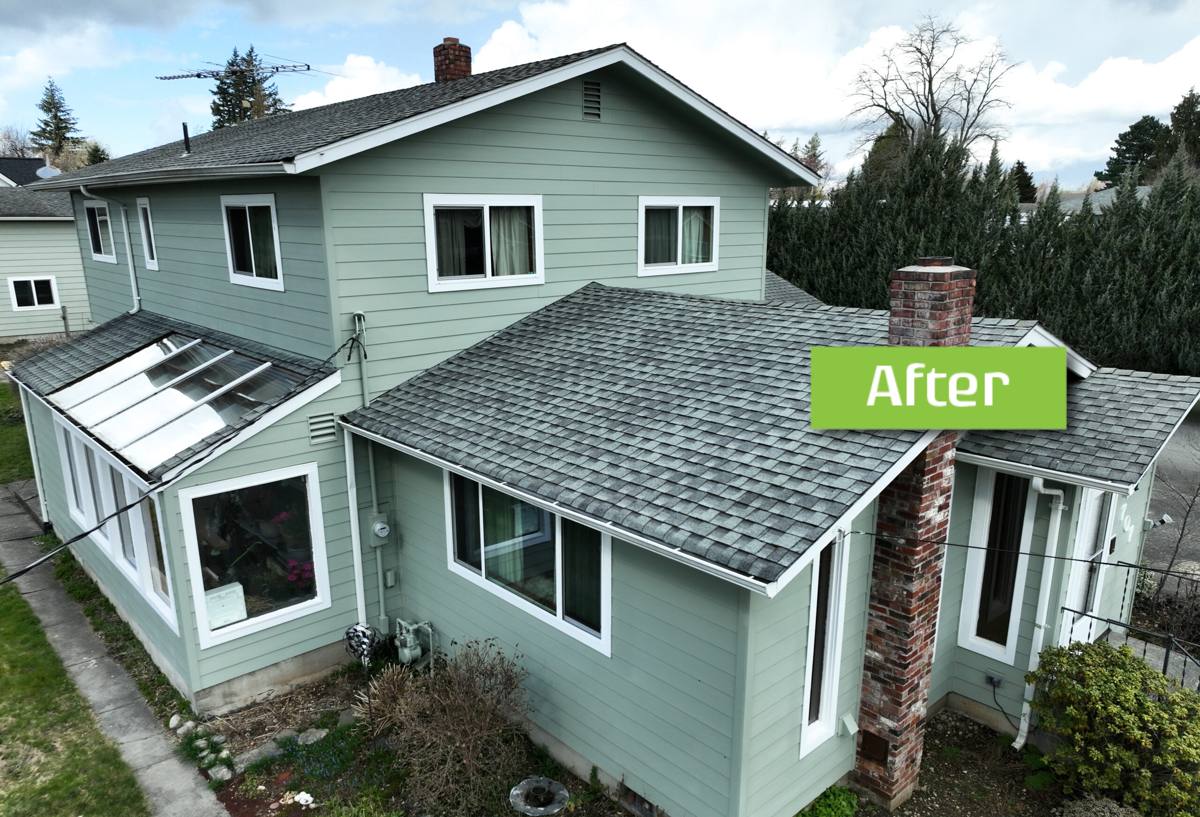
What Edgemoor Homes Actually Need From Their Siding
Strip away the marketing and every siding decision in this neighborhood comes down to a handful of real questions:
- Does the material stay dimensionally stable when it's damp for days at a time, or does it swell, cup, or soften?
- Does it resist feeding moss and mildew, or does its surface give organic growth something to hold onto?
- Do the fasteners and trim hold up under salt air, or do they corrode and stain the face of the siding?
- Can it handle long stretches without direct sun to dry it out, common on shaded, tree-covered lots?
- Does it need to be repainted on a cycle, and if so, can that even be done easily on a heavily wooded property with tight access?
Wood-based and wood-derived siding products struggle with several of these at once — they're organic material, so moisture drives rot and swelling, and shaded, salt-humid conditions are close to a worst case for them. Vinyl holds up to moisture fine but softens and warps in a way that shows on a home surrounded by mature trees, and it doesn't add any fire resistance. This is the environment fiber cement was built for.
Why We Install Only James Hardie Fiber Cement Here
We don't install LP SmartSide, vinyl, Cemplank, Allura, or primed wood siding, and Edgemoor is one of the neighborhoods where that standard matters most. James Hardie's fiber cement is cement, sand, and cellulose fiber — an inorganic composite that doesn't absorb and swell the way wood-based products do, and doesn't feed mold or algae the way an organic wood surface can. That matters directly on shaded, damp lots where a wall can stay wet longer than it would in full sun.
Hardie's ColorPlus factory finish is baked on under controlled conditions rather than field-painted on site, which gives it better fade and moisture resistance than site-applied paint and takes the repaint cycle off the table for years. On a wooded property where scaffolding a full repaint means working around trees and limited access, that's not a small convenience — it changes the maintenance math for the life of the siding.
Hardie also engineers specific product lines for different climates. The HZ5 line is built for regions with real moisture exposure like ours, with a formulation and finish tuned to hold up under sustained wet weather rather than the drier conditions HZ10 products are built for. We spec HZ5 on Edgemoor homes for that reason, not as an upsell. Fiber cement is also non-combustible, which is a genuine long-term advantage as wildfire risk in Washington gets more attention every summer, even in a wetter coastal pocket like this one.
What Hardie Doesn't Solve By Itself
The product is only half the equation. Fiber cement installed with the wrong clearances, missing flashing, or the wrong fastening pattern will still trap moisture and fail early — just more slowly than a lesser material would. The installation has to match the material.
What a Correct Installation Involves
A lot of siding problems we get called out to fix aren't material failures — they're installation shortcuts. On a shaded, damp lot like Edgemoor, those shortcuts show up faster because the wall doesn't get the drying time a sunnier site would give it. A correct install includes:
- Minimum clearance from grade (siding shouldn't sit buried against soil or mulch) and proper clearance below roof lines and decks
- A continuous weather-resistive barrier behind the siding, with flashing integrated at every window, door, and penetration — not caulk substituting for flashing
- Correct fastener spacing and depth, driven into framing rather than just sheathing, using fasteners rated to resist the corrosion that salt air accelerates
- Manufacturer-specified gaps at butt joints and trim, so the assembly can move slightly without cracking the finish
- Caulking only where Hardie's install guide calls for it — sealing every seam traps moisture behind the board instead of letting it drain and dry
- A drainage plane or rain screen approach on walls that stay shaded most of the day, so damp air behind the siding has somewhere to go
Any of these done wrong voids Hardie's warranty and shortens the life of the siding regardless of how good the product is. It's worth asking a contractor directly how they handle each of these before signing anything.
Our Process on Edgemoor Homes
1. Assessment
We look at the existing wall assembly, check for moisture damage already present, and map out which sides of the house get the least sun and airflow — that's usually where moss, algae, and slow-drying problems concentrate first.
2. Material and Detail Planning
We spec HZ5 product, plank or panel profile, and color, and plan flashing details around windows, trim, and any spot where the old siding was patched or caulked over previous problems.
3. Installation
Old siding comes off, the sheathing and barrier underneath get inspected and repaired if needed, and the new assembly goes on to spec — correct clearances, correct fastening, correct flashing, not just a fast re-clad over existing problems.
4. Final Walkthrough
We check clearances, caulking lines, and trim details before calling the job done, and go over what maintenance looks like going forward for that specific house.
Cost and Maintenance: How the Options Compare
| Material | Upfront Cost | Behavior in Shade & Damp | Maintenance Cycle | Fire Rating |
|---|---|---|---|---|
| James Hardie fiber cement | Mid-to-higher | Dimensionally stable, resists moisture and algae growth | Occasional gentle wash; no repaint needed for years | Non-combustible |
| Vinyl | Lower | Doesn't rot, but can warp and discolor under prolonged damp/shade | Low, but limited repair options once damaged | Combustible |
| Wood-based / engineered wood | Mid | Absorbs moisture, prone to swelling and rot in shaded, wet conditions | Regular repainting and moisture monitoring | Combustible |
| Primed spruce / cedar | Mid-to-higher | Natural material, most exposed to rot and moss in damp shade | Frequent repainting and sealing | Combustible |
The upfront cost gap between fiber cement and lower-cost options is real, but on a lot with heavy tree cover and salt air, the maintenance column is where the real difference shows up over ten to twenty years.
Maintenance Edgemoor Homeowners Should Actually Expect
Fiber cement is low-maintenance, not no-maintenance. In this environment, that means:
- A gentle wash once a year or so on shaded walls to keep moss and algae from getting established, using a soft brush or low-pressure rinse — never a pressure washer aimed directly at the siding
- Keeping gutters and downspouts clear so runoff isn't sheeting down the wall face during heavy rain
- Trimming back branches and foliage that keep a wall section wet and shaded longer than the rest of the house
- Periodically checking caulking at trim and penetrations for cracking, since that's the first place water finds its way in
Why a Crew That Already Works This Neighborhood Matters
A contractor who's worked Edgemoor and nearby Bellingham neighborhoods knows which walls on a typical lot here take the worst of the shade and moisture, understands City of Bellingham permitting requirements, and has real experience working around mature trees and tighter lot access without cutting corners on staging or disposal. That's different from a crew installing the same material in a dry, open subdivision inland — the product is the same, but the details that keep it performing for decades change with the site.
If you're weighing a siding project on an Edgemoor home, we're happy to walk the property, look at what's there now, and give you a straight assessment of what it needs. Reach out for a free, no-pressure estimate — there's a form right below this page.