 Bellingham Siding
 Why Puget Homes Ask More of Their Windows
Windows in the Puget area of Bellingham don't just keep a house warm — they're the first line of defense against a climate that never really lets up. Whatcom County sits close enough to the water that salt-laden air, driving rain off the Sound, and a long, damp moss season all put steady pressure on the seals, frames, and hardware of every window in a home. A window that would perform fine in a drier inland climate can start failing here years ahead of schedule if it wasn't built or installed with this specific environment in mind.
When we talk about "energy-efficient windows" for a Puget home, we're really talking about two things at once: how well the window holds heat in during the wet, gray months, and how well it keeps water and moisture out year-round. Get either one wrong and you end up with high heating bills, foggy glass, soft framing, or worse.
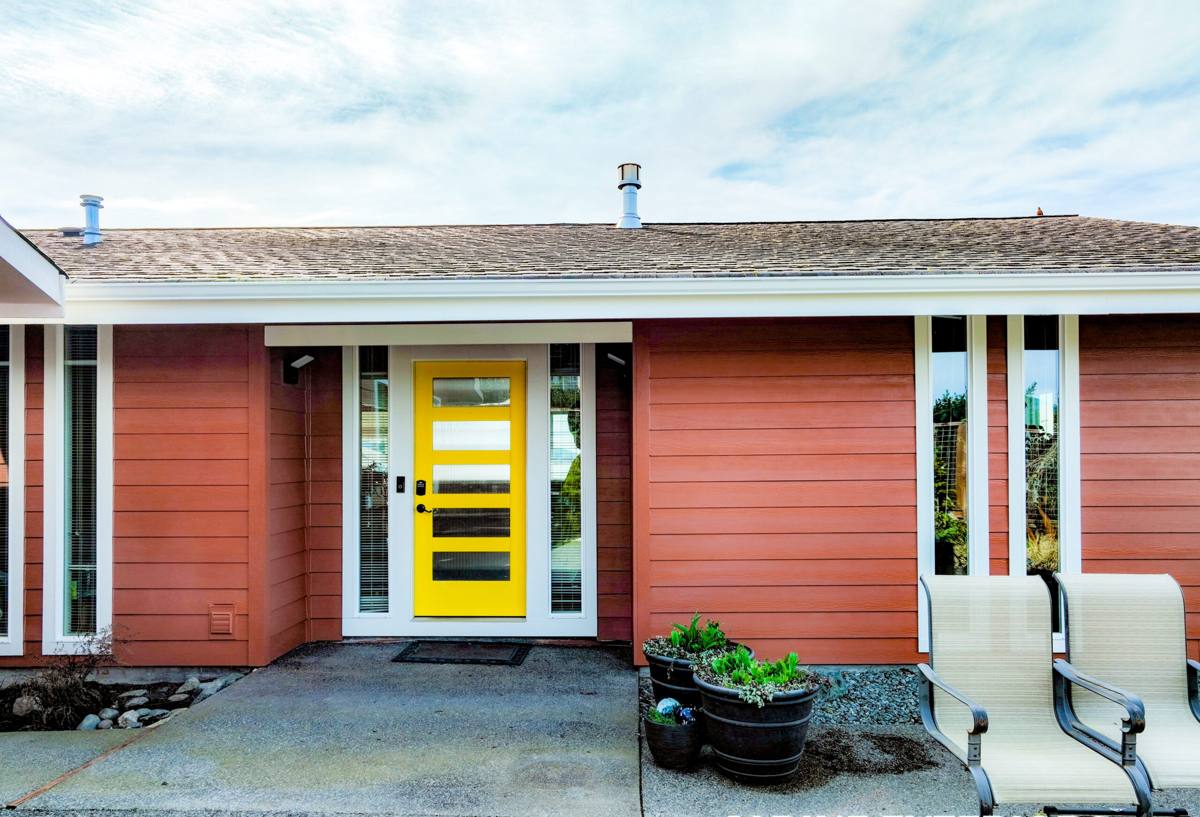
What Bellingham's Marine Climate Does to Windows Over Time
Driving Rain and Water Intrusion
Rain here doesn't just fall straight down — wind off the water regularly drives it sideways into wall assemblies and window openings. A window that isn't flashed and sealed correctly on all four sides can let water track behind the trim and into the wall cavity long before anyone notices a stain indoors. By the time a homeowner sees damage, the rot or mold underneath has often been developing for a season or more.
Salt Air and Hardware Corrosion
Proximity to Puget Sound means a fine mist of salt in the air on windy days, even away from the immediate waterfront. Over years, that salt attacks unprotected metal — window locks, hinges, screen frames, and lesser-grade aluminum components corrode faster here than they would inland. It's one of the reasons hardware and frame material choice matters more in this area than in most.
Moss, Mildew, and Prolonged Dampness
Bellingham's moss season isn't limited to roofs. Sills, tracks, and any horizontal surface on a window that stays damp for weeks at a stretch can grow mildew or support moss and algae growth if drainage isn't designed properly. Poor sill drainage is a small detail that causes an outsized share of the window problems we see in this area.
What "Energy-Efficient" Actually Means Here
Manufacturers publish two numbers that matter most for a Puget-area home: U-factor (how well the window resists heat loss — lower is better) and Solar Heat Gain Coefficient, or SHGC (how much solar heat passes through the glass). Because Bellingham gets relatively little direct winter sun and a lot of cloud cover, the priority for most homes here is a low U-factor to hold in heat, rather than chasing a very low SHGC meant for sun-heavy climates.
| Glass Package | Best For | Trade-Off |
|---|---|---|
| Double-pane, low-E, argon-filled | Most Puget homes — solid year-round performance | Standard cost, proven track record |
| Triple-pane | North-facing walls, homes near open water with more wind exposure | Higher upfront cost, added weight on frames |
| Double-pane, low-E, no gas fill | Budget replacements, secondary rooms | Noticeably less efficient over time as basic double-pane ages |
Glass is only half the equation. The frame material, the quality of the weatherstripping, and — more than either of those — the installation itself determine whether a window actually performs the way its rating suggests. A high-end window installed with a poor seal will underperform a mid-range window installed correctly.
Frame Materials: What Actually Holds Up in This Climate
| Frame Material | Performance in Puget's Climate | Maintenance |
|---|---|---|
| Vinyl | Good moisture resistance, no corrosion risk, solid insulation value | Low — occasional cleaning |
| Fiberglass | Excellent stability in wet, temperature-swinging conditions; holds paint well if color-matching trim | Low |
| Wood-clad | Strong insulation, classic look, but the wood core is vulnerable if the exterior cladding is ever breached by driving rain | Moderate — needs sealant checks over time |
| Aluminum | Weak thermal performance and more prone to salt-air corrosion unless heavily treated | Higher — hardware needs monitoring |
We don't push any single material on every home. The right choice depends on the home's exposure — a house facing open wind and rain off the water needs different priorities than one tucked behind trees and other structures. Our standard is to match the frame to the actual exposure the window will face, not just what's cheapest or trendiest.
Signs a Puget-Area Home Needs New Windows
Because water and air infiltration problems build slowly, most homeowners don't notice a failing window until the damage is already underway. Watch for:
- Condensation or fogging between the panes (a sign the seal has failed)
- Soft or discolored wood trim around the window frame
- Drafts you can feel with a hand near the frame on a windy day
- Windows that are difficult to open, close, or lock — often a sign of frame warping
- Visible moss, algae, or persistent black staining on the sill or lower frame
- A noticeable rise in heating costs without any change in usage
- Peeling paint or bubbling on interior trim near the window
Any one of these on its own isn't necessarily an emergency, but several together usually mean the window's seal and drainage are no longer doing their job.
How We Install Energy-Efficient Windows in Puget Homes
The window product matters, but installation is where most long-term problems actually start or get prevented. Our process is built around the realities of this specific climate:
- Assessment — we check the existing window's flashing, sill condition, and any signs of hidden water damage before quoting anything.
- Removal — old windows come out carefully so we can inspect the rough opening and framing underneath for rot or moisture that needs addressing first.
- Flashing and sealing — proper flashing tape and drainage planes are installed so any water that does reach the opening is directed back out, not into the wall.
- Fit and set — the new window is shimmed and leveled precisely; a window that's slightly out of square will never seal correctly no matter how good the product is.
- Insulation — the gap between the window frame and the rough opening is filled with the correct low-expansion foam or fiberglass, avoiding both gaps and over-compression.
- Exterior finish — trim, caulking, and any cladding tie-in are finished to shed water the way the rest of the wall assembly is designed to.
- Final check — we test operation, seal integrity, and drainage before calling the job done.
Skipping or rushing any one of these steps is how a good window ends up with a bad reputation. It's rarely the glass that fails first — it's the installation around it.
Cost Factors for a Puget Window Project
Every home is different, so we won't quote a number without seeing the job, but a few factors consistently move the price up or down:
| Factor | Effect on Cost |
|---|---|
| Number of windows replaced at once | Bundling multiple windows typically lowers the per-window cost |
| Frame material chosen | Vinyl is generally the most budget-friendly; fiberglass and wood-clad cost more upfront |
| Condition of the existing opening | Hidden rot or reframing adds labor beyond a standard swap |
| Glass package | Triple-pane and specialty coatings add cost over standard low-E double-pane |
| Access and home layout | Upper-story or hard-to-reach windows add time and equipment needs |
Broadly, homeowners in this area should expect window replacement costs to range from a modest per-window figure for a straightforward vinyl swap up to significantly more for larger, higher-end, or structurally complicated openings. We'll walk through the real numbers for your home during the estimate rather than guessing here.
Why Hiring a Crew That Already Works Puget Matters
General window installation experience doesn't automatically translate to this climate. A crew that mostly works drier, inland regions may not think twice about flashing details, sill drainage slope, or hardware corrosion resistance — details that matter far more here than somewhere with less rain and no salt air. Working regularly in the Puget area and around Bellingham means we've already seen how local homes age, what fails first, and what holds up over time in this specific mix of wind, rain, and moisture.
It also means we're familiar with the building patterns common to homes in this part of Whatcom County, so assessments move faster and quotes are more accurate the first time — no surprise change orders once the old window comes off the wall.
Get a Straightforward Estimate
If your windows are original to the home, fogging, drafty, or just costing you more to heat than they should, we're happy to take a look and give you an honest read on what's going on — no pressure, no inflated urgency. Fill out the form below to schedule a free estimate for your Puget-area home.