 Bellingham Siding
 Why Ferndale Roofs Wear Out Differently
Ferndale sits close enough to the water that homes here deal with a combination most inland towns never see: salt-laden marine air, wind-driven rain that comes in sideways off winter storms, and long stretches of cool, damp weather that never quite dry out. Add tree cover common to Whatcom County neighborhoods and you get months of shade and moisture sitting on a roof surface — exactly what moss and algae need to take hold. A roof built for a drier, more sheltered climate simply doesn't hold up the same way out here.
None of this means Ferndale homes need exotic materials or gimmicks. It means the installation details that get skipped on a rushed job — flashing laps, underlayment coverage, ventilation balance, edge protection — are the details that actually matter most in this climate. A new roof installed correctly the first time will outlast one that was installed fast but generic.
What Driving Rain and Salt Air Actually Do to a Roof
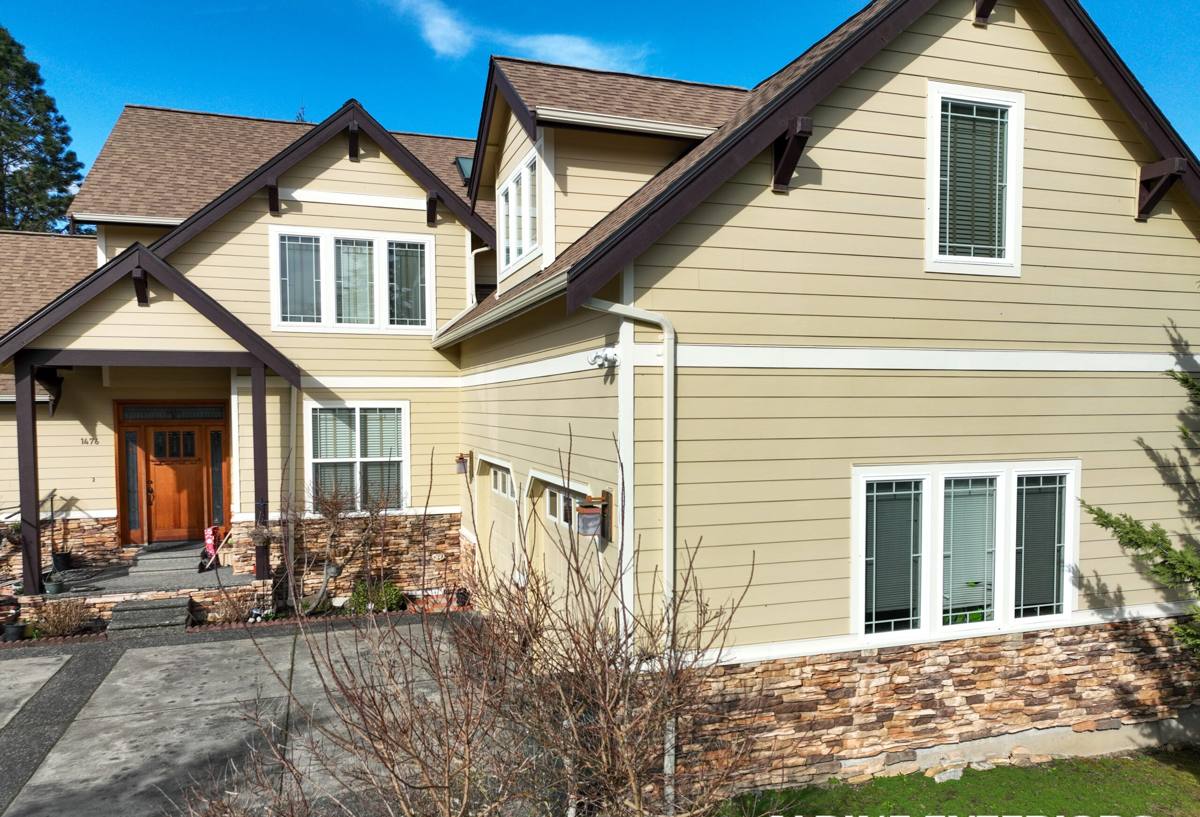
Wind-driven rain doesn't just fall on a roof, it gets pushed sideways and upward under shingle edges, around vent boots, and into any gap in the flashing. Over enough storm seasons, a roof with weak flashing or thin underlayment will start leaking not through the shingles themselves but through the transitions — valleys, chimneys, skylights, and wall intersections.
Salt air adds a second, slower problem. Airborne salt accelerates corrosion on exposed metal — nail heads, flashing, vent stacks, and gutter hardware — and it can shorten the life of lower-grade fasteners and trim. It also feeds algae growth, which is why homes closer to the water tend to show those dark streaks and moss patches sooner than homes further inland, even when the roofing material is identical.
Moss Season Is Longer Here Than Most Homeowners Expect
In much of Whatcom County, moss isn't a once-a-year nuisance — it's a near-constant background condition on north-facing slopes and shaded sections of roof. Once moss establishes itself, it holds moisture against the roofing material, works its way under shingle tabs, and can lift edges enough to let water in. A new roof installation is the best opportunity to build in the details that slow moss down, rather than fighting it after the fact with pressure washing and chemical treatments that stress the roof surface.
What a Correct New Roof Installation Involves
A new roof is more than stripping the old material and nailing down new shingles. Each layer has a job, and skipping or shortcutting any one of them is where premature leaks and warranty voids come from.
- Full tear-off: removing old roofing down to the deck rather than layering over it, so the deck and structure can actually be inspected.
- Deck inspection and repair: replacing any soft, delaminated, or water-stained sheathing before anything new goes down.
- Ice and water shield at vulnerable points: eaves, valleys, and roof-to-wall transitions get a self-adhering waterproof membrane, not just felt paper.
- Synthetic underlayment across the field: a water-resistant barrier under the entire roof surface as backup protection.
- New flashing throughout: chimneys, skylights, sidewalls, and vent penetrations get new metal flashing, not old flashing reused under new shingles.
- Balanced ventilation: intake at the eaves and exhaust at the ridge, sized to move air through the attic properly.
- Correct fastening and material installation: following the manufacturer's nailing pattern and exposure specs, which is what keeps wind and algae-resistance warranties valid.
Choosing the Right Roofing Material for Ferndale's Climate
There's no single "best" roofing material for every home — it depends on budget, roof pitch, and how much maintenance a homeowner wants to take on. What matters in this climate is how a material handles sustained moisture and salt exposure over decades, not just how it looks on day one.
| Material | How It Handles Moss & Moisture | Typical Lifespan | Maintenance Notes |
|---|---|---|---|
| Architectural asphalt shingle (algae-resistant) | Copper- or zinc-infused granules resist algae growth; good performance when installed with proper ventilation | 25–30 years | Occasional soft-wash cleaning recommended in shaded areas |
| Standing seam metal | Smooth surface sheds moss and debris better than textured materials; minimal organic growth | 40–50+ years | Low maintenance; check fastener corrosion near coastline over time |
| Synthetic/composite shingle | Resistant to moisture absorption; performance varies by product line | 30–50 years | Follow manufacturer cleaning guidance |
| Cedar shake | Naturally porous; holds moisture and is more prone to moss without diligent upkeep | 20–30 years with maintenance | Requires regular treatment and cleaning to manage rot and moss |
We install and stand behind architectural asphalt and metal roofing systems because they give Ferndale homeowners the most predictable long-term performance for the maintenance effort involved. Products that demand frequent upkeep to avoid moisture problems put more burden on the homeowner over time — that's a trade-off we're upfront about rather than something we discover after the fact.
Building Moss Resistance Into the Install, Not Just the Shingle
Algae-resistant shingles help, but the installation details matter just as much as the material choice:
- Zinc or copper strips can be installed near the ridge on shaded roofs, where rainwater carries trace metal ions down the slope and inhibits moss and algae growth.
- Proper attic ventilation keeps the underside of the roof deck closer to outdoor temperature, reducing the condensation that feeds moisture-loving growth from below.
- Keeping gutters and valleys clear of debris during install and after is one of the simplest, most overlooked ways to reduce standing moisture.
- Trimming back overhanging branches where possible reduces shade and debris buildup, though we recognize that's not always practical on every lot.
Ventilation and Moisture Control Matter More Here
In a climate with long wet seasons and limited hot, dry stretches to help an attic naturally dry out, ventilation isn't optional — it's part of what keeps a new roof performing for its full expected life. An attic that's too tight traps humid air, which condenses on the underside of the deck and can lead to rot, mold, and premature shingle failure from below, even when the roofing surface itself is holding up fine. Balanced ventilation — enough intake at the soffit or eave to match exhaust at the ridge — is a detail we calculate for every roof rather than applying a one-size-fits-all vent count.
Our Installation Process
- On-site inspection and estimate: we walk the roof, check the attic, and assess deck condition before quoting anything.
- Material selection: we walk through the trade-offs of each option based on your roof's exposure, pitch, and budget — no upselling for its own sake.
- Permit handling: we pull the required permits so the job is inspected and documented properly.
- Tear-off and deck repair: old roofing comes off, the deck gets inspected, and any damaged sheathing is replaced.
- Waterproofing and flashing: ice and water shield, underlayment, and new flashing go in at every vulnerable point.
- Roofing installation: shingles or panels are installed to manufacturer spec, with attention to nailing pattern and exposure.
- Ventilation and cleanup: intake and exhaust venting is finalized, and the site is cleared of debris and nails with a magnetic sweep.
- Final walkthrough: we go over the finished roof with you before calling the job complete.
What Drives the Cost of a New Roof
Every roof is different, so we won't quote a price without seeing the job — but these are the main factors that move the number up or down:
| Factor | Why It Matters |
|---|---|
| Roof size and pitch | Steeper roofs take longer to work safely and require more material overlap |
| Number of existing layers | Tearing off multiple old layers adds labor and disposal cost |
| Deck condition | Rotted or soft sheathing found during tear-off requires replacement before installing new roofing |
| Material choice | Asphalt, metal, and composite systems carry different material and labor costs |
| Roof complexity | Valleys, dormers, skylights, and chimneys each add flashing work and time |
| Access and site conditions | Tree cover, steep lots, or limited staging space can affect labor time |
Permits, Inspections, and Local Requirements
Roofing work in Whatcom County generally requires a permit and inspection, and coastal wind exposure is a real factor in how a roof needs to be fastened and detailed. Working with a crew that pulls permits and builds to the applicable code isn't just about compliance — it's what protects your home's insurance standing and resale value down the line. We handle the permitting process as a standard part of the job rather than something homeowners have to chase down themselves.
Why It Matters to Hire a Crew That Already Works in Ferndale
A roofing crew that works Ferndale regularly already knows which slopes tend to hold moss longest, how much wind exposure to plan for near the water, and which flashing details actually hold up through a full Whatcom County winter. That's the kind of judgment that doesn't show up on a spec sheet — it comes from doing the work here, not from a general roofing checklist applied the same way everywhere. It also means faster response if a storm causes damage and you need someone who already knows your roof.
If your roof is showing granule loss, moss buildup that keeps coming back, or you're just planning ahead before it becomes a leak, we're happy to take a look and walk you through your options honestly — including whether repair still makes sense or replacement is the better long-term call. Reach out for a free, no-pressure estimate using the form below.