 Bellingham Siding
 Why Ferndale Roofs Wear Out Faster Than You'd Expect
Ferndale sits close enough to the water that the air itself works against your roof. Homes here deal with a combination most inland Washington towns never see: salt-laden marine air off the Salish Sea, wind-driven rain that comes in sideways instead of straight down, and a moss season that can run nine or ten months out of the year. None of those things destroy a roof overnight. What they do is quietly shorten its life, one wet winter and one un-treated patch of moss at a time.
Salt Air and Corrosion
Metal roofing components take the brunt of this — flashing, fasteners, gutter hardware, and any exposed nail heads. Salt in the air accelerates oxidation, and once flashing starts to pit or a fastener starts to rust, it stops sealing the way it should. That's how a five-dollar flashing problem turns into a five-figure water intrusion issue if it sits unnoticed behind siding or in a valley you can't see from the ground.
Driving Rain and Wind-Driven Leaks
Whatcom County storms don't always drop rain straight down. When wind pushes rain sideways or upward under shingle edges, standard-pitch installation tolerances that would hold fine in a calmer climate can leak. This is why so many Ferndale roof leaks show up at valleys, ridge caps, and anywhere a roof plane meets a wall or chimney — those are the spots where wind-driven water finds a way in if the flashing and underlayment weren't detailed correctly the first time.
A Moss Season That Never Really Ends
Between the marine humidity, the tree cover common around Ferndale, and mild year-round temperatures, moss and algae get a long runway to establish themselves. Moss isn't just cosmetic. As it grows, it lifts shingle edges, holds moisture directly against the roofing material, and works its root structure into granule surfaces and seams. A roof that looks "mossy but fine" from the street is very often holding water exactly where it shouldn't be.
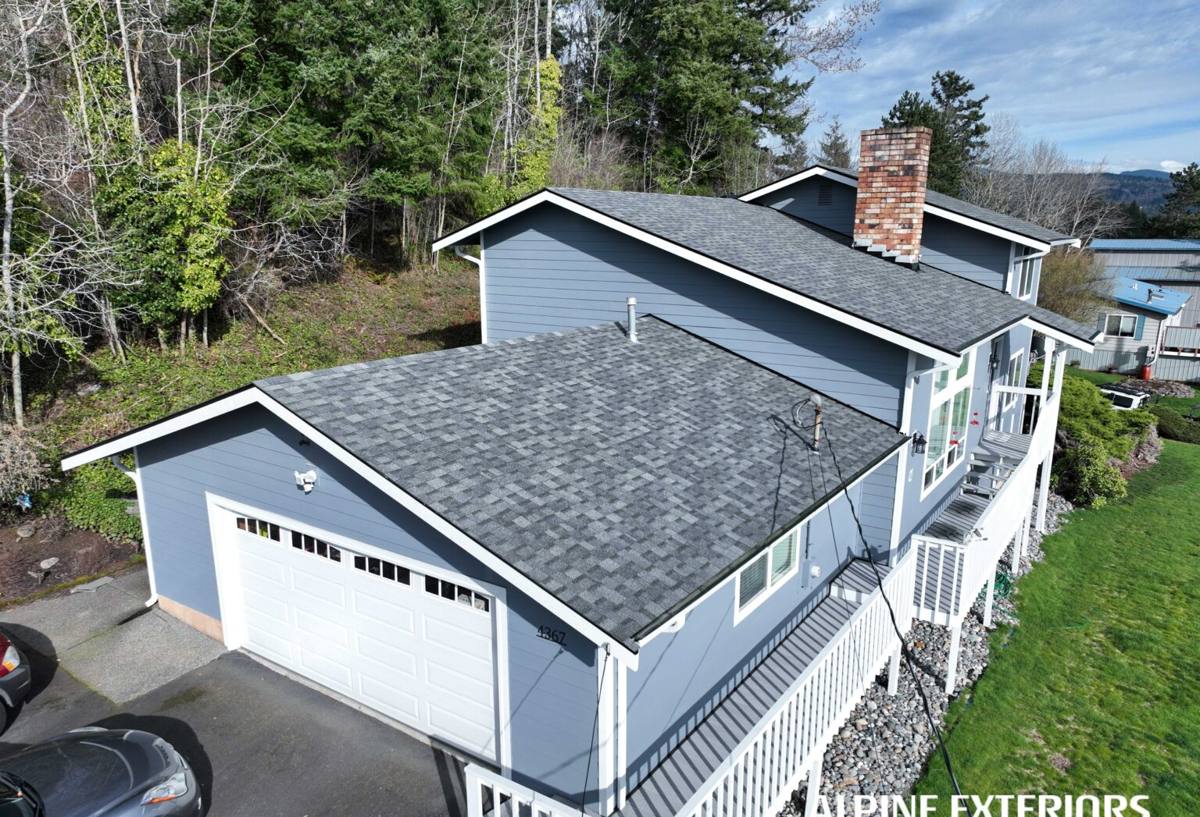
The Roof Repair Problems We See Most in Ferndale Homes
Most repair calls in this area fall into a handful of repeat categories. Knowing which one you're dealing with matters, because the fix — and the cost — is very different for each.
Flashing Failures
Corroded, improperly lapped, or under-sized flashing around chimneys, skylights, dormers, and roof-to-wall transitions is the single most common source of leaks we find. It's rarely the shingles themselves that fail first — it's the metalwork around the penetrations.
Moss and Organic Growth Damage
Thick moss mats trap moisture against the roof deck, degrade shingle granules, and can work their way under tabs and ridge caps. By the time moss is visible from the driveway, it's usually been established for a season or more.
Wind-Lifted or Cracked Shingles
Sustained wind events loosen shingle tabs and sealant strips. Once a shingle has lifted even slightly, it rarely reseals on its own — it needs to be re-secured or replaced before the next storm gets underneath it.
Gutter Line and Roof Edge Rot
Where gutters back up with moss debris or needles, water can sit against the fascia and roof edge far longer than it should, leading to soft decking and rot right at the eave — a spot that's easy to miss during a quick visual check.
What a Correct Roof Repair Actually Involves
A repair that actually lasts starts with figuring out what's really wrong, not just patching what's visible. That means getting on the roof, not just looking at it with binoculars from the ground. A proper repair typically includes:
- Identifying the true source of a leak — which is often several feet away from where the stain shows up inside
- Checking the roof deck underneath the damaged area for soft spots or rot before any new material goes down
- Replacing flashing rather than just re-sealing it, when corrosion or improper installation is the root cause
- Matching shingle type, weight, and color as closely as possible so the repair doesn't stand out or create a mismatched wear pattern down the road
- Confirming proper overlap and fastening so the repaired section performs the same as the surrounding roof in wind and rain
Skipping the diagnostic step is the most common reason a "fixed" roof leaks again the following winter. Caulk and patch materials can hide a symptom for a while, but they don't address flashing that's failing or decking that's already compromised.
Repair or Replace? How We Help You Decide
Not every roof problem needs a full replacement, and not every roof is a good candidate for another repair. We walk homeowners through the same factors every time:
| Factor | Leans Toward Repair | Leans Toward Replacement |
|---|---|---|
| Roof age | Under 15-20 years, within expected lifespan | Near or past manufacturer-rated lifespan |
| Extent of damage | Localized to one area or penetration | Spread across multiple roof planes |
| Repair history | First or second repair in this area | Same spot has been patched repeatedly |
| Decking condition | Solid, no rot found | Soft or rotted decking discovered underneath |
| Moss coverage | Light, surface-level | Heavy, long-established growth affecting large sections |
We'll always tell you honestly which side of that table your roof falls on. If a repair will genuinely hold, that's what we recommend — replacement isn't the answer just because it's more profitable for us.
Our Roof Repair Process
- Inspection. We get on the roof and check the deck, flashing, ventilation, and shingle condition — not just the spot you called about.
- Diagnosis and explanation. We show you what we found and explain what's actually causing the problem, in plain terms, before recommending anything.
- Written estimate. You get a clear scope of work and price before we schedule anything — no surprise add-ons once we're up there.
- The repair. We replace what needs replacing — decking, flashing, underlayment, shingles — and match materials to the existing roof as closely as possible.
- Cleanup and walkthrough. Debris and old materials are hauled off, and we walk you through what was done and what to watch for going forward.
Materials We Use — and Why
For flashing, we favor corrosion-resistant metals over lighter-gauge or painted alternatives in this climate. Salt air is unforgiving on hardware, and the cost difference between a flashing detail that lasts and one that doesn't is small compared to the cost of chasing another leak in a few years. For underlayment, we use synthetic, water-resistant products rather than older felt paper, since synthetic underlayment holds up better to the extended damp periods common here and gives the roof deck a stronger second line of defense if wind-driven rain does get past the shingles.
On shingle matching, we're upfront when an exact match isn't possible — sun fading and product line changes over time mean a repaired section can look slightly different even when it's done correctly. We'll tell you what to expect before the work starts rather than let you be surprised afterward.
Signs You Need Roof Repair Now, Not Later
Roof problems in this climate rarely announce themselves clearly. Watch for these warning signs:
- Dark streaking or thick moss mats on north-facing or shaded roof slopes
- Granules collecting in gutters or at downspout outlets
- Shingle tabs that look lifted, curled, or cracked, especially after a windstorm
- Any staining on interior ceilings or in the attic, even faint or old-looking
- Daylight visible through the roof deck from inside the attic
- Soft or spongy spots when walking the roof during an inspection
- Rust streaks running down from flashing, vents, or metal fasteners
Catching any of these early is almost always cheaper than waiting for a visible interior leak, since by that point water has usually been getting in for a while.
Why Hiring a Crew That Already Works Ferndale Matters
A roofer who works across Whatcom County regularly knows what wind-driven rain off the Salish Sea does to flashing details, how long moss takes to become a structural issue in this specific climate, and which repair shortcuts simply don't hold up here even if they'd be fine somewhere drier. That local pattern recognition is the difference between a repair that gets diagnosed correctly the first visit and one that gets patched, leaks again next season, and costs more in the end. It also means faster response when weather turns — a crew already working the area doesn't need to mobilize from somewhere across the state.
Maintaining Your Roof Between Repairs
A repair holds longer when it's not fighting neglect on the rest of the roof. A few habits go a long way in this climate:
- Clear moss and debris from gutters and valleys at least once a year, ideally before the wet season ramps up
- Trim back overhanging branches to reduce shade and debris buildup that feed moss growth
- Have flashing and penetrations checked every couple of years, since that's where failures start
- Address small leaks or stains as soon as they appear rather than waiting to see if they get worse
If it's been a while since your roof was actually inspected up close rather than glanced at from the yard, we're happy to take a look and give you a straight answer about what it needs. Reach out anytime for a free, no-pressure estimate — there's a form right below to get started.