 Bellingham Siding
 Fiber Cement Siding Built for Sehome's Weather
Sehome sits close enough to Bellingham Bay and the surrounding hills that homes here take a steady beating from moisture in almost every form: salt-tinged air off the water, wind-driven rain that gets pushed sideways into walls, and long gray stretches where moss and algae get every chance they need to take hold. Siding in this neighborhood isn't decoration — it's the first and most important barrier between that weather and the wood framing underneath. When we talk with Sehome homeowners about a siding project, the conversation almost always starts with one question: what does this material actually do when it's wet for six months straight?
That question is exactly why we install James Hardie fiber cement siding and nothing else. Fiber cement is cement, sand, and cellulose fiber pressed and cured into a dense, stable board. It does not absorb water the way wood-based products do, it does not feed mold or moss the way organic siding can, and it holds its shape through the wet-dry cycling that defines a Whatcom County winter. That combination matters more in Sehome than it does in a lot of places, simply because of how consistently wet the local climate stays for so much of the year.
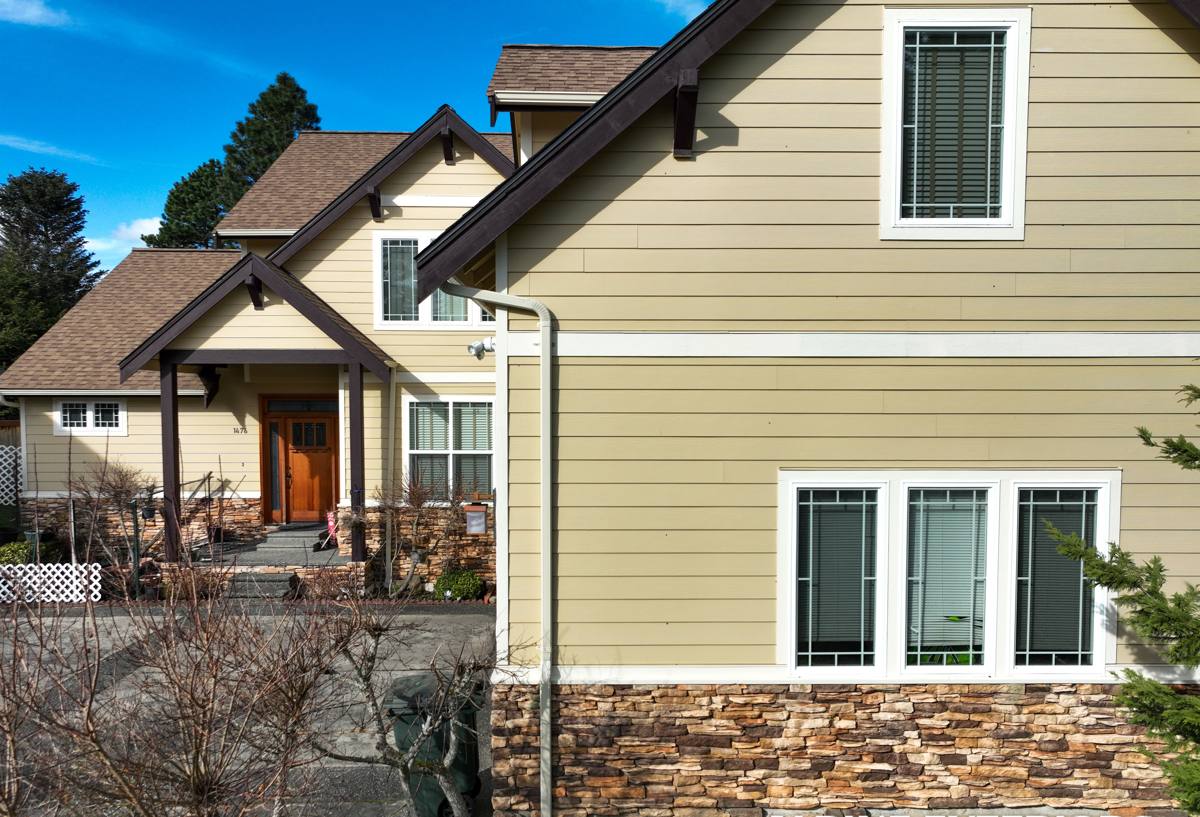
What Sehome's Climate Actually Does to Siding
Salt Air
Proximity to Bellingham Bay means a light but constant load of salt-laden moisture in the air, especially on breezy days. Salt air accelerates corrosion on exposed metal fasteners and trim, and it speeds up the breakdown of finishes that aren't formulated to resist it. Siding that looks fine going up can chalk, fade, or start lifting at the seams within a few years if the finish and fasteners weren't chosen with salt exposure in mind.
Driving Rain
Rain in this part of Washington rarely falls straight down. Wind off the bay and through the hills pushes it sideways into walls, which means water finds its way into every gap, seam, and fastener hole that isn't properly sealed or flashed. A siding job that would hold up fine in a calmer climate can fail here simply because the installer didn't account for wind-driven moisture getting behind the cladding.
Long Moss Season
Cool temperatures, shade from mature trees, and months of damp air add up to a moss and algae season that can run from fall through spring. Any siding material with an organic component — wood fiber, cellulose facing, or a finish that traps moisture against the substrate — gives moss something to grow on. Once it takes hold, moss holds moisture directly against the siding surface, which accelerates whatever damage the rain was already causing.
Why We Only Install James Hardie in This Neighborhood
James Hardie fiber cement is engineered specifically for climates like this one. The HardieZone system includes an HZ10 product line designed for wetter, more variable climates — which covers most of Western Washington, including Bellingham and Sehome. That's not a marketing detail; it changes how the board is formulated and how it performs over decades of exposure to exactly the conditions described above.
- Non-combustible core — cement-based composition doesn't feed a fire the way wood-based siding can, which matters for insurance and for peace of mind.
- ColorPlus factory finish — a baked-on, multi-coat finish applied in a controlled factory environment, which holds color and resists fading, chalking, and moisture intrusion far better than field-applied paint.
- Dimensional stability — fiber cement doesn't swell, warp, or cup the way wood and wood-composite sidings can when they cycle between soaked and dry.
- Moss and algae resistance — the dense cement composition doesn't provide the organic material that moss needs to establish itself the way wood fiber siding can.
- Strong transferable warranty — backed by a manufacturer warranty structure that holds up when the product is installed to spec, which protects the homeowner, not just the installer.
We don't install LP SmartSide, vinyl, Cemplank, Allura, primed spruce, or cedar. Each of those products has real strengths, and homeowners who choose them aren't making a mistake — but after years of working on homes in this specific climate, we standardized on Hardie because it's the product we trust to still look and perform correctly ten and twenty years out, without the maintenance burden or moisture vulnerability that comes with the alternatives.
What a Correct Fiber Cement Job Actually Involves
Fiber cement siding is only as good as its installation. The board itself resists moisture and rot, but a poorly installed job can still fail — usually not because the siding is bad, but because water got behind it through a detail that was rushed or skipped. In a climate like Sehome's, these details aren't optional extras. They're the difference between siding that lasts a full service life and siding that starts showing problems in five years.
Water Management Comes First
Before a single piece of siding goes up, the wall needs a correctly installed weather-resistive barrier and properly integrated flashing at every window, door, and penetration. This is what actually keeps water out of the wall assembly — the siding is the second line of defense, not the first.
Rainscreen Considerations
Given how much wind-driven rain this area sees, a drainage gap behind the siding (a rainscreen) gives any moisture that does get past the cladding a way to drain and dry out instead of sitting against the wall sheathing. This is one of the details that separates a job built for this climate from a generic installation.
Fastening and Clearances
James Hardie specifies exact nailing patterns, fastener types, and minimum clearances from grade, roof lines, and other surfaces. Corrosion-resistant fasteners matter here specifically because of the salt air — the wrong fastener can start rusting and staining the siding within a few seasons.
Joints and Caulking
Butt joints, corners, and trim intersections need to be treated correctly — sometimes with sealant, sometimes with flashing, depending on the detail. Manufacturer specs exist for a reason, and skipping them is the single most common cause of early siding failures we see when we're called out to look at problem installations.
| Detail | Why It Matters in Sehome |
|---|---|
| Weather-resistive barrier | Primary defense against wind-driven rain getting into the wall assembly |
| Rainscreen gap | Lets moisture that gets past the siding drain and dry instead of sitting against sheathing |
| Corrosion-resistant fasteners | Salt air accelerates rust on the wrong fastener type |
| Correct flashing at penetrations | Windows, doors, and vents are the most common leak points |
| Factory ColorPlus finish | Holds up against fading and moisture better than field-painted siding |
| Manufacturer-spec clearances | Keeps siding away from standing water and splashback at grade |
Our Process for a Sehome Siding Project
Every home is different, but the process we follow stays consistent because it's built around getting the water management right first and the finish work right second.
- On-site assessment — we look at the existing siding, wall assembly, drainage patterns around the home, and any moss, staining, or moisture damage that's already present.
- Scope and product selection — we walk through which James Hardie line and profile fits the home, factoring in exposure, sun/shade, and the homeowner's style preferences.
- Removal and inspection — old siding comes off and we inspect the sheathing underneath for rot or hidden moisture damage before anything new goes up.
- Weather barrier and flashing — this is the step that determines whether the new siding actually keeps water out, done to manufacturer and code specifications.
- Installation — Hardie boards installed with correct fastening, clearances, and joint treatment throughout.
- Final inspection and walkthrough — we check the completed work against manufacturer specs before calling the job done.
Signs Sehome Homeowners Should Watch For
Because of the local climate, certain warning signs show up here more consistently than they might in a drier region. If you're seeing any of the following, it's worth having the siding looked at before it turns into a larger repair:
- Dark streaking or green/black growth that returns shortly after cleaning
- Soft spots, bubbling, or visible warping in existing siding boards
- Paint that's peeling or bubbling in a consistent pattern along seams or laps
- Staining below fastener heads, which often points to corroding hardware
- Gaps opening up at trim, corners, or window and door casings
- A musty smell near exterior walls, which can indicate moisture behind the siding
Why Hiring Local Experience Matters Here
Sehome's mix of tree cover, proximity to the bay, and Bellingham's general rainfall pattern creates conditions that don't show up identically in every neighborhood, let alone every region. A crew that installs siding across a wide range of climates might not think twice about rainscreen detailing or fastener corrosion resistance — but a crew that works this specific area regularly has already seen what happens when those details get skipped. That local pattern recognition is worth more than it sounds like on paper: it's the difference between a siding job that's technically installed and one that's actually built for where it sits.
We're a Bellingham-based crew, and Whatcom County's climate — the bay-influenced air, the driving rain, the moss season that runs longer here than in a lot of places — is the only climate we build for. That focus is part of why we standardized on James Hardie in the first place: it's the product that holds up best under exactly these conditions when it's installed correctly.
Cost Factors to Expect
Every home is different, so we don't quote pricing sight unseen, but a few factors consistently affect the cost of a fiber cement project in this area:
| Factor | How It Affects Cost |
|---|---|
| Home size and complexity | More wall area, corners, and roof lines mean more material and labor |
| Condition of existing sheathing | Hidden rot or moisture damage found during tear-off adds repair scope |
| Siding profile and accessories | Trim, soffit, and specialty details add to material and installation time |
| Access and site conditions | Tight lots, slopes, or limited staging area can affect labor time |
| Color and finish selection | Factory ColorPlus finishes vs. field painting affect both cost and long-term durability |
If you're weighing a siding project in Sehome, we're happy to come take a look, walk the property with you, and put together a straightforward, no-pressure estimate based on what your home actually needs.