 Bellingham Siding
 Windows Built for How Happy Valley Actually Weathers
Happy Valley sits close enough to Bellingham Bay that salt-laden air is a constant factor, and like the rest of Whatcom County, the neighborhood gets long stretches of driving, wind-blown rain rather than gentle vertical rainfall. Add a moss season that can run eight months or more out of the year, and you have a set of conditions that will find every weak point in a window installation — usually within a few years, not decades. Homes here range from older single-pane originals that have never been touched to newer replacements that were installed without much thought given to how water actually moves across a wall in this climate.
Custom windows done right in this neighborhood aren't just about picking a style you like. The frame material, the flashing detail, and the way the window ties into the siding around it all matter more here than they would in a drier, calmer climate. We've installed and repaired enough windows in this part of Bellingham to know which details are worth insisting on and which upsells are just noise.
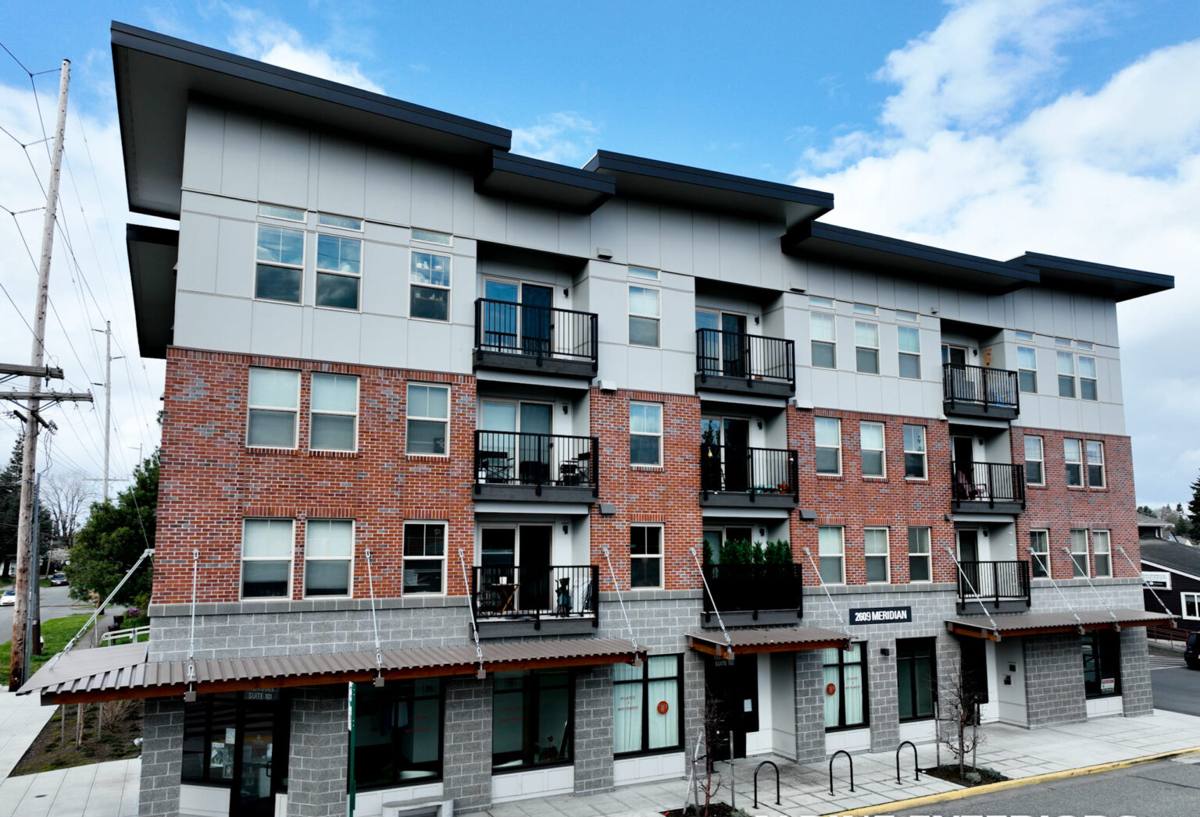
What Salt Air and Driving Rain Do to a Window Over Time
Salt Air
Airborne salt is corrosive to exposed metal hardware, screen frames, and some window coatings. It also tends to hold moisture against surfaces longer than dry inland air would, which slows drying time after every rain event. Over years, this shows up as pitted or sticky hardware, discoloration on darker frame finishes, and premature failure of cheaper weatherstripping.
Driving Rain
When rain comes in sideways instead of straight down, it pushes water into gaps that would stay dry in a calmer climate — around the top corners of the frame, behind trim boards, and into any flashing that was installed as an afterthought rather than as part of a planned water path. This is the single biggest cause of hidden rot we find behind window openings in this area, and it's almost always a flashing or sealant problem, not a defect in the window itself.
Moss and Prolonged Dampness
Moss doesn't grow on windows directly, but a long moss season means a long season of surfaces staying damp — sills, trim, and the wood or fiber-cement around a window opening included. Wood components that stay wet longer decay faster, and moss holding moisture against lower sills or nearby siding accelerates that process right next to the window frame.
Signs Your Current Windows Are Losing the Battle
Most window failure in this climate is gradual, so homeowners often live with early warning signs for a year or two before addressing them. Worth checking for:
- Fogging or a permanent haze between panes of double-glazed glass — the seal has failed and the insulating gas is gone
- Soft or discolored wood at the sill or lower corners, inside or out
- Drafts you can feel with a hand near the frame on a windy day
- Paint or finish that's peeling specifically around the window opening, not the wall in general
- Hardware that's stiff, corroded, or won't latch fully closed
- Visible gaps or cracked caulk between the window frame and the siding or trim
- A musty smell near the window that shows up after rain
Any one of these on its own might be minor. Two or three together usually means water has already gotten past the surface, and it's worth a real inspection rather than another round of caulk.
Choosing a Window Type for This Climate
There's no single "best" window material — the right choice depends on your budget, how much upkeep you want to do, and how exposed your specific wall is to weather. Here's how the common options compare for a coastal Whatcom County home:
| Frame Material | Moisture Resistance | Maintenance | Typical Lifespan |
|---|---|---|---|
| Vinyl | Very good — won't rot or corrode | Low; occasional cleaning | 20–30 years |
| Fiberglass | Excellent; very stable in wet/dry cycling | Low | 30–40+ years |
| Aluminum | Good but prone to salt-air corrosion on hardware/finish | Moderate; watch for pitting | 20–30 years |
| Wood (unclad) | Poor unless finish is kept up religiously | High; annual inspection and refinishing | Varies widely with upkeep |
| Wood-clad (vinyl or aluminum exterior) | Good on the exterior face; interior wood still needs care | Moderate | 25–35 years |
For homes closer to the water or on more exposed elevations, we generally steer people away from bare wood exteriors and unfinished aluminum hardware — not because those materials are bad products, but because this specific combination of salt air and sustained dampness asks more of a finish than most homeowners want to keep up with. Fiberglass and quality vinyl tend to be the lower-maintenance, longer-term choice for this area; wood-clad units are a reasonable middle ground when the interior wood look matters to you and you're willing to do periodic upkeep.
The Installation Details That Actually Determine Whether a Window Leaks
A high-end window installed poorly will leak faster than a mid-grade window installed correctly. In driving rain, the installation detail matters as much as the product. What we consider non-negotiable on every job in this area:
Sill Pan Flashing
A sloped, sealed pan under the window that directs any water that does get past the frame back outside instead of into the wall cavity. This is cheap insurance and one of the most commonly skipped steps in budget installations.
Proper Sequencing with the Water-Resistive Barrier
Flashing tape and building paper or house wrap need to be layered so water sheds downward and outward — like shingles — at every point around the opening. Get the sequence backward and you've built a funnel instead of a barrier.
Head Flashing with a Drip Edge
Especially important where driving rain hits a wall directly. A proper drip edge above the window kicks water away from the top of the frame instead of letting it run down and pool against it.
Sealant as a Backup, Not the Primary Defense
Caulk fails over time — sun, temperature swings, and settling all break the bond eventually. A correctly flashed window will keep water out even after the sealant ages; a window relying on caulk alone will not.
Our Process for a Happy Valley Window Project
- On-site assessment — we look at each window opening individually, check for existing water damage or rot, and note which elevations take the most weather exposure on your specific lot.
- Product recommendation — based on exposure, budget, and how the window fits the rest of the home's exterior, not a one-size-fits-all pitch.
- Removal and inspection of the opening — once the old window is out, we check the framing and sheathing underneath for hidden moisture damage before anything new goes in.
- Correct flashing and sealing sequence — sill pan, WRB integration, and head flashing installed in the right order, every time.
- Final fit, insulation, and interior/exterior trim — the window is shimmed, insulated, and trimmed so it operates smoothly and looks finished on both sides.
- Walkthrough — we show you what was done and what to watch for going forward, particularly around seasonal maintenance.
What Custom Windows Cost — and What Drives the Price
Pricing varies a lot based on size, quantity, and complexity, so exact numbers aren't useful without seeing the actual openings. What generally moves the price up or down:
| Factor | Effect on Cost |
|---|---|
| Standard replacement (same size opening) | Lower — no structural or siding rework needed |
| Resizing the opening or changing window style | Higher — requires framing and siding work |
| Frame material (vinyl vs. fiberglass vs. wood-clad) | Fiberglass and wood-clad typically cost more than vinyl |
| Number of windows done at once | Per-unit cost usually drops with larger projects |
| Existing water or rot damage found during removal | Higher — repair needed before new window install |
| Upper-floor or hard-to-access windows | Higher — added labor and equipment |
We'll always tell you honestly if we find rot or damage once a window is out — it's far better to deal with it then than to seal a new window over a problem that will keep growing behind it.
Why Local Experience in This Neighborhood Matters
Happy Valley's mix of home ages and its proximity to the bay mean no two window jobs here look quite the same. A crew that mostly works inland, drier parts of Whatcom County may not think twice about skipping a drip edge or using a lighter-duty sealant — details that matter far less somewhere with less wind-driven rain. Working this neighborhood regularly means we've seen where water actually tends to get in on homes like yours, and we build the installation around that, not around a generic checklist.
It also means we're realistic about maintenance. We won't sell you a low-upkeep material and then leave you with hardware that corrodes in two salt-air seasons, and we won't talk you into a finish that needs more attention than you're willing to give it. The right window for a Happy Valley home is the one that matches both your budget and how much upkeep you actually intend to do.
Get a Straight Answer on Your Windows
If your windows are original to the house, showing early signs of trouble, or you're just planning ahead for a remodel, it's worth having someone look at them before small problems turn into wall damage. We offer free, no-pressure estimates for Happy Valley homeowners — we'll tell you plainly what we see, what your options are, and what we'd actually recommend for your specific windows and exposure. Use the form below to get started.