 Bellingham Siding
 Siding That Has to Earn Its Keep in Columbia
Columbia is one of Bellingham's older, closer-in neighborhoods, and its proximity to Bellingham Bay means houses here take a steadier beating from the weather than homes further inland in Whatcom County. Salt-tinged air off the water, wind-driven rain rolling in off the Sound, and a moss season that can stretch from fall through spring all put real, cumulative stress on exterior siding. That's not a sales pitch — it's just what the marine climate does to a house over years and decades, and it's the reason siding choice matters more here than it might in a drier inland town.
This page focuses on one thing: what a correctly installed James Hardie fiber cement siding job looks like on a Columbia home, why the climate makes that correctness non-negotiable, and how our process is built around it.
What Salt Air, Driving Rain, and Moss Season Actually Do to a House
Salt Air
Homes within a mile or two of Bellingham Bay pick up airborne salt that settles on exterior surfaces and works into fastener heads, trim joints, and any exposed metal. Over time this accelerates corrosion in low-quality fasteners and can chalk or dull finishes that weren't engineered to handle it. It's a slow process, which is exactly why it gets ignored until a fastener rusts through or a finish starts failing early.
Driving Rain
Bellingham doesn't just get rain — it gets wind-driven rain that hits siding at an angle instead of falling straight down. That matters because it pushes water into laps, seams, and any gap around windows, doors, or trim that isn't properly flashed and sealed. A siding system can look fine from the curb and still be letting water behind it every time a storm rolls through, which is where the real damage happens.
Moss Season
Whatcom County's long, damp shoulder seasons are ideal moss and algae territory. Moss holds moisture directly against a siding surface for extended periods, which is hard on any product that isn't dimensionally stable or that relies on a painted finish to keep water out. It also collects in ledges, butt joints, and anywhere airflow is restricted, so installation detailing — not just the product itself — determines how much of a problem this becomes.
Why We Standardized on James Hardie for This Climate
We install James Hardie fiber cement siding exclusively. We don't install vinyl, LP SmartSide, Cemplank, Allura, primed spruce, or cedar, and we think homeowners deserve an honest explanation of why, not just a brand preference.
Vinyl siding is inexpensive and low-maintenance in the sense that it never needs painting, but it's a thin, flexible material that expands and contracts with temperature swings and relies on overlapping panels rather than a sealed surface — in driving rain, water can work behind those laps over time, and impacts or cold-weather stress can crack it. LP SmartSide and other engineered wood panel products perform reasonably well when every cut edge and seam is sealed exactly to spec, but they're wood-based, and wood-based products are less forgiving of the kind of sustained moisture exposure this area sees if any detail is missed — now or years down the road as caulk ages. Cedar and primed spruce are real wood, which means real wood problems: they need ongoing refinishing, and in a marine climate that maintenance cycle is short and unforgiving. Cemplank and Allura are also fiber cement, and reasonable products, but we standardized on one manufacturer's system so our crews install to one set of specs, one flashing detail, one warranty structure — consistency we can stand behind.
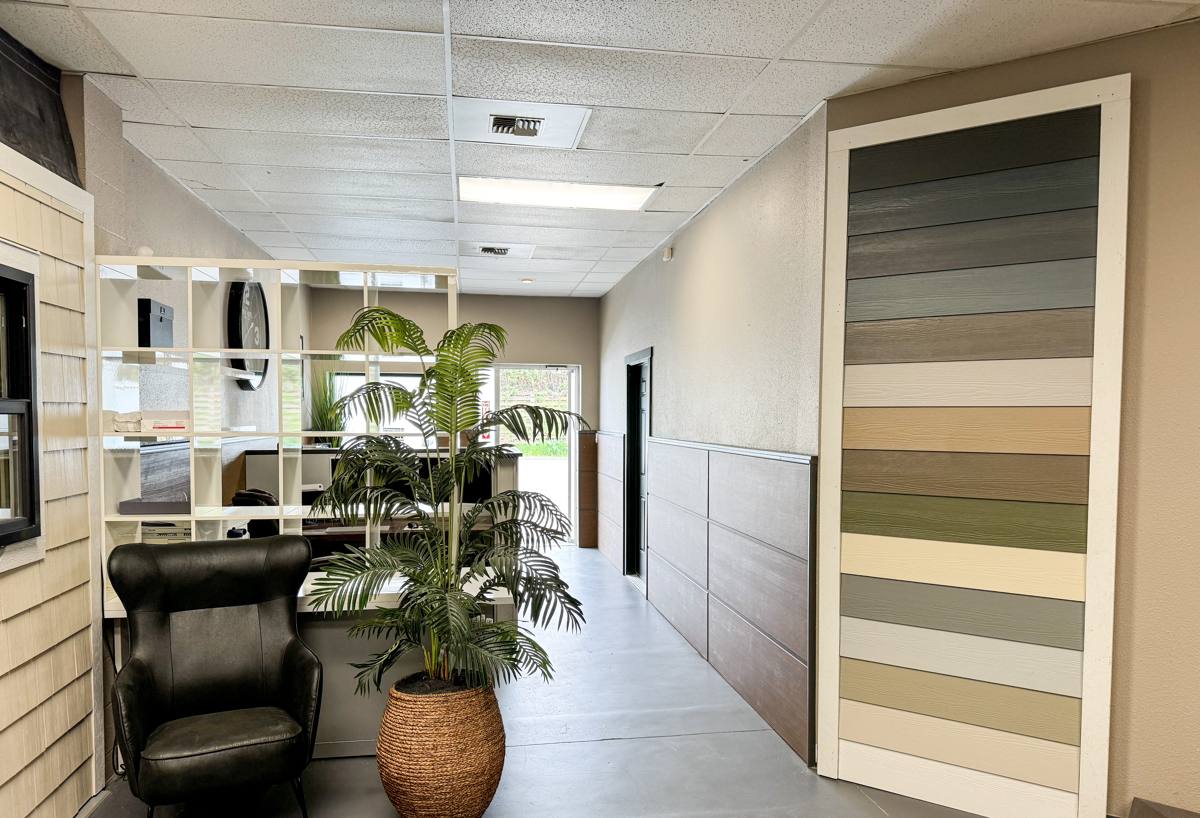
James Hardie fiber cement is non-combustible, doesn't rot, and comes with a factory-applied ColorPlus finish that's baked on under controlled conditions rather than field-painted — which matters directly for salt exposure and moss-season moisture, since the finish isn't relying on a homeowner's repaint schedule to keep performing. Hardie also makes climate-specific product lines, including an HZ5 line engineered for regions like ours with more moisture exposure. None of this means Hardie is maintenance-free or installer-proof — it still has to go on correctly, which is most of what the rest of this page covers.
James Hardie Product Lines That Fit a Columbia Home
Hardie makes several product profiles, and the right one depends on the home's existing architecture, trim style, and how much of the wall is exposed to weather.
| Product Line | Typical Use | Why It Fits Here |
|---|---|---|
| HardiePlank Lap Siding (HZ5) | Most common wall siding, traditional and craftsman-style homes | Engineered moisture resistance for wetter regions; widest color and profile selection |
| HardieShingle | Accent gables, dormers, Cape Cod-style detailing | Matches older Columbia home character without wood's upkeep |
| HardiePanel | Board-and-batten look, modern or farmhouse styles | Fewer horizontal seams, which matters where wind-driven rain is common |
| HardieTrim | Window and door surrounds, corner boards, fascia | Non-wood trim reduces the weak points where water intrusion usually starts |
What a Correct Installation Actually Involves
Fiber cement siding's real-world performance depends far more on installation detail than most homeowners expect. The material itself is durable; the failures we see on older jobs almost always trace back to shortcuts in these areas:
- A continuous weather-resistive barrier behind the siding, lapped correctly so water sheds outward instead of pooling
- Proper flashing at every window, door, and roof-to-wall intersection — the single most common failure point in driving-rain climates
- Correct fastener type, spacing, and placement per Hardie's published installation specs, not generic carpentry judgment
- Minimum clearance from grade, roof lines, and decks so moisture and moss-prone debris don't sit against the bottom edge
- Sealed and painted cut edges wherever a factory-finished board is trimmed on site
- Caulking only at the joints Hardie's specs call for — over-caulking traps moisture just as often as under-caulking lets it in
- Adequate spacing or a rain screen gap where wall assemblies benefit from a drainage plane behind the siding
Any one of these done wrong can undercut the product's performance regardless of which fiber cement brand went on the wall.
Our Process, Start to Finish
A siding project on a Columbia home generally moves through the same sequence, though the details shift depending on the age and condition of the house:
- Inspection and estimate — we look at the existing siding, trim condition, and any visible signs of past moisture problems before quoting anything.
- Tear-off and sheathing check — once old siding is off, we can actually see the sheathing and framing underneath, which is often the first real look anyone's had at that wall in years.
- Repair as needed — rot or water damage found at this stage gets addressed before anything new goes up; covering a problem is worse than finding it.
- Weather-resistive barrier installation — a fresh, continuous moisture barrier goes on correctly lapped before any siding touches the wall.
- Flashing and trim — windows, doors, and transitions get flashed to shed water outward, not just caulked over.
- Siding installation — Hardie boards go up to manufacturer spec for fastening, spacing, and clearance.
- Finish work — cut edges sealed, trim installed, touch-up paint matched to the ColorPlus finish where needed.
- Final walkthrough — we go over the finished job with the homeowner before calling it done.
Cost Factors for a Columbia Siding Project
Every home is different, and we're not going to quote a number here that doesn't reflect your actual house. What we can do is walk through what drives cost up or down:
| Factor | Effect on Cost |
|---|---|
| Home size and wall area | Largest single driver of material and labor cost |
| Condition of existing sheathing | Rot repair found during tear-off adds cost but prevents covering a bigger problem |
| Product line and profile | Shingle and board-and-batten profiles generally run higher than standard lap |
| Trim complexity | Homes with more corners, gables, and window trim take more labor per square foot |
| Site accessibility | Tight lots, multi-story walls, or limited staging space affect labor time |
| Color and finish | Factory ColorPlus finishes vary slightly in cost by color family |
Why Hiring a Crew That Already Works in Columbia Matters
A lot of Columbia's housing stock predates modern building practices, which means original sheathing, older framing methods, and sometimes decades of prior repairs hiding behind the existing siding. A crew that regularly works this neighborhood has seen that construction pattern before and knows what to expect once tear-off starts, rather than being surprised by it. Familiarity with the City of Bellingham's permitting requirements also keeps a project moving instead of stalling on paperwork. And there's a practical microclimate reason too — blocks closer to the bay take more direct salt and wind exposure than those a half-mile inland, and a crew that works this area regularly builds in that judgment rather than treating every Whatcom County job identically.
Maintenance After the Job Is Done
James Hardie siding installed correctly is genuinely low-maintenance, but "low" isn't "none," especially this close to the bay. We recommend an annual rinse-down to clear salt residue and moss spores before they get a foothold, a periodic look at caulk joints around windows and doors since caulk ages faster than the siding itself, and prompt attention to any wood trim that was painted on site, since factory-finished Hardie boards will consistently outlast field-applied paint on adjacent trim pieces.
If you're weighing a siding replacement on a Columbia home and want a straight answer about what your house actually needs, we're happy to take a look and put together a free, no-pressure estimate.