 Bellingham Siding
 Silver Beach Sits Where Bay Weather Meets the House
Silver Beach is one of Bellingham's older waterfront-adjacent neighborhoods, and homes here take on a specific combination of punishment that inland Whatcom County houses don't deal with in the same way. Proximity to Bellingham Bay means salt-laden air moving across exterior surfaces, wind-driven rain that hits siding at an angle instead of falling straight down, and a long, damp shoulder season where moss and algae get a real foothold on anything that stays wet too long. None of this is exotic weather. It's just relentless, and it's exactly the kind of exposure that separates siding that holds up for decades from siding that starts showing problems in five or ten years.
This page is about one thing: putting James Hardie fiber cement siding on Silver Beach homes correctly, with an installation approach that accounts for what this specific stretch of Bellingham actually throws at a house year-round.
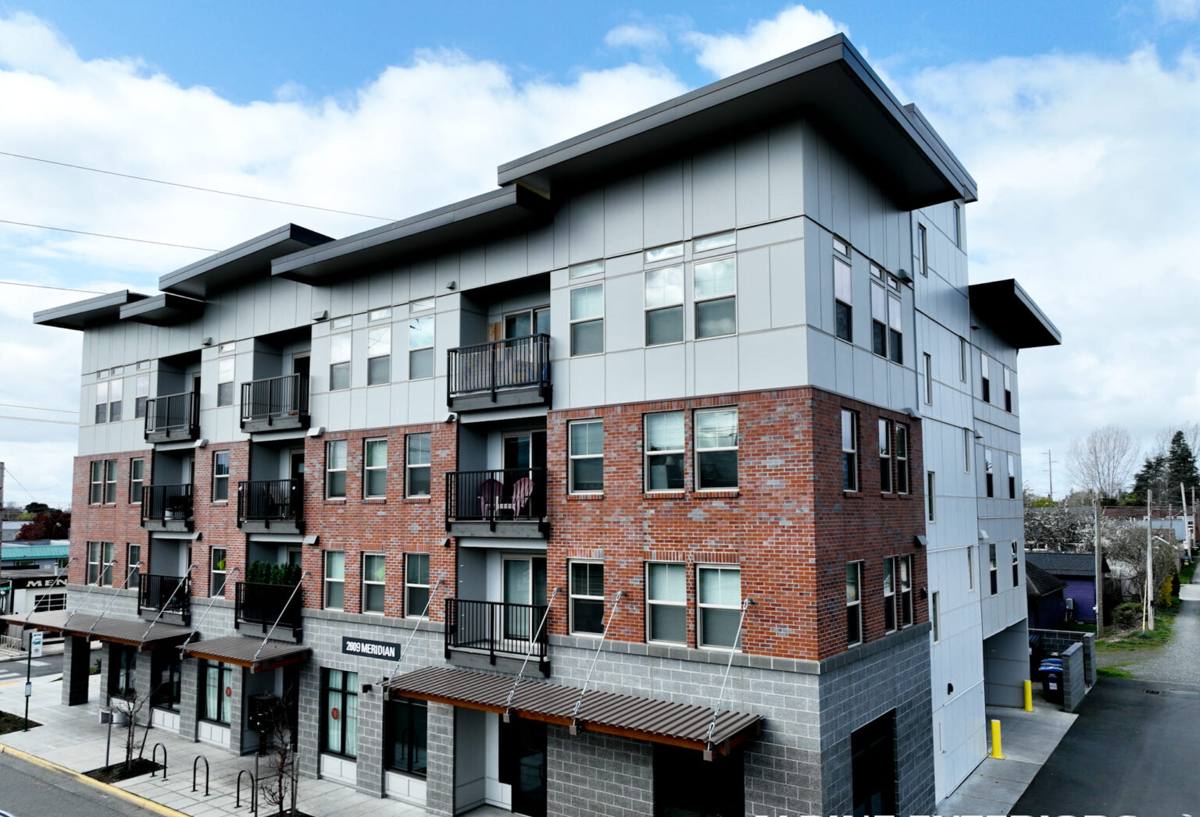
What Salt Air, Driving Rain, and Moss Season Actually Do to Siding
Salt Air
Salt spray carried off the bay settles on exterior surfaces and accelerates corrosion of anything metal — fasteners, flashing, trim screws. It also draws moisture to surfaces, keeping siding damper for longer after a rain event than the same siding would stay in a drier inland location. Materials and fasteners that aren't rated for this kind of exposure corrode faster, and corroding fasteners are one of the more common hidden causes of siding failure.
Driving Rain
Wind off the water doesn't let rain fall straight down — it pushes it sideways into wall assemblies, seams, and any gap in flashing or caulking. A siding system that's only built to shed vertical rainfall will let water find its way behind panels over time. Correct lap coverage, properly lapped flashing, and a functioning drainage plane behind the siding matter more here than they would in a sheltered, inland lot.
Moss Season
Bellingham's damp fall-through-spring stretch gives moss and algae months of favorable conditions on any siding surface that stays shaded and moist. This is mostly a maintenance and finish-quality issue rather than a structural one, but it affects how a home looks and how often it needs attention, and it's worth planning for from the start rather than fighting after the fact.
Why We Standardized on James Hardie for This Kind of Exposure
We install James Hardie fiber cement siding exclusively. We don't install vinyl, LP SmartSide, Cemplank, Allura, primed spruce, or cedar, and that's a deliberate professional standard, not a sales pitch. Each of those alternatives has real strengths, but each also has a trade-off — moisture sensitivity, expansion and contraction behavior, finish durability, or long-term maintenance demand — that we don't think holds up as well against a coastal Bellingham exposure over a 30-plus year ownership horizon.
James Hardie's fiber cement formulation is engineered specifically around regional climate exposure, including moisture and humidity conditions common to the Pacific Northwest. It's non-combustible, it doesn't rot, and it resists the swelling and cupping that wood-based and wood-fiber products can experience when they take on repeated moisture cycles. Hardie's ColorPlus factory finish is baked on under controlled conditions rather than field-applied, which gives a more consistent, UV- and weather-resistant finish than jobsite painting typically achieves — and a finish that holds color longer is one that shows less visible wear from salt exposure and repeated wet-dry cycling.
None of that replaces good installation. Hardie siding installed poorly can still fail early. But a correctly installed Hardie system gives Silver Beach homeowners a genuine climate advantage over the alternatives, backed by a strong transferable manufacturer warranty when installation specs are followed.
What a Correct Installation Actually Involves Here
"James Hardie siding" is a product. A siding job that performs for decades in this environment is a system, and the details matter more in a bay-adjacent neighborhood than they do somewhere sheltered.
- Drainage plane and rain screen gap: A proper water-resistive barrier and, where called for, a ventilated gap behind the siding lets any moisture that does get past the surface drain and dry out instead of sitting against the wall sheathing.
- Flashing at every penetration: Windows, doors, hose bibs, light fixtures, and roof-to-wall intersections all need correctly lapped flashing so wind-driven rain can't work its way behind the cladding at those weak points.
- Fastener selection: Corrosion-resistant fasteners, installed at the manufacturer's specified pattern and depth, matter more here given salt air exposure. Under- or over-driven fasteners are a common source of early cracking and water intrusion.
- Correct lap and clearance: Proper overlap between courses, and correct clearance from grade, decks, roofs, and other siding-to-surface transitions, keeps water moving down and off the wall instead of collecting at horizontal joints.
- Caulking and joint treatment done to spec: Butt joints and trim intersections need the right sealant, applied correctly, in the locations Hardie's install guide actually calls for — not everywhere, and not nowhere.
- Painted or factory-finished cut edges: Any field-cut edge needs to be sealed per Hardie's specifications so raw material isn't left exposed to moisture.
Skipping or rushing any one of these doesn't necessarily show up in month one. It shows up in year five or year ten, as a callback nobody wants — a stain at a window head, a soft spot at a butt joint, moss taking hold where water has been sitting instead of draining.
How Our Process Works, Start to Finish
- Walkthrough and assessment: We look at the existing siding and wall assembly, note problem areas — moisture staining, soft sheathing, failed flashing — and talk through what your home's exposure actually calls for.
- Written estimate: You get a clear scope covering tear-off (if applicable), the Hardie product line and color, trim details, and what the drainage and flashing plan looks like for your home specifically.
- Prep and moisture check: Before new siding goes up, we address anything compromised underneath — damaged sheathing, missing or failed house wrap, existing water damage — rather than covering it over.
- Installation to manufacturer spec: Fastening, flashing, clearances, and joint treatment are done to James Hardie's published installation guidelines, which is also what keeps the manufacturer warranty intact.
- Final walkthrough: We go over the finished job with you, including what routine maintenance looks like given your home's specific exposure to sun, shade, and weather.
Comparing Siding Options for a Bay-Adjacent Bellingham Home
| Factor | James Hardie Fiber Cement | Vinyl | Wood / Primed Spruce / Cedar |
|---|---|---|---|
| Moisture response | Doesn't absorb, swell, or rot | Doesn't absorb, but can warp or crack in temperature swings | Absorbs moisture; prone to rot without diligent maintenance |
| Salt air / corrosion resistance | Material itself doesn't corrode; fasteners must be rated | Material resists corrosion; fasteners still a factor | Requires ongoing sealing to resist salt-driven decay |
| Fire resistance | Non-combustible | Combustible, can melt/deform near heat | Combustible |
| Finish durability | Factory-baked ColorPlus finish, long fade resistance | Color molded through material, can fade and chalk | Field-applied paint or stain, shorter repaint cycle |
| Maintenance in moss-prone conditions | Low; occasional wash keeps finish clean | Low, but can trap moss in seams/laps | Higher; wood surfaces hold moisture that feeds moss/mildew |
| Typical service life when correctly installed | Decades, backed by manufacturer warranty | Long, but seams and fasteners are common failure points | Shorter without consistent, ongoing maintenance |
Living With Hardie Siding in a Silver Beach Microclimate
Even the right product benefits from a little homeowner attention, especially given the moss and algae pressure common to this part of Bellingham. None of this is heavy labor — it's mostly about not letting small things sit unaddressed.
- Rinse siding once or twice a year, focusing on shaded, north-facing, or tree-covered walls where moss and algae take hold fastest.
- Keep gutters clear so overflow isn't running down siding faces and keeping them wet longer than necessary.
- Trim back vegetation that shades siding or holds moisture against it, particularly on walls facing away from direct sun.
- Have caulking and joint sealant checked periodically — sealant is a wear item and eventually needs refreshing, even on a well-installed job.
- Watch for any staining at window heads, butt joints, or bottom courses — early signs of a flashing or drainage issue are much cheaper to fix than what they turn into if ignored.
What Drives Cost on a Job Like This
We don't publish blanket per-square-foot pricing because it genuinely depends on your home's condition and scope, but the main cost drivers on a Silver Beach James Hardie project are consistent:
| Cost Factor | Why It Matters |
|---|---|
| Tear-off vs. new construction | Removing existing siding, disposing of it, and addressing what's found underneath adds labor and sometimes repair scope |
| Sheathing and moisture damage found during prep | Compromised sheathing has to be repaired before new siding goes up — this isn't optional and isn't always visible beforehand |
| Home size and wall complexity | More corners, dormers, and trim details mean more cutting, flashing, and labor time |
| Hardie product line chosen | Lap siding, panel systems, and shingle-style products carry different material and labor costs |
| Color and finish selection | Factory ColorPlus finishes vs. field-primed-for-paint options affect both material cost and long-term maintenance |
Why It Matters That We Already Work Silver Beach
A crew that's worked this neighborhood already knows what to expect before the first panel goes up: how exposed a given wall face is to bay wind, where moss tends to establish first on homes in this area, and what the flashing details need to look like to hold up against driving rain rather than just ordinary rainfall. That's not something you can fully substitute with a generic installation manual. It shows up in fewer callbacks, fewer surprises during tear-off, and a finished job that's built for the actual conditions your house sits in — not a textbook average.
If you're weighing a siding project for a Silver Beach home, we're happy to walk the exterior with you, point out what we're seeing, and put together a straightforward, no-pressure estimate for James Hardie siding done right for this stretch of Bellingham. There's a form below to get that started.