 Bellingham Siding
 Roofing a Lynden Home in Whatcom County's Marine Climate
Lynden sits inland from Bellingham Bay, but it still lives under the same wet, marine-influenced weather pattern that shapes roofing decisions across Whatcom County. Long stretches of steady, driving rain from fall through spring keep roof surfaces saturated for days at a time. Humidity carried in off the Puget Sound region doesn't fully dissipate before it reaches the valley, so even roofs that never see standing water still deal with prolonged dampness. Add in the tree cover and shaded north-facing slopes common on Lynden lots, and you get a long moss season that can run nearly year-round on the wrong roof.
None of that is unusual for this part of Washington. But it does mean a roof replacement here isn't a generic swap-the-shingles job. The materials, ventilation, and underlayment choices that work fine in a dry climate can fail early in ours. A roof built for Lynden has to shed water fast, resist moss and moisture intrusion at every seam, and keep air moving underneath so trapped humidity doesn't rot the deck from below.
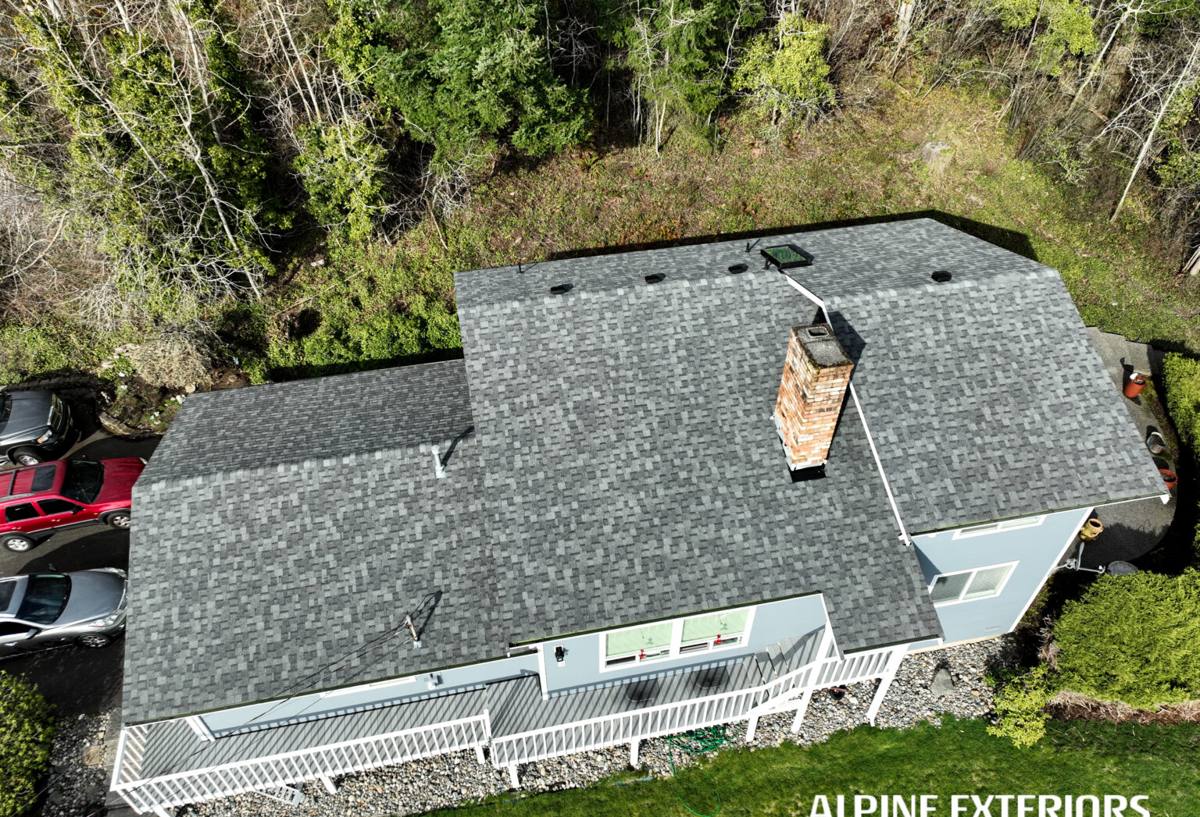
Signs Your Roof Needs Replacement, Not Another Repair
Most homeowners call about a leak. The real question is whether that leak is a symptom of one bad spot or a roof that's reached the end of its usable life. A few signs tend to separate a repair situation from a replacement situation:
- Granule loss heavy enough that you're finding shingle grit in gutters or downspout runoff
- Shingles that are cupping, curling, or cracking across multiple slopes, not just one section
- Moss that keeps returning within a season or two of cleaning, even after treatment
- Soft spots or noticeable give when walking the roof, which usually points to deck damage underneath
- Daylight visible through the roof deck from inside the attic, or water staining on rafters
- A roof that's already had two or more patch repairs in different areas within the last few years
One or two of these can often be addressed with a targeted repair. Several at once, especially combined with a roof that's already past 20-25 years old, usually means repair costs start stacking up faster than a full replacement would.
What a Correct Roof Replacement Actually Involves
Full Tear-Off, Not a Layover
We remove the existing roofing down to the deck rather than layering new shingles over old ones. A layover traps moisture that's already worked its way into the old material, and it hides deck problems that need to be caught before they get covered up again. In a climate that stays wet as long as ours does, that trapped moisture is exactly what accelerates rot.
Deck Inspection and Repair
Once the old roofing is off, we inspect the decking for soft spots, delamination, or water staining. Any damaged sections get replaced before anything new goes down. Skipping this step is one of the most common ways a "new roof" ends up with problems within a few years.
Underlayment Built for Wet Weather
A synthetic, water-resistant underlayment goes down across the full roof, with self-adhering ice-and-water membrane at the vulnerable points: eaves, valleys, and around any penetrations. In a region with as much sustained rainfall as Whatcom County gets, this secondary water barrier is doing real work, not just satisfying code.
Flashing at Every Transition
Chimneys, skylights, vent pipes, and roof-to-wall transitions are where the vast majority of leaks start. New step flashing, counter-flashing, and pipe boots get installed at every one of these points rather than reusing old flashing that's already fatigued.
Ventilation That Matches the Home
Intake at the soffits and exhaust at the ridge need to work together so air actually moves through the attic space. We size and balance this to the specific roof, not a one-size-fits-all vent count.
Material Options for Lynden's Climate
There isn't one "best" roofing material for every home. The right choice depends on your roof's slope, how much shade and tree cover it gets, and your tolerance for maintenance. Here's how the common options stack up for a wet, moss-prone climate:
| Material | Typical Lifespan | Moss/Moisture Resistance | Maintenance | Relative Cost |
|---|---|---|---|---|
| 3-Tab Asphalt Shingle | 15-20 years | Lower unless algae-resistant granules specified | Moderate — benefits from periodic moss treatment | Lowest |
| Architectural/Dimensional Shingle | 25-30 years | Good with algae-resistant (copper/zinc granule) options | Low to moderate | Mid-range |
| Standing Seam Metal | 40-50+ years | Excellent — sheds moss and moisture well | Low | Higher upfront |
| Cedar Shake | 20-30 years with upkeep | Requires active maintenance to resist moss and rot | High | Mid to higher |
For most Lynden homes, we lean toward architectural shingles with algae-resistant granules or standing seam metal on shaded or heavily-treed lots, simply because both hold up better against sustained moisture without demanding constant upkeep. Cedar shake can look great, but in a climate this wet it needs a homeowner willing to stay on top of maintenance — we'll always tell you that honestly rather than sell you a product that doesn't fit your lifestyle.
Cost Factors Worth Understanding
Every roof is different, so we won't quote a number without seeing the job, but a few factors consistently move the price:
| Factor | Why It Matters |
|---|---|
| Roof pitch and complexity | Steeper slopes and multiple valleys or dormers take more labor and safety equipment |
| Deck condition | Rotted or delaminated sheathing found during tear-off adds material and labor |
| Layers to remove | Multiple existing layers cost more to strip and haul away |
| Material choice | Asphalt, metal, and cedar carry very different material costs per square |
| Ventilation upgrades | Adding or correcting intake/exhaust venting is easiest to do during a full replacement |
Moss, Moisture, and Why Ventilation Matters More Here
Moss doesn't just look bad — it holds moisture directly against the roofing material, and on shingles it works into the granule layer and lifts edges over time. In a climate with as long a wet season as Whatcom County's, moss can establish itself on north-facing and shaded slopes within a single season if nothing's done about it. Trimming back overhanging branches, keeping gutters clear so water doesn't pool at the eaves, and choosing algae-resistant materials all help slow it down.
The other half of the equation is what's happening under the roofing. Warm, moist air from inside the house rises into the attic, and if it can't escape through proper ridge and soffit ventilation, it condenses against the underside of the deck. Over years, that's a slower but more expensive problem than moss: rotted sheathing, compromised insulation, and shortened shingle life from the inside out. A correctly balanced ventilation system is one of the least visible parts of a roof replacement and one of the most important for a house in this climate.
Our Process for a Lynden Roof Replacement
- On-site inspection and honest assessment of whether repair or replacement makes sense
- Written estimate covering material options, ventilation plan, and a clear scope of work
- Scheduling around weather windows — we don't tear off a roof ahead of a forecast we can't beat
- Full tear-off, deck inspection, and any necessary sheathing repair
- Underlayment, ice-and-water membrane, and new flashing at every penetration and transition
- Installation of the chosen roofing material with balanced intake and exhaust ventilation
- Full site cleanup, including magnetic sweep for nails and debris
- Final walkthrough so you can see the completed work and ask questions before we consider the job done
Why a Locally Established Crew Matters for This Job
Roofing crews that work primarily in drier climates sometimes underspecify underlayment or skip ventilation upgrades that don't matter where they're from. A crew that already works Lynden and the surrounding Whatcom County towns knows which slopes on which lot orientations tend to hold moss, which older neighborhoods commonly have deck issues under the existing roofing, and how to schedule tear-offs around a weather pattern that doesn't always cooperate. That local familiarity shows up in fewer surprises mid-project and a roof that's actually built for the conditions it has to survive, not a generic specification pulled from a national average.
Before You Replace: A Homeowner's Checklist
- Note any interior water stains, attic light gaps, or musty odors and mention them at the estimate
- Check whether your current roof has one layer or two — this affects tear-off scope
- Ask what underlayment and ice-and-water coverage is included, not just the shingle brand
- Confirm the ventilation plan is being addressed, not just reusing existing vents
- Get the warranty terms in writing — both manufacturer and workmanship coverage
- Plan for driveway and yard access for material delivery and debris removal
- Ask how weather delays are handled, given how often our forecasts change
Ready to Talk About Your Roof?
If your Lynden roof is showing its age, holding onto moss it shouldn't, or you just want an honest read on how much life it has left, we're glad to take a look. There's a free, no-pressure estimate form below — reach out and we'll walk the roof with you and tell you straight what we see.