 Bellingham Siding
 Metal Roofing in Puget: Built for This Corner of Bellingham's Climate
Puget is a residential area within the greater Bellingham community, close enough to the water that homes here take a heavier dose of the marine weather that shapes exterior work across Whatcom County. Salt-laden air moves in off nearby waterways, rain arrives sideways as often as it falls straight down, and there's a long stretch of the year — often five months or more — where shaded, damp roof surfaces never fully dry out between storms. A roof built for a drier climate, or installed without those specific loads in mind, tends to show its age here faster than most homeowners expect. We work on Puget roofs regularly, and metal roofing has become one of the systems we recommend most often for homes carrying this level of coastal exposure.
This page is specifically about metal roofing for Puget homes — what the local climate demands from it, what a correct installation actually involves, and how we approach the work differently than we would somewhere drier and more sheltered.
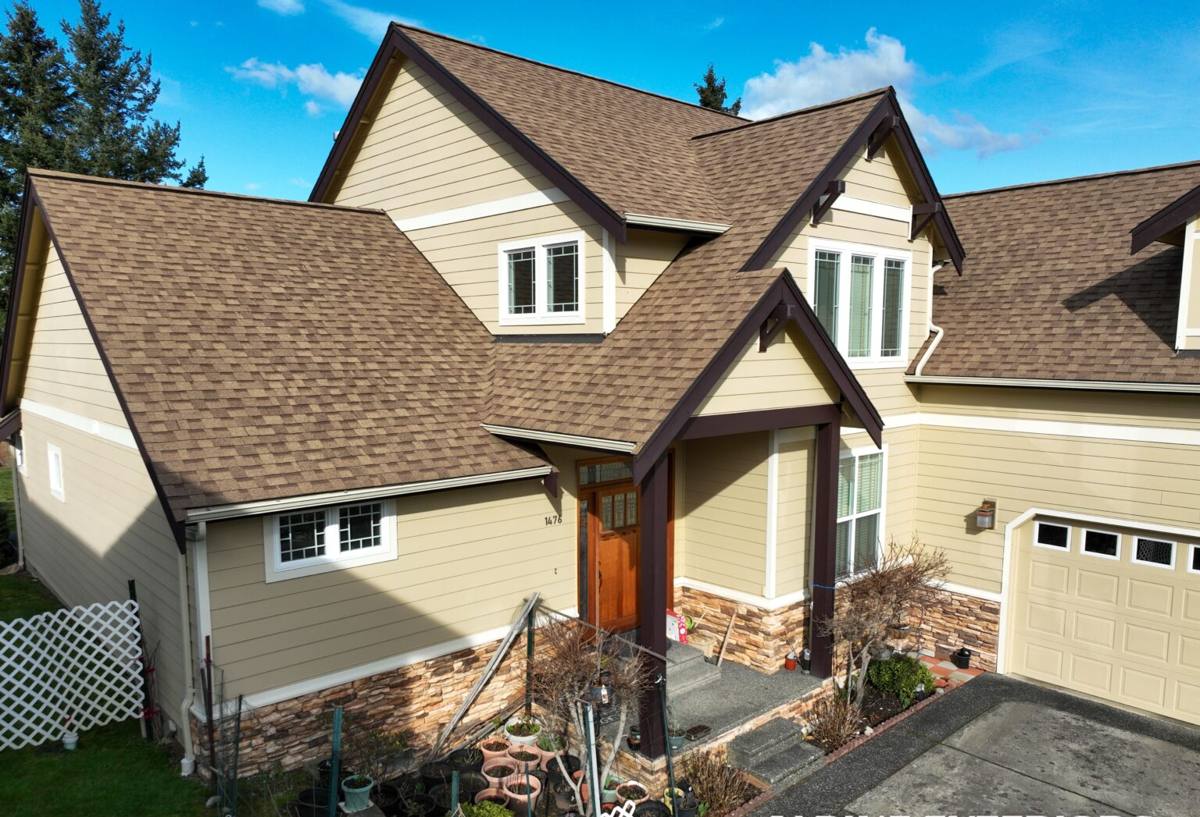
What Salt Air, Driving Rain, and a Long Moss Season Do to a Roof
Salt Air and Slow Corrosion
Homes in Puget sit close enough to open water to pick up a steady, low-level dose of salt in the air, and that salt is hard on anything metal that isn't specified for it. Cheap fasteners, uncoated flashing, and lower-grade panel finishes corrode faster here than they would ten or fifteen miles inland. It's rarely dramatic — a roof doesn't fail overnight from salt exposure — but rust bleeding from a fastener head or a flashing seam that's lost its coating is usually a sign the wrong hardware went on the roof to begin with.
Wind-Driven Rain
Rain in this part of Whatcom County doesn't reliably fall straight down. Wind pushes it sideways into ridge caps, around chimney flashing, and under any panel seam or trim detail that isn't properly lapped and sealed. That's a tougher test than a simple annual rainfall total suggests, and it's exactly where a roof with weak flashing details or a rushed fastening job tends to leak first — not in the open field of the roof, but at the transitions and penetrations.
A Long Moss Season
Shaded roof planes, north-facing slopes, and anything under tree cover stay damp longer here than sun-exposed areas, and that dampness is what lets moss establish itself. Moss on a roof isn't just cosmetic — it holds water against the surface below it and, on porous or textured roofing materials, can work its way into seams and joints over time. Metal roofing handles this part of the climate better than most materials, which is one of the main reasons it comes up so often in conversations with Puget homeowners.
Why Metal Roofing Holds Up Well in This Climate
A correctly specified and installed metal roof addresses the three climate factors above about as directly as any roofing material can:
- Smooth, non-porous surface: Metal panels don't absorb moisture the way shingle or shake products can, which means less material for moss and algae to grip onto and less water retained against the roof surface after a storm.
- Fast water shed: A steep or moderately pitched metal roof sheds rain quickly, which matters when driving rain is hitting the roof at an angle rather than falling straight down.
- Long service life: A well-installed metal roof commonly outlasts asphalt shingles by two to three times, which matters on a coastal-exposure property where materials are already working harder than they would inland.
- Coating and finish options built for coastal exposure: Quality metal roofing systems use factory-applied coatings specifically formulated to resist salt-air corrosion and UV fading, rather than relying on field-applied paint that degrades faster.
Metal roofing isn't automatically the right call for every home or every budget, and we'll say so plainly if a different system is a better fit for your roof's pitch, structure, or price point. But for a Puget property taking the fuller version of this county's coastal weather, it's usually near the top of the list.
Choosing the Right Metal Roofing System
"Metal roofing" covers a range of products with real differences in performance, appearance, and cost. Here's how the main options compare for a home in this climate:
| System | Moss & Moisture Behavior | Salt-Air Durability | Typical Maintenance | Realistic Lifespan Here |
|---|---|---|---|---|
| Standing seam | Excellent — smooth panel, concealed fasteners, minimal seams for water to enter | Very good with a coastal-rated finish and stainless or coated fasteners | Low; occasional visual check of seams and flashing | 40-60 years |
| Exposed-fastener panel | Good, but exposed fastener heads are a maintenance point over time | Fasteners are the weak point unless upgraded to a coastal-grade type | Moderate; fastener and gasket inspection every few years | 25-40 years, largely dependent on fastener condition |
| Stone-coated steel shingle/tile | Very good; sheds water well while mimicking a shingle or tile look | Good with correct panel and fastener specification | Low to moderate | 30-50 years |
Standing seam tends to be our default recommendation for the most exposed Puget properties because it has the fewest points where water and salt air can get at the fasteners underneath. Exposed-fastener panel systems cost less up front and are a reasonable choice for a less-exposed roof plane, but we'll be direct about the added long-term maintenance that comes with visible fasteners in a salt-air environment. We'll walk your specific roof and talk through which system actually fits your budget and your exposure, rather than defaulting to whichever is easiest to sell.
What Correct Metal Roof Installation Involves
Metal roofing has a reputation for being low-maintenance, and it earns that reputation only when it's installed correctly. The material itself isn't what fails on a coastal-exposure roof — it's almost always a detail underneath or around it.
Flashing and Water Management
Every valley, ridge, chimney, and roof-to-wall transition needs flashing that's properly lapped, fastened, and sealed for a metal system specifically — not adapted from a shingle-roof detail. This is where wind-driven rain finds its way in when it's going to, and it's the single detail we spend the most time getting right on a Puget install.
Fastening and Panel Movement
Metal panels expand and contract with temperature swings more than most roofing materials, and a system that doesn't account for that movement will eventually work fasteners loose or stress panel seams. Standing seam systems handle this with concealed clips designed to let the panel move without compromising the seal; exposed-fastener systems need fasteners set correctly — not overdriven, not underdriven — to keep their gaskets sealing properly over years of movement.
Avoiding Galvanic Corrosion
Mixing incompatible metals — the wrong fastener in the wrong panel material, or metal roofing in direct contact with the wrong flashing alloy — sets up galvanic corrosion that eats away at the less noble metal, often faster than salt air alone would. Getting fastener and flashing material right for the specific panel system isn't optional detail work in a coastal environment like Puget's; it's one of the more common causes of early metal roof failure we see on jobs that weren't specified correctly the first time.
Signs a Puget Roof Needs Attention
- Rust streaking below fastener heads or at panel seams
- Moss or dark staining building up in shaded valleys or on north-facing roof planes
- Panels that look wavy, oil-canned, or loose along a seam
- Flashing that's lifted, gapped, or missing sealant around chimneys and vents
- Water staining on interior ceilings near exterior walls, especially after a windstorm
- Fastener heads that are backing out or show gasket wear
- Granular loss or fading well ahead of a system's expected finish life
Any one of these is worth a professional look before it turns into a leak. On a metal roof, catching a flashing or fastener issue early is usually a straightforward repair rather than a costly one.
Repair, Recoat, or Replace?
Not every issue on a metal roof calls for full replacement, and we don't default to recommending one. A localized flashing failure, a handful of corroded fasteners, or storm damage to one panel run can often be repaired without touching the rest of the roof. A roof with widespread coating failure but a sound structure underneath can sometimes be cleaned, treated, and recoated rather than torn off. Full replacement usually makes sense when corrosion has spread across multiple panel runs, the underlying deck has taken on moisture damage, or an aging exposed-fastener system is reaching the point where fastener replacement would cost nearly as much as a new install. We'll tell you honestly which situation your roof is actually in.
Why a Local Crew That Already Works Puget Matters
A crew that installs metal roofing across this part of Bellingham regularly understands how salt air, driving rain, and a long moss season behave on real roofs over time, not just how a panel system performs on a spec sheet. That experience shows up in practical decisions on install day: which fastener grade is worth the extra cost on a given roof plane, how much flashing coverage a specific valley actually needs, and which panel system fits a home's exposure without over- or under-building for it. Puget's proximity to the water means it sees a fuller version of the coastal weather that affects roofing across Whatcom County, and a crew with hands-on local experience treats that seriously instead of applying a generic approach built for a drier, more sheltered site.
What to Expect When You Call Us
- A walk of the roof to assess its current condition, pitch, and exposure
- An honest read on whether you're looking at a repair, a recoat, or a full replacement
- A clear explanation of which metal roofing system fits your home and your budget, and why
- A written estimate with no pressure to sign on the spot
If your Puget home needs a new roof, a repair, or just an honest second opinion on what a metal roof would actually take, we're glad to take a look. Reach out using the form below to schedule a free, no-pressure estimate.