 Bellingham Siding
 Roofing Sunnyland Homes in Bellingham's Marine Climate
Sunnyland sits close enough to Bellingham Bay and Whatcom Creek that its homes take a steady beating from the same weather pattern that defines this part of Whatcom County: salt-tinged air rolling in off the water, wind-driven rain that doesn't fall so much as get pushed sideways under eaves, and a long, damp moss season that runs from fall through spring. A roof here isn't just shedding water from above — it's fighting moisture that works its way in from the sides, settles into shaded valleys, and never fully dries out between storms. New roof installation in this neighborhood has to account for all of that from the first layer of underlayment to the last ridge cap, not just the shingle color.
Many of the houses in and around Sunnyland were built decades ago, with roof framing and ventilation designed for a different era of materials. When we install a new roof here, we're not just replacing what's on top — we're often correcting ventilation gaps, undersized flashing, and underlayment choices that were fine for their time but don't hold up to what this climate throws at a roof year after year.
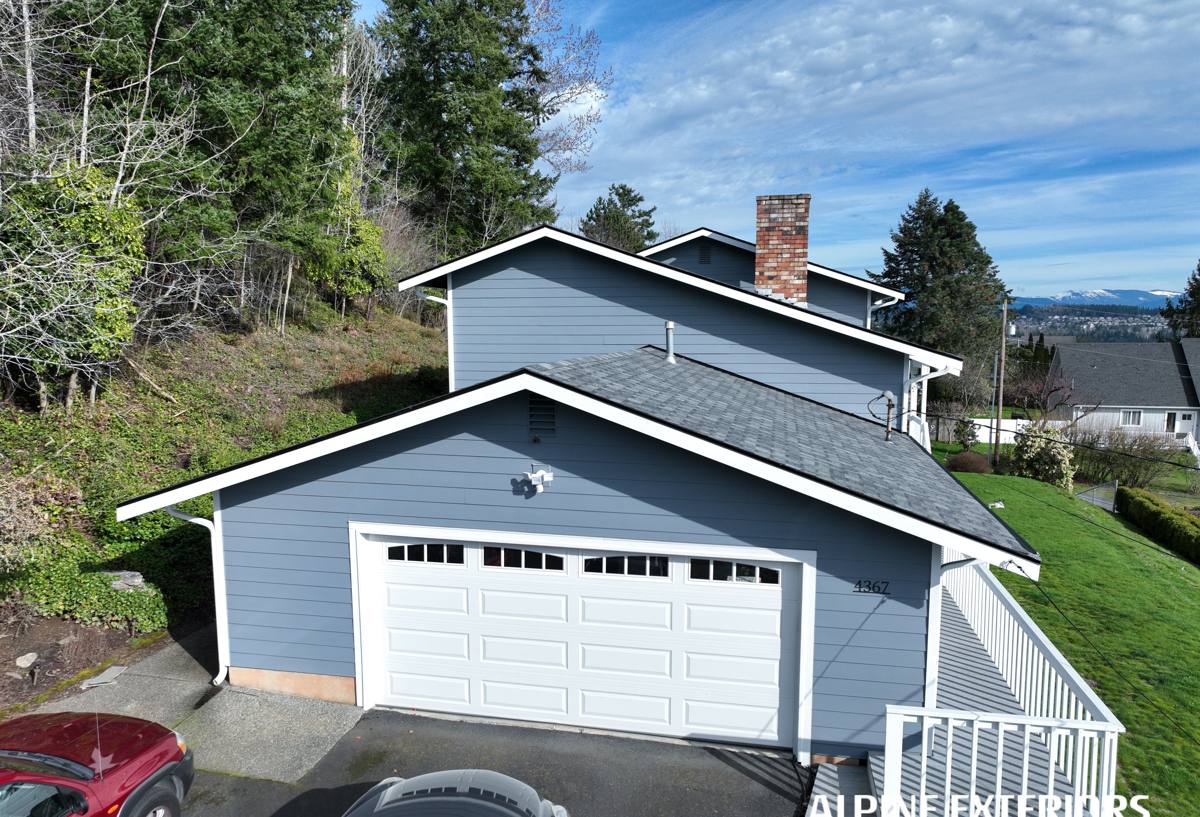
What Bellingham's Climate Actually Does to a Roof
Salt Air and Metal Fatigue
Proximity to Bellingham Bay means airborne salt settles on every exterior surface, including your roof. Over years, that salt content accelerates corrosion on unprotected or lower-grade metal flashing, fasteners, and vent components. It's a slow process, but it's steady, and it's one reason we default to corrosion-resistant metals and fasteners on homes this close to the water rather than treating every roof the same regardless of location.
Driving Rain and Wind-Driven Water
Bellingham doesn't just get a lot of rain — a good share of it arrives at an angle, pushed by wind off the Sound. That kind of weather finds every weak seam, every under-lapped shingle course, and every place where flashing was installed a little too casually. Roofs here need tighter lap tolerances and properly integrated flashing at every penetration, valley, and wall intersection, because water that would simply run off in a calmer climate gets driven sideways and upward here.
Moss, Shade, and Slow Drying
Sunnyland's mature tree cover is part of what makes the neighborhood pleasant to live in, but it also means a lot of roof surfaces stay shaded and damp well after a storm passes. Combined with our long wet season, that's ideal growing conditions for moss and algae. Left unaddressed, moss holds moisture against the roofing material, lifts shingle edges, and shortens the life of the roof significantly. A new roof installation is the best opportunity to build in moss resistance from day one, rather than fighting it after the fact.
Signs a Sunnyland Home Needs a New Roof, Not a Repair
- Granule loss showing up in gutters or at downspout outlets, especially after wind or heavy rain
- Moss established at the ridge or in valleys that keeps returning after cleaning
- Curling, cupping, or cracked shingles, particularly on south- and west-facing slopes
- Daylight visible through the roof deck from inside the attic
- Soft or spongy spots when walked on, indicating deck rot underneath
- Repeated leaks around chimneys, skylights, or valleys despite past patch repairs
- Roof is at or beyond the manufacturer's expected service life for its material and exposure
If you're seeing two or more of these, a patch repair is usually a short-term fix on borrowed time. It's worth having the whole roof evaluated rather than chasing individual leaks one at a time.
Choosing the Right Roofing Material for This Neighborhood
There's no single "best" roofing material — the right choice depends on your home's exposure, roof pitch, budget, and how much shade and moisture the roof deals with. Here's how the common options stack up specifically for a Sunnyland-type site with mixed sun and tree shade near the water:
| Material | Moss/Moisture Resistance | Wind-Driven Rain Performance | Typical Lifespan Here |
|---|---|---|---|
| Architectural asphalt shingle | Good with treated/zinc-strip options | Very good when properly flashed | 25–30 years |
| Standard 3-tab asphalt shingle | Fair; more prone to moss without treatment | Good | 15–20 years |
| Metal (standing seam) | Excellent — sheds moisture, little for moss to grip | Excellent | 40–50+ years with proper coating |
| Cedar shake | Requires ongoing maintenance in this climate | Good if maintained | Highly variable; maintenance-dependent |
For most Sunnyland homes, we steer people toward architectural asphalt with algae-resistant granules or standing-seam metal, depending on budget and how the roof is shaded. Cedar shake can look great, but in a climate this wet and shaded, it demands a level of ongoing upkeep that many homeowners don't want to sign up for — that's a maintenance conversation we have honestly up front, not a knock on the material itself.
What a Correct Installation Actually Involves
A new roof is only as good as what's underneath the visible layer. On every Sunnyland installation, our process includes:
Deck Inspection and Repair
Once the old roofing is stripped, we inspect the deck for rot, soft spots, and delamination — common in older homes where past leaks went unnoticed. Any compromised sheathing gets replaced before anything new goes down; installing new roofing over a damaged deck just hides the problem.
Underlayment Built for Wet Weather
Given how much sustained rain this area gets, we use a synthetic underlayment rated for extended exposure, with self-adhered ice-and-water membrane at eaves, valleys, and around penetrations — the spots most vulnerable to wind-driven water working its way underneath the roofing surface.
Flashing at Every Transition
Chimneys, skylights, sidewalls, and valleys are where most roof leaks actually start. We install new step flashing, counter-flashing, and valley metal rather than reusing old flashing, and we use corrosion-resistant metal given the salt content in the air near the bay.
Ventilation That Matches the Home
Proper intake and exhaust ventilation keeps the attic dry and temperature-balanced, which reduces condensation buildup and helps prevent premature aging of the new roofing from underneath. On older Sunnyland homes, this is frequently the piece that was undersized or missing entirely in the original construction.
Moss-Resistant Materials Where It Counts
On shaded slopes, we install shingles with zinc or copper granule strips, or recommend zinc/copper strips at the ridge, to slow moss regrowth without relying on chemical treatments as the only line of defense.
Our Installation Process, Start to Finish
- On-site assessment — we walk the roof and attic, check the deck condition, ventilation, and existing flashing, and take measurements.
- Written estimate — a clear scope and price, including material options, so you're comparing real numbers, not vague ranges.
- Material selection — we walk through the tradeoffs for your specific roof exposure and budget, not a one-size-fits-all pitch.
- Tear-off and deck repair — full removal of old roofing, deck inspection, and any necessary sheathing replacement.
- Underlayment and flashing installation — the moisture-management layer that does most of the real work.
- Roofing installation — installed to manufacturer specifications for wind and rain exposure at this elevation and proximity to the water.
- Final walkthrough — we review the completed work with you and cover basic maintenance expectations, including moss management going forward.
Why a Crew That Already Works in Sunnyland Matters
A roofing crew that regularly works this specific pocket of Bellingham has already seen how the tree cover, the water proximity, and the local drainage patterns interact on roofs like yours. That's not a small thing — it means fewer surprises during tear-off, better judgment about where extra flashing or ventilation is worth the investment, and a realistic sense of how a given material will actually hold up on your particular lot rather than in a generic climate zone. It also means someone local you can reach easily if a question comes up after the job is done, rather than a crew that's here once and gone.
Hiring the Right Contractor for a New Roof
- Ask for proof of current Washington state contractor licensing and insurance, not just a business card
- Get the estimate in writing, with materials and scope of work spelled out — not just a bottom-line price
- Ask specifically how they handle valleys, flashing, and ventilation, not just "what shingle do you use"
- Confirm whether deck repair, if needed, is included or billed separately
- Check that the manufacturer warranty requires certified installation, and confirm the crew meets that standard
- Be cautious of anyone pushing for a decision same-day or requiring large upfront payment before work begins
After the Install: Keeping a Bellingham Roof Healthy
Even a well-installed roof needs occasional attention in this climate. Keep gutters clear so water isn't backing up under the eaves, especially during fall leaf drop. Have moss growth addressed early rather than letting it establish, since removal gets more disruptive to the roofing surface the longer it sits. A quick visual check after major windstorms — looking for lifted shingles or debris damage — can catch small issues before they become deck-level problems.
If your Sunnyland home's roof is showing its age or you're just weighing your options, we're happy to take a look and walk you through what we're seeing — no pressure, no obligation. Reach out using the form below for a free estimate.