 Bellingham Siding
 Building Decks for Puget's Particular Climate
Puget sits close enough to the water and the weather patterns rolling off it that a deck built the same way you'd build one in a drier inland town simply won't hold up the same way. Homes here deal with a combination that's tougher on wood and hardware than most regions ever see: salt-tinged air moving in off the water, long stretches of driving rain, and a moss season that can run half the year. A deck that isn't designed with all three in mind will show it within a few seasons — soft spots at the ledger, green film on the boards, corroded fasteners, and railings that start to wobble before their time.
We build and repair decks throughout Bellingham and Whatcom County, and Puget projects get the same attention to the details that actually matter in this climate: how water moves off the structure, what the fasteners are made of, and how the deck breathes underneath. This page walks through what a correctly built deck looks like for a Puget property, not a generic one.
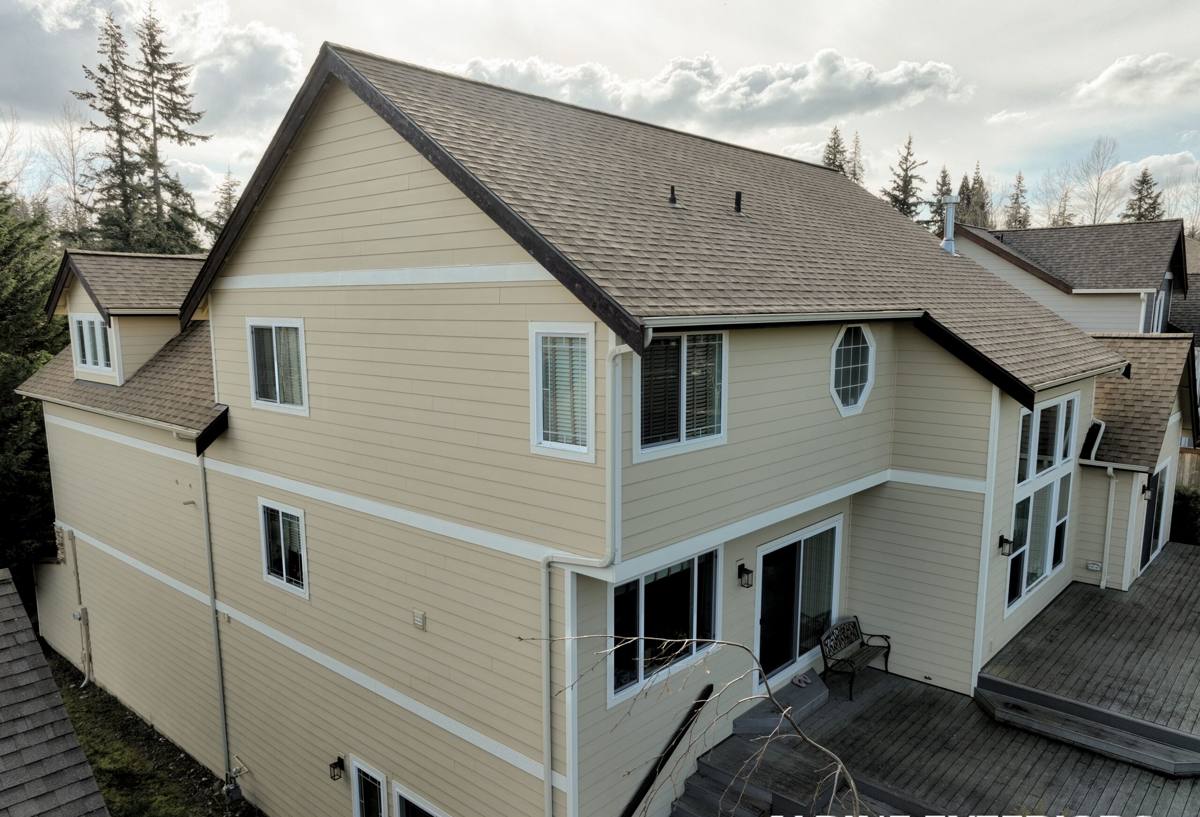
What the Local Climate Actually Does to a Deck
Salt Air and Corrosion
Even a few miles inland from open water, airborne salt accelerates corrosion on anything metal — screws, joist hangers, post bases, railing brackets. Standard zinc-coated fasteners that would be fine in a dry climate can start rusting and staining the decking within a couple of years near Puget. That rust doesn't just look bad; it weakens the connection it's supposed to be holding.
Driving Rain
Rain here doesn't just fall straight down — wind-driven rain gets pushed sideways into ledger connections, under railing posts, and into any gap where flashing was skipped or done poorly. A deck built without proper ledger flashing and water diversion will eventually rot from the house side outward, which is often the least visible and most expensive kind of damage to catch late.
Moss and Algae
Shaded, damp decks in this part of Washington grow moss and algae on a schedule most homeowners underestimate. Beyond looking dirty, a mossy deck surface holds moisture against the wood or composite cap far longer than a clean one, and it turns slick enough to be a genuine fall hazard on stairs and ramps.
Decking Material Options for a Puget Property
There's no single "best" decking material — the right choice depends on your budget, how much upkeep you want to do, and how much sun versus shade the deck gets. Here's how the common options actually perform in this climate.
| Material | Moss/Algae Resistance | Maintenance | Typical Lifespan Here |
|---|---|---|---|
| Pressure-treated wood | Low — needs regular cleaning and sealing | Annual cleaning, re-seal every 1-2 years | 10-15 years with upkeep |
| Cedar | Moderate — natural oils help, but still needs care | Cleaning and oil/stain every 1-2 years | 15-20 years with upkeep |
| Capped composite | High — sealed cap resists moisture and staining | Occasional washing, no sealing | 25-30+ years |
| PVC decking | High — fully synthetic, no wood fibers to feed growth | Occasional washing | 25-30+ years |
We're upfront with clients that wood decking costs less upfront but asks for more of your time every year — and if that upkeep gets skipped even a season or two, moss and moisture damage catch up fast in a climate like this. Composite and PVC cost more initially but hold up with far less attention, which is why we see more homeowners in wetter, shadier lots leaning that direction.
The Structural Details That Actually Determine Whether a Deck Lasts
Ledger Board Flashing
The ledger board — where the deck attaches to the house — is the single most common failure point on decks in wet climates. Correct flashing (and proper counter-flashing tied into the house's water-resistive barrier) keeps rain from working its way behind the ledger and rotting the rim joist or wall sheathing. This isn't optional trim work; it's the difference between a deck that's structurally sound in ten years and one that isn't.
Joist Tape and Fastener Protection
Every cut end and top surface of a joist should be protected with a self-adhering flashing tape before decking goes down. It's a small material cost that prevents water from soaking into end grain and starting rot from the inside, where you won't see it until boards start feeling soft.
Footings and Frost Depth
Post footings need to be sized and set to the depth required by local code, with proper drainage gravel underneath so water doesn't pool and heave the footing over time. Whatcom County's building department has specific requirements here, and we pull permits and inspections on every project rather than treating that as a step to skip.
Fasteners and Hardware
Given the salt air exposure, we use stainless steel or high-grade coated fasteners and hot-dip galvanized or stainless structural hardware — joist hangers, post bases, and structural screws — rather than the cheaper coated fasteners that start showing rust streaks within a couple of wet seasons.
Design Choices That Matter in a Wet, Mossy Climate
- Slight gaps between deck boards for proper drainage and airflow, sized correctly for the decking material used
- Under-deck ventilation so the joist bay isn't trapping moisture against the structure
- Railing posts through-bolted rather than surface-mounted where possible, to avoid trapped water at the base
- Stair and ramp surfaces oriented and finished to shed water rather than pool it
- Overhangs or gutter tie-ins considered where a deck sits close to a roofline that sheds heavy water onto it
- Post bases set above grade and away from standing water or sprinkler overspray
Our Process for a Puget Deck Project
1. On-Site Assessment
We look at sun and shade exposure, drainage on the lot, how close the deck sits to the water or tree cover, and the condition of the ledger wall if it's an attached deck. This tells us what materials and detailing make sense for that specific spot.
2. Design and Material Selection
We walk through decking, railing, and structural options honestly — including the maintenance trade-offs above — so you're choosing based on real cost-over-time, not just the sticker price.
3. Permitting
We handle the permit application and inspections through Whatcom County or the City of Bellingham as required for the project, so the work is documented and up to code — which also matters if you sell the home later.
4. Build
Footings, framing, flashing, decking, and railing, in that order, with the moisture-management details above built in at every stage rather than added as an afterthought.
5. Walkthrough
We go over the finished deck with you, including what maintenance (if any) the material you chose will need going forward.
Maintenance Checklist for Puget Decks
Whatever material you choose, a little seasonal attention goes a long way in this climate:
- Sweep debris off the deck regularly, especially in fall — trapped leaves hold moisture against the surface
- Clean moss and algae film at least once a year with a deck-safe cleaner, more often on shaded areas
- Check and re-seal wood decking on the schedule appropriate to that product, don't let it lapse
- Inspect the ledger flashing area and any visible fasteners for rust staining once a year
- Keep gutters and downspouts near the deck clear so runoff isn't dumping directly onto it
- Confirm under-deck vents or skirting aren't blocked, so air can still circulate underneath
Why Hire a Crew That Already Works in Puget
A deck built for a dry inland climate and a deck built for a Bellingham-area, water-adjacent lot are not the same project, even if they look identical from the driveway. Crews without local experience often under-flash ledgers, use standard-grade fasteners that weren't specified for salt air exposure, or skip the drainage detailing that matters most in a moss-prone climate. Those shortcuts don't show up as problems on day one — they show up as rot, rust, and slick, mossy boards two or three years in.
We know what Whatcom County's inspectors look for, what materials actually hold up on shaded, damp lots near the water, and how to detail a deck so it's still solid and safe well past the point where a poorly built one would be showing real damage.
Get a Straight Answer for Your Property
Every lot in Puget handles sun, shade, and drainage a little differently, and the right deck plan follows from that, not from a one-size-fits-all package. If you're planning a new deck or replacing one that's showing its age, we're happy to come take a look and give you an honest, no-pressure estimate — use the form below to get started.