 Bellingham Siding
 Blaine's Roofs Work Harder Than Most
Sitting at the northwest corner of Whatcom County, right along Semiahmoo Bay and Drayton Harbor, Blaine gets a version of Pacific Northwest weather that's tougher on roofing than what homes further inland deal with. The salt-laden air off the water accelerates corrosion on fasteners, flashing, and metal roofing components. Winter storms roll in off the Strait of Georgia with driving, wind-blown rain that finds every weak seam. And the mild, wet shoulder seasons here mean moss and algae get a long runway to establish themselves on north-facing slopes and shaded valleys. None of this means Blaine roofs fail faster than they should — it means small problems get exploited faster if they're not caught and repaired correctly.
A roof repair in this environment isn't just patching a leak. It's understanding why that specific spot failed here, in this climate, on this type of roof, and fixing the actual cause instead of just the symptom.
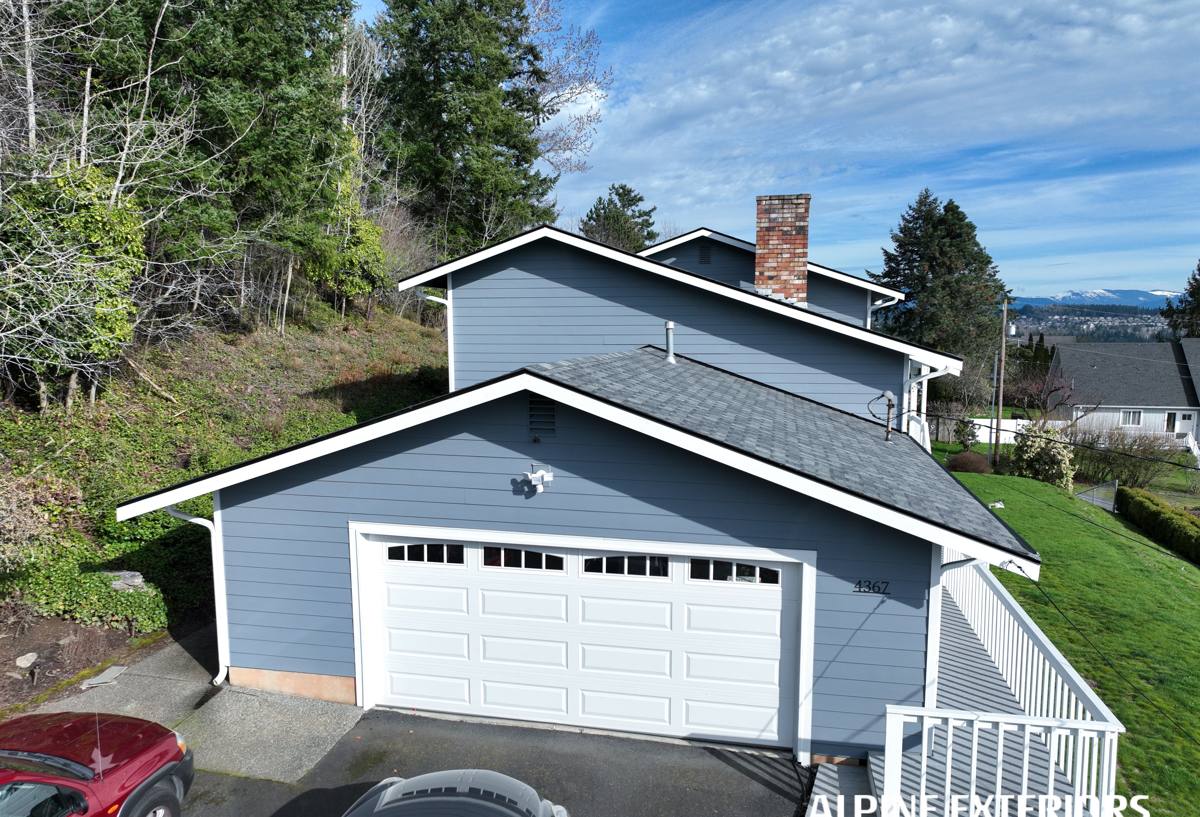
What Salt Air, Rain, and Moss Actually Do to a Roof
Salt Air and Corrosion
Being close to saltwater means airborne salt settles on roofing surfaces and works into fastener heads, flashing seams, and any exposed metal edges. Galvanized fasteners and lower-grade flashing corrode faster near the coast than they would twenty miles inland. Once a fastener head rusts and loses its seal, water has a direct path underneath the roofing material.
Driving, Wind-Blown Rain
Storms coming off the water don't just fall straight down — wind pushes rain sideways and up under shingle tabs, around chimney flashing, and into any gap that a calmer rain would never reach. This is why leaks in Blaine often show up at flashing details (chimneys, skylights, wall-to-roof transitions) rather than in the middle of an open roof field. Flashing that would hold up fine in a drier climate can fail here simply because it's being tested by weather it wasn't built to handle.
Moss and Algae
Blaine's mild, damp stretches from fall through spring give moss plenty of time to take hold, especially on shaded north- and east-facing slopes and in valleys where debris collects. Moss isn't just cosmetic. As it grows, it lifts shingle edges, holds moisture against the roofing surface, and creates channels for water to travel sideways instead of shedding downhill. Left unchecked over a few seasons, moss growth is one of the most common reasons we find rot in the roof deck underneath otherwise serviceable shingles.
Signs a Blaine Roof Needs Repair
- Water stains on interior ceilings, especially near chimneys, skylights, or where two roof planes meet
- Granules collecting in gutters or at downspout outlets
- Shingles that are curling, cupping, or lifting at the edges
- Visible moss or dark algae streaking, particularly on shaded slopes
- Rusted, lifted, or missing flashing around chimneys, vents, or sidewalls
- Soft or spongy spots underfoot when walking the roof (a sign of deck rot)
- Daylight visible through the roof deck from inside an attic
- Missing or torn shingles after a windstorm
Any one of these on its own may be a straightforward, inexpensive fix. Several together, or signs that have been ignored for more than a season, usually mean water has already gotten past the surface layer and into the deck or structure below — which changes the scope of the repair.
What a Correct Repair Actually Involves
A roof repair done right isn't just laying a new shingle over the damaged spot. Our process typically includes:
1. Finding the Real Source
Leaks rarely show up directly above the water stain — water travels along the underlayment or deck before it drips through. We trace the path back to the actual entry point rather than patching where the stain appears.
2. Checking the Deck
Once we're into the damaged area, we check whether the roof deck (usually plywood or OSB sheathing) has taken on moisture or started to soften. Repairing the visible roofing over a compromised deck just guarantees another failure in the same spot.
3. Rebuilding Flashing Properly
Given how much flashing-related failure we see near the coast, we don't reuse corroded or undersized flashing. Chimney counterflashing, step flashing, and valley flashing get rebuilt to shed water the way they're supposed to, not just resealed with caulk over a bad detail.
4. Matching Materials
Where possible we match existing shingle type, color, and exposure so the repair blends in rather than standing out as an obvious patch. When exact matches aren't available (common on older roofs), we explain the trade-off honestly rather than pretending it won't be visible.
5. Addressing the Cause, Not Just the Symptom
If moss caused the failure, we talk through moss control options. If ventilation is driving moisture problems in the attic, we flag it. A repair that ignores the underlying cause is a repair you'll be paying for again in a year or two.
Repair or Replace? What Actually Drives the Decision
Not every damaged roof needs full replacement, and not every leak is worth chasing with repeated patches. Here's how we think through it:
| Factor | Leans Toward Repair | Leans Toward Replacement |
|---|---|---|
| Age of roofing | Under 15-20 years, single isolated issue | Near or past expected service life |
| Extent of damage | Localized to one flashing detail or a small shingle area | Widespread granule loss, multiple leak points |
| Deck condition | Solid, dry sheathing under the damage | Soft, rotted, or repeatedly wet decking |
| Moss/algae history | First occurrence, treatable | Chronic, recurring across large areas |
| Material availability | Matching shingles still available | Discontinued product, poor match |
We'll always tell you honestly which side of this table your roof falls on. A repair that's likely to fail again within a couple of years isn't a good use of your money, and we won't sell it to you as one.
How Our Process Works in Blaine
- Inspection: We walk the roof (and check the attic where accessible) to trace leaks back to their source, not just document surface symptoms.
- Written diagnosis: You get a clear explanation of what's actually wrong, why it happened, and what fixing it correctly involves — before any work starts.
- Honest scope and estimate: A straightforward range for the repair, with the repair-vs-replace conversation up front if that's relevant.
- The repair itself: Deck checked and, if needed, replaced in the affected area; flashing rebuilt where corroded or undersized; shingles matched as closely as possible.
- Cleanup and check: Debris and old material cleared, gutters checked for granules or blockage that could cause new problems.
Roofing Materials and Coastal Exposure
Different roofing materials hold up differently in a salt-air, high-moisture environment like Blaine's. This isn't about one product being "bad" — it's about matching material choice to realistic maintenance expectations near the water.
| Material | Coastal Considerations |
|---|---|
| Asphalt composition shingles | Widely used and cost-effective; benefits from algae-resistant granules and regular moss control near the coast |
| Metal roofing/flashing | Needs corrosion-resistant fasteners and coatings near saltwater; lower-grade galvanized components corrode faster here |
| Wood shakes | Higher maintenance burden in a moss-prone, moisture-heavy climate; requires more frequent treatment and inspection |
| Synthetic/composite roofing | Generally resists moisture absorption well, though installation quality matters more than with forgiving materials |
Whatever material your home already has, our repairs use fasteners and flashing rated for coastal exposure rather than whatever's cheapest, because a repair that corrodes out in three years isn't a repair worth doing.
Timing: When to Get Repairs Done in Blaine
The best window for roof repair here is generally late spring through early fall, when extended dry stretches let materials seal and cure properly. That said, active leaks don't wait for good weather — if water is getting into your home, we'll get a temporary or permanent fix done regardless of season, and schedule any moss treatment or fuller repair work for a drier window if the situation allows it. Waiting until the wet season is well underway to address a known issue almost always turns a small repair into a bigger one, since every storm that passes over an unrepaired weak point pushes more water into the deck and framing below.
A Simple Twice-a-Year Check for Blaine Homeowners
- Look at north- and shaded-facing roof slopes for moss or dark streaking
- Check gutters for granule buildup (a sign of shingle wear)
- Scan for lifted, curled, or missing shingles after major windstorms
- Look inside the attic for water stains, damp insulation, or daylight through the deck
- Check chimney and vent flashing for visible rust or gaps
Catching any of these early is almost always the difference between a modest repair and a much larger one once water has had a season or two to work into the structure.
Why It Matters to Hire a Crew That Already Works Blaine
Roofing crews that mainly work drier, inland areas don't always account for how much harder coastal Whatcom County weather is on flashing, fasteners, and moss-prone slopes. A crew that already works in Blaine knows which details fail first in this climate, uses materials rated for salt-air exposure as a matter of course, and can usually get to an active leak faster because they're already in the area. That local familiarity shows up in fewer callbacks and repairs that actually hold up through the next few winters of driving rain.
Get an Honest Look at Your Roof
If you're dealing with a leak, storm damage, moss buildup, or just want an honest opinion on a roof that's starting to show its age, we're glad to take a look. The estimate is free, there's no pressure, and you'll get a straight answer about what your roof actually needs — simply fill out the form below to get started.