 Bellingham Siding
 Roofing in Sehome: A Neighborhood With Its Own Set of Problems
Sehome sits close enough to Bellingham Bay to catch the salt air off the water, and its mix of mature tree cover and hillside lots means a lot of roofs here spend more time shaded and damp than roofs out in open, sunnier parts of Whatcom County. That combination — salt-laden air, driving rain off the Sound, and a long moss season that can run from fall through spring — is hard on roofing materials in ways that don't show up in a generic install. A roof replacement done right in Sehome accounts for all three, not just the fact that the old roof is worn out.
This page is about roof replacement specifically for Sehome homes: what the climate does to a roof over time, what a correct replacement job actually includes, and why local experience with this particular neighborhood matters more than most homeowners assume.
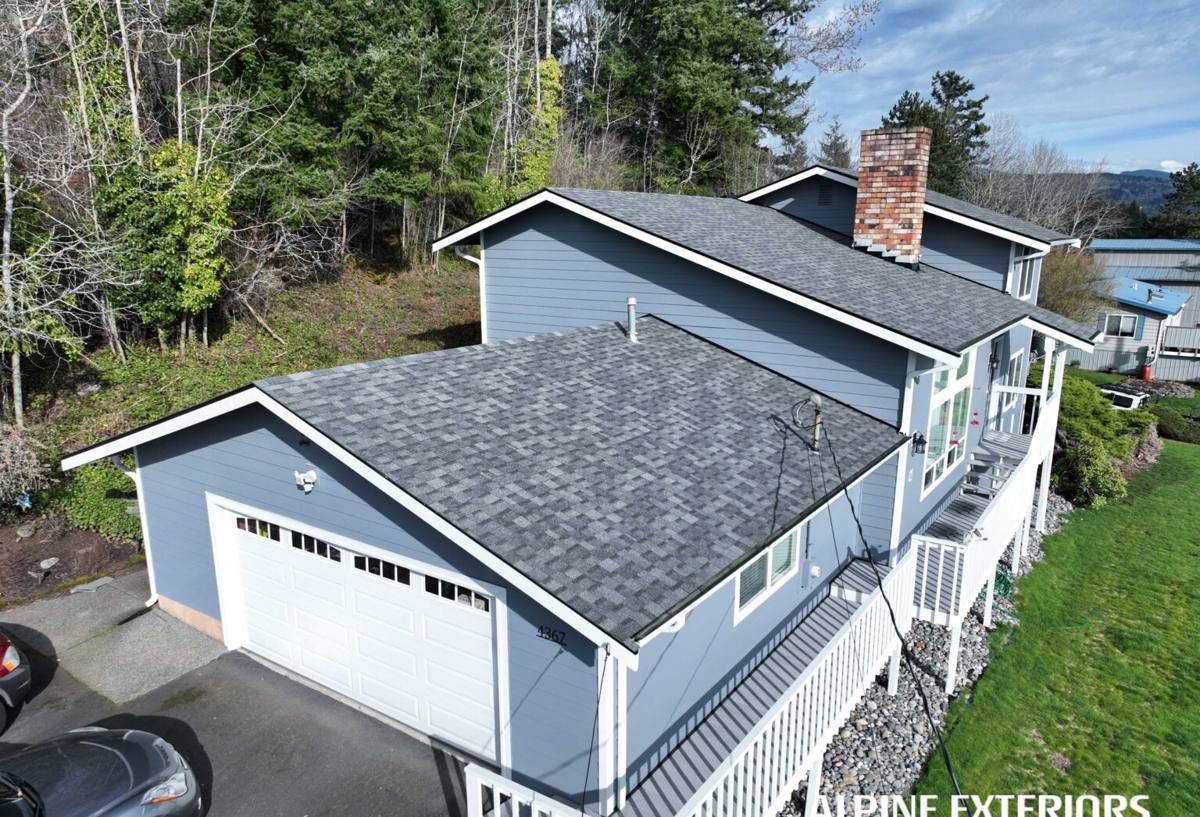
Signs a Sehome Roof Has Reached the End of Its Life
Not every roof problem means full replacement — plenty of leaks and missing shingles are legitimate repairs. But there's a point where patching stops making sense and a full tear-off is the honest recommendation. Here's what we look for:
- Granule loss heavy enough that you can see bare asphalt mat on multiple shingles, not just a few scattered spots
- Shingles that are cupping, curling, or cracking across large sections of the roof, especially on north- and west-facing slopes that stay shaded and wet longer
- Soft or spongy decking felt underfoot in the attic, or daylight visible through the roof deck
- Moss or algae growth that keeps coming back within a season or two of cleaning, which usually means moisture is holding under the shingles, not just sitting on top
- Repeated flashing leaks around chimneys, vents, or valleys even after prior repairs
- A roof already past 20-25 years old (asphalt) with no major upgrades to underlayment or ventilation since it was installed
If a roof is showing two or more of these at once, replacement is usually the more honest and more economical path than continuing to chase individual repairs.
What a Correct Roof Replacement Actually Involves
A roof replacement is more than swapping old shingles for new ones. In a climate like Bellingham's, the parts you don't see matter as much as the parts you do.
Tear-Off and Deck Inspection
We remove the existing roofing down to the deck rather than layering over it. That's the only way to actually see the plywood or plank decking underneath — which, on a lot of older Sehome homes, has taken on some moisture damage over the years from slow leaks that were never obvious from inside the house. Any soft or rotted decking gets replaced before anything new goes down; covering over bad decking just hides the problem for the next owner to find.
Underlayment Built for Wet Weather
Standard felt underlayment is the minimum, not the standard we aim for. In areas that see the kind of sustained, driving rain Bellingham gets off the Sound, synthetic underlayment and self-adhered ice-and-water membrane at the eaves, valleys, and penetrations give the roof a real second line of defense if wind-driven rain ever gets under the shingles.
Ventilation
Attic ventilation is one of the most under-discussed parts of a roof replacement, and one of the most important in a moss-prone, moisture-heavy climate. Poor intake and exhaust airflow traps warm, moist air in the attic, which condenses on the underside of the decking, promotes rot, and accelerates moss growth on the shingles above it from the inside out. Every replacement is a chance to correct ventilation that was undersized or mismatched the first time around.
Flashing and Penetrations
Chimneys, vent pipes, skylights, and roof-to-wall transitions are where the overwhelming majority of roof leaks actually start — not the open field of shingles. New step flashing, counter-flashing, and pipe boots go in as part of the job, not patched around the old ones.
Choosing the Right Material for Whatcom County Weather
There's no single "best" roofing material — the right choice depends on the home, the budget, and how much long-term maintenance the owner wants to take on. Here's how the common options actually compare for a climate with heavy rain, salt air, and moss pressure:
| Material | Typical Lifespan | Moss & Moisture Behavior | Best Fit |
|---|---|---|---|
| Architectural asphalt shingle | 25-30 years | Good with proper ventilation and algae-resistant granules; needs periodic moss removal on shaded slopes | Most Sehome homes; best balance of cost and performance |
| 3-tab asphalt shingle | 15-20 years | Lower wind and moisture resistance than architectural; moss and granule loss show up sooner | Budget-driven jobs or lower-slope, less exposed roofs |
| Standing seam metal | 40-50+ years | Sheds moss and moisture very well due to smooth, non-porous surface; minimal maintenance | Owners planning to stay long-term and wanting the lowest maintenance load |
| Synthetic/composite shingle | 30-50 years | Resists moisture absorption well; performance varies by manufacturer | Homeowners wanting a shake or slate look without the maintenance burden of natural materials |
We don't push one material on every roof. What we will do is give an honest read on how each option will actually hold up on your specific roof's pitch, sun exposure, and tree cover — those factors matter more than the marketing on any particular shingle line.
Moss and Moisture: Sehome's Ongoing Maintenance Issue
Tree cover is part of what makes Sehome a pleasant place to live, but it's also the reason moss is a recurring conversation with homeowners here. Shaded, north-facing roof slopes stay damp longer after every rain, and moss spores need very little to get established once shingle granules start wearing thin. Left alone, moss doesn't just look bad — it holds moisture against the shingle surface, works into seams and nail lines, and shortens the life of the roof underneath it.
A roof replacement is the best time to get ahead of this. Proper ventilation, algae-resistant shingle granules where applicable, and attention to which slopes get the least sun all reduce how often moss becomes a maintenance chore. We'll also talk through simple upkeep — occasional soft washing and keeping gutters and valleys clear of needles and debris — so the new roof stays in the condition it was installed in for as long as possible.
Our Replacement Process, Start to Finish
Every roof replacement we do follows the same sequence, whether it's a straightforward gable roof or something with more valleys and penetrations:
- On-site inspection and honest assessment of whether replacement or repair is the right call
- Written estimate covering material options, scope of work, and a realistic timeline
- Tear-off of existing roofing and full deck inspection, with any rotted decking replaced before moving forward
- Installation of underlayment, ice-and-water membrane at vulnerable areas, and new flashing
- Ventilation check and correction where intake or exhaust airflow is inadequate
- Shingle or material installation per manufacturer specifications
- Full site cleanup, including magnetic sweep for nails and debris removal
- Final walkthrough so you can see the finished work before we consider the job done
Here's a quick checklist worth going through with any contractor before a roof replacement starts:
- Is the estimate written and itemized, not just a verbal number?
- Does it specify underlayment type, not just the visible shingle brand?
- Is decking replacement priced as an allowance or handled as a change order if rot is found?
- Does the scope include ventilation review, or just a shingle swap?
- Are permits and inspections (where required) included in the scope?
- Is there a clear warranty on both materials and labor, in writing?
What Affects the Cost of a Roof Replacement
Every roof is different, so exact numbers depend on the inspection, but the factors that move the price are consistent. In Whatcom County, a typical single-family asphalt shingle replacement often lands somewhere in the $10,000-$20,000 range, with metal and premium synthetic materials running higher. Here's what actually drives that number up or down:
| Factor | Why It Matters |
|---|---|
| Roof size and number of squares | More material and labor hours directly increase cost |
| Roof pitch and complexity | Steep or cut-up roofs with many valleys and planes take longer and require more safety setup |
| Decking condition | Rotted or soft decking found during tear-off adds material and labor not visible before the job starts |
| Material choice | Asphalt, metal, and synthetic products carry very different material costs and install labor |
| Layers of existing roofing | Multiple layers of old shingles mean more tear-off labor and disposal cost |
| Access and site conditions | Tree cover, steep lots, and limited driveway access common in Sehome can affect staging and disposal logistics |
Why a Crew That Already Works in Sehome Matters
Roofing crews that only work a job or two a year in a given neighborhood have to relearn its quirks every time. A crew that already works Sehome regularly knows which slopes hold moss the longest, how tree cover on tighter lots affects staging and material delivery, and what the older housing stock in the area tends to need in terms of decking condition and ventilation upgrades. That familiarity shows up in fewer surprises mid-job, not just faster scheduling.
It also matters for the parts of the job that aren't glamorous — knowing which side of a hillside lot handles equipment access best, being upfront about how salt air and moisture exposure will affect material choice, and giving a straight answer about what's actually needed versus what's optional. That's the difference between a roof that's installed correctly for Bellingham's climate and one that was installed the same way it would be anywhere else in the country.
Get a Straightforward Estimate
If your Sehome roof is showing its age — moss that won't stay gone, granule loss, or leaks that keep coming back — it's worth having someone take an honest look before you decide anything. Fill out the form below for a free, no-pressure estimate, and we'll tell you plainly whether you're looking at a repair or a full replacement.