 Bellingham Siding
 Roofing in Sudden Valley Comes With Its Own Set of Problems
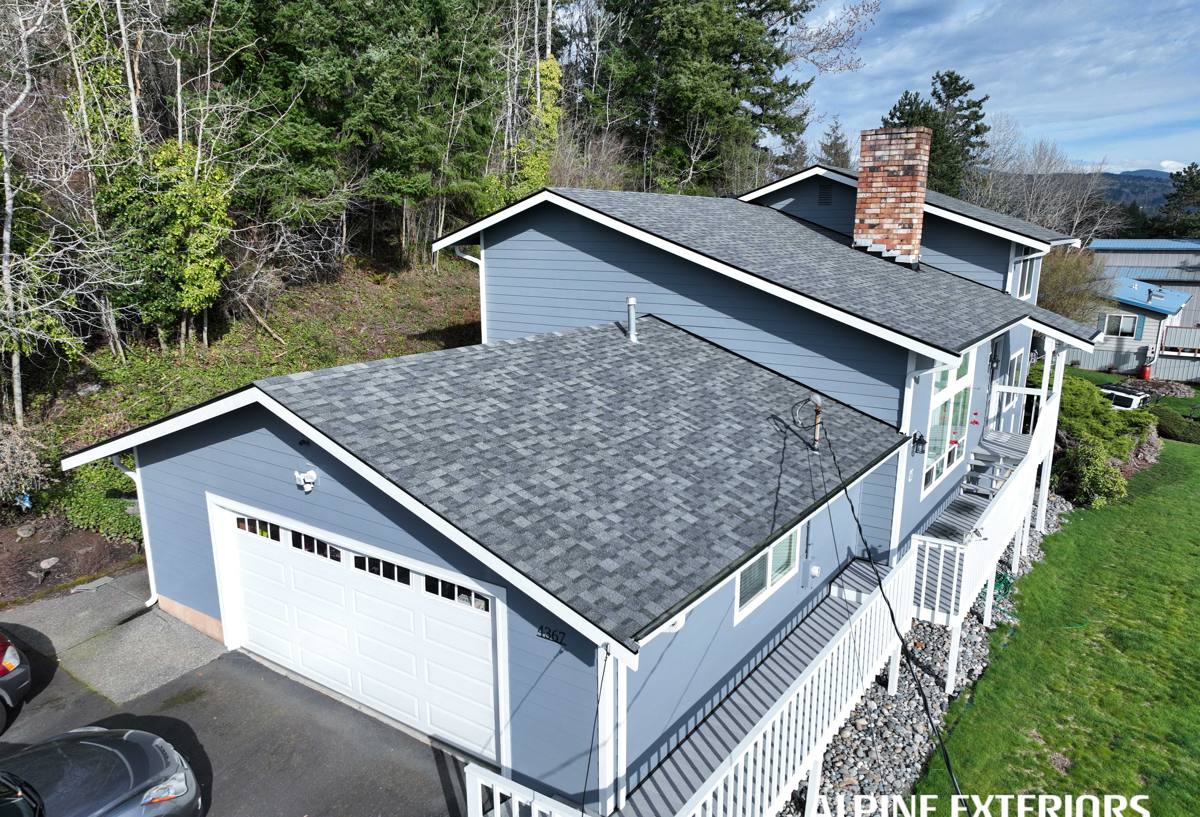
Sudden Valley sits close to Lake Whatcom, tucked into tree cover and hillside terrain that shapes almost every roofing decision homeowners here make. It's a different environment than a flat lot in downtown Bellingham. Shade from mature trees means roofs dry out slower after rain. Proximity to the lake and the surrounding forest means more organic debris — needles, cones, leaf litter — collecting in valleys and behind chimneys. And like the rest of Whatcom County, the marine air moving in off the Salish Sea brings salt content that slowly works on exposed metal fasteners, flashing, and vent components.
None of this means Sudden Valley roofs fail faster by default. It means they need a roofing system and an installation approach that accounts for slower drying times, heavier moss pressure, and long stretches of low-intensity rain that finds every weak seam eventually. A roof replacement done without that context in mind is a roof you'll be patching again in five years.
What the Local Climate Actually Does to a Roof
Moss and Organic Growth
Whatcom County's moss season isn't a month — it's most of the year. Shaded, north-facing slopes in Sudden Valley barely get direct sun from October through April, and moss doesn't need much more than consistent moisture and shade to take hold. Once moss establishes on shingles, it holds water against the roofing surface, lifts shingle edges, and accelerates granule loss. On a roof that's already several years old, moss is often the first visible sign that the surface is losing its ability to shed water.
Driving Rain and Wind-Driven Moisture
Storms coming off the water don't always fall straight down. Wind-driven rain pushes moisture sideways and upward under shingle tabs, into vent flashing, and behind siding-to-roof transitions. A roof that relies on gravity alone to shed water — rather than proper underlayment, ice-and-water barrier at vulnerable points, and correctly lapped flashing — will eventually let water in during a sideways storm even if it looks fine on a calm day.
Salt Air and Metal Components
Bellingham's proximity to the coast means airborne salt reaches inland further than people expect, especially on elevated or exposed lots. Salt accelerates corrosion on unprotected steel fasteners, cheaper flashing, and lower-grade vent boots. It's a slow process, but over 15-20 years it's a real factor in why some roofing hardware fails before the shingles around it do.
Signs a Sudden Valley Roof Needs Replacing, Not Patching
- Moss covering more than a small patch, especially if it's returned after a previous cleaning
- Granules collecting in gutters or at downspout outlets in noticeable amounts
- Shingles that are cupping, curling at the edges, or visibly brittle
- Soft spots in the decking when walked, or sagging visible from the ground
- Daylight visible through the attic roof boards
- Water stains on interior ceilings, especially near chimneys, skylights, or valleys
- Flashing that's rusted, lifted, or was never properly stepped and counter-flashed
- A roof that's 20+ years old regardless of how it looks from the driveway
Any one of these on its own might be a repair. Several together, especially on an older roof, usually mean the underlying materials have reached the end of their useful life and a patch would just be delaying the inevitable at a higher long-term cost.
What a Correct Roof Replacement Actually Involves
Tear-Off and Decking Inspection
We remove the old roofing down to the deck rather than layering over it. That's the only way to actually see the condition of the sheathing underneath — soft, delaminated, or water-stained decking needs to be replaced before anything new goes down, and you can't know that's needed until the old material is off.
Underlayment Suited to the Conditions
Given how long moisture sits on shaded Sudden Valley roofs, underlayment choice matters more here than on a sunnier, more exposed lot. We use synthetic underlayment as standard and add ice-and-water shield at eaves, valleys, and roof penetrations — the spots where wind-driven rain and slow-draining moisture cause the most long-term damage.
Flashing and Ventilation
Flashing around chimneys, skylights, and roof-to-wall transitions gets replaced, not reused, and installed with proper step and counter-flashing rather than caulked-over shortcuts. Attic ventilation is checked and corrected where needed — poor ventilation traps moisture under the deck, which in a shaded, humid setting like Sudden Valley speeds up rot from the inside even on a roof with good shingles.
Material Selection
We'll walk through options honestly based on your roof's exposure, pitch, and budget rather than pushing one product for every house.
| Material | Moss Resistance | Typical Lifespan | Best Fit |
|---|---|---|---|
| Standard asphalt composition | Low without treatment | 20-25 years | Budget-conscious, sunnier lots |
| Algae-resistant (AR) shingles | Moderate to good | 25-30 years | Shaded lots with moss history |
| Metal roofing | High | 40-50+ years | Steep pitches, heavy tree cover |
| Synthetic/composite shingles | Good | 30-40 years | Homes wanting shake look with less upkeep |
For heavily shaded Sudden Valley properties, we generally steer homeowners toward algae-resistant shingles or metal, since the copper or zinc granules in AR shingles and the smooth surface of metal both actively discourage moss regrowth in ways standard shingles don't. That's a maintenance and longevity conversation, not a claim that standard shingles are a bad product — they're just a poorer fit for a shaded, moisture-heavy lot.
Our Process for a Sudden Valley Roof Replacement
- On-site inspection — we walk the roof and attic, check decking condition, ventilation, and existing moss or moisture damage before quoting anything
- Written estimate — material options, scope, and pricing laid out clearly, no vague allowances
- Scheduling around weather — we plan tear-off days around dry windows, since an open roof deck in a driving rain is exactly the scenario we're trying to prevent for you
- Tear-off and deck repair — old roofing removed, damaged sheathing replaced before anything new is installed
- Underlayment and flashing — installed to handle wind-driven rain and slow-drying conditions specific to shaded, tree-covered lots
- New roofing installation — installed to manufacturer spec, which matters for both performance and warranty validity
- Cleanup and final walkthrough — debris and old material hauled off, gutters checked, and a walkthrough so you know exactly what was done
Why Hiring a Crew That Already Works Sudden Valley Matters
Sudden Valley isn't laid out like a standard subdivision. Lot access can be tight, driveways steep, and tree cover means working around branches and drop zones that a crew unfamiliar with the neighborhood hasn't planned for. A crew that's already worked roofs here knows to expect shaded decking that takes longer to dry after a rain delay, knows which material choices actually hold up under the moss pressure specific to this area, and isn't guessing at how wind moves through the valley during a storm.
There's also a permitting and access reality: private road associations and community guidelines in Sudden Valley can affect scheduling, parking for equipment, and disposal logistics. A contractor who's navigated that before saves you the back-and-forth of figuring it out mid-project.
Cost Factors Specific to This Area
| Factor | Why It Affects Sudden Valley Roofs |
|---|---|
| Tree cover and access | Overhanging branches may need trimming before work starts; steep or wooded driveways affect equipment staging |
| Decking condition | Shaded roofs with a moss history more often reveal water damage under old shingles, adding sheathing replacement cost |
| Material upgrade | Algae-resistant or metal roofing costs more upfront but reduces cleaning and re-treatment costs long term on shaded lots |
| Roof pitch and complexity | Valleys, dormers, and multiple roof planes common in the area's home styles add labor and flashing work |
| Weather scheduling | Tear-off timing around dry windows can shift start dates during the wetter months |
Maintenance After Your New Roof Is Installed
- Have gutters cleared at least twice a year — more often under heavy tree cover
- Schedule a moss check-and-treat before it visibly spreads, not after
- Keep overhanging branches trimmed back to reduce shade and debris buildup
- Check attic ventilation isn't blocked by insulation or storage
- Have flashing and seals inspected every few years, especially after major storms
A well-installed roof suited to this climate will still benefit from this kind of upkeep. It's a small recurring cost that protects a much larger investment.
Get a Straight Answer About Your Roof
If you're seeing moss coming back, granules in the gutters, or just know your roof is getting up there in age, it's worth having someone look at it before winter storms find the weak spot for you. We'll give you a straightforward assessment of what your Sudden Valley home actually needs — no pressure, no upsell. Fill out the form below for a free estimate.