 Bellingham Siding
 Why Sehome's Climate Puts Real Demands on Siding
Sehome sits in central Bellingham, close enough to the Salish Sea to catch salt-laden air on a regular basis, and far enough into Whatcom County's marine weather pattern that rain rarely falls straight down here. It comes in on a wind, angled into lap joints, trim edges, and anywhere a wall assembly has a gap. Add a moss and mildew season that runs most of the year on shaded, tree-covered lots, and you have three separate stresses, salt, wind-driven moisture, and organic growth, all acting on the same wall at the same time, year after year, in a way that compounds rather than resets each season.
None of that is unique to Sehome. What is worth thinking about at the neighborhood level is Sehome's housing stock: a mix of older homes, mid-century construction, and newer infill, much of which has already been sided once and is either due for a replacement or approaching one. A siding material that can absorb this kind of sustained exposure without slowly losing ground matters more here than it does in a drier inland climate, where a mediocre installation might coast for decades before problems show up.
What James Hardie Fiber Cement Brings to a Sehome Re-Side
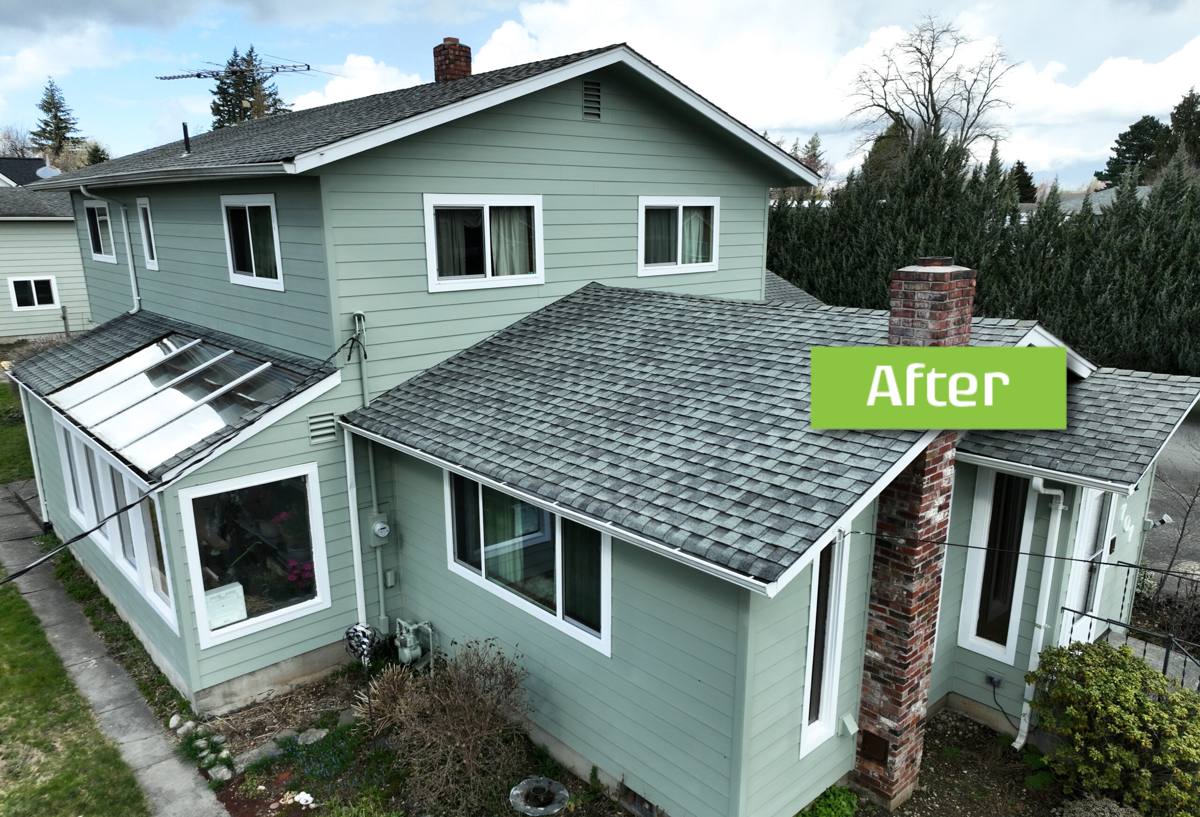
We install James Hardie fiber cement exclusively, and that choice is about how the material itself responds to this specific set of conditions rather than about brand preference. Hardie siding is a cement-based composite, portland cement, sand, and cellulose fiber, cured into planks or panels. The core is inorganic. It doesn't have wood fiber that can absorb water and swell, and it doesn't give fungus or insects an organic substrate to work with, which matters directly in a climate where dampness sits on a wall for long stretches at a time.
The HZ5 Line: Built for This Climate Zone
James Hardie makes different formulations for different climate zones, and the HZ5 line is engineered specifically for regions with heavy moisture exposure and freeze-thaw cycling. That description fits western Whatcom County well, and it's the product line we spec for Sehome jobs rather than defaulting to a generic national formulation built for a drier, warmer region. The difference isn't cosmetic, it's how the board itself is engineered to hold up under repeated wet-dry cycling over the life of the siding.
ColorPlus Factory Finish vs. Field-Applied Paint
Most Hardie siding we install carries the factory-applied ColorPlus finish rather than a field-painted primed board. That finish is baked on under controlled conditions before the material ever reaches a jobsite, which means it isn't at the mercy of whatever the weather is doing on install day the way a field-applied coat of paint is. In a climate where a real drying window can be hard to find for weeks at a stretch, that difference shows up years later as a finish that's still holding its color instead of chalking, fading, or peeling at the seams.
What Correct Installation Actually Involves
Material choice is half the equation. The other half, and the half that determines whether a Hardie installation actually performs the way it's engineered to, is whether the installation followed Hardie's own specifications exactly. This is where a lot of the real-world problems on fiber cement jobs actually originate, not from the board itself, but from shortcuts taken to save labor time, shortcuts a homeowner usually can't see or evaluate until years later when a joint starts failing.
Fastening, Clearance, and Why Both Matter
Hardie specifies a fastening pattern, nail or screw type, spacing, and depth, that's meant to hold the board securely without over-driving fasteners and cracking the material or under-driving them and leaving the board loose to work itself free over time. Clearance matters just as much: minimum gaps from grade, roofline, decks, and roof-to-wall transitions keep the bottom edge of the siding from sitting in standing water or wicking moisture up from a deck surface or soil line. Skipping either of these, tighter fastening to save a step, or tighter clearance to make a trim detail look cleaner, is a common way a correctly chosen product ends up performing poorly on an actual house.
Flashing, Joints, and Water Management
Every horizontal joint, every window and door opening, and every point where siding meets a different material needs flashing and sealant integrated with the house wrap underneath, not just caulk smeared over the surface afterward. In a climate where wind pushes rain sideways into these exact spots, a joint that isn't properly lapped and flashed becomes the point where water gets behind the siding rather than running down the face of it. We treat this as the baseline on every job, not an upgrade, because it's the detail that actually determines whether a wall stays dry through a Bellingham winter.
Choosing the Right Hardie Product for Your Home
Hardie's product line isn't one-size-fits-all, and Sehome's mix of architectural styles, from older bungalows to mid-century homes to newer infill construction, means the right profile varies house to house.
| Product | Best Fit | Consideration for Sehome |
|---|---|---|
| HardiePlank lap siding | Most homes, especially older and mid-century styles | Horizontal reveal handles wind-driven rain well when lapped and flashed correctly |
| HardiePanel vertical siding | Gables, modern-style infill, accent sections | Fewer horizontal joints, but seams still need careful flashing at every panel edge |
| HardieShingle | Craftsman and cottage-style homes common in central Bellingham | More individual joints than lap siding, so installation discipline matters even more |
| HardieTrim | Corner boards, window and door trim, fascia | Keeps trim material consistent with the siding's moisture behavior instead of mixing in wood trim that ages differently |
None of these is automatically the right answer. The decision depends on your home's existing architecture, your neighbors' streetscape, and how much of the wall is exposed to direct wind-driven rain versus a more sheltered elevation.
Our Process for a Sehome Hardie Installation
We run the same process on every Hardie job in this neighborhood, because skipping steps is exactly how moisture problems get built into a wall before the first board goes up.
- Walk the property and inspect the existing siding, trim, and any visible signs of moisture damage, staining, or soft spots, especially around windows and low wall sections.
- Decide on tear-off versus overlay based on the substrate's condition, not on which option is faster, since older Sehome homes especially can have hidden moisture damage behind existing siding that only shows up once it comes off.
- Repair or replace any damaged sheathing, framing, or house wrap discovered during tear-off before any new material goes on.
- Install house wrap and flashing at every window, door, and penetration first, integrated as one continuous water management system rather than patched in afterward.
- Install the Hardie boards to spec: correct fastening pattern, correct clearances, correct joint lapping, checked as work progresses rather than at the end.
- Walk the finished job with the homeowner to review the work and confirm it matches what was quoted.
Why a Crew That Already Works Sehome Matters
A crew that works across Bellingham regularly sees how this specific combination of salt air, driving rain, and a long moss season actually plays out on real houses over full seasons, not just how a product performs on a spec sheet. On a practical level, that shows up in things like knowing what to expect when opening up walls on the neighborhood's older housing stock, understanding which elevations tend to take the most direct wind-driven rain, and being familiar with the City of Bellingham's permitting process for exterior work so a project doesn't stall waiting on paperwork a contractor from further afield hasn't dealt with before. It also means scheduling installation for the drier windows this climate actually offers rather than working around a crew's unfamiliarity with the local weather pattern. And it means we're a known, local crew if a warranty question or a callback ever comes up down the road, not a company that did one job in the area and moved on.
Cost Factors for a Sehome Hardie Project
| Factor | What It Affects | Why It Matters in Sehome |
|---|---|---|
| Tear-off vs. overlay | Labor scope and access to the substrate | Older homes often need tear-off to catch hidden moisture damage |
| Substrate repair | Cost before new siding goes on | Years of trapped moisture behind older siding can rot sheathing and framing |
| Product line and profile | Material cost per square | Lap, panel, and shingle profiles price differently and suit different home styles |
| Trim and finish selection | Material cost and long-term finish life | ColorPlus factory finish costs more upfront than primed boards but resists salt air and fading longer |
| Home complexity | Labor time for joints and flashing | More corners, dormers, and window trim mean more joints exposed to wind-driven rain |
Exact numbers depend on the specific home and what tear-off reveals, which is why we walk the property in person before giving a real estimate rather than quoting off a generic price sheet.
Signs Your Current Siding Is Already Behind
- Moss or dark staining that returns quickly after cleaning, especially on shaded or north-facing walls
- Soft or spongy siding low on the wall or around window and door trim
- Visible cupping, warping, or cracking, especially on older wood-based siding
- Peeling or chalking paint that keeps recurring within a few years of repainting
- Gaps opening at seams, corners, or trim joints
- Rust staining below fasteners or trim hardware
- Musty smell or visible mold near baseboards on interior walls that back onto exterior siding
Get a Free, No-Pressure Estimate
If your Sehome home needs new siding, or you're planning ahead for one that's showing early signs of wear, we're glad to walk the property, look at what's actually happening on your walls, and give you a straightforward answer about what a correct James Hardie installation would involve and what it would cost. Reach out using the form below to schedule a free estimate, no pressure and no upsell script.