 Bellingham Siding
 Why Edgemoor Homes Wear Differently Than Homes Inland
Edgemoor sits close to the water, and that changes what siding has to deal with year-round. Homes here take on a steady mix of salt-laden air off Bellingham Bay, wind-driven rain that hits walls at an angle instead of falling straight down, and long stretches of shaded, damp ground that keep moss and algae active for most of the year. None of that is dramatic on any single day, but it adds up fast on a building material that isn't built to shed it.
We've replaced siding on enough homes in this part of Whatcom County to know the failure pattern before we even get out of the truck: north- and west-facing walls that never fully dry out, trim and butt joints where paint has failed first, and moss lines creeping up from grade or down from roof valleys and gutters that overflow during a hard Pacific storm. Salt air also accelerates corrosion on fasteners, flashing, and any exposed metal trim — which is often the first thing to fail, well before the siding panels themselves.
Understanding this pattern matters because it changes what "correct installation" means here. A siding job that would hold up fine in a drier part of the state can fail early in Edgemoor if the details aren't adjusted for salt exposure, wind-driven moisture, and constant dampness at ground level and in shaded wall sections.
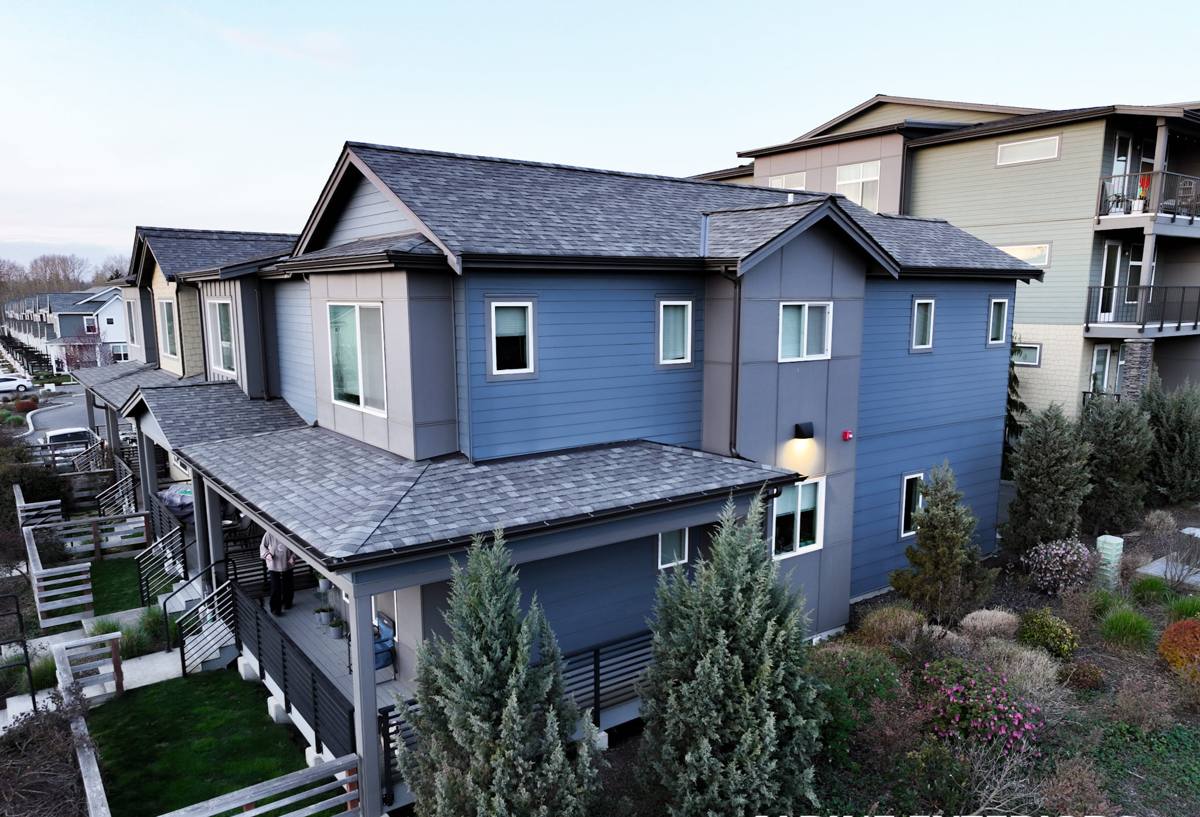
What Edgemoor's Climate Actually Does to Siding
Salt Air and Corrosion
Proximity to the water means airborne salt settles on every exterior surface, not just the siding face. Over years, that salt accelerates corrosion on nails, screws, and any exposed metal flashing or trim. When fasteners corrode, they weaken their grip on the siding board, and rust staining bleeds through paint and caulking — a cosmetic problem that also signals a structural one underneath.
Wind-Driven Rain
Rain that comes in sideways during winter storms pushes water into joints, seams, and butt ends that would stay dry in a straight-down rain. Any siding product that relies heavily on caulking or paint film to keep water out is more exposed here than in a sheltered inland lot. Water that gets behind the siding and can't escape is the single biggest driver of rot in this climate.
Moss and Algae
Edgemoor's tree cover and marine humidity mean shaded walls stay damp far longer after a storm than sun-exposed walls elsewhere in Bellingham. Moss and algae growth on siding isn't just a look problem — sustained moisture retention under organic growth softens paint film and, on the wrong substrate, softens the material underneath it.
Why We Only Install James Hardie Fiber Cement Here
Given what Edgemoor's climate does to exterior materials, we standardized on James Hardie fiber cement siding rather than vinyl, LP SmartSide, cedar, primed spruce, or other fiber cement brands like Cemplank or Allura. Here's the honest reasoning, not a sales pitch:
- It's non-combustible. Fiber cement doesn't feed a fire the way wood-based products can, which matters for insurance and peace of mind regardless of coastal exposure.
- It doesn't rely on paint film alone to survive moisture. Fiber cement is dimensionally stable and resists the swelling, warping, and edge-softening that engineered wood products can experience when they take on repeated moisture cycling.
- ColorPlus factory finish holds up to salt air and UV better than field-applied paint. The finish is baked on under controlled conditions, which gives it better adhesion and color retention than paint applied on-site in variable weather — a real advantage where salt exposure accelerates paint breakdown.
- HZ5 product engineering. James Hardie makes climate-specific formulations, and the HZ5 line is engineered for wetter, harsher climate zones like ours — it's built with this kind of exposure in mind, not a one-size-fits-all product.
- Warranty strength. Hardie's transferable limited warranty on both the substrate and the ColorPlus finish gives homeowners real recourse, which matters more in a climate that stresses materials harder than average.
We won't install vinyl here because it becomes brittle and can crack in coastal wind exposure and doesn't hold up structurally under wind-driven rain the way a rigid fiber cement board does. We won't install cedar or primed spruce because untreated or field-primed wood products need far more maintenance to keep moisture out in a climate that barely lets walls dry between storms. We won't install LP SmartSide because its wood-strand composition, while treated, is still an engineered wood product that depends on an intact outer seal to keep water from reaching the strand core — a seal that field conditions and joint details can compromise over time. These aren't claims that any of these products are junk; they're honest trade-offs that don't line up well with what Edgemoor's climate demands.
How the Main Siding Options Compare in This Climate
| Material | Moisture Behavior in Salt Air / Driving Rain | Maintenance Load | Fire Rating |
|---|---|---|---|
| James Hardie fiber cement | Dimensionally stable; factory finish resists salt-driven paint breakdown | Low — periodic wash, no repainting cycle needed for years | Non-combustible |
| Vinyl | Can become brittle and crack under wind and impact; seams can allow water intrusion | Low, but limited repair options once damaged | Combustible, can warp near heat sources |
| Cedar / primed spruce | Absorbs moisture, prone to rot and moss retention in shaded, damp walls | High — repainting and sealing on a recurring cycle | Combustible |
| LP SmartSide / other fiber cement brands | Depends on maintaining an intact seal or finish; performance varies by product line | Moderate — finish maintenance matters | Varies by product |
What a Correct Siding Replacement Involves in Edgemoor
Replacing siding here isn't just pulling old boards and nailing up new ones. Given the moisture load this neighborhood sees, the work underneath the siding matters as much as the siding itself.
Tear-Off and Substrate Inspection
Once old siding comes off, we inspect the sheathing and framing for rot, especially at wall penetrations, old flashing points, and any area that showed moss or staining before removal. Salt air and driving rain often mean damage extends further than what's visible from outside — this is the point where hidden problems get caught or missed.
Weather-Resistive Barrier and Flashing
A correctly installed water-resistive barrier and properly lapped, corrosion-resistant flashing at every window, door, and penetration is what actually keeps wind-driven rain out — the siding itself is the second line of defense, not the first. This is one of the most commonly under-done parts of a siding job, and it's where corner-cutting shows up as rot five to ten years later.
Fastener Selection
Given the corrosion risk from salt air, fastener choice matters more here than inland. Using corrosion-resistant fasteners rated for the exposure, installed to Hardie's specified nailing pattern and depth, is a detail that's invisible once the job is done but directly affects how long the installation lasts.
Joint and Trim Detailing
Butt joints, corner details, and trim transitions are where wind-driven rain finds its way in. Correct installation means proper gapping, factory-finished cut edges sealed per manufacturer specification, and trim details that shed water rather than trap it against the wall.
Our Process for an Edgemoor Siding Replacement
- On-site assessment. We walk the exterior, note moss lines, staining, soft spots, and areas with the most wind and rain exposure based on the home's orientation.
- Written scope and product selection. We recommend the appropriate Hardie product line and color for the home's exposure, with a clear written scope of tear-off, moisture barrier, flashing, and installation details.
- Tear-off and substrate check. Old siding comes off, sheathing and framing get inspected, and any rot or damage is addressed before new siding goes up — not covered over.
- Weather barrier and flashing installation. This is done to manufacturer and code specification, not shortcut, because it's the layer doing the real water management work.
- Hardie siding installation. Installed to manufacturer specification for fastener type, spacing, joint treatment, and clearance from grade and hard surfaces.
- Final walkthrough. We review the finished work with the homeowner and confirm trim, caulking, and touch-up details are complete.
What to Check Before Hiring Anyone for This Job
- Do they have documented experience installing James Hardie products specifically, not just "fiber cement in general"?
- Will they inspect and address sheathing and framing condition before installing new siding, not just over old problems?
- Do they specify corrosion-resistant fasteners appropriate for coastal exposure?
- Is the weather-resistive barrier and flashing plan spelled out in the written scope, not left vague?
- Do they carry manufacturer certification that supports a full warranty, including labor coverage where applicable?
- Can they explain how their approach accounts for wind-driven rain and salt air specifically, rather than a generic pitch?
Why Hiring a Crew That Already Works Edgemoor Matters
A contractor who works this part of Bellingham regularly already knows which wall orientations in the neighborhood take the worst of the wind-driven rain, where moss builds up fastest, and how salt air exposure tends to show up first — usually in fastener corrosion and flashing failure before the siding face itself shows a problem. That local pattern recognition changes how a crew scopes tear-off, where they spend extra time on flashing, and what they flag during the walk-through before work even starts.
It also means fewer surprises once the old siding comes off. Homes near the water in Whatcom County often carry moisture damage that isn't visible until removal, and a crew that's seen this pattern before knows what to look for and how to price for it honestly upfront rather than discovering it mid-job.
What Homeowners Can Do Between Now and a Replacement
If a full siding replacement isn't imminent, a few things slow the damage this climate causes:
- Keep gutters clear so overflow doesn't run down and saturate wall sections repeatedly.
- Trim back vegetation and tree cover that keeps specific wall sections shaded and damp longer than the rest of the house.
- Have visible moss or algae growth washed off gently rather than left to sit — but avoid high-pressure washing that can force water behind aging siding.
- Watch for rust staining around fasteners or trim, since that's often the earliest visible sign of the corrosion this climate causes.
None of that replaces a proper siding system, but it buys time and helps you catch problems before they become structural.
If your Edgemoor home is showing moss buildup, rust staining, soft trim, or paint that keeps failing no matter how often it's redone, we're happy to take a look and give you a straightforward, no-pressure assessment. Use the form below to request a free estimate.