 Bellingham Siding
 Why Silver Beach Homes Wear Out Siding Faster
Silver Beach sits close enough to Bellingham Bay that salt-laden air is a daily fact of life, not an occasional nuisance. Combine that with Whatcom County's long wet season and the heavy tree cover common in the area, and you get a specific set of stresses on exterior siding: constant moisture exposure, driving rain that gets pushed sideways off the water, and moss and algae that colonize any surface that stays damp for more than a day or two. Siding here doesn't just get old — it gets attacked from several directions at once.
Homeowners in this neighborhood often notice the same pattern: paint that fails years ahead of schedule, panels that feel soft or spongy near the bottom courses, and a persistent green-black film on north-facing walls that pressure washing only knocks back temporarily. None of that is bad luck. It's what happens when a siding material and installation weren't matched to this specific microclimate.
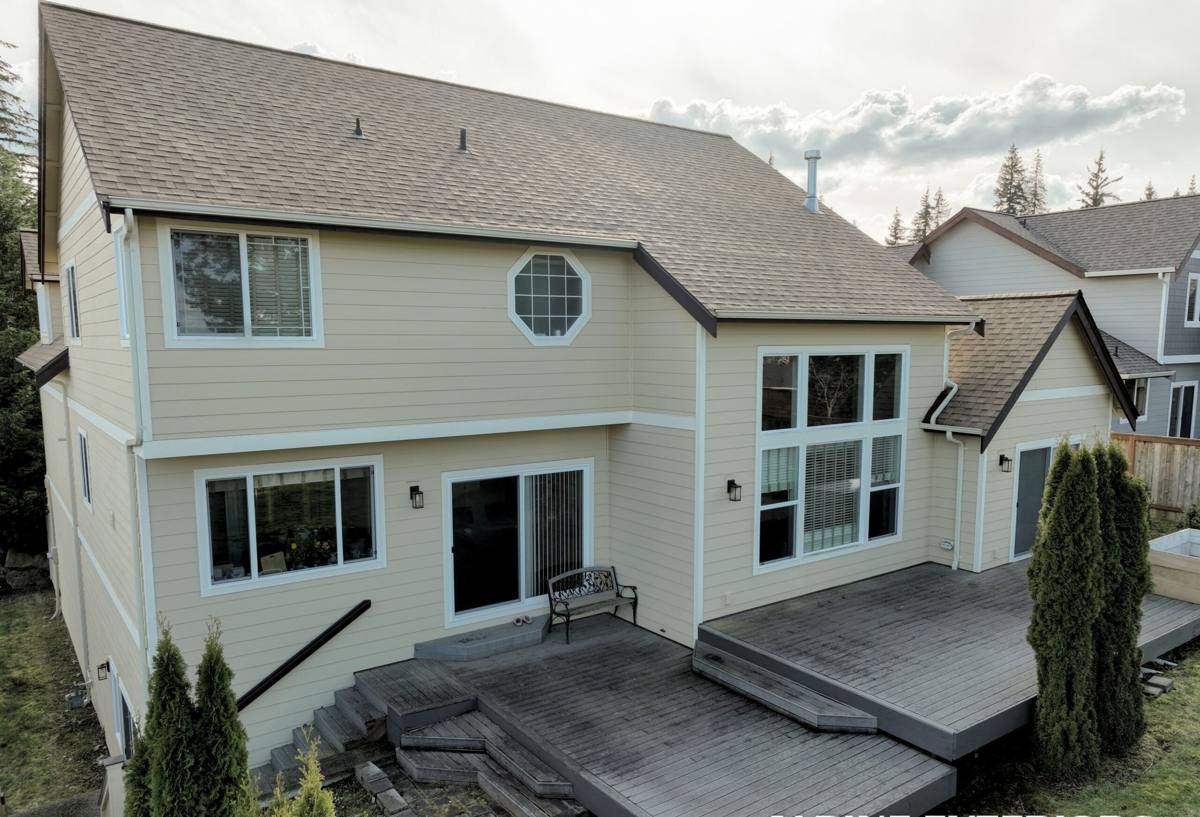
What Salt Air and Moss Actually Do to Siding
Salt Air
Airborne salt is hygroscopic — it pulls moisture out of the air and holds it against whatever surface it lands on. On wood-based or wood-fiber siding products, that means the material spends more time saturated than it would a few miles inland. Saturated wood fiber swells, and repeated swelling and drying cycles are what eventually break down paint adhesion and the material itself at butt joints and cut edges.
Driving Rain
Bellingham Bay-facing exposures catch wind-driven rain that hits siding almost horizontally during winter storms. That kind of exposure finds every gap in flashing, every under-caulked seam, and every spot where the original installer skipped a step. Water doesn't need much of an opening to get behind siding — it just needs time and pressure, and this neighborhood supplies both.
Moss and Algae
Shade, moisture, and mild temperatures are exactly what moss and algae need to establish themselves. Once a spore colony takes hold on a porous or textured surface, it holds additional moisture against the wall, which accelerates whatever moisture damage is already underway. Siding that can't shed water quickly, or that has a surface texture spores can grip, will always be fighting a losing battle in this climate.
Why We Only Install James Hardie Fiber Cement Here
We've made a deliberate decision not to install vinyl, LP SmartSide, or other wood-fiber composite sidings, and Silver Beach is a good example of why. Vinyl siding expands and contracts significantly with temperature swings, and in a coastal, wind-exposed setting that movement stresses seams and fastening over time, sometimes allowing wind-driven rain to work its way behind panels. Wood-fiber composite products, even engineered ones, are still wood at their core — they can perform well for years, but they depend on unbroken paint film and perfect edge sealing to keep moisture out, which is a hard standard to guarantee permanently in a salt-air, high-moisture environment.
James Hardie fiber cement is cement, sand, and cellulose fiber — it doesn't have the same relationship with moisture that wood products do. It doesn't swell and rot the way wood fiber can, and it holds paint and factory finish far longer under UV and moisture cycling. It's also non-combustible, which matters increasingly in Washington given the wildfire smoke and ember exposure the region has seen in recent summers. We install it because it's engineered for exactly the conditions Silver Beach deals with, not because it's the only option on the market.
Hardie Products That Make Sense for This Neighborhood
James Hardie makes climate-specific product lines, and for a bay-adjacent, high-moisture neighborhood like this one, that distinction matters more than color or style choice.
- HardiePlank HZ5 lap siding — engineered for the wetter, harsher climate zones and the standard choice for most homes in this area.
- ColorPlus factory finish — baked-on finish that resists fading and holds up to salt air and UV significantly better than field-applied paint, which is where most siding failures actually start.
- HardieTrim — for corners, fascia, and window trim, keeping the whole envelope in one non-combustible, moisture-stable material system rather than mixing wood trim with fiber cement panels.
- Smooth or cedar-textured profiles — both perform identically; the choice is aesthetic, matched to the home's style and neighborhood character.
What a Correct Replacement Involves
Replacing siding isn't just swapping old panels for new ones. In a moisture-heavy environment like Silver Beach, most of the long-term performance is decided by what happens underneath the siding, not the siding itself.
Tear-Off and Sheathing Inspection
Once old siding is off, we inspect the sheathing for soft spots, rot, or prior water damage — something that's genuinely common on homes near the bay that have been fighting moisture for decades. Any compromised sheathing gets replaced before anything new goes up. Installing new siding over damaged sheathing just seals the problem in.
Weather-Resistive Barrier
A properly lapped and sealed weather-resistive barrier goes down next, giving the wall a secondary drainage plane in case any moisture does get past the siding face. This step is easy to rush and impossible to inspect later, which is exactly why it matters who's doing it.
Flashing at Every Penetration
Windows, doors, hose bibs, vents — every penetration through the wall plane needs correctly lapped flashing so water is directed out and down, never trapped behind the siding. In a driving-rain environment, flashing detail is usually the single biggest factor separating a wall system that lasts thirty years from one that starts failing in five.
Fastening and Clearances
James Hardie has specific fastening patterns and minimum clearances from grade, roof lines, and decks. Skipping these to save time is one of the most common ways a fiber cement installation underperforms its potential — the material is only as good as the installation.
Caulking and Paint Touch-Up
Factory-finished ColorPlus panels need minimal field painting, but cut edges and any touch-up areas still need to be sealed and coated correctly to maintain the warranty and keep moisture out at every joint.
Signs It's Time to Replace, Not Repair
| Sign | What It Usually Means |
|---|---|
| Soft or spongy panels near the bottom | Moisture has reached the substrate; localized repair rarely stops it from spreading |
| Persistent moss/algae that returns within weeks of cleaning | Surface is holding moisture the material can't shed on its own |
| Paint failing within 2-3 years of repainting | Substrate is likely saturated or failing underneath the paint film |
| Visible gaps at butt joints or corners | Movement or shrinkage has opened entry points for wind-driven rain |
| Musty smell or interior staining near exterior walls | Water has already breached the wall assembly |
Cost Factors for a Silver Beach Home
Every home is different, but a few factors consistently drive the price of a siding replacement in this specific neighborhood more than they would in a drier, more sheltered part of Whatcom County.
| Factor | Why It Matters Here |
|---|---|
| Sheathing condition | Bay-facing and older homes more often need sheathing repair discovered during tear-off |
| Wall exposure/orientation | Sides facing the water or prevailing wind need more attention to flashing and fastening |
| Trim and detail complexity | Homes with more corners, windows, and rooflines require more flashing and cut work |
| Existing siding removal | Some products (older wood, certain composites) are more labor-intensive to strip than others |
| Access and site conditions | Tree cover, slopes, and tight lots common in the area can affect staging and labor time |
We give straightforward, itemized estimates so homeowners can see exactly what's driving the number, rather than a single lump figure.
Why Local Experience in Silver Beach Matters
A crew that already works this neighborhood knows which walls take the worst of the weather off the bay, where moss tends to establish first, and what condition to expect from sheathing on homes of a given age in this specific area. That's not something you get from a general contractor bid template — it comes from having pulled siding off enough Silver Beach homes to know the patterns. It also means fewer surprises mid-project, because we've already seen most of what's likely hiding behind the old siding before we ever start tear-off.
A Simple Pre-Project Checklist
- Note any interior wall staining, musty odors, or soft drywall near exterior walls before the estimate visit
- Point out areas where moss or algae return quickly after cleaning
- Flag any past water intrusion or repair history, even if it seems resolved
- Ask specifically which Hardie product line and finish is being quoted, and why
- Confirm the estimate includes sheathing inspection and flashing detail, not just panel replacement
If your Silver Beach home is showing any of these signs, or you just want a straight answer about what condition your siding is really in, we're happy to take a look. The estimate is free, there's no pressure, and you'll get a clear, itemized picture of what a correct replacement would involve.