 Bellingham Siding
 Decks in South Hill Face a Different Set of Conditions
South Hill sits above the rest of Bellingham, with mature tree canopy, older home lots, and in many spots a clear line of sight down toward Bellingham Bay. That combination is part of what makes the neighborhood desirable — and part of what makes an outdoor deck here behave differently than one built on a flat, open lot elsewhere in Whatcom County. Salt-laden air off the bay, long stretches of driving rain through fall and winter, and a moss season that can run half the year all work on exposed wood and fasteners in ways that show up as squeaks, soft spots, and premature staining within just a few seasons if the deck wasn't built with those specific stresses in mind.
None of this is unusual for this part of Washington — it's just the baseline a deck has to be designed around. A deck built to a generic spec, without attention to how water actually moves across a hillside lot shaded by fir and maple canopy, is the deck that needs board replacement in year six instead of year twenty.
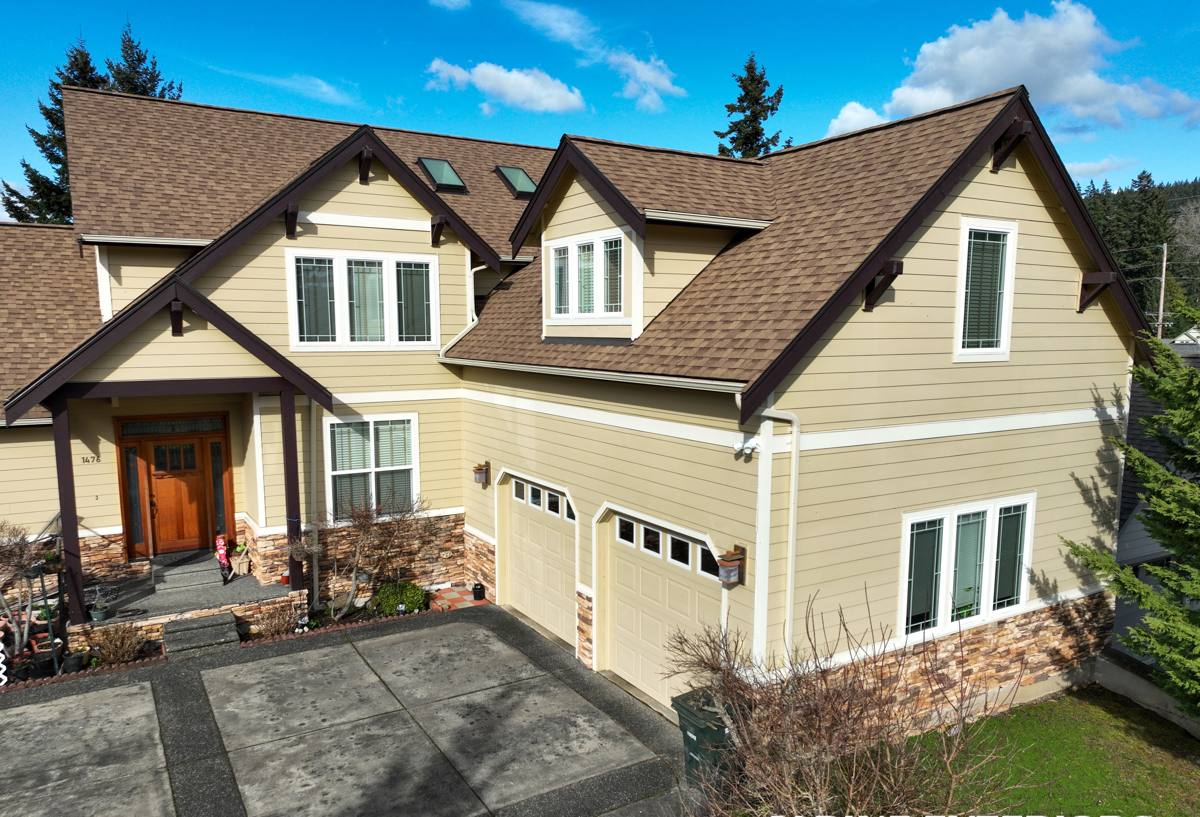
What South Hill's Hillside Setting Means for Deck Design
Many South Hill lots slope, which changes how a deck needs to be framed and footed compared to a deck going in on level ground. Footings often need to step down the grade, posts run longer on the downhill side, and drainage under the deck has to be planned rather than left to chance — otherwise water collects against the house foundation or pools under low-clearance areas where it can't dry out between storms.
The tree cover that gives South Hill its character also means many decks sit in partial shade for a good part of the day, especially in the shoulder seasons. Shade plus moisture is exactly the combination that grows moss and mildew fastest. Good design accounts for this with board spacing, airflow underneath the deck, and material choices that don't hold moisture against the wood — not by fighting the trees, but by building around the reality of where the sun does and doesn't reach on a given lot.
Older South Hill homes also mean older ledger connections. Before we touch decking or framing on a rebuild, we look at how — and whether — the deck is properly attached to the house, since a lot of legacy attachments in this neighborhood predate current flashing and fastening standards.
Common site conditions we plan around
- Sloped or stepped lots requiring variable post heights and additional footings
- Partial shade from mature trees, which slows dry-out time after rain
- Older homes with ledger attachments that need to be brought up to current standards
- Proximity to the bay, which puts salt-bearing air on every exposed fastener and hinge
- Limited or awkward access on some lots, which affects how materials get to the build site
Choosing Decking Material for This Climate
There's no single right decking material for every South Hill home — the right choice depends on budget, how much shade the deck sits in, and how much upkeep the homeowner actually wants to take on. Here's how the common options compare under Bellingham's wet, moss-prone conditions:
| Material | Upfront Cost | Moss & Mildew Resistance | Maintenance | Typical Lifespan Here |
|---|---|---|---|---|
| Pressure-treated wood | Lowest | Fair — needs regular cleaning and sealing | Annual cleaning, re-sealing every 1-2 years | 10-15 years with upkeep |
| Cedar | Moderate | Good, but softens without upkeep | Cleaning and oil or stain every year or two | 15-20 years with upkeep |
| Capped composite | Higher | Very good — protective shell resists moss staining | Occasional washing, no sealing needed | 25-30 years |
| PVC | Highest | Best — fully synthetic, nothing organic for moss to grip | Occasional washing | 25-30+ years |
We install all of the above — the point isn't to steer every homeowner toward the most expensive option. Pressure-treated and cedar decks are perfectly good choices when they're built with the right drainage and airflow underneath and the owner is realistic about the maintenance schedule that comes with them. Where we get more cautious is with lower-grade composite products that use a thin or uncapped surface layer — in a shaded, wet climate like this one, moisture can work into the core over time, and the moss staining that results is difficult to fully clean off. That's a maintenance-burden and warranty-structure issue we raise honestly, not a brand judgment, and it's why we walk through the real trade-offs before a homeowner commits to a material.
The Structural Details That Actually Matter Here
The parts of a deck nobody sees are the parts that decide whether it's still solid in fifteen years. In this climate, a handful of details matter more than they would in a drier region.
Ledger flashing
Where the deck attaches to the house is the single most common point of hidden rot on decks we've opened up in this area. Flashing installed so water sheds outward and never gets behind the siding has to be right the first time, since it's the one part of the deck that's expensive to fix once decking and framing are already down over it.
Joist and beam protection
Wrapping the tops of joists and beams in a self-adhering flashing tape keeps standing water from soaking into end grain and fastener holes, which is where framing lumber fails first under sustained wet-season exposure.
Fastener and hardware choice
Salt air off the bay accelerates corrosion on lower-grade fasteners and structural hardware. We use fasteners and connectors rated for the exposure, not just whatever happens to match the decking color, since a corroded hidden fastener is a safety issue long before it's a cosmetic one.
Footings and post bases
On sloped lots, footings need to be sized and set below frost depth and clear of standing water, with post bases that hold the post off the concrete so end grain isn't sitting in a puddle after every storm.
Railings, Fascia, and Finish Work for Wet Weather
Railings and fascia boards take the most direct weather exposure on any deck, since they're vertical, unshaded by the deck surface above them, and usually the first thing to show weathering. We pay attention to end-grain sealing on every cut piece, drainage gaps behind fascia boards so trapped moisture can escape instead of wicking into the wood, and railing post connections that are through-bolted rather than just screwed into the rim joist. On view-oriented South Hill lots, we also talk through railing style early, since cable, glass, and traditional baluster systems all handle wind-driven rain differently and carry different long-term maintenance needs.
Our Deck Building Process
The process is largely the same whether it's a full rebuild or a new deck on a bare lot:
- Site walk and assessment — we look at slope, drainage, existing ledger condition on rebuilds, sun exposure, and access before anything is quoted.
- Design and material selection — sizing, footing layout, and material options are worked out with the homeowner, with honest cost and maintenance trade-offs laid out for each.
- Permitting — most decks attached to the house or built above a certain height require a permit; we handle the application and inspections so the homeowner doesn't have to chase it down.
- Framing and flashing — the structural work, including ledger flashing, joist protection, and footings, gets inspected before decking goes down over it.
- Decking, railing, and finish work — surface material, railings, stairs, and any fascia or skirting are installed and detailed.
- Final walkthrough — we go over the finished deck with the homeowner, including how to maintain the specific material that was chosen.
Maintenance Through Moss Season
Every deck in this climate needs some seasonal attention — the amount just depends on the material. A short list covers most of what matters:
- Sweep leaves and debris off the deck surface regularly through fall so they don't trap moisture against the boards
- Clean moss and algae with a deck-safe cleaner rather than a pressure washer alone, which can drive water into wood fibers or damage composite surfaces
- Check and clear drainage gaps and any underdeck drainage system before the wet season sets in
- Re-seal or re-stain wood decking on the schedule the material calls for — don't wait until it already looks gray and dry
- Inspect railing posts and stair connections once a year for movement or corrosion at the fasteners
- Keep gutters and downspouts near the deck clear so roof runoff isn't adding extra water onto or under it
Why Hire a Crew That Already Works in South Hill
Building a deck that holds up in Bellingham's climate isn't complicated, but it does take getting the details right — the ones described above aren't optional extras, they're the difference between a deck that needs real repair in year six and one that's still tight in year twenty. A crew that already works South Hill's sloped lots, older homes, and tree-shaded yards has already made the adjustments — footing layouts for grade changes, flashing details suited to older ledger conditions, material recommendations that account for how much shade a given yard actually gets — that a crew unfamiliar with the neighborhood has to learn on someone's project.
We also know the practical side of building here: what permitting looks like for decks in this area, what access challenges to expect on a hillside lot, and how to sequence a build so framing isn't left exposed to a run of driving rain mid-project.
If you're planning a new deck or need to replace one that's showing its age, we're happy to take a look and put together a straightforward, no-pressure estimate — use the form below to get started.