 Bellingham Siding
 South Hill Decks Face a Specific Kind of Wear
South Hill sits up above much of Bellingham, which means more exposure to wind-driven rain off Bellingham Bay and the Salish Sea, plus the salt-laden air that comes with living close to the water in Whatcom County. That combination is hard on exterior wood and fasteners in ways that homeowners further inland don't deal with as much. Add in our long, wet moss season that can run from fall through spring, and a deck up here is working against a slow, steady assault almost year-round.
None of this means a deck can't last. It means the repair work has to account for how moisture actually moves through a structure in this climate, not just patch what's visible on the surface. A board that looks fine from a few feet away can be sitting on a joist that's been trapping water for two winters.
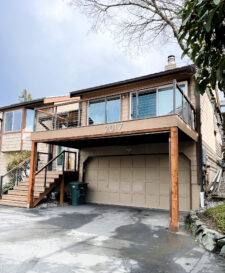
What Local Conditions Actually Do to a Deck
Driving rain and hidden moisture
Rain that comes in sideways during a South Hill storm gets pushed under railings, behind ledger boards, and into the end grain of joists and beams — spots that stay wet long after the surface has dried. Over time this leads to soft or spongy spots, fastener corrosion, and in the worst cases, rot in structural framing that isn't visible until a board flexes underfoot.
Salt air and metal fatigue
Coastal air accelerates corrosion in nails, screws, joist hangers, and bolts. Once a fastener starts to rust, it loses grip strength long before it looks obviously bad. A deck with 15-year-old hardware in a salt-air environment often needs a hardware refresh even if the wood itself is still sound.
Moss, algae, and trapped moisture
Our extended damp season lets moss and algae take hold on decking boards, stairs, and anywhere shade keeps a surface from drying out. Beyond being slippery and a fall hazard, moss holds moisture against the wood surface, which speeds up cupping, splintering, and rot in softwood decking.
Signs Your Deck Needs Repair — and What They Usually Mean
- Soft or bouncy spots underfoot — often a sign of joist or beam rot, not just a bad board
- Railings that wiggle or feel loose — a safety issue tied to post connections or rotted framing, not something to leave for later
- Rust streaks around fasteners — a sign hardware is failing and may need full replacement, not just tightening
- Persistent moss or dark staining — points to a drainage or airflow problem under or around the deck, not just a cleaning issue
- Gaps opening up between boards — normal wood movement, but worth checking if it's exposing fastener heads or ledger connections
- Stairs that feel uneven or shift slightly — usually a stringer or footing issue that gets worse with foot traffic over time
Some of these are cosmetic and can wait for routine maintenance. Others — especially anything involving structural framing, ledger attachment, or railings — are safety issues that shouldn't sit on a to-do list through another wet winter.
What a Correct Deck Repair Actually Involves
A repair that only replaces what's visible from the top often misses the reason the damage happened in the first place. A thorough repair looks at the whole system:
- Checking the ledger board connection to the house — this is the single most common source of catastrophic deck failure when it's improperly flashed or fastened
- Inspecting joists and beams for soft spots, especially near the ledger and anywhere boards have been holding standing water
- Evaluating footings and posts for movement, rot at ground contact, or inadequate original construction
- Replacing corroded fasteners and hardware with materials rated for coastal, high-moisture exposure
- Confirming proper drainage and airflow underneath the deck so replaced wood doesn't fail again in a few years
- Reviewing railing posts and guard connections against current safety standards, not just how they were originally built
Skipping the structural check and just swapping decking boards is the most common shortcut we see — and the most common reason a "repaired" deck needs work again within a couple of seasons.
Decking Materials: Repair Considerations by Type
What your deck is built from changes what repair actually looks like, and what to expect going forward. Here's how the common options hold up to South Hill's climate:
| Material | Common Repair Issues | Maintenance Reality |
|---|---|---|
| Pressure-treated wood | Rot at fastener points, cupping, splintering with age | Needs regular sealing/staining to resist our wet season; most affordable to repair board-by-board |
| Cedar | Softer wood, more prone to surface wear and moss growth in shaded areas | Natural rot resistance is good, but still benefits from periodic sealing near ground level and under railings |
| Composite decking | Fastener/clip failures, edge swelling if end caps are damaged, fading over time | Low maintenance on the surface, but structural framing underneath still needs the same wood-based inspection |
| Structural framing (any deck) | Ledger rot, joist hanger corrosion, footing movement | The part that matters most for safety and the part most often ignored during a surface-level repair |
Whatever the surface material, the framing underneath is almost always wood, and it's almost always what determines whether a repair holds up or fails again. We're honest with clients that composite decking on rotted framing is not a fix — it just hides the problem under a nicer surface.
How We Approach a Deck Repair on South Hill
- On-site inspection. We walk the whole deck, check underneath where possible, test for soft spots, and look at the ledger connection and footings, not just the decking surface.
- Honest assessment. We tell you plainly whether this is a repair, a partial rebuild, or if the deck has enough underlying damage that full replacement is the more sensible long-term option.
- Scope and estimate. You get a clear breakdown of what's being replaced and why, in plain language, before any work starts.
- Repair work. We replace only what needs replacing, using hardware and fasteners suited for coastal Whatcom County exposure, and correct any drainage or ventilation issues we find along the way.
- Final check. We walk the deck with you when it's done so you know what was fixed and what to keep an eye on going forward.
Repair vs. Rebuild: What Drives the Decision
| Factor | Leans Toward Repair | Leans Toward Rebuild |
|---|---|---|
| Ledger board condition | Solid, properly flashed | Rotted or improperly attached originally |
| Extent of joist damage | Isolated to one or two joists | Widespread soft spots across the frame |
| Footings/posts | Stable, no movement | Shifting, undersized, or rotted at ground contact |
| Age of structure | Under 15-20 years with good bones | Original build was undersized or code has changed significantly since |
| Decking surface | Wear limited to boards, easily swapped | Damage tied to a structural cause that will recur |
Broadly, a straightforward board and hardware repair on a structurally sound deck tends to run into the low thousands, while a partial rebuild involving framing or footings costs more, and a full rebuild is its own project scope entirely. We give you real numbers after we've actually seen the deck — not before.
Maintenance Checklist to Get More Years Out of Your Deck
- Clear leaves and debris from between boards before fall rains set in
- Scrub moss and algae off surfaces and stairs each spring before it gets a foothold
- Check railings and stair posts for looseness at least once a year
- Look underneath the deck periodically for standing water or blocked drainage
- Reseal or restain wood decking on the schedule recommended for the product, not just when it looks faded
- Watch for rust streaks around fasteners as an early warning sign
- Keep gutters and downspouts clear so runoff isn't dumping directly onto or under the deck
Why a Crew That Already Works South Hill Makes a Difference
Deck problems in this neighborhood tend to follow patterns — ledger flashing that wasn't detailed for our rain, hardware that wasn't rated for salt air, decking that was never sealed before the first moss season hit it. A crew that's already worked on homes up here has seen those patterns enough times to catch them during the first walk-through, instead of discovering them halfway through a job.
That familiarity also means a more realistic estimate up front, because we're not guessing at how Bellingham's weather affects a structure — we're accounting for it based on what we've actually seen on decks in this exact area.
If your deck is showing soft spots, loose railings, or just isn't holding up the way it used to, we're happy to take a look. Reach out for a free, no-pressure estimate using the form below.