 Bellingham Siding
 Siding Repair Built for South Hill's Conditions
South Hill sits above downtown Bellingham with some of the best exposure to Bellingham Bay in the city — which is exactly why siding up here takes a beating that flatland neighborhoods don't see. The same elevation and water views that make the neighborhood desirable also mean more direct salt-laden air, more wind-driven rain hitting walls at an angle instead of falling straight down, and long stretches of shaded, damp shoulder seasons that keep moss and algae established on north- and east-facing walls for months at a time. A siding repair here isn't just a patch job — it's a decision about whether the fix will hold up to the next five winters or fail again in eighteen months.
We repair siding on South Hill homes regularly, and the pattern is consistent: the damage almost never comes from one dramatic event. It's the slow accumulation of moisture finding a weak point — a cracked board, a failed caulk line, a spot where the original installation didn't leave enough clearance — and then Whatcom County's wet season doing the rest.
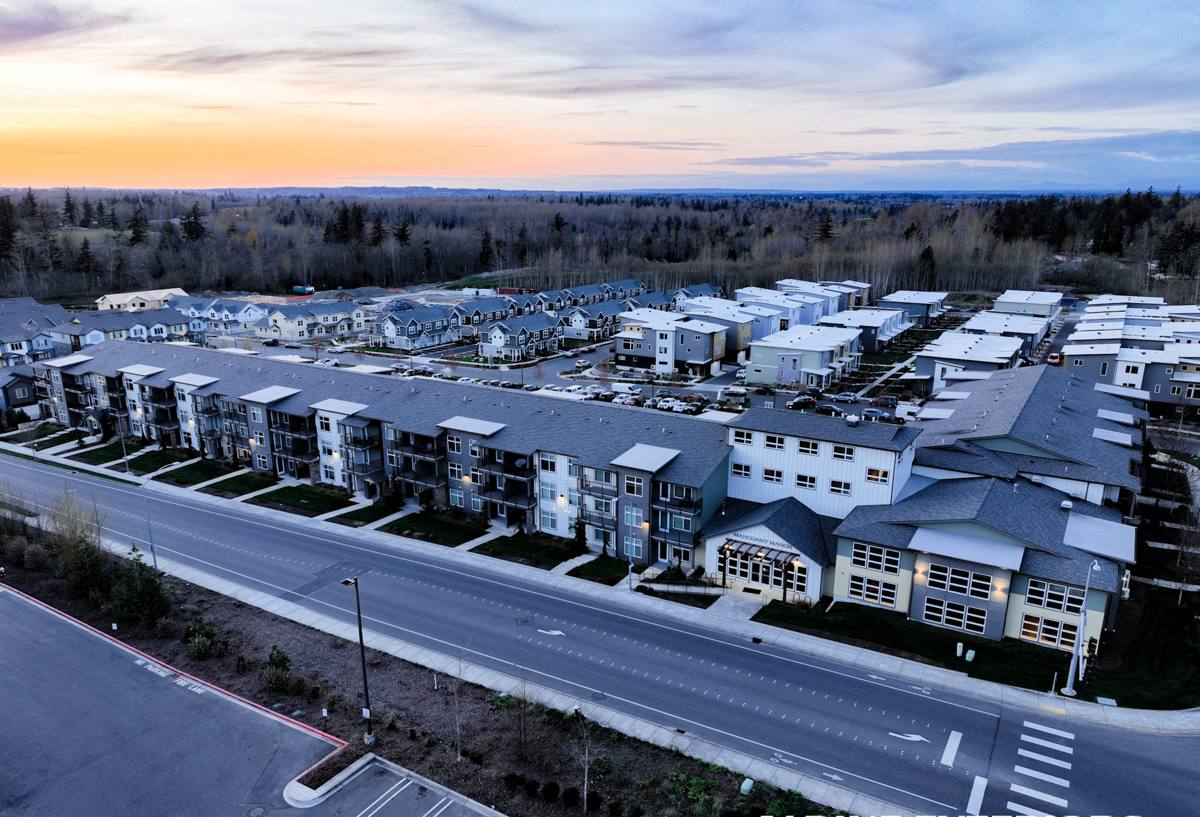
Why South Hill Homes Age Differently Than Other Bellingham Neighborhoods
Elevation and Wind Exposure
Homes higher on the hill catch more wind off the bay, which drives rain sideways into wall assemblies that were only ever designed to shed water falling straight down. Over time this pushes moisture into seams, corner boards, and butt joints that would stay dry on a more sheltered lot.
Tree Canopy and Shade
Many South Hill streets have mature tree cover, which is a real asset for the neighborhood but a mixed blessing for siding. Shaded walls dry out far more slowly after rain, and that lingering moisture is exactly what moss, algae, and mildew need to take hold and spread.
Older Housing Stock
South Hill has an older mix of homes than some of Bellingham's newer subdivisions. Older siding — whether it's original wood, an aging vinyl retrofit, or a previous fiber cement job — is more likely to have accumulated small failures over the decades: nail pops, caulk that's dried and cracked, trim that was never properly flashed. Repair work on these homes often turns up more than one problem once we're actually up on the wall.
Signs Your South Hill Home Needs a Siding Repair
- Soft or spongy spots when you press on a section of siding
- Visible cracking, splitting, or buckled boards, especially at corners
- Paint or finish peeling in a localized area rather than across the whole wall
- Persistent green or black staining that returns shortly after cleaning
- Gaps opening up at seams, trim, or around windows and doors
- Interior signs — a damp smell, a stained spot on an interior wall — that trace back to an exterior wall
What a Correct Siding Repair Actually Involves
A repair that just covers the visible damage is a temporary fix. A correct repair starts by figuring out why that section failed in the first place — otherwise you're patching a symptom and the same spot fails again in a season or two. On South Hill homes, that means checking whether the damage is isolated or whether moisture has traveled behind the siding into the sheathing, checking the flashing and caulking around the damaged area, and confirming the clearance between the bottom of the siding and grade, decks, or roof lines is adequate. Driving rain finds the smallest gap, so a repair that doesn't address the underlying water path is just a delay.
Once the cause is understood, the actual repair work involves removing the damaged section cleanly without disturbing more of the wall than necessary, correcting whatever let water in — reflashing, resealing, adjusting clearance — and then installing new material that matches the existing siding in profile, exposure, and finish as closely as possible. Color and texture matching matter more than most homeowners expect; a mismatched patch is the fastest way to make a repair look worse than the damage it fixed.
Common Repair Scenarios We See on South Hill
Most of the calls we get from this neighborhood fall into a few recurring categories:
Moisture at Butt Joints and Corners
These are the highest-risk points on any siding job, and on wind-exposed South Hill walls they're often where the first sign of trouble shows up — swelling, dark staining, or a board that's started to separate from the wall.
Moss and Algae Damage on Shaded Elevations
Growth itself isn't always structural, but the moisture it traps against the siding surface is. Left long enough, that trapped dampness breaks down paint and finish and eventually the substrate underneath.
Impact and Age-Related Cracking
Older siding materials become more brittle over time, and localized cracking or splitting — from age, minor impact, or freeze-thaw cycling — is common on homes with original siding that's due for attention.
Failed Caulking and Trim Gaps
Caulk has a service life, and once it dries out and cracks, it stops doing its job of keeping wind-driven rain out of seams. This is one of the simplest problems to fix correctly and one of the most commonly ignored.
Our Repair Process
We approach every siding repair call on South Hill the same methodical way:
- Inspection. We look at the damaged area and the surrounding wall, not just the spot you called about — a single failure point is often a sign of a broader issue nearby.
- Moisture check. Where there's any sign the damage isn't purely cosmetic, we check for moisture intrusion behind the siding before deciding on a repair plan.
- Diagnosis. We identify the actual cause — clearance, flashing, caulking, material failure — so the repair fixes the problem instead of just the symptom.
- Material matching. We source or fabricate a repair that matches the existing siding's profile and finish as closely as possible.
- Correct installation. The repaired section goes in with proper clearance, fastening, and sealing — built to the same standard as a full replacement, just on a smaller scale.
- Walkthrough. We show you what we found and what we did, including anything else on the wall worth keeping an eye on going forward.
Repair vs. Replace: How We Help You Decide
Not every damaged section needs a full wall replacement, and not every repair is worth doing if the underlying siding is near the end of its life. Here's how we think through it:
| Factor | Repair Usually Makes Sense | Replacement Usually Makes More Sense |
|---|---|---|
| Extent of damage | Isolated to one or two sections | Recurring failures across multiple walls |
| Age of existing siding | Siding is otherwise sound and well within its service life | Siding is old, brittle, or was poorly installed originally |
| Moisture history | No sign of hidden moisture behind the wall | Evidence of ongoing moisture intrusion into sheathing |
| Material match | A close color/profile match is achievable | Discontinued product or heavy fading makes matching impractical |
| Cost over time | Repair cost is a small fraction of replacement | Multiple repairs are starting to add up to replacement cost anyway |
We'll always tell you honestly which side of that table your home falls on — our goal is the right fix for your budget and your house, not the biggest possible job.
Why We Only Repair and Replace With James Hardie
We install and repair exclusively with James Hardie fiber cement siding, and that standard applies to repair work too. When we're patching into an existing Hardie wall, ColorPlus factory-finished material gives us a much better chance of a color match that doesn't stand out five years from now, because the finish is baked on at the factory rather than field-painted. Hardie's HZ product lines are also engineered for Pacific Northwest moisture exposure specifically, which matters on a wind-exposed, salt-air neighborhood like South Hill. Fiber cement doesn't absorb water the way wood does, and it doesn't have the seam and expansion issues that make vinyl repairs prone to warping or visible patch lines. If your home currently has vinyl, LP SmartSide, cedar, or another fiber cement brand, we'll still assess and discuss your repair honestly — but when a section needs full replacement rather than a patch, our recommendation is Hardie, and we'll explain why in plain terms rather than just pushing our own product line at you.
Why Hire a Crew That Already Works This Neighborhood
South Hill's combination of hillside wind exposure, mature tree cover, and a mix of older and newer homes isn't the same repair environment as a new subdivision on flatter ground elsewhere in Whatcom County. A crew that's already worked on this hill knows to check clearance and flashing at wind-exposed corners first, knows which elevations are going to have moss and moisture issues before they even walk the property, and isn't guessing at how the local climate behaves on a hillside lot. That familiarity shows up in faster, more accurate diagnosis and fewer surprises once the repair is underway.
It also matters for logistics — hillside lots, narrow access, and mature landscaping all affect how a repair job gets staged and executed cleanly without damage to your yard or plantings. A crew unfamiliar with the neighborhood is more likely to be working that out on the fly; a crew that already works here has a plan before the truck arrives.
Get an Honest Look at Your Siding
If you're seeing cracked boards, persistent staining, soft spots, or gaps in your siding, it's worth getting an honest, no-pressure assessment before the next wet season makes it worse. We'll tell you plainly whether you're looking at a straightforward repair, a larger fix, or something better addressed as part of a future replacement — and give you a free estimate either way.