 Bellingham Siding
 Happy Valley Roofs Work Harder Than Most People Realize
Happy Valley sits close enough to the water and the hills around it that roofs here deal with a combination most inland neighborhoods never see: salt-laden air moving in off Bellingham Bay, long stretches of driving rain, and a moss season that can run most of the year in shaded, north-facing sections of a roof. None of these on their own is unusual for Whatcom County. Together, over years, they wear a roof down faster than the calendar would suggest.
Storm damage rarely announces itself with a dramatic hole in the roof. More often it shows up as a handful of shingles that lifted in a windstorm, a section of flashing that worked loose during heavy rain, or moss that's been quietly holding moisture against the roof deck for a season or two. By the time a homeowner notices a stain on a ceiling, the damage has usually been developing for a while.
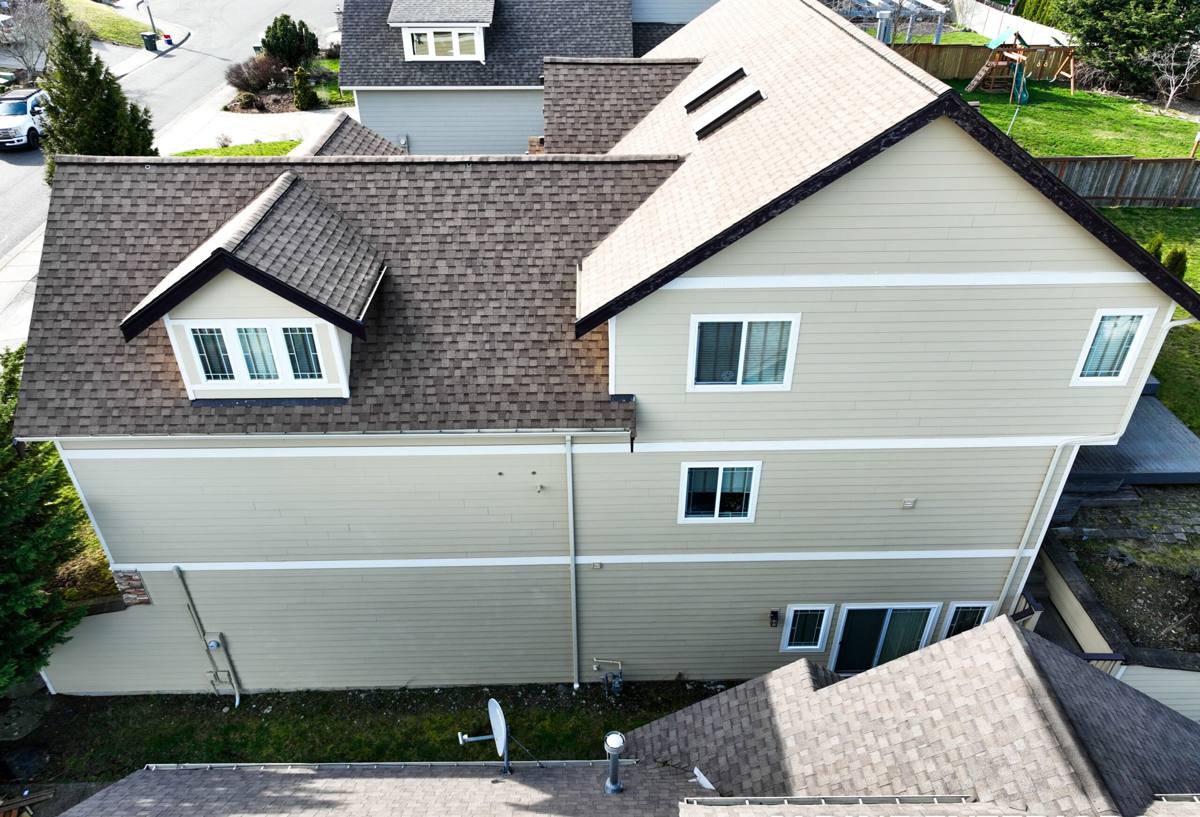
What Actually Counts as Storm Damage Here
"Storm damage" covers more than wind ripping shingles off in dramatic fashion. In Happy Valley, the damage we're called out for most often falls into a few categories:
Wind and Wind-Driven Rain
Sustained wind can lift shingle tabs, break the seal underneath them, or crack ridge caps without removing anything visibly. Once that seal is broken, wind-driven rain gets pushed sideways underneath the shingle instead of running off the top of it, which is a very different (and slower, sneakier) kind of leak than a missing shingle.
Moss and Trapped Moisture
Moss isn't storm damage by itself, but it sets a roof up to be damaged by the next storm. Moss holds water against the shingle surface and roof deck long after the rain has stopped, which softens shingles, corrodes exposed fasteners, and can rot the decking underneath in shaded valleys and north-facing slopes. A roof with heavy moss going into a windstorm is far more likely to lose material than a clean one.
Flashing and Penetration Failures
Flashing around chimneys, vents, skylights, and roof-to-wall transitions is where most leaks actually originate, storm or no storm. Repeated freeze-thaw cycles, wind flex, and general age loosen the seal or the fasteners, and a hard rain finds the gap.
Gutter and Drainage Overload
When gutters and downspouts can't keep up with a heavy rain event — often because they're clogged with moss and debris in the first place — water backs up under the roof edge and into fascia boards, which is a slower form of storm damage that's easy to miss from the ground.
What a Correct Repair Actually Involves
A storm damage repair that's done right is not just "put new shingles where the old ones used to be." It starts with understanding why the damage happened, because a repair that ignores the cause tends to fail again in the next storm.
A Real Inspection, Not a Drive-By
That means getting on the roof (not just looking from the driveway), checking the decking under damaged shingles for soft spots or rot, examining flashing at every penetration near the damaged area, and checking the attic from the inside where access allows, since water staining on rafters or insulation tells you how far a leak has traveled.
Matching Materials, Not Just Colors
Shingles fade with UV and salt-air exposure over time, so a patch using brand-new material next to five-year-old shingles will often look mismatched even if the color is technically the same. We'll be upfront about what a visual match will realistically look like before starting, rather than promising a seamless blend we can't deliver.
Underlayment and Flashing Come First
Any repair that replaces shingles without addressing the underlayment or flashing beneath them is doing half the job. If the underlayment has been compromised by moisture, it gets replaced in that section. If flashing is original and brittle, it gets replaced rather than resealed, since caulk over old flashing is a temporary fix, not a repair.
Moss and Debris Removal Before, Not After
We clear moss and organic debris from the repair area and its drainage path before closing the roof back up. Repairing storm damage while leaving moss in place next to it just sets up the same failure again.
How Our Process Works
1. Inspection and Documentation
We assess the damage, photograph it for your records (useful whether or not you're filing an insurance claim), and identify the root cause — wind, moss, flashing age, or a combination.
2. A Clear, Written Scope
You get a plain-English explanation of what's damaged, what needs to happen to fix it correctly, and what it will cost — before any work starts. If there's a cheaper, honest option that's genuinely sufficient, we'll say so rather than upselling a full section replacement you don't need.
3. The Repair
We work the damaged section with matched or closely matched materials, correct flashing and underlayment where needed, and proper fastening for wind resistance going forward — an important detail in a neighborhood that sees its share of exposed, wind-driven weather.
4. Cleanup and Walkthrough
Debris and old material are hauled off, gutters near the repair are cleared if they were part of the problem, and we walk the completed work with you before we consider the job done.
Repair or Replace? What Actually Drives That Decision
Not every storm-damaged roof needs full replacement, and not every roof that "just needs a patch" should get one. The honest answer depends on a few factors:
| Factor | Leans Toward Repair | Leans Toward Replacement |
|---|---|---|
| Roof age | Under roughly 12-15 years | Nearing or past its expected service life |
| Extent of damage | Isolated section or single slope | Multiple slopes or widespread moss/moisture damage |
| Decking condition | Solid, no rot found | Soft or rotted decking discovered during inspection |
| Prior repair history | First significant repair | Repeated patch jobs in the same areas |
| Material availability | Close visual match available | Discontinued product, mismatch would be obvious |
Cost is always part of this conversation, but we'd rather walk you through the actual condition of your roof than default to the more expensive option. A well-executed repair on a roof with life left in it is a legitimate long-term fix, not a stopgap.
Why a Crew That Already Works Happy Valley Matters
A roofer who works this specific area regularly has seen how the local mix of salt air, rain, and moss actually plays out on real roofs over multiple seasons — which slopes tend to hold moss longest, how quickly certain materials weather here compared to drier parts of Whatcom County, and what flashing details tend to fail first in this climate. That's the kind of judgment that comes from repeat exposure to the same conditions, not from a general repair checklist.
It also means practical things: familiarity with permitting and code expectations that apply locally, and a crew that isn't learning the neighborhood's quirks on your roof for the first time.
Between Storms: A Practical Maintenance Checklist
Most storm damage in Happy Valley is made worse by roofs that were already stressed going into the event. A little maintenance between storms goes a long way:
- Clear moss growth at least once a year, more often on shaded or north-facing slopes
- Keep gutters and downspouts free of debris so heavy rain drains properly during a storm
- Trim back overhanging branches that drop debris and hold moisture against the roof
- Have flashing around chimneys, vents, and skylights checked every few years, not just when a leak shows up
- Look at your ceilings and attic after any significant windstorm for early staining, even without an obvious leak
- Address small issues (a lifted shingle, a loose flashing edge) promptly rather than waiting for the next storm to make them worse
When to Call Right Away vs. When It Can Wait
Active leaking, visible daylight through the roof deck, or shingles found in the yard after a windstorm warrant a call as soon as it's safe to do so — delayed action on active water intrusion is what turns a repair into a much larger project. Cosmetic moss growth, minor granule loss, or a single curled shingle tab with no interior signs of water are worth having looked at, but generally aren't an emergency.
Let's Take a Look
If a recent storm has you wondering about the condition of your roof, or you've noticed moss, staining, or missing material, we're glad to come take an honest look. There's no pressure and no obligation — just a straight assessment of what's actually going on up there and what, if anything, it needs. Use the form below to request your free estimate.