 Bellingham Siding
 What "New-Construction Windows" Actually Means
In the window trade, "new construction" isn't a marketing term — it describes a specific type of window and a specific installation method. A new-construction window has a nailing fin (sometimes called a flange) built around its frame. That fin gets fastened directly to the wall sheathing before the house wrap and siding go on, which lets the window become part of the wall's water-management system rather than sitting inside a finished opening. This is different from a pocket or "insert" replacement window, which slides into an existing frame with the old exterior trim left in place.
In Sunnyland, we install new-construction windows on true ground-up builds, additions, garage-to-living-space conversions, and any remodel where a wall gets opened to the studs. If your project involves removing siding and sheathing down to the framing, this is almost always the right window type and the right time to get it done correctly — because once the siding goes back on, the flashing details underneath are hidden for decades.
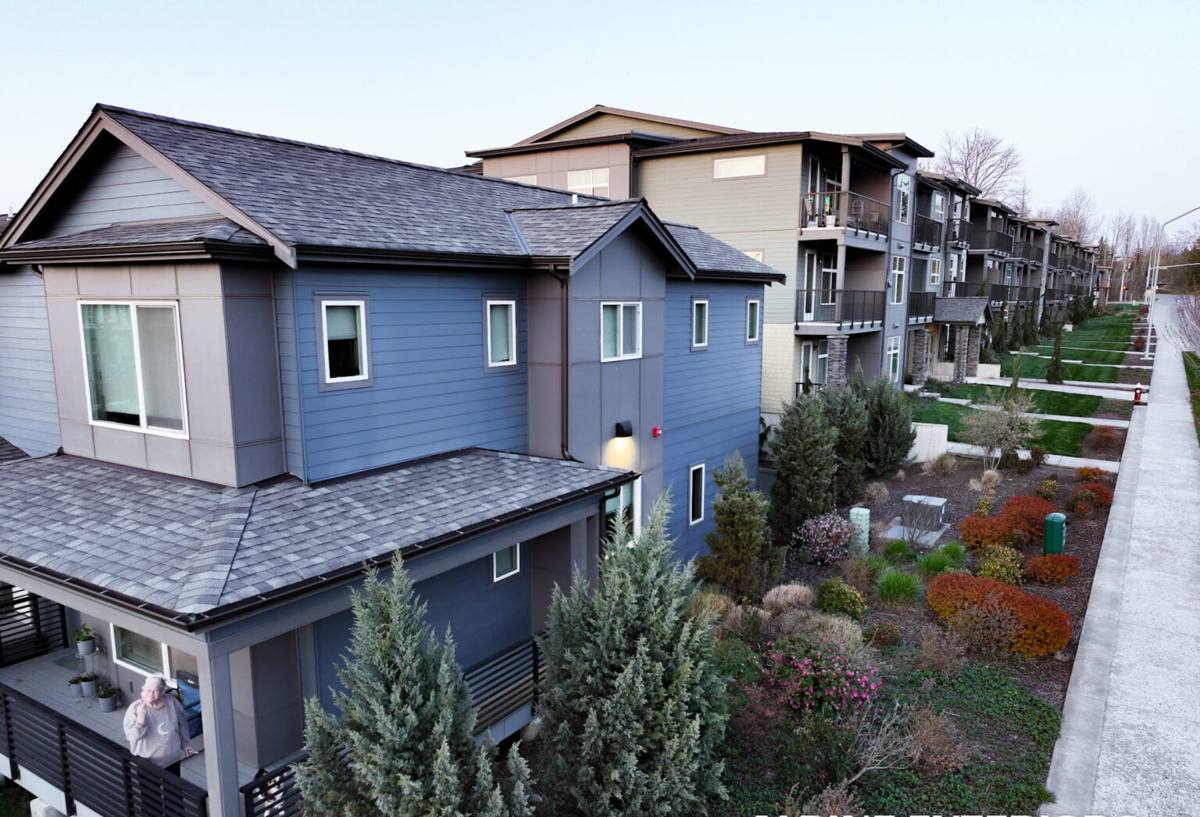
Why Bellingham's Climate Makes the Details Matter More
Whatcom County sits where marine air off Bellingham Bay meets a wet, mild Pacific Northwest weather pattern. That combination creates three specific stresses on window openings that a generic install elsewhere in the country doesn't have to deal with:
Salt Air
Homes closer to the water deal with airborne salt that accelerates corrosion on fasteners, hinges, and any exposed metal flashing. It doesn't ruin a window overnight, but it shortens the life of hardware and flashing that wasn't chosen or protected with that exposure in mind.
Driving, Wind-Driven Rain
Bellingham doesn't just get rain — it gets rain pushed sideways by wind off the water, which means water hits window openings at angles a vertical-only flashing detail was never designed to shed. A sill pan, proper head flashing, and correctly lapped house wrap aren't optional extras here; they're the difference between a dry wall cavity and slow, hidden rot.
A Long Moss and Algae Season
Sunnyland's established tree canopy keeps a lot of the neighborhood shaded and damp for much of the year. That's good for curb appeal and bad for anything that holds moisture against a surface — wood trim, unsealed fastener heads, and low-quality caulk joints all become growth sites for moss and algae faster here than in a drier climate. Material choice and detailing around the window frame matter more in a neighborhood like this than in a sunnier one.
What a Correct Installation Actually Involves
A new-construction window install has a specific order of operations. Skipping or reversing any of these steps is the single most common cause of water intrusion around window openings — and it's invisible from the outside until the siding comes off years later.
The Flashing Sequence
- Rough opening is cut, checked for level, square, and plumb, and inspected for any framing damage or gaps
- A sloped sill pan is installed at the bottom of the opening so any water that gets past the window has somewhere to drain — outward, not into the wall
- Self-adhered flashing tape is run up the jambs first, then across the head, always shingle-lapped so water sheds downward and outward at every layer
- The window is set, shimmed level and square, and fastened through the nailing fin per the manufacturer's schedule — not just a few nails in the corners
- House wrap is cut and lapped over the top flange in a proper shingle pattern, with a drip cap or head flashing directing water away from the top of the frame
- Interior gaps between the frame and rough opening are insulated (typically low-expansion foam, not rigid foam that can bow the frame) and sealed for air infiltration
Every one of those steps is standard, published guidance from window manufacturers and building science organizations. None of it is exotic. But it takes time and it's easy for a rushed crew to skip the sill pan or fail to properly lap the house wrap — and those two shortcuts account for most of the water damage we get called to diagnose years later.
Choosing a Frame Material for This Climate
| Frame Material | How It Handles Salt Air & Moisture | Maintenance in a Damp, Shaded Neighborhood |
|---|---|---|
| Vinyl | Won't corrode or rust; performs consistently near the water | Low — occasional cleaning, no repainting or sealing |
| Fiberglass | Very stable, resists moisture-driven expansion and contraction | Low — durable finish, minimal upkeep |
| Wood-clad (exterior clad, wood interior) | Good if the cladding and flashing details are done right; any exposed or damaged cladding lets moisture reach the wood core | Moderate — cladding needs to stay intact; exposed wood trim benefits from regular inspection in shaded, damp yards |
| Aluminum | Prone to corrosion in salt-air exposure unless it's a marine-grade or well-coated product | Moderate to high — watch fastener corrosion and finish wear near the coast |
We don't push one brand over another — the right call depends on your budget, the look you want, and how close your lot is to the water. What we won't do is install a window whose flashing details and material don't match the exposure it's going into. That's a maintenance headache we'd rather help you avoid than sell you into.
Situations We Commonly See in Sunnyland
Sunnyland is an established Bellingham neighborhood with a mix of long-standing homes and newer infill construction, so the new-construction window work we do here tends to fall into a few categories:
- Additions that extend the footprint of an older home, where new framing meets existing wall sections and flashing has to tie into what's already there
- Garage or basement conversions being finished into living space, where windows are being added to walls that never had them
- Full re-sides where the siding and sheathing come off down to the studs, opening up the chance to correct old, undersized, or poorly flashed openings
- New builds on infill lots, where the whole envelope is being built from scratch and there's no old detailing to work around
Each of these has a different starting point, which is why we walk the actual opening in person before quoting anything — a tie-in to 1950s framing behaves differently than a brand-new stud wall.
Our Process, Start to Finish
We keep this straightforward because the trade itself doesn't need to be complicated when it's done right:
- On-site walkthrough — we look at the openings, the framing condition, and the existing water-management details (if any) before quoting
- Product selection — we go over frame material, glass package, and sizing based on your budget and the exposure of that specific wall (south-facing water walls get different attention than sheltered ones)
- Flashing and installation — sill pan, shingle-lapped flashing tape, correct fastening, and house wrap integration per the sequence above
- Interior and exterior finish — insulation, air sealing, and trim work to match the rest of the wall assembly
- Final walkthrough — we check operation, sealing, and sightlines with you before calling the job done
What Drives the Cost
| Cost Factor | Why It Matters |
|---|---|
| Opening size and quantity | Larger openings and multi-window combinations need more structural and flashing work |
| Frame material | Vinyl is typically the most budget-friendly; fiberglass and wood-clad cost more up front |
| Glass package | Low-E coatings and gas fills add cost but improve comfort and condensation resistance in our humid climate |
| Wall condition | Framing repairs, old flashing removal, or rot found once siding comes off add labor |
| Access and height | Second-story or hard-to-reach openings need staging or lift access |
We give a written, itemized quote before any work starts, so you know exactly what you're paying for and why — not a lump-sum number with no breakdown.
Why Hiring a Crew That Already Works This Neighborhood Matters
A window installer who works Sunnyland regularly already knows the City of Bellingham's permitting expectations for window openings on additions and new construction, understands how mature tree cover and lot layout in this part of town affect drying time and moss growth on trim, and has seen how older Sunnyland framing typically ties into newer additions. That's not a marketing point — it's the difference between a crew guessing at conditions and a crew that's already solved these exact problems on the next street over. It also means faster, more accurate quoting, because we're not learning the neighborhood on your dime.
What to Watch For During and After the Job
Whether you're hiring us or vetting any contractor for new-construction window work, these are reasonable things to ask about or check yourself:
- Ask whether a sill pan is part of the install — if the answer is vague, that's a red flag
- Confirm the house wrap will be cut and lapped over the flange, not just taped flat against it
- Check that windows are shimmed square before fastening, not just nailed in as-is
- Ask what fastener type is used near the coast if your lot is close to the water
- After the job, watch trim and sills for the first couple of wet seasons for staining, gaps, or moss forming faster in one spot than another — early signs of a flashing issue
If you're planning an addition, a conversion, or a full re-side in Sunnyland and want windows installed the way they're supposed to be — flashed correctly the first time, matched to this climate, and priced honestly — we're happy to come take a look. Fill out the form below for a free, no-pressure estimate.