 Bellingham Siding
 Window Installation Built for Birchwood's Weather, Not Just Its Homes
Birchwood sits close enough to the water and the surrounding hills that its homes take a specific kind of weathering: salt-laden air off the bay, rain that comes in sideways during winter storms, and long stretches of gray, damp weather that keep everything outside a home wet for days at a time. Windows are one of the first places that shows up. A window that was installed correctly ten years ago in a drier climate can still fail early here if the flashing, sealants, or sill details weren't matched to what Whatcom County actually throws at a house.
This page is about window installation specifically for Birchwood homes — what the climate does to windows over time, what a correct installation actually requires here, and how our process works when we're on your property.
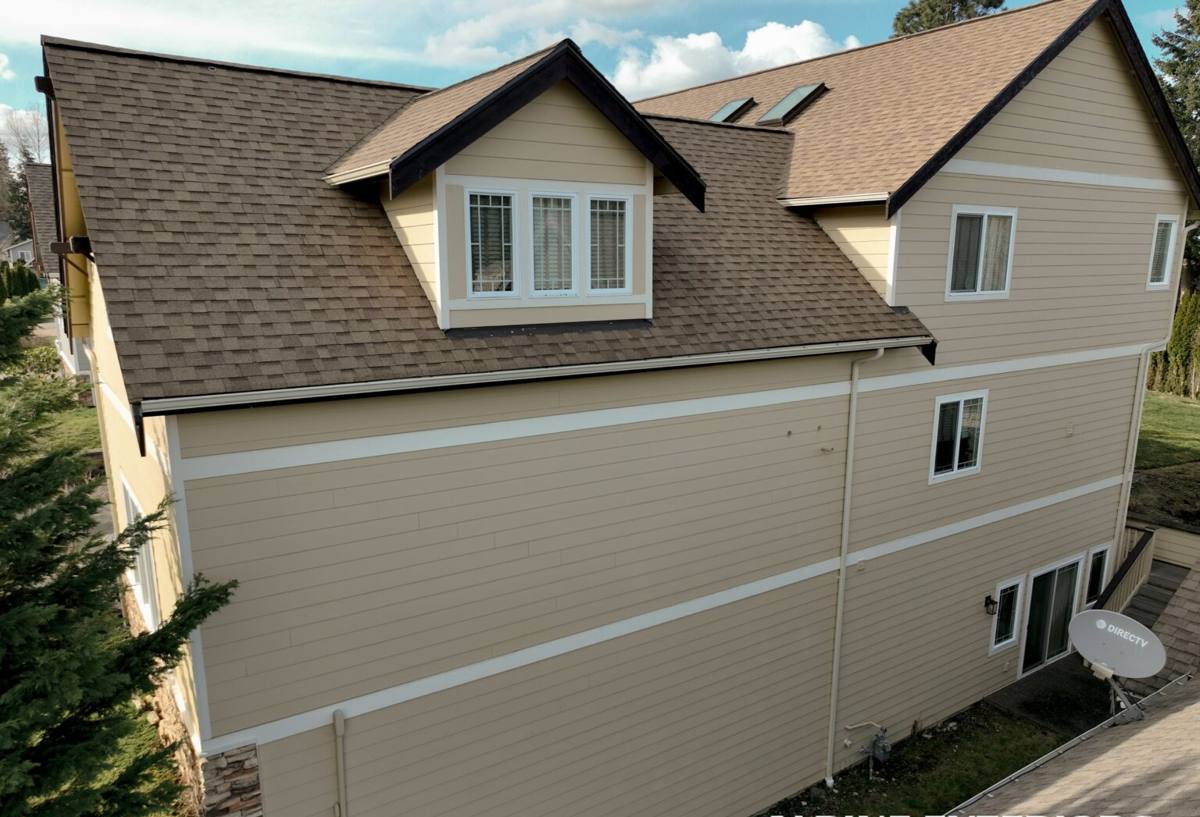
What Bellingham's Climate Does to Windows Over Time
Salt Air and Metal Fatigue
Homes closer to the water deal with a slow, steady exposure to salt-carrying air. It doesn't destroy a window overnight, but over years it can corrode hardware — hinges, locks, and cranks on operable windows — faster than the same parts would wear in an inland home. It can also accelerate the breakdown of certain sealants and finishes if they weren't rated for coastal exposure.
Driving Rain and Flashing Failures
Rain that falls straight down is easy for any window to shed. Rain that's pushed sideways by wind is a different problem — it tests the flashing, the sill pan, and the seal between the window frame and the wall assembly. Most window leaks we find in this area aren't failures of the window itself; they're failures of the flashing and sealing details around it, which is an installation issue, not a product issue.
Moss, Algae, and Trapped Moisture
Bellingham's long moss season isn't just a roof and siding problem. Moss and algae can take hold on north-facing window trim, sills, and the caulking lines around a window, holding moisture against the wood or composite longer than it would sit in a drier climate. Where that moisture gets trapped behind trim or under a poorly sealed sill, rot can start well before it's visible from outside.
What a Correct Window Installation Actually Involves
A window installation is only as good as the water management built around it. The window itself is often the easy part — most quality units from reputable manufacturers will perform fine if installed correctly. The details that separate a durable installation from a future callback are these:
Sill Pans and Sloped Sills
Every window opening should have a sloped sill pan that directs any water that gets past the frame back outside, rather than letting it sit against the rough opening. In a climate with as much sustained rain as ours, skipping this step is one of the most common causes of hidden rot we find when we open up an old window opening.
Flashing Sequence
Flashing has to be installed in the correct shingle-style order — sill, jambs, then head — so that water is always directed down and out, never trapped behind a layer above it. This has to integrate correctly with whatever weather-resistive barrier and siding system is already on the house, which is where a lot of rushed installations go wrong.
Air Sealing and Insulation
The gap between the window frame and the rough opening needs to be sealed and insulated correctly — not overpacked with expanding foam, which can bow a frame, and not left open, which lets moist air condense inside the wall. A correct installation balances weatherproofing with keeping the frame square and operating smoothly.
Choosing the Right Window for a Birchwood Home
There isn't one "best" window material for every house — it depends on your home's exposure, your maintenance preferences, and your budget. Here's an honest comparison of the common options for this climate:
| Material | Moisture & Salt Air Behavior | Maintenance | Relative Cost |
|---|---|---|---|
| Vinyl | Won't rot or corrode; performs well in coastal exposure | Low — occasional cleaning | Lower |
| Fiberglass | Very stable in temperature and moisture swings; strong seal longevity | Low | Mid to higher |
| Wood-clad | Good performance if maintained; exposed wood interior/exterior needs attention | Higher — periodic refinishing | Higher |
| Aluminum | Prone to condensation and corrosion in salt air over time | Moderate | Varies |
For homes in Birchwood specifically, we lean toward recommending vinyl or fiberglass for most exposures because they hold up to sustained moisture and salt air with the least ongoing upkeep. Wood-clad windows can still be the right call for a homeowner who wants that look and is willing to keep up with maintenance — we'll walk through the honest trade-offs for your specific home rather than push one product line.
Our Installation Process
- On-site assessment — we look at your existing windows, the condition of the rough openings, and any signs of past water intrusion before quoting anything.
- Honest estimate — a written quote that spells out materials, scope, and timeline, with no pressure to decide on the spot.
- Removal and opening inspection — old windows come out and we check the rough opening and sheathing for hidden rot or damage before anything new goes in.
- Sill pan and flashing installation — done in the correct sequence for your siding type, whether that's lap siding, board and batten, or another system.
- Window setting and shimming — leveled, squared, and secured per manufacturer specs so the window operates properly for its lifespan.
- Air sealing and insulation — the gap around the frame is sealed correctly, not overfilled or left open.
- Interior and exterior finish work — trim, caulking, and touch-up so the job looks finished, not patched.
- Final walkthrough — we test every window with you before we consider the job done.
Signs Your Current Windows Are Already Failing
Because a lot of window failure happens behind the trim, it's worth knowing what to look for before it becomes a bigger repair:
- Fogging or visible moisture between panes of a double-pane window (a sign the seal has failed)
- Soft or spongy trim or sill wood when pressed
- Paint that's bubbling or peeling specifically around the window frame
- Drafts you can feel near a closed window on a windy day
- Difficulty opening, closing, or locking a window that used to operate smoothly
- Visible moss, algae, or dark staining building up on the sill or lower trim
- Musty smell in a room near an exterior window
Any one of these on its own isn't necessarily an emergency, but a few together usually means it's worth having someone take a real look rather than waiting.
What Affects the Cost of a Window Installation
We won't quote a price without seeing the job, but the main factors that move cost up or down on most Birchwood projects are:
- Number of windows and whether they're standard sizes or custom-order
- Window material and glass package (standard double-pane vs. upgraded low-E or triple-pane glass)
- Condition of the existing rough openings — hidden rot adds repair time before installation can proceed
- Whether siding needs to be removed and reinstalled around the opening, or already provides good access
- Full-frame replacement versus insert (pocket) replacement, where the existing frame is left in place
Insert replacements are usually less expensive and faster, but they only make sense when the existing frame and flashing are still in good condition. If we find rot or a bad flashing job behind your old windows, a full-frame replacement is usually the more honest recommendation, even though it costs more, because it lets us fix the water management instead of building a new window around an old problem.
Why a Local Birchwood Crew Matters
Window installation done right depends on matching the details to the specific exposure of your home — which direction it faces, how much wind-driven rain it takes in winter, how close it sits to salt air, and how much shade keeps moisture around it longer in moss season. A crew that regularly works in this part of Bellingham has already seen how these factors play out on real houses here, not just in a training manual. That familiarity shows up in small decisions — sill pan slope, sealant choice, flashing overlap — that don't show up on an invoice but decide whether the job holds up through the next ten winters.
If you're dealing with drafty, foggy, or failing windows, or you're planning ahead for a full replacement, we're happy to come take a look and give you a straightforward, no-pressure estimate using the form below.