 Bellingham Siding
 Blaine's Coastal Climate Is Hard on Windows
Blaine sits at the northern edge of Whatcom County, right on the water and just minutes from the Canadian border. That location is part of what makes the town appealing, but it also means homes here take a beating that inland houses never see. Salt-laden air rolls off the water year-round, wind-driven rain hits siding and window frames sideways during winter storms, and the long, overcast wet season that defines this part of Washington keeps north- and shade-facing walls damp for months at a time. Windows are one of the first places that damage shows up.
A window that was installed correctly, with the right materials for a marine environment, can handle decades of this. A window that was installed with shortcuts, or one that was never suited to salt exposure in the first place, tends to fail early and quietly — often behind the trim, where you can't see it until the damage has spread into the wall framing.
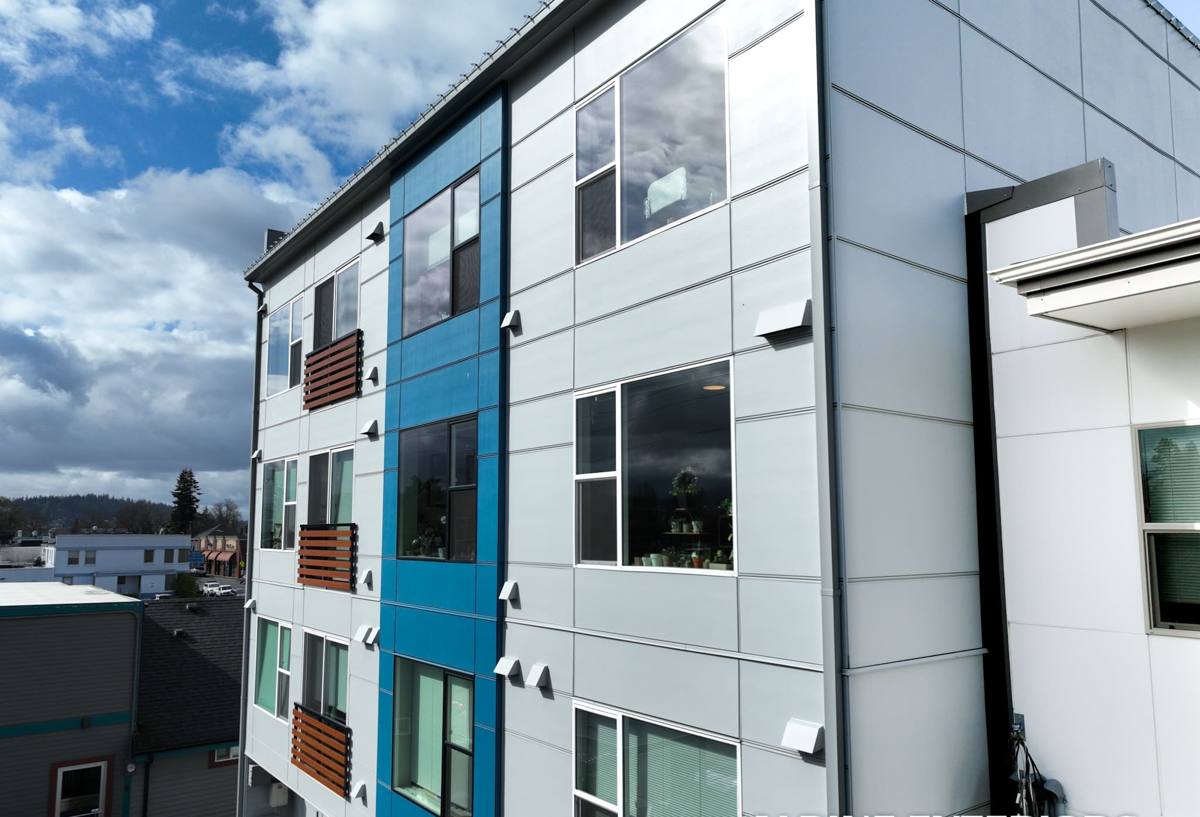
What Salt Air, Rain, and Moss Actually Do to a Window Over Time
Salt Air and Metal Hardware
Salt in the air accelerates corrosion on anything metal: hinges, cranks, balance systems, and screws. On lower-grade hardware, this shows up as stiff or failing operation years before it should. It also attacks poorly protected aluminum components and fasteners that weren't rated for coastal exposure, which is one reason material choice matters more here than it does thirty miles inland.
Wind-Driven Rain and Water Intrusion
Standard rain falls straight down. Wind-driven rain off the water gets pushed sideways and upward, which means it can find its way past flashing details and sealant joints that would be perfectly adequate in a calmer climate. Most of the window failures we see in this area aren't glass failures at all — they're water finding a gap at the flashing, the nailing flange, or the sill, and slowly rotting the framing around the window from the inside.
Moss, Mildew, and Shaded Exposures
Whatcom County's long wet season keeps shaded and north-facing walls damp for extended stretches, which is exactly the environment moss and mildew need. On windows, that moisture tends to collect at the sill and lower corners, where a poor seal or the wrong trim detail will trap it against wood instead of shedding it. Over a few seasons, that trapped moisture is what turns into soft sills and rotted jambs, not the rain itself.
What a Correct Window Installation Involves in This Climate
Anyone can set a window into a rough opening and screw it in place. Whether it holds up in Blaine depends on details that aren't visible once the trim goes back on.
- Proper flashing sequence — sill pan flashing, weather-resistant barrier integration, and head flashing installed in the correct shingle-lap order so water is directed out and down, never trapped.
- Sealant that's rated for the exposure — the right sealant at the right joints, not a bead of caulk over gaps as a catch-all fix.
- Correct shimming and squaring — an out-of-square window stresses the seals at the corners first, which is exactly where leaks start.
- Insulation at the rough opening — gaps around the frame need to be filled without over-compressing the frame, which can bow it and break the seal on the glass unit.
- Hardware matched to a marine environment — corrosion-resistant fasteners and hardware, not standard-grade parts that will start seizing up within a few winters.
Skipping any one of these doesn't usually cause an immediate problem. It causes a problem in year four or five, after the first winter storms have had time to work water into a gap that should never have been there.
Choosing the Right Frame Material for a Blaine Home
Frame material matters more here than in a dry inland climate. Here's how the common options hold up against salt air, driving rain, and prolonged dampness:
| Material | Coastal Performance | Maintenance | Trade-offs |
|---|---|---|---|
| Vinyl | Good — won't corrode or rot, handles moisture well | Low | Can look less premium on higher-end homes; limited color options fade over decades of sun and salt |
| Fiberglass | Very good — dimensionally stable, resists moisture and salt corrosion | Low | Higher upfront cost than vinyl |
| Wood-clad | Fair to good depending on cladding quality — cladding protects the wood core from direct weather | Moderate — cladding seams and interior wood still need occasional attention | Best appearance for traditional or historic styles; more installation-sensitive in wind-driven rain |
| Aluminum | Fair — durable but prone to corrosion at the coast unless properly treated and finished | Moderate | Thin sightlines are attractive, but we're selective about aluminum for direct-exposure walls in this area |
We don't push one material on every home. A shaded, west-facing wall that takes the brunt of storm winds is a different situation than a covered, east-facing wall on the same house, and the right choice depends on both the exposure and what you're trying to match architecturally.
Why We're Careful with Certain Products Here
Some window systems that perform fine in a mild inland climate are more installation-sensitive in a coastal, wind-driven-rain environment — meaning the margin for error at the flashing and sealant details is much smaller. Rather than install a system that depends on perfect conditions to perform, our standard is to match the product to the exposure and install it with the coastal-grade details that exposure calls for, every time.
Our Installation Process
- On-site assessment. We look at each window opening individually — exposure direction, existing water damage, framing condition, and how the current windows have held up — before recommending anything.
- Product selection. We match frame material and glass package to that specific wall's exposure, not a one-size-fits-all default.
- Removal and opening inspection. Once the old window is out, we check the rough opening and framing for hidden rot or water staining before anything new goes in. This is often where problems from a prior installation surface.
- Flashing and air/water barrier integration. Sill pan, jamb, and head flashing installed in the correct order and tied into the existing weather-resistant barrier so water sheds outward.
- Setting, shimming, and squaring. The window is set level, plumb, and square before it's fastened, so the seals aren't under stress from day one.
- Insulation and sealing. Gaps filled correctly, sealant applied at the joints that need it — not as a substitute for good flashing.
- Interior and exterior trim. Finished to match the home, with attention to how the trim detail sheds water at the sill.
- Final walkthrough. We check operation, seal, and finish with you before we consider the job done.
Signs a Blaine Home's Windows Need Attention
Because water damage from a failed window installation tends to happen behind the trim, it's easy to miss until it's advanced. Watch for:
- Soft or spongy wood at the sill or lower corners of the frame
- Peeling paint or bubbling finish on interior trim below a window
- Persistent condensation between the panes, which means the seal on the glass unit has failed
- Drafts you can feel near the frame even when the window is fully closed and locked
- Windows that are difficult to open, close, or lock — often an early sign of hardware corrosion or a frame that's shifted
- Visible moss, algae, or dark staining building up on or around the frame, especially on shaded walls
- Musty smell near a window that doesn't clear with ventilation
Any one of these on its own isn't necessarily an emergency, but in this climate they tend to compound quickly once moisture gets behind a wall. Catching it early is almost always cheaper than catching it late.
What Affects the Cost of a Window Installation Here
We don't quote window jobs off a flat price list, because the honest cost depends on a handful of factors that vary from house to house:
| Factor | Why It Matters |
|---|---|
| Frame material | Vinyl, fiberglass, wood-clad, and aluminum carry different material costs and different labor requirements |
| Condition of the rough opening | Hidden rot or water damage found during removal adds repair work before a new window can go in correctly |
| Exposure and elevation | Walls that take direct wind-driven rain need more careful flashing work than sheltered walls |
| Window size and configuration | Larger units, custom shapes, and multi-window assemblies take more time and specialized handling |
| Number of openings | Whole-house replacements typically bring a better per-window cost than one-off jobs |
| Access | Second-story or hard-to-reach windows require additional equipment and time |
We'll walk the specific openings on your home and give you a real number based on what we actually find, not a generic estimate that assumes nothing is wrong behind the trim.
Why a Crew That Already Works in Blaine Makes a Difference
Window installation isn't a generic skill that transfers evenly from a dry inland job site to a coastal one. A crew that regularly works homes in Blaine and the rest of Whatcom County's coastal areas already knows which walls in this kind of setting take the worst of the weather, which flashing details actually hold up to wind-driven rain year after year, and which materials are worth the extra upfront cost versus which ones are overkill for a sheltered wall. That local pattern recognition is the difference between an installation that looks fine on move-in day and one that's still performing correctly ten winters from now.
It also means we're not learning on your house. We've seen how these houses age in this specific climate, and we install accordingly from the first window.
If you're noticing any of the warning signs above, or you're simply ready to replace aging windows before another wet season, we're happy to take a look. Reach out for a free, no-pressure estimate — we'll walk your home's specific exposures with you and give you a straight answer on what it needs.