 Bellingham Siding
 Windows in York Take a Different Kind of Beating
York is one of Bellingham's older residential neighborhoods, and that means a lot of the housing stock still carries windows that were installed decades before anyone was talking about energy codes. Add in the specific climate York homes sit in — close enough to Bellingham Bay to pick up salt-laden air, exposed to the driving rains that roll in off the Sound, and shaded by mature trees that keep siding and window sills damp for a good chunk of the year — and you get a window replacement problem that's a little different from what you'd deal with in a drier inland climate.
Salt air is slow but relentless. It accelerates corrosion on hardware, fasteners, and older aluminum frames, and it degrades certain sealants faster than manufacturers' generic warranty language accounts for. Driving rain, especially the wind-driven kind that comes sideways off a storm front, finds every gap in flashing and trim that a calm-weather install might get away with. And the long stretch of wet, low-light months that lets moss take hold on roofs and north-facing surfaces does the same thing to window sills, sashes, and the wood trim around them — moisture sits, doesn't dry, and eventually rot follows.
None of that means windows in York are doomed to fail early. It means the products and the installation details have to be chosen with this specific climate in mind, not a generic one.
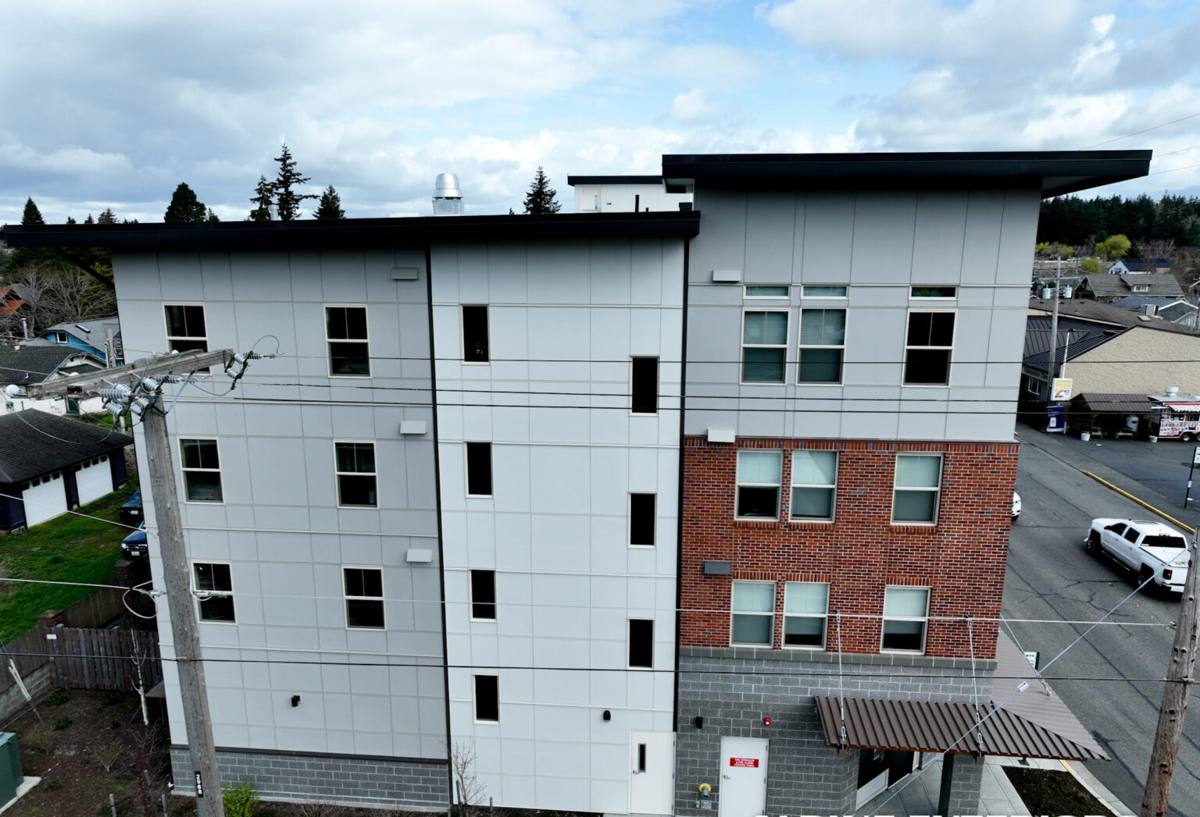
What "Energy-Efficient" Should Mean for a York Home
Energy efficiency in a window isn't one number — it's a combination of how well the glass and frame resist heat transfer, how tightly the unit seals against air movement, and how well it handles condensation. For Whatcom County's marine climate, a few of these matter more than they would in a hot, dry region.
Air infiltration matters as much as insulation
In a climate with as much wind-driven rain as ours, a window's air infiltration rating is just as important as its insulating glass. A window can have a great U-factor on paper and still leak cold, damp air around the sash if the weatherstripping and hardware aren't holding a tight seal — which is common on older single-pane and early double-pane units that have been through 30-plus wet seasons.
Condensation resistance protects the wall around the window
Homes in York with poor air sealing and older glass often show interior condensation on cold mornings. That moisture doesn't just fog the glass — over years it works into the sill and the wall framing below it. A properly specified, well-sealed replacement window with a good condensation resistance rating cuts this down significantly, which matters more here than in a dry climate where interior humidity swings aren't a daily event.
Signs a York Home's Windows Are Underperforming
Most homeowners don't think about their windows until something's obviously wrong, but there are earlier signs worth catching before they turn into wood repair jobs. A quick check before the next wet season is worth the ten minutes it takes.
- Visible fog or moisture between the panes of a double-pane window — the seal has failed and the insulating gas is gone
- Soft or discolored wood at the sill or bottom corners of the frame, especially on north- or west-facing walls
- Noticeable draft or cold spot near the window when it's windy outside, even with the window fully latched
- Paint that's peeling or bubbling on interior trim, which usually points to trapped moisture behind it
- Green or black growth on the exterior sill or trim that keeps coming back no matter how often it's cleaned
- Difficulty latching or locking a window that used to close easily — frames can shift slightly as wood swells and dries with the seasons
Choosing a Frame Material for This Climate
There's no single "best" window material for every house — it depends on the home's age, exposure, and how it's built. But for a salt-air, high-rain environment like York's, some materials hold up more predictably than others with less ongoing maintenance.
| Frame Material | Energy Performance | Salt Air / Moisture Resilience | Maintenance | Good Fit For |
|---|---|---|---|---|
| Vinyl | Good, with multi-chamber designs performing well | Doesn't corrode; seams and welds are the main long-term watch point | Low — no painting, occasional cleaning | Most standard replacements, budget-conscious upgrades |
| Fiberglass | Very good; low expansion/contraction helps keep seals tight | Excellent — dimensionally stable in wet, temperature-swinging conditions | Low, can be painted if desired | Homes with more weather exposure or where long-term stability matters most |
| Wood-clad | Good, depends on core and glass package | Cladding protects the exterior face, but any breach exposes wood to rot risk | Higher — exposed wood elements need periodic attention | Homes prioritizing a traditional wood interior look and willing to maintain it |
| Aluminum (older stock) | Poor unless thermally broken | Prone to corrosion and condensation without a thermal break | Low, but performance issues are hard to fix without replacement | Generally a replacement candidate, not a recommendation, in this climate |
We don't push one brand or material on every job. What we push is matching the frame to the exposure that specific window faces — a west-facing window catching the brunt of storm winds off the bay deserves a different spec than a sheltered window on a covered porch, even on the same house.
Why the Installation Matters More Than the Window Itself
A high-performance window installed with poor flashing details will underperform a mid-grade window installed correctly. This is the part of the job that's invisible once it's done, which is exactly why it's where corners get cut on rushed installs — and why it's the part we spend the most time on.
Flashing and the drainage plane
Every window opening needs to shed water down and out, not let it track behind the siding or pool at the sill. That means proper sill pan flashing, correctly lapped house wrap or building paper at the head and jambs, and a drip cap that actually directs water away from the wall — not just caulk covering gaps. In a climate with as much driving rain as ours, a caulk-only approach to weatherproofing is a slow leak waiting to happen, often not discovered until there's rot to deal with.
Sealing without trapping moisture
It's tempting to seal a window opening completely airtight on all sides, but that can trap any moisture that does get in. Correct practice uses sealant strategically — tight where it needs to block air and bulk water, but with a way for incidental moisture to drain and dry rather than sit behind the trim.
Working around what's already there
Older York homes often have original wood trim, sometimes original siding, and framing that's not always perfectly square after decades of settling. A correct install accounts for that reality — shimming and leveling properly, checking the condition of the framing once the old window is out, and flagging any hidden rot before a new window goes in over it, rather than boxing over a problem.
Our Process for a York Window Replacement
The process is straightforward, but each step exists for a reason specific to this kind of house and this kind of climate.
- On-site assessment — we look at each window individually, not just the house as a whole. Exposure, existing damage, and framing condition vary window to window, especially on older homes.
- Product recommendation — we walk through frame material, glass package, and performance ratings that fit the home's exposure and your budget, without steering you toward the most expensive option by default.
- Removal and inspection — once the old window comes out, we check the framing and sill for hidden rot or moisture damage before anything new goes in. This is often where problems that weren't visible from inside or outside get caught.
- Proper flashing and air-sealing — sill pans, house wrap integration, and drainage details go in before the new window, not as an afterthought.
- Installation and finish work — the window goes in level, plumb, and square, with interior and exterior trim finished to match the home.
- Final walkthrough — we check operation, seals, and finish work with you before calling the job done.
Maintaining Energy-Efficient Windows in a Wet Climate
Even the right window installed correctly benefits from a small amount of upkeep in a climate like this. None of it is expensive or time-consuming, but skipping it for years is how small issues become sill replacements.
- Clear debris and moss from exterior sills and tracks a couple times a year, especially on shaded, north-facing windows
- Check weatherstripping annually for compression or cracking and replace it before it fails completely
- Keep an eye on caulk lines at the trim — hairline gaps are easy to reseal before they become water paths
- Wipe down hardware and tracks periodically if the home is within a mile or two of the water, since salt residue accelerates wear on moving parts
- Address any interior condensation early — it's usually a sign of an air-sealing issue, not just "normal" winter humidity
Why Hire a Crew That Already Works in York
Bellingham isn't a uniform climate zone, and neither is Whatcom County. A crew that mostly works drier, inland jobs can miss details that matter on a home a few blocks from the bay. Knowing which exposures in York tend to take the worst of the driving rain, which older homes commonly have a particular framing quirk, and how long moss season actually runs here changes how a window gets specified and installed — not just what brand gets sold.
There's also a practical side to hiring locally: shorter lead times for site visits, familiarity with the permitting process through the City of Bellingham, and a crew that's around afterward if something needs a look, rather than a traveling install team that's on to the next region by the time a problem shows up.
Getting a Straight Answer on Cost
Window replacement cost depends on frame material, glass package, window size and count, and what the removal and framing repair actually involves once the old window comes out. Homes with hidden rot or non-standard openings cost more to do right than a straightforward swap. We'd rather walk your home, look at each window, and give you real numbers than quote a price over the phone that doesn't survive contact with the actual job.
If your York home's windows are drafty, foggy, or just old enough that you're wondering whether it's time, we're happy to take a look and give you a free, no-pressure estimate — use the form below to get started.