 Bellingham Siding
 Why South Hill Roofs Wear Differently Than Roofs Inland
South Hill sits up above the flats of Bellingham, which means more exposure to wind off Bellingham Bay and longer stretches of damp shade under mature trees on many lots. That combination — salt-tinged marine air, driving rain that comes in sideways during winter storms, and shaded north slopes that never fully dry out — is hard on asphalt shingles in ways that don't show up on a roof twenty miles inland. We've worked on enough South Hill roofs to know the pattern: granule loss on the windward slopes first, moss creeping up from the eaves on the shaded sides, and soft spots developing where two problems overlap.
None of that means asphalt shingles are the wrong choice here. They're still the most practical, cost-effective roofing material for most Whatcom County homes. It means the installation and the maintenance schedule have to account for the actual conditions on the hill, not a generic set of manufacturer instructions written for a drier climate.
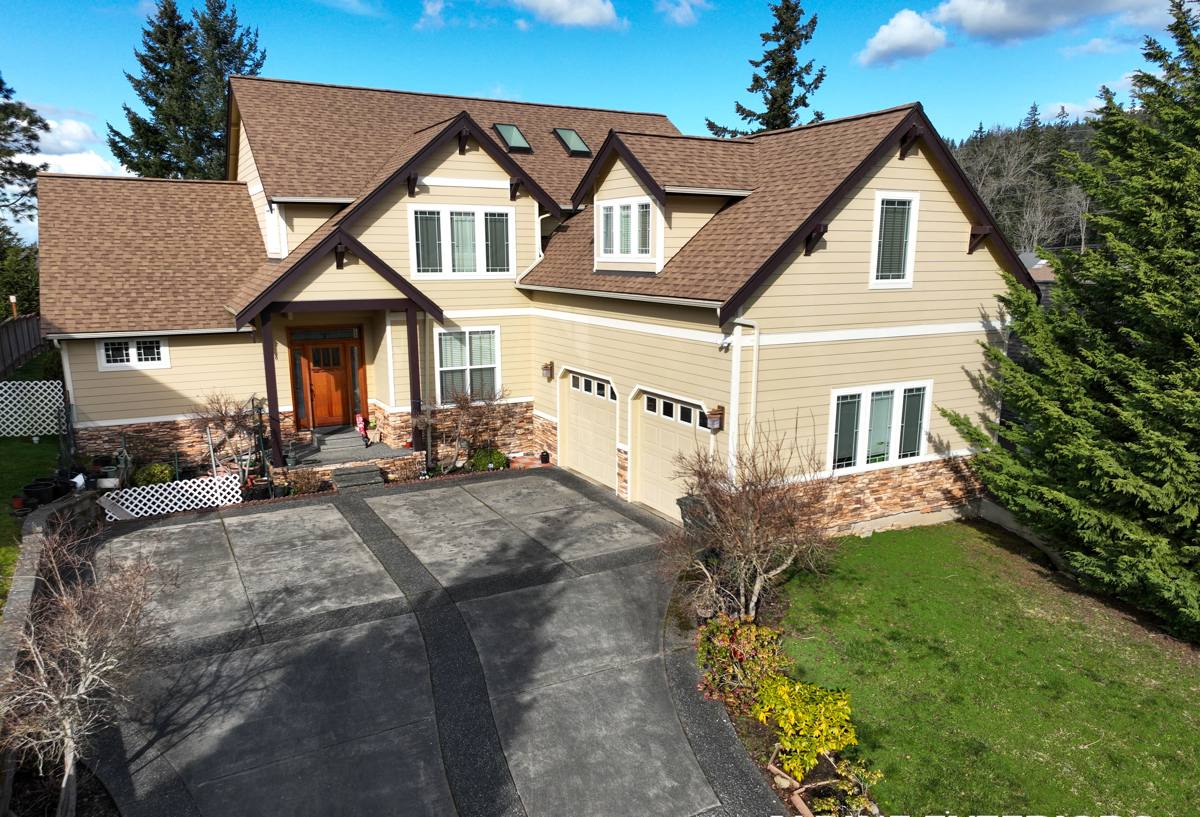
What Bellingham's Climate Actually Does to a Shingle Roof
Moss and Organic Growth
Western Washington's long, wet, mild winters are close to ideal growing conditions for moss, and South Hill's tree cover only adds to it. Moss doesn't just look bad — it holds moisture against the shingle surface, works its way under tabs as it grows, and can lift shingles enough to let wind-driven rain underneath. Left alone for a few seasons, a mossy roof degrades much faster than a clean one.
Wind-Driven Rain
Storms coming off the water don't just drop rain straight down — they push it sideways and upward under the shingle tabs and around flashing. A roof that would be fine in a calm rain can leak in a wind-driven storm if the underlayment, valleys, and flashing weren't detailed correctly. This is one of the most common causes of "mystery leaks" we get called out for on the hill.
Salt Air and Metal Components
Proximity to the bay means faster corrosion on exposed fasteners, flashing, and vents than you'd see further inland. Cheap or under-spec'd metal components can start rusting and staining within a few years, which is why component choice matters as much as the shingle itself.
Signs Your South Hill Roof Needs a Look
Most roof failures don't happen suddenly — they build for a season or two before they show up as a leak inside the house. Worth checking for, or having us check for, if it's been a few years since anyone was up there:
- Moss or dark streaking concentrated on north-facing or shaded slopes
- Granules collecting in gutters or at downspout outlets
- Shingle tabs that look curled, cupped, or lifted at the edges
- Soft or spongy spots when walked (we check this, not a reason to get up there yourself)
- Rust staining around vent pipes, chimney flashing, or valleys
- Daylight visible through the roof deck from inside the attic
- Water stains on ceilings or in the attic near exterior walls
- Missing or torn shingles after a windstorm
Any one of these on its own isn't necessarily an emergency, but a few of them together usually means it's time for an inspection before the next wet season.
What a Correct Asphalt Shingle Roof Actually Involves
A shingle roof is only as good as what's underneath it. Given the rain and wind exposure on South Hill, we don't treat any of the following as optional:
Underlayment and Ice-and-Water Protection
A synthetic underlayment across the full deck, with self-adhered ice-and-water shield at eaves, valleys, and around all penetrations — the places wind-driven rain is most likely to find a way in. This is the layer that saves a roof when a few shingles get damaged in a storm.
Ventilation
Balanced intake and exhaust ventilation keeps the attic close to outdoor temperature and lets moisture escape instead of condensing on the underside of the deck. Poor ventilation shortens shingle life from underneath, which is easy to miss because you can't see it from the ground or the driveway.
Flashing and Metal Details
Step flashing at walls, proper valley metal or woven valleys done correctly, and quality vent boots and pipe flashing — sized and installed to actually shed water instead of just meeting code minimum. Given the salt air here, we don't cut corners on metal quality.
Fastening and Nail Pattern
Correct nail count and placement per the manufacturer's wind rating, not just "enough to hold it down." This is what actually determines whether a roof holds together in a real windstorm off the bay, and it's one of the easiest things for a rushed crew to shortcut.
Choosing a Shingle for This Climate
Not every asphalt shingle product is built the same, and the differences matter more here than in a mild, dry climate. We walk homeowners through the trade-offs rather than just quoting the cheapest option:
| Shingle Type | Algae/Moss Resistance | Wind Rating | Best Fit |
|---|---|---|---|
| Standard 3-tab | Basic, unless algae-resistant granules specified | Lower | Budget-conscious, less shaded lots |
| Architectural/dimensional | Better with algae-resistant granules | Higher, rated for stronger gusts | Most South Hill homes — better durability for the cost increase |
| Premium/designer laminate | Best available in algae-resistant lines | Highest available | Heavily shaded or exposed lots, longer-term ownership plans |
For most South Hill homes we recommend at least a mid-grade architectural shingle with algae-resistant (copper-infused) granules. The upcharge over basic 3-tab is modest, and it directly targets the moss and algae problem this climate causes.
Repair or Full Replacement?
Not every problem roof needs a full tear-off. The right call depends on the age of the roof, how widespread the damage is, and what's happening underneath the shingles. General factors we weigh:
| Factor | Leans Toward Repair | Leans Toward Replacement |
|---|---|---|
| Roof age | Under 12-15 years | Near or past typical shingle lifespan |
| Damage extent | Isolated area, one slope | Multiple slopes, widespread granule loss |
| Deck condition | Solid, dry decking | Soft spots or rot found underneath |
| Moss history | Recently treated, minimal regrowth | Chronic moss returning year after year |
We'll tell you honestly which category a roof falls into. A patch that just delays an inevitable full replacement isn't a good use of a homeowner's money, and we'd rather say so up front than sell a repair we don't believe will hold.
How We Approach a South Hill Roofing Project
- On-site inspection. We get on the roof (or use appropriate tools for steep or unsafe sections) to check the deck, flashing, ventilation, and current shingle condition — not just a driveway estimate.
- Honest scope and written estimate. Repair vs. replacement, materials, and a clear cost range before any work starts.
- Protection of the property. Landscaping, siding, and gutters covered or protected before tear-off begins.
- Tear-off and deck check. Old material removed, deck inspected for soft or rotted sections, any damaged decking replaced before new material goes down.
- Underlayment, flashing, and shingle installation. Done to the standards above, not the bare minimum.
- Cleanup and magnetic sweep. Debris and stray fasteners cleared from the yard and driveway.
- Final walkthrough. We go over the finished work with you before calling the job done.
Why Local Experience Matters for This Job
Roofing crews that don't regularly work in Whatcom County can underestimate what this climate does to a roof — they'll spec materials and ventilation for a drier region and the roof underperforms within a few years. A crew that already works South Hill knows which slopes on a given lot tend to hold moss, how much wind exposure to plan for on an elevated site near the bay, and which flashing details actually hold up through a full Pacific Northwest winter rather than just looking right on installation day.
That local pattern recognition is also what makes an inspection faster and more accurate — we're not guessing at how a roof will behave here, we're comparing it against roofs we've already seen go through several winters.
Maintenance That Actually Extends Roof Life Here
A well-installed shingle roof in this climate still needs periodic attention — that's just the reality of the moss season and rain volume Whatcom County gets. Reasonable habits that make a real difference:
- Keep gutters clear so water isn't backing up under the eaves
- Trim back overhanging branches to cut down on shade and debris on shaded slopes
- Have moss treated (not power-washed, which can strip granules) before it spreads
- Get a roof checked after any major windstorm, not just when a leak shows up
- Schedule a general inspection every couple of years even with no visible problems
None of this is expensive or time-consuming, but skipping it is the single biggest reason otherwise well-built roofs on the hill fail early.
If you're seeing moss buildup, dealing with a leak, or just want an honest read on how much life is left in your South Hill roof, we're happy to take a look. The estimate is free, there's no pressure to act on it right away, and you'll get a straight answer about repair versus replacement — just fill out the form below to get started.