 Bellingham Siding
 Why Cordata Homes Are Tough on Windows
Cordata sits in north Bellingham, close enough to the water and open enough to weather that windows here take a different kind of beating than windows fifty miles inland. It's not one dramatic event that wears a window out — it's the accumulation of small, steady exposures: salt-laden air off the Sound, driving rain that hits window walls at an angle instead of straight down, and a moss season that runs long enough to keep wood and trim damp for months at a stretch. None of that is unique to Cordata, but it's a real, local pattern we see over and over when we open up an old window and look at what's actually happened behind the trim.
Salt Air and Metal Fatigue
Coastal air carries fine salt particles that settle on window hardware, screen frames, and especially older aluminum sashes. Over years, that accelerates corrosion on hinges, balances, and lock hardware — windows that used to open smoothly start to bind, and weatherstripping compresses unevenly because the frame itself is no longer square or true.
Driving Rain and Flashing
Whatcom County storms often come with real horizontal push behind the rain, not just vertical drop. That matters because a window flashed correctly for straight-down rain can still let water in when it's driven sideways under a nail fin or up under a sill pan. Most of the water damage we find in older Cordata homes didn't come through the glass or the frame — it came around it, through flashing that was never detailed for this kind of weather to begin with.
Moss and Hidden Rot
Bellingham's long wet season keeps moss and algae established on north- and west-facing walls for much of the year. Where that dampness sits against wood trim or an old wood sill, rot can start well before it's visible from inside the house. By the time a homeowner notices a soft spot on a sill or peeling paint at a corner, there's often already compromised wood behind it.
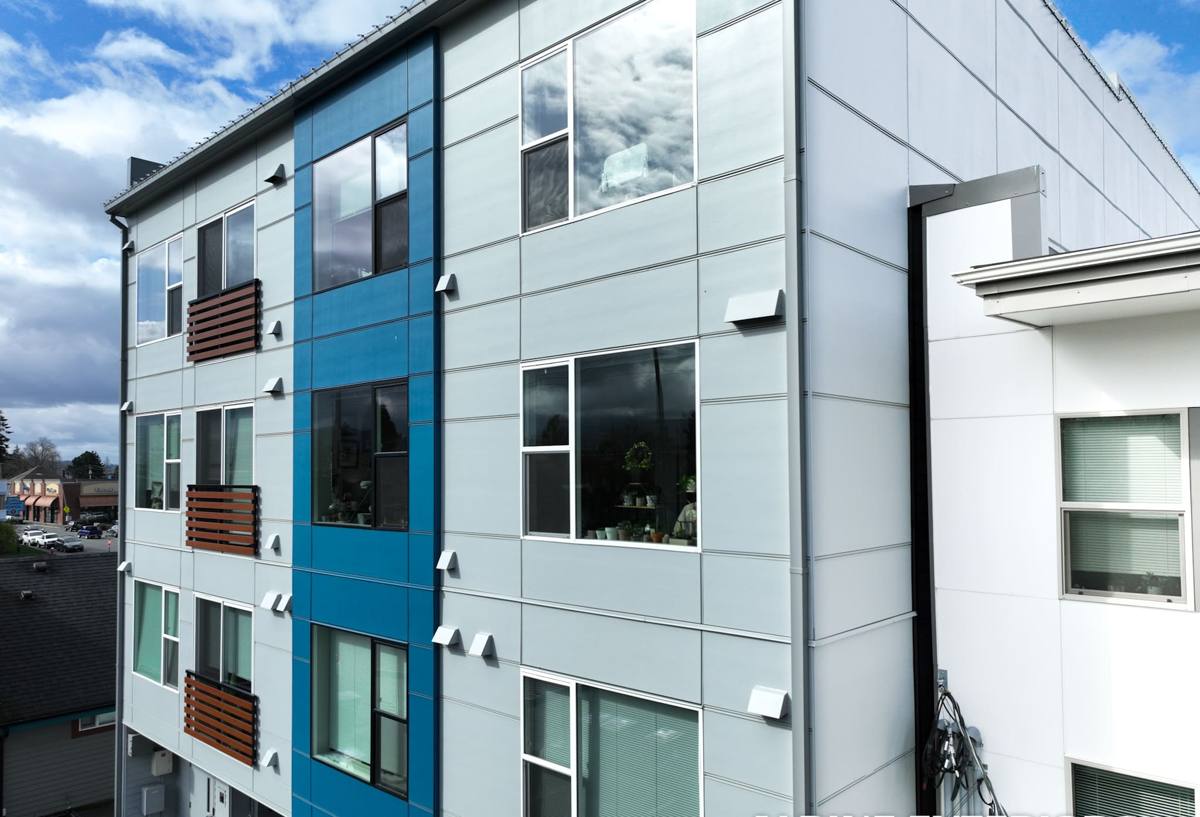
Signs a Cordata Home May Need Window Replacement
- Visible fogging or a persistent haze between panes of double-glazed glass — a sign the seal has failed
- Soft, spongy, or discolored wood at the sill, jamb, or exterior trim
- Windows that are hard to open, won't stay up on their own, or no longer latch tightly
- Noticeable draft or cold air near a closed window on a windy day
- Condensation forming on the inside of the glass regularly, especially in winter
- Visible daylight or gaps around the frame when viewed from outside
- Paint that's cracking or peeling specifically around window trim, not the whole wall
- Musty smell near a window that doesn't go away with cleaning
Any one of these on its own isn't necessarily an emergency. Several of them together, especially on the same window or the same wall, usually mean the assembly has been letting moisture in for a while and it's worth having someone look at it before it becomes a bigger repair.
What a Correct Window Replacement Job Actually Involves
Swapping in a new window is the easy, visible part. The work that determines whether it lasts is mostly hidden once the job is done.
Removal and Rough Opening Inspection
We don't just pull the old sash and drop a new unit in the same hole. Once the old window is out, the rough opening gets inspected for rot, soft framing, or old flashing that's failed. This is the point where problems that have been building for years actually get found — and it has to happen before anything new goes in, not after.
Flashing and Water Management
Given how often driving rain is a factor here, proper flashing sequencing matters more in Bellingham than it does in drier climates. That means a sill pan to catch and direct any water that gets past the window, house wrap integrated correctly with the flashing tape, and everything lapped so water always sheds outward and down — never trapped behind the siding.
Insulation and Air Sealing
The gap between the new window frame and the rough opening needs to be filled with the right material — typically low-expansion foam or backer rod and sealant, not just stuffed with fiberglass — so the window is both insulated and sealed against air infiltration without bowing the frame out of square.
Interior and Exterior Finish
Trim, caulking, and paint or stain get finished to match the surrounding wall so the new window doesn't stand out as an obvious patch job. On the exterior, that finish work is also functional — it's the last line of defense against wind-driven rain finding its way to the edges of the frame.
Frame Material Comparison for This Climate
There's no single "best" window material for every home — it depends on budget, the home's age and style, and how much upkeep an owner wants to do. Here's how the common options hold up against Bellingham's coastal, wet conditions specifically.
| Frame Material | Moisture Resistance | Maintenance | Typical Lifespan |
|---|---|---|---|
| Vinyl | Very good — won't rot or corrode | Low; occasional cleaning | 20–30 years |
| Fiberglass | Excellent — dimensionally stable in wet/dry cycles | Low | 30–40 years |
| Wood (unclad) | Poor without diligent upkeep in this climate | High; needs regular painting/sealing | Varies widely with maintenance |
| Wood-clad (exterior-clad) | Good on the exposed side; interior wood look preserved | Moderate | 20–30 years |
| Aluminum | Fair; prone to corrosion in salt air over time | Moderate | 15–25 years near the coast |
We steer most Cordata homeowners toward vinyl or fiberglass for standard replacements, mainly because they don't need repainting and they don't corrode in salt air the way older aluminum frames do. Where a home's character calls for a wood look, exterior-clad options let you keep that appearance on the interior while putting a low-maintenance material on the side that actually faces the weather.
Our Process for a Cordata Job
- On-site assessment. We look at every window being considered, not just the ones an owner has flagged, and check trim, sills, and interior sightlines for signs of the moisture issues common in this area.
- Honest recommendation. Some windows genuinely just need new hardware or re-caulking, not full replacement. We'll tell you which is which rather than defaulting to "replace everything."
- Written estimate. Clear pricing by window, with the reasoning behind material and configuration choices, so there are no surprises once work starts.
- Scheduling around weather. We plan install days around Bellingham's forecast, since an opening should never sit exposed to driving rain overnight.
- Removal and rough opening check. Every opening is inspected before the new window goes in, and any rot or damage found is flagged and discussed before we proceed.
- Install, flash, and seal. Windows go in plumb, level, and square, with flashing and sealing detailed for wind-driven rain, not just standard vertical rainfall.
- Finish and walkthrough. Interior and exterior trim is finished, and we walk the job with the homeowner before calling it done.
Why a Crew That Already Works Cordata Matters
A window installer who mostly works drier, inland areas can do fine, competent work and still miss details that matter specifically here — how far to extend a drip cap, how aggressively to flash a sill pan, or which frame materials hold up against salt air over a decade instead of just looking good on install day. A crew that's already worked homes in this part of Whatcom County has usually already seen what fails in this climate and adjusts for it as a matter of habit, not as an afterthought.
That local familiarity also shows up in smaller, practical ways: knowing which older homes in the area are likely to have outdated flashing details, knowing how local weather patterns affect scheduling, and being able to speak plainly about what we're seeing once an opening is exposed — instead of guessing.
Mistakes We See From Past Installs
We're not here to run down other contractors, but there are patterns worth knowing about so you can ask the right questions of anyone quoting your job.
- No sill pan flashing. Relying on caulk alone at the sill instead of a proper drainage path is a common shortcut that tends to fail quietly, over years.
- Foam used as the only air seal. Standard expanding foam without a backer rod and sealant approach can bow thin vinyl frames out of square over time.
- Reusing old flashing tape. Old house wrap and flashing that's already been through several wet seasons doesn't always bond well to new tape — it needs to be evaluated, not assumed to be fine.
- Skipping the rough opening inspection. Installing a new window directly into a rotted or out-of-square opening just hides the problem for a while instead of fixing it.
Permits, Timing, and Local Scheduling
Standard like-for-like window replacement in Bellingham typically doesn't require a separate permit in most cases, but changes to a window's size, structural header work, or work tied into a larger remodel can trigger permitting requirements — that's worth confirming for your specific project before work begins. On timing, we try to schedule installs for stretches of drier weather where possible, since an open rough opening shouldn't sit exposed overnight during a driving rain event. In a climate where the wet season runs long, that planning matters more than it would somewhere drier.
If you're weighing whether a window in your Cordata home needs replacing or just some repair and maintenance, we're happy to come take a look. The estimate is free, there's no pressure to move forward, and you'll get a straight answer about what's actually going on with your windows — use the form below to get started.