 Bellingham Siding
 Decks in Barkley Face a Different Set of Problems
Barkley sits close enough to the water and the weather patterns that roll off Bellingham Bay that decks here age differently than decks fifty miles inland. Salt-laden air corrodes fasteners and hardware faster than most homeowners expect. Driving rain off Puget Sound finds every gap in flashing and every unsealed end cut. And Whatcom County's long, wet moss season turns any deck surface that doesn't drain and dry properly into a slick, green, slowly rotting problem by the second or third winter.
None of this means a deck can't last in Barkley — it means the deck has to be built for these specific conditions from the ground up, not assembled from a generic plan and hoped for the best. That's the whole point of hiring a crew that already works this neighborhood instead of a contractor who treats every job the same regardless of zip code.
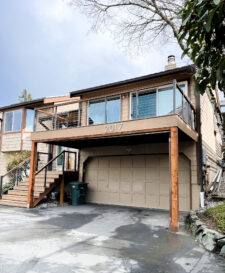
What "Built for Bellingham" Actually Means
Moisture Management Comes First
Every deck we build starts with how water is going to move off it and away from the house. That includes ledger board flashing that actually sheds water instead of trapping it against the rim joist, joist tape on every horizontal cut to stop end-grain from wicking moisture, and gaps between deck boards sized to let the structure dry out between our frequent rain events rather than staying damp for weeks at a stretch.
Hardware That Won't Corrode
Salt air near Bellingham Bay is hard on standard fasteners. We use stainless steel or heavy hot-dip galvanized hardware rated for coastal exposure — not the cheaper coated screws that start rusting streaks into the wood within a couple of seasons. This matters more in Barkley than it would in a dry inland climate, and it's one of the first things we check when we're asked to look at a deck someone else built.
Footings Set Below Frost and Seasonal Wet
Whatcom County soil holds water longer than people assume, especially through our wet winters. Footings that are too shallow or poured without proper drainage around them can shift over a few seasons, which shows up later as a bouncy deck or gaps opening up at the ledger. We set footings to local code depth and grade the site so water moves away from the posts instead of pooling around them.
Moss, Mildew, and the Long Wet Season
Moss doesn't just make a deck look neglected — it holds moisture against the wood or composite surface and accelerates decay underneath it. In Barkley, a deck surface that doesn't get enough sun exposure or airflow can start showing moss within a single wet season if it isn't designed with drainage and cleaning in mind.
A few things reduce the moss problem significantly:
- Proper board spacing so water drains through rather than sitting on the surface
- Joist spacing and airflow underneath the deck, not just on top of it
- Material choice suited to shaded or partially shaded yards, which are common on wooded Barkley lots
- A realistic annual cleaning routine we walk you through at handoff, not just a one-time pressure wash
We're upfront that no deck material is entirely moss-proof in this climate. The goal is a deck that sheds water fast enough and dries out well enough that moss stays manageable with normal seasonal upkeep instead of turning into a slip hazard by January.
Choosing the Right Decking Material for This Climate
There's no single "best" decking material — there's a best material for your yard's sun exposure, your maintenance appetite, and your budget. Here's how the common options actually perform in Bellingham's conditions:
| Material | How It Handles Salt Air & Rain | Moss/Mildew Resistance | Maintenance |
|---|---|---|---|
| Pressure-treated wood | Good if sealed and re-sealed on schedule; hardware corrosion is the bigger risk | Moderate — needs regular cleaning | Annual sealing/staining recommended |
| Cedar | Naturally rot-resistant, ages well with care | Moderate — same drainage rules apply | Periodic oiling to prevent graying and cracking |
| Composite decking | Handles moisture very well, doesn't absorb water like wood | Can still grow surface moss in shaded, damp spots without airflow | Low — occasional washing, no sealing |
| PVC decking | Fully moisture-resistant, best option for constant wet exposure | Best resistance of the group with proper drainage | Lowest — wash as needed |
Composite and PVC decking generally make the most sense for Barkley yards with heavy shade or limited airflow, since they don't absorb water the way wood does. Cedar and pressure-treated wood remain solid, budget-conscious choices for sunnier, better-ventilated sites where you're willing to keep up with sealing. We'll walk your specific lot with you and give an honest recommendation rather than steering you toward whatever has the highest margin.
Railings, Fasteners, and the Details That Fail First
On older decks in this area, the failure point is almost never the decking boards themselves — it's the connections. Railing posts that weren't through-bolted properly, fastener heads that rusted and lost grip, or stair stringers that were undersized for the load all show up as the first real problems, usually within five to eight years on a deck that wasn't built with local conditions in mind.
Our approach treats these connection points as the most important part of the build, not an afterthought:
- Through-bolted railing posts rather than surface-mounted brackets alone
- Stair stringers sized for the actual span and expected load, not the minimum code allows
- Corrosion-resistant fasteners at every structural connection, not just the visible surface
- Ledger attachment inspected and flashed to current code, since this is the single most common point of deck failure nationally
Our Process for a Barkley Deck Build
1. On-Site Walkthrough
We look at your yard's sun exposure, drainage patterns, existing structure (if it's a rebuild), and how the deck will actually be used — entertaining, grilling, a quiet morning coffee spot — before we talk materials or layout.
2. Honest Material and Design Recommendation
Based on that walkthrough, we recommend materials and a layout suited to your specific site, not a one-size-fits-all package. We'll explain the trade-offs in plain terms so you're deciding with full information.
3. Permitting and Code Compliance
Deck permitting requirements apply throughout Whatcom County jurisdictions, and we handle that process as part of the build so you're not left tracking down inspections yourself.
4. Build, With Weather-First Sequencing
We sequence the work to protect exposed wood and framing from our wetter stretches whenever possible — flashing and structural work don't sit exposed to rain longer than necessary.
5. Final Walkthrough
Before we call the job done, we walk the finished deck with you, point out the maintenance routine that fits your material choice, and answer any questions about care through the wet months ahead.
Repair, Rebuild, or Start Over?
Not every deck problem means starting from scratch. If the framing and footings are sound and the issues are limited to surface boards, railings, or fasteners, a repair or partial rebuild can extend the deck's life at a fraction of full replacement cost. If the ledger connection is compromised, footings have shifted, or rot has reached structural framing members, a rebuild is the more honest recommendation — patching a structurally compromised deck just delays a bigger problem. We'll tell you plainly which category your deck falls into when we inspect it, and why.
A Quick Pre-Build Checklist for Barkley Homeowners
- Confirm the deck's sun and shade pattern across the day — this drives material choice more than most people expect
- Ask any contractor what fastener grade they use and whether it's rated for coastal/salt-air exposure
- Ask how ledger flashing will be handled — this is the single most common failure point on decks in wet climates
- Get a straight answer on footing depth and drainage, not just "it'll be up to code"
- Decide your realistic maintenance appetite before choosing between wood and composite/PVC
- Confirm permitting is included in the scope of work, not left to you
Why a Local Barkley Crew Matters
A deck built by a crew that already works Barkley regularly isn't guessing about how this neighborhood's rain, shade patterns, and salt-influenced air affect a build — they've seen it hold up, and they've seen it fail, on decks a few streets over. That local track record shapes real decisions: which fastener grade to spec, how much board spacing to leave for drainage, and which materials are worth the extra cost on a shaded, moisture-prone lot versus a sunnier one. It's the difference between a deck built to a generic spec sheet and one built for the actual conditions it has to survive in Bellingham.
If you're planning a new deck or need an honest opinion on repairing versus rebuilding an existing one, we're happy to walk your Barkley property and give you a straightforward, no-pressure estimate — just fill out the form below.