 Bellingham Siding
 Ferndale Siding Needs a Different Kind of Repair Approach
Ferndale sits close enough to Bellingham Bay and the open water of the Strait of Georgia that homes here take on a specific combination of punishment: salt-laden air, long stretches of driving rain off the water, and a moss season that can run most of the year in shaded, north-facing spots. A siding repair that would hold up fine in a drier inland climate can fail within a couple of seasons out here if it doesn't account for those conditions. We work on homes throughout Whatcom County, and Ferndale calls are common enough that we've built our repair process specifically around what this stretch of coastline does to a wall system over time.
This page focuses on one thing: what a correct siding repair looks like for a Ferndale home, why the local climate changes the calculus, and how we handle the job from first inspection to finished work.
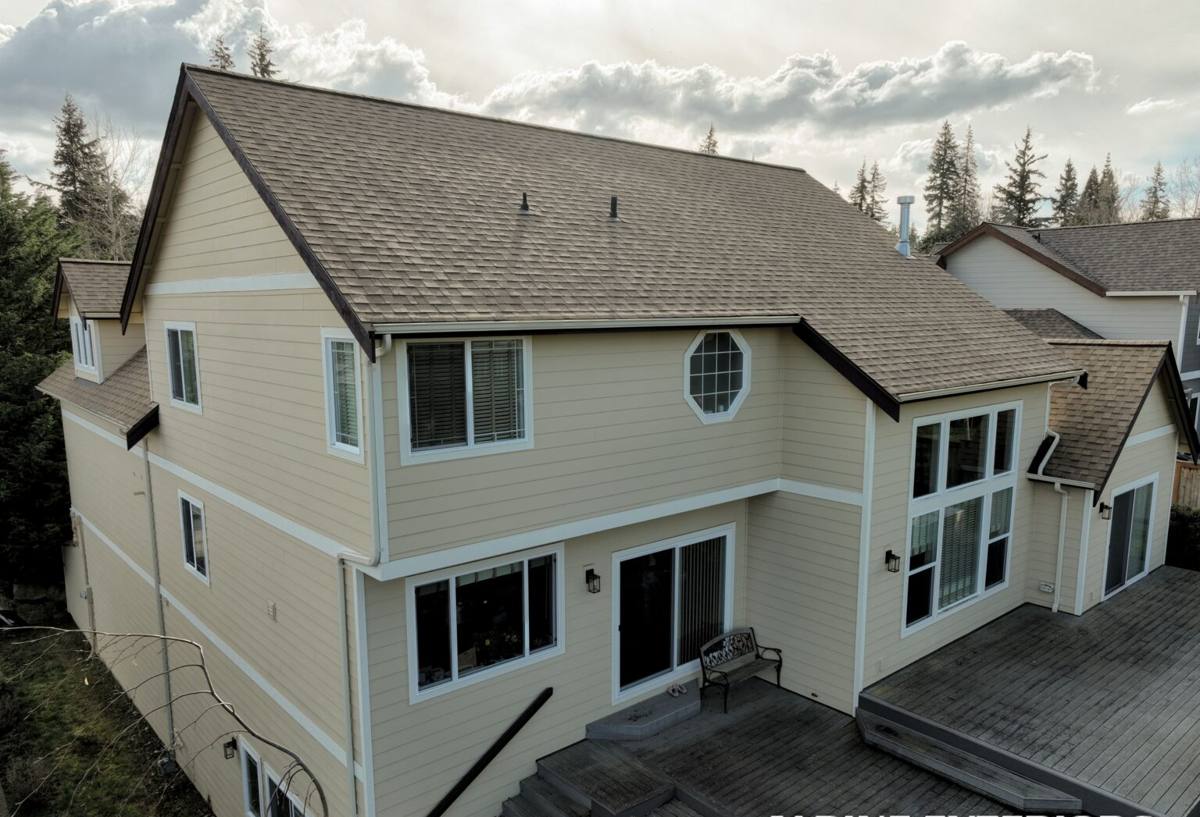
What Salt Air, Rain, and Moss Actually Do to Siding
Homeowners often assume siding damage is just cosmetic — a cracked board, a stained patch, some green fuzz near the ground. In reality, each of those symptoms points to a different mechanism, and treating the wrong one is how repairs fail early.
Salt Air and Fastener Corrosion
Airborne salt doesn't just dull a paint finish — it accelerates corrosion in exposed fasteners, flashing, and any metal trim that wasn't specified for a coastal-adjacent environment. Once a nail head or trim screw starts rusting, it can streak the siding face and, more importantly, lose its grip, which lets boards work loose and open gaps for water.
Driving Rain and Wind-Driven Moisture
Ferndale gets its share of storms pushing rain sideways off the water, not just straight down. That matters because a lot of siding damage isn't from rain hitting a wall — it's from rain finding a horizontal lap, a butt joint, or a penetration (a hose bib, a light fixture, a vent) that wasn't sealed or flashed to handle wind-driven water. Vertical-only water management fails in these conditions.
Moss, Algae, and Prolonged Dampness
Shaded north walls, areas under mature trees, and anywhere airflow is blocked will grow moss and algae for much of the year in this climate. That growth holds moisture against the siding surface far longer than open, sun-exposed walls experience, which softens caulk, breaks down paint film faster, and — on moisture-sensitive materials — can lead to swelling or delamination underneath the growth long before it's visible from the ground.
Signs a Ferndale Home Needs Repair, Not Just a Repaint
A fresh coat of paint can hide a lot of problems for a season or two, which is exactly why so many repair calls we get are further along than the homeowner expected. Here's what we actually check for:
- Soft or spongy spots when you press on the siding, especially near the bottom courses and around windows
- Visible gaps or separation at butt joints and corner boards
- Persistent moss or algae growth that returns within weeks of cleaning
- Rust streaking below nail heads, trim screws, or metal flashing
- Bubbling, peeling, or chalking paint concentrated on one elevation (usually north or west-facing)
- Visible warping, cupping, or bowing in individual boards or panels
- Staining or discoloration around window and door trim, which often signals a flashing failure rather than a siding failure
- Any interior sign — a musty smell, a soft spot on interior drywall, or a stain on an interior wall that shares an exterior wall with a damaged section
If more than one or two of these show up on the same wall, it's usually a sign of an underlying moisture path rather than isolated cosmetic wear — and that changes how we approach the repair.
What a Correct Siding Repair Actually Involves
Finding the Moisture Path First
The most common mistake in siding repair is replacing the damaged board and stopping there. If water got behind that board in the first place, the same path is still open, and the new piece will show the same damage within a year or two. Before we touch a single board, we trace how water is getting in — a failed sealant joint, a missing kick-out flashing, a butt joint with no house wrap overlap, or a fastener pattern that's pulling boards away from the wall plane.
Matching Material and Profile
Patch repairs only look right, and perform right, when the replacement piece matches the existing siding's profile, exposure, and finish. Mismatched reveal heights or a slightly different lap profile are obvious from the curb and can also create new water-shedding problems at the transition.
Flashing and Fastening Done to Spec
Every penetration, joint, and termination gets addressed on its own — not caulked over as a shortcut. That means proper flashing at horizontal joints and trim, correct fastener type and placement for the material being used, and attention to the water-resistive barrier behind the siding, not just the visible surface.
Finish and Color Match
Where the existing siding has a factory finish, we account for finish matching as part of the repair scope, not an afterthought — mismatched sheen or color on a repaired section is one of the most common complaints homeowners have about lower-quality repair work.
Repair vs. Replacement: How We Make the Call
Not every damaged section needs a full re-side, and not every "repair" is actually a good use of money. We walk homeowners through the honest trade-offs rather than defaulting to whichever job is bigger.
| Factor | Favors Repair | Favors Replacement |
|---|---|---|
| Extent of damage | Isolated to one or two elevations or sections | Recurs across multiple walls or the whole house |
| Underlying material condition | Board/panel is otherwise sound, damage is localized | Material is failing broadly (warping, delamination, chronic moisture intake) |
| Age of existing siding | Relatively recent install with an isolated defect | Siding is near or past its realistic service life |
| Moisture source | Source identified and correctable at the repair point | Source is systemic (poor original flashing, missing house wrap, grading issues) |
| Cosmetic match | Color/profile match is achievable | Discontinued profile or badly faded finish makes matching impractical |
When the honest answer is "repair," we tell you that. When it isn't, we explain exactly why before you spend money on a fix that won't hold.
Why We Only Repair and Replace With James Hardie Fiber Cement
We standardized on James Hardie fiber cement siding, and we don't install LP SmartSide, vinyl, Cemplank, Allura, primed spruce, or cedar. That's a deliberate call, not a brand preference, and it matters especially in a climate like Ferndale's.
Fiber cement is non-combustible, which matters given Whatcom County's wildfire-season awareness in recent years. It doesn't rot, and it's engineered to hold up against the moisture cycling that a marine-influenced climate produces — swelling, freeze-thaw stress, and constant damp-dry cycles from moss and shade. Hardie's ColorPlus factory finish is baked on and warranted against fading, which solves the finish-matching problem that plagues field-painted repairs over time. And Hardie's HZ5 product line is specifically engineered for climates with the kind of moisture exposure and freeze-thaw pattern that Western Washington sees — it's not a one-size-fits-all product across the country.
When we do a repair on an existing Hardie installation, we're matching into a system built for this exposure. When a repair call comes in on a different material, we'll still tell you honestly what your options are — but our own installs and full re-sides are Hardie, because it's what we're willing to warranty and stand behind.
Our Process for a Ferndale Siding Repair Call
- Inspection. We walk the exterior, check every elevation (not just the spot you called about), and look for the signs listed above — including areas that aren't visibly damaged yet but show early moisture signs.
- Diagnosis. We identify the actual water path or failure cause, not just the visible symptom, and explain it in plain terms.
- Honest scope and quote. You get a clear repair-vs-replace recommendation with reasoning, plus a written estimate before any work starts.
- Repair work. Matching material, correct flashing and fastening, and finish matching where applicable — done to the standard we'd want on our own homes.
- Cleanup and check. We clear debris, and where moss or algae contributed to the original damage, we'll flag ongoing maintenance steps to keep it from coming back.
Why a Local Crew Matters for This Kind of Work
Siding repair in a coastal-adjacent climate isn't generic handyman work — it's diagnostic work that depends on understanding how water moves on a house in this specific environment. A crew that already works Ferndale and the surrounding Bellingham area has seen the recurring failure patterns tied to this coastline: which elevations take the worst wind-driven rain, which fastener and flashing shortcuts show up again and again in older installs, and how fast moss returns on a shaded wall if it isn't addressed at the root. That local pattern recognition is the difference between a repair that lasts and one that's back on our schedule in two years.
It also means faster response, easier scheduling around Whatcom County's wetter months, and a crew that's accountable in the community it works in — not a crew passing through for one job.
What a Ferndale Homeowner Should Expect From an Estimate
A useful estimate isn't just a number — it should tell you what's actually wrong, why it happened, and what the repair will and won't fix. Before you commit to any siding repair, it's reasonable to expect:
- A full exterior walk-through, not just an inspection of the spot you pointed out
- A plain-language explanation of the moisture source, not just "the siding is damaged"
- A clear repair-vs-replace recommendation with the reasoning behind it
- Written scope of work before any contract is signed
- Straight answers about material options and why we recommend what we recommend
If you're seeing signs of siding trouble on a Ferndale home — or you just want a second, honest opinion before committing to a repair — we're happy to take a look. The estimate is free, there's no pressure, and you'll get a straight answer about what your siding actually needs. Use the form below to get started.