 Bellingham Siding
 Fiber Cement Siding in Lynden: Built for This Valley's Weather
Lynden sits inland from the coast, up in the Nooksack River valley near the Canadian border, so it doesn't take the direct salt spray some of our waterfront service areas see. It's still solidly inside the marine climate pattern that governs exterior work across northern Whatcom County, though. Moist air off the Sound moves up the valley, rain arrives wind-driven more often than it falls straight down, and mild, damp winters give moss and mildew a long stretch of the year to work on anything shaded or slow to dry. Siding absorbs the brunt of all of it, year after year, which is exactly why product choice and installation quality matter more here than in most parts of the country.
We're based here in Bellingham and work Whatcom County steadily, with a regular flow of projects in Lynden. On siding, we install one product: James Hardie fiber cement. Not vinyl, not LP SmartSide, not Cemplank, Allura, primed spruce, or cedar. This page stays narrow on purpose — it's about fiber cement siding specifically, on Lynden homes specifically: what the local climate does to a wall system, what a correct installation actually requires, and how our process runs from first look to final walkthrough.
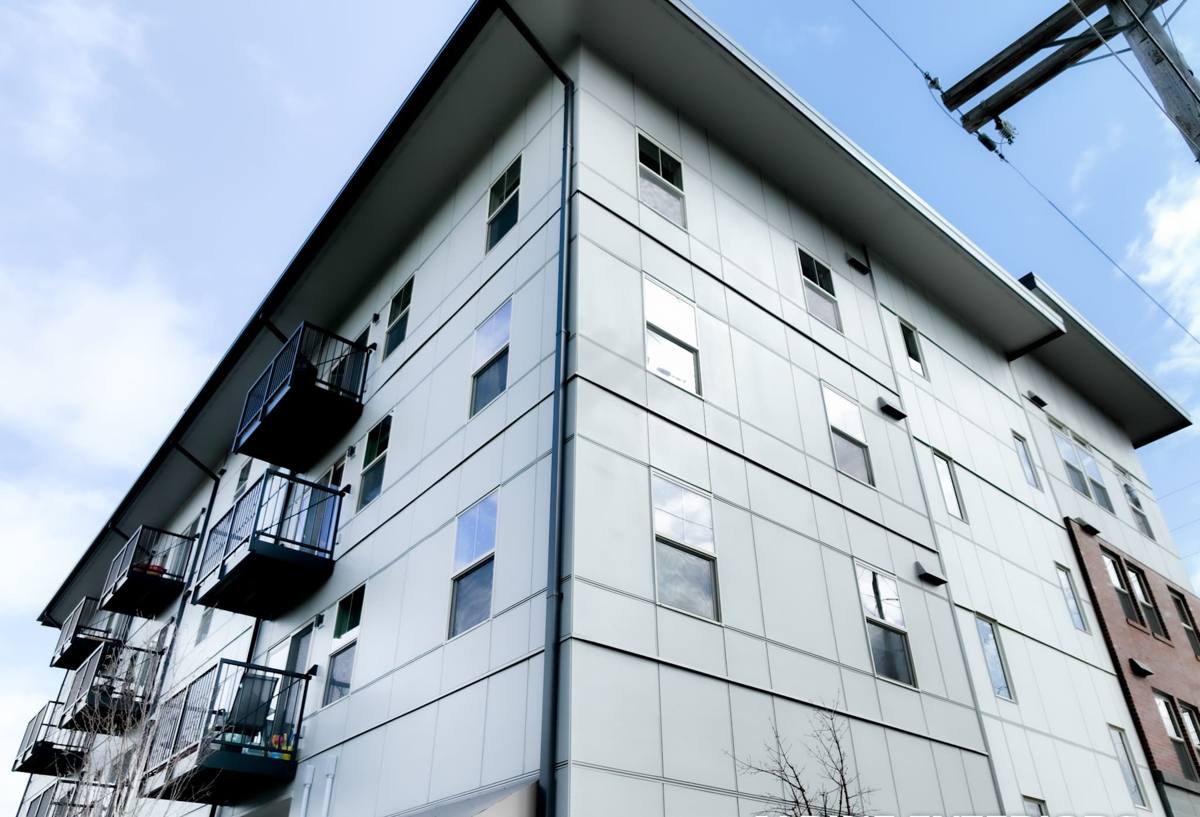
What Lynden's Climate Puts a Siding System Through
Salt-Tinged Air and Fastener Corrosion
Even well inland, Whatcom County homes get a steady dose of salt-carrying marine air moving through the valley. Fiber cement's cement-and-fiber core doesn't corrode, but the fasteners, flashing, and trim hardware around it can, especially cheaper hardware or elevations that face prevailing weather. Corroded fasteners eventually work loose, streak the face of the siding, or lose their holding power at exactly the joints that need to stay tight.
Driving Rain and Joint Behavior
Rain in this valley tends to arrive sideways, pushed by wind rather than falling straight down. That matters because most real-world fiber cement problems trace back to water finding its way behind the boards through a butt joint, a window head, or a fastener penetration that wasn't sealed correctly — not through the panel material itself. A fiber cement wall system is only as good as its weakest joint, and wind-driven rain finds weak joints fast.
A Long Moss and Mildew Season
Mild temperatures and consistent moisture give moss, algae, and mildew a long window to take hold on shaded or north-facing walls. James Hardie's factory-applied ColorPlus finish resists this meaningfully better than field-applied paint, but no exterior finish is completely immune. Siding installed with poor drainage behind it, or set too close to grade or landscaping, will still show growth sooner than it should.
Why We Install Only James Hardie Fiber Cement
We narrowed our siding offering down to one system after years of seeing what actually holds up in this climate versus what looks good on a spec sheet. James Hardie's HZ5 formulation is engineered for regions with sustained moisture and freeze-thaw cycling rather than extreme heat, which is a close match for what Lynden and the rest of Whatcom County see most winters. It's non-combustible, it carries a strong transferable warranty when installed to the manufacturer's spec, and the ColorPlus factory finish holds color and resists moss buildup longer than most field-applied paint systems.
We don't install LP SmartSide, vinyl, Cemplank, Allura, primed spruce, or cedar. Each of those has a place in the broader siding market, and plenty of homeowners are satisfied with them elsewhere. Our decision is a professional one, not a knock on any single product: in a climate that stays this wet for this much of the year, we'd rather commit fully to the one system we've watched perform consistently than spread our crew's expertise across several products and risk uneven installation quality on any of them.
What a Correct Fiber Cement Installation Actually Involves
Clearances and Fastening
James Hardie's warranty depends on installation following its published specifications: minimum clearance above roof lines, decks, and grade; the correct fastener type, spacing, and penetration depth; and the right nailing pattern for the specific product line being installed. Skipping these details rarely shows up right away, but it shortens the working life of the siding and can void the manufacturer warranty outright if a claim is ever filed.
Joint and Seam Treatment
Butt joints, corners, and every place two pieces of siding meet are where water gets behind a wall if they aren't handled correctly. That means proper overlap or flashed joints, sealant used exactly where Hardie's spec calls for it and skipped where it doesn't, and attention to how each course sheds water onto the one below it rather than trapping it.
Housewrap and Flashing
The siding itself is the visible layer, but the weather-resistive barrier and flashing underneath do most of the real work of keeping a wall dry. Window and door flashing, kick-out flashing at roof-to-wall intersections, and correctly lapped housewrap all have to be right before the first piece of siding goes up. Most of the water damage we find behind old siding traces back to one of these details, not to the cladding that was covering it.
| Installation Detail | Why It Matters in Lynden |
|---|---|
| Fastener clearance above grade and roofline | Keeps cut edges from wicking moisture during our long wet season |
| Correctly lapped housewrap and flashing | Stops wind-driven rain from reaching the sheathing before siding even goes up |
| Sealant used only where Hardie specifies | Over-caulking traps moisture behind the board; under-caulking lets it in — both fail |
| Field-cut edges sealed on site | Factory finish doesn't extend to a fresh cut; an unsealed edge absorbs water directly |
Choosing the Right Product Line and Finish
James Hardie's lineup covers more ground than most homeowners realize. HardiePlank lap siding is the most common choice for Lynden homes and comes in several profiles and exposures. HardiePanel gives a smoother, more modern vertical look and works well for accent walls or contemporary builds. HardieShingle mimics a cedar-shake appearance without the maintenance a real cedar shake demands in this climate. All three are available in the ColorPlus factory finish, a baked-on coating applied under controlled conditions rather than brushed on after installation, which is what gives it a meaningful edge over field-applied paint in a region with this much sustained moisture and salt exposure.
The right choice depends on the home's style, its exposure to prevailing wind and rain, and the homeowner's long-term maintenance preferences. We walk through those options during the estimate rather than defaulting to whatever's fastest to install.
Our Process for a Lynden Siding Project
- On-site assessment. We look at the whole exterior, not just the siding — roof-to-wall transitions, window flashing, and grading all affect how long new siding will actually last.
- Tear-off and sheathing check. Once the old siding comes off, we inspect the sheathing underneath for rot or soft spots before anything new goes up. Covering damaged sheathing with new siding just hides a problem that gets worse behind the wall.
- Weather barrier and flashing. Housewrap, window flashing, and every wall penetration get addressed before the first course of siding is installed.
- Installation to Hardie's published spec. Correct clearances, fastening, and joint treatment — the baseline we install to, not an upsell.
- Trim, touch-up, and final walkthrough. We cover care and maintenance expectations with the homeowner and confirm the finished work matches what was estimated.
What Drives the Cost of a Lynden Fiber Cement Project
| Factor | What It Affects | Why It Matters Here |
|---|---|---|
| Home size and number of stories | Total material, labor hours, and staging/scaffolding needs | Multi-story homes need more careful access planning around Lynden's tighter lots and outbuildings |
| Trim and detail complexity | Labor time around windows, corners, and rooflines | More trim means more joints, and more joints means more places water can get in if rushed |
| Sheathing condition once old siding is off | Whether repair work is needed before new siding goes up | Older Lynden homes with a history of moisture intrusion sometimes need sheathing repair first |
| Product line and finish | Material cost and long-term maintenance needs | HZ5-rated products and ColorPlus finish cost more upfront but resist this climate longer |
Every estimate is specific to the house rather than a flat per-square-foot number pulled from a national average, and most full re-sides land in a broad five-figure range depending on the factors above. We walk through the actual drivers of the number with each homeowner during the estimate instead of handing over a figure with no explanation behind it.
Why a Local Bellingham-Based Crew Matters in Lynden
Working out of Bellingham means we're on Whatcom County job sites through every season, not just when the weather cooperates. That repeated, local exposure shapes real decisions on a project — which wall orientations on a Lynden property stay wet longest, where extra flashing attention pays off, and which install-day details are worth the time so a homeowner isn't dealing with a callback two winters later. It also means that if a warranty question or maintenance issue comes up years down the road, it's a call to a crew still working in the same area, not a company that's moved on to the next region.
Because siding failures often trace back to a roof or window problem feeding moisture in from somewhere else, it's worth having those checked at the same time as a siding project even if siding is the main concern. We handle roofing, windows, and decks in addition to siding, so a Lynden homeowner isn't left coordinating between separate contractors who each only see their own piece of the house.
Before You Hire: What to Check
- Confirm the contractor's Washington state license is active, bonded, and insured through the Department of Labor & Industries.
- Ask specifically which siding products they install and why — a contractor who installs everything has less depth in any one system.
- Ask how they handle sheathing repair if it's found during tear-off, and whether that's included or billed separately.
- Ask whether they install to the manufacturer's published spec as standard practice, not as an upgrade.
- Ask how long they've worked in Whatcom County specifically, not just in Washington generally.
- Get a written estimate that breaks down product line, finish, and scope rather than a single lump figure.
If your Lynden home needs new siding, or you'd like a roof, window, or deck looked at alongside it, we're glad to come take a look. Reach out using the form below for a free, no-pressure estimate.