 Bellingham Siding
 Why Decks in Barkley Wear Out Faster Than Homeowners Expect
Barkley sits close enough to the water and to Bellingham's marine weather pattern that decks here take a beating most inland homeowners never have to think about. The combination of salt-laden air drifting in off the bay, long stretches of driving rain through fall and winter, and a moss season that can run half the year means an outdoor deck is under near-constant moisture pressure. Add in the shaded, tree-lined lots common throughout the neighborhood, and you get decking surfaces that stay damp longer after every rain than they would in a drier, sunnier climate.
That moisture load doesn't just make a deck look tired. It works on the wood and hardware from the inside — swelling boards, loosening fasteners, and feeding the fungal growth that eventually turns into rot. A deck that would last two or three decades in a dry climate can start showing structural problems in Whatcom County well before that, especially if it was built with lower-grade lumber, undersized footings, or flashing details that weren't suited to this much sustained wet weather.
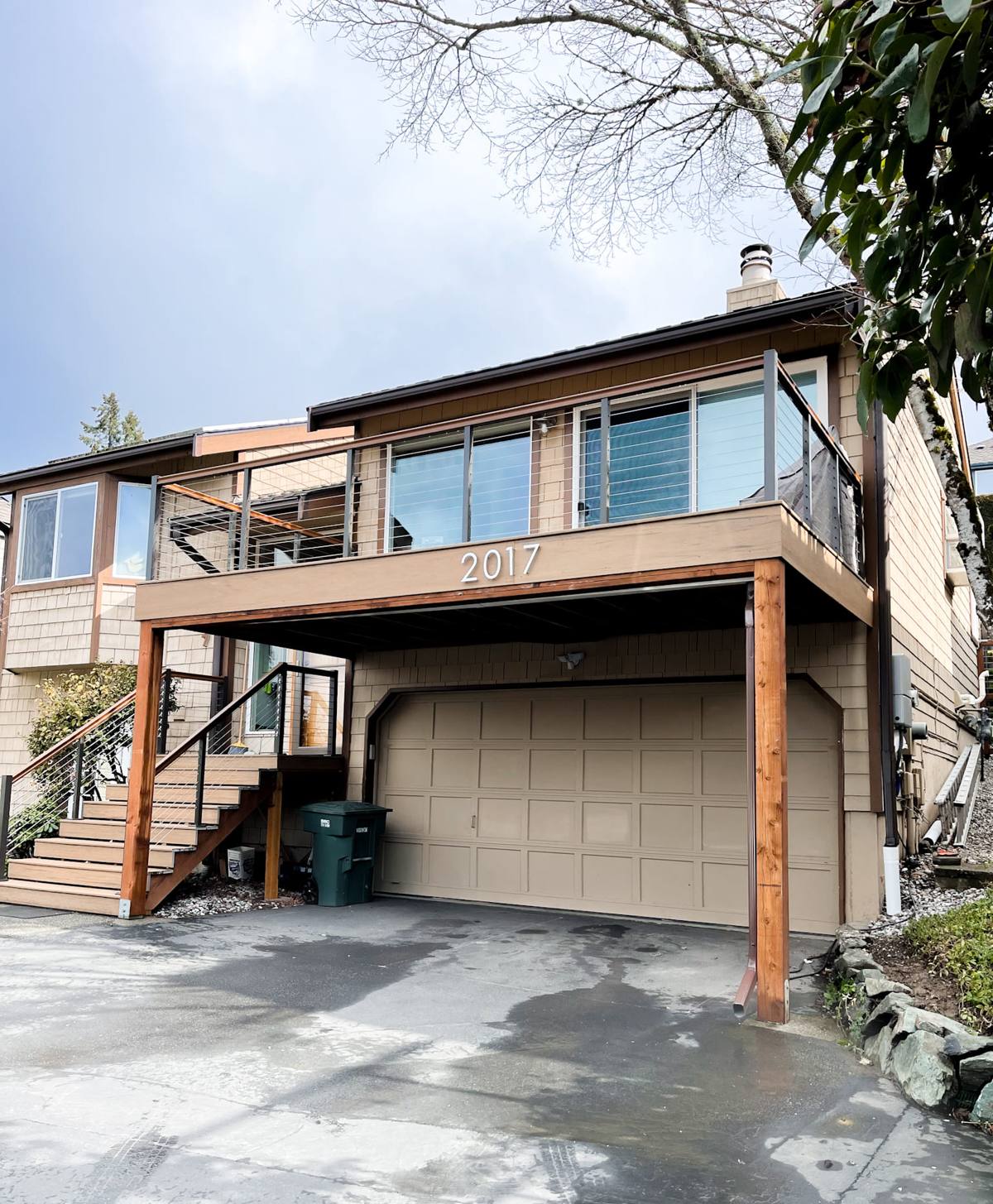
Signs a Barkley Deck Needs Replacement, Not Just Repair
Not every tired-looking deck needs to be torn out. But there's a point where patching boards and re-staining stops being a real fix and starts being a way to delay the inevitable. We look at a handful of specific signs when deciding whether a deck can be repaired or should be replaced outright.
- Soft, spongy, or spring-back decking boards, especially near the house or in shaded corners that never fully dry out
- Rust streaking or corrosion around fasteners, which usually means moisture has been sitting against the metal for a long time
- Visible gaps opening up between the ledger board and the house, or daylight showing where flashing has failed
- Persistent moss or algae film that comes back within weeks of cleaning, a sign the wood is staying wet longer than it should
- Posts or footings that feel loose when the railing is pushed, which points to a foundation problem rather than a surface one
- A deck older than 20-25 years built with standard lumber and never fully rebuilt, even if it looks presentable from a distance
If two or more of these show up at once, it's usually a sign the structure — not just the surface — has been compromised. At that point, patchwork repairs tend to cost real money without buying much extra life out of the deck.
What Happens If You Wait
The risk with an aging deck in this climate isn't cosmetic, it's structural. Ledger board connections and support posts are the parts most exposed to standing moisture, and they're also the parts holding the whole structure to the house and the ground. When those fail quietly over a few wet seasons, the first sign a homeowner notices is often a soft spot underfoot or a railing that wobbles — by then the deck has usually been unsafe for longer than it looked unsafe.
What a Correct Deck Replacement Actually Involves
A full deck replacement is more than pulling up old boards and screwing down new ones. Done right, it starts from the ground up and treats every connection point as a place moisture could eventually get in.
Footings and Framing
We check footing depth and condition against current code requirements, not just what was there before — older decks in this area were sometimes built with footings that don't meet today's frost and load standards. Framing lumber gets upgraded to pressure-treated stock rated for ground contact where it's called for, and joist spacing is set to match whatever decking material is going on top, since composite and PVC boards often need tighter spacing than solid wood.
Ledger Attachment and Flashing
The ledger board — where the deck attaches to the house — is the single most common failure point we see on old decks in wet climates like Bellingham's. A correct replacement uses proper structural fasteners rather than deck screws, a code-compliant flashing detail that sheds water away from the house rather than trapping it, and a gap or drainage plane so moisture doesn't sit against the siding or rim joist.
Decking, Railings, and Hardware
All fasteners and structural hardware go in stainless or coated for exposure near salt air, since cheaper galvanized hardware corrodes noticeably faster this close to the water. Railings are set to current code height and baluster spacing, which matters both for safety and for resale, since older railings often don't meet current requirements even if they look fine.
Choosing a Decking Material for Barkley's Climate
There's no single best decking material — it depends on budget, how much upkeep a homeowner wants to take on, and how much sun or shade the deck actually gets. In a shaded, damp Whatcom County lot, that trade-off looks different than it would in a dry, sunny yard.
| Material | How It Handles Local Moisture | Maintenance | Typical Lifespan Here |
|---|---|---|---|
| Pressure-treated wood | Needs consistent sealing to resist the extended wet season; shaded areas stay damp longer between treatments | Annual cleaning, re-sealing every 1-2 years | 10-15 years before major repair |
| Cedar | Naturally moisture- and insect-resistant, but still needs upkeep in a climate this wet to prevent graying and moss growth | Cleaning and oil or sealer every 1-2 years | 15-20 years with regular care |
| Composite decking | Doesn't absorb water like wood, so it resists warping and rot; still needs regular cleaning where moss and algae can take hold | Periodic washing, no sealing required | 25-30 years |
| PVC and capped polymer decking | Fully resistant to moisture absorption, rot, and insect damage — a strong fit for shaded, high-moisture lots | Occasional washing | 25-30+ years, often with a longer warranty |
We install all of these depending on what a homeowner wants, but for shaded Barkley lots with heavy moss exposure, we usually steer the conversation toward composite or PVC decking, simply because it holds up with far less season-to-season maintenance. Wood can still be the right call for homeowners who want that specific look and are willing to keep up with sealing — we'll walk through the honest trade-offs either way rather than push one product.
Our Deck Replacement Process
We keep the process straightforward, and we walk homeowners through each stage so there aren't surprises once the old deck comes down.
- On-site assessment. We inspect the existing deck's framing, footings, ledger connection, and overall condition to confirm replacement is the right call and identify anything code-related that will need attention.
- Material and layout discussion. We go over decking material options, railing style, and layout, factoring in how much sun or shade the space gets and how it's actually used.
- Permitting. We handle the permit application with the City of Bellingham or Whatcom County, whichever applies to the property, and build to the approved plan.
- Demolition and disposal. The old deck is removed and hauled away, and we check the ledger area and any framing underneath for hidden moisture damage before building begins.
- Framing and structural work. New footings, framing, ledger flashing, and structural hardware go in to current code, sized for the decking material selected.
- Decking, railings, and finish work. Boards, railings, stairs, and any trim are installed and inspected for fit and fastening before final walkthrough.
- Final walkthrough and cleanup. We go over the finished deck with the homeowner, confirm everything meets code, and leave the site clean.
Permits and Code in the City of Bellingham and Whatcom County
Most deck replacements that involve new footings, framing, or a change in size or height require a permit, whether the property falls under City of Bellingham jurisdiction or unincorporated Whatcom County. Requirements can differ slightly between the two, particularly around setback distances, footing depth, and railing specifications, so it matters that whoever pulls the permit actually knows which jurisdiction a given Barkley property sits in and builds to that standard rather than a generic one. Skipping the permit step on a deck rebuild is a common shortcut that can come back to cost a homeowner at resale, when an unpermitted structure gets flagged during a home inspection.
Keeping a New Deck Looking Good Through Bellingham's Wet Seasons
Even a well-built deck needs some seasonal attention in this climate. A little upkeep goes a long way toward getting the full lifespan out of the materials and hardware.
- Sweep leaves and debris off the deck regularly in fall — trapped organic matter holds moisture against the boards and speeds up moss growth
- Clean moss and algae off the surface before it gets a foothold, rather than waiting until it's visibly established
- Check that gutters and downspouts near the deck are directing water away, not dumping runoff onto the decking or footings
- Inspect railings and stair connections once a year for looseness, especially after a hard winter
- If wood decking, plan on resealing on a regular cycle rather than waiting until it visibly grays or absorbs water
- Keep planters and furniture legs off direct board contact where possible, or move them periodically, since standing contact points trap moisture
Why It Matters to Hire a Crew That Already Works in Barkley
A deck built to a generic national standard isn't necessarily built for this specific stretch of Whatcom County. Crews who already work in Barkley and the surrounding Bellingham neighborhoods know which details actually matter here — the flashing approach that holds up against this much sustained rain, the hardware grade that doesn't corrode as fast this close to the salt air, and which decking materials genuinely perform in shaded, moss-prone yards versus which ones just look good in a showroom. That local experience also means a faster, more accurate read on permitting, since the requirements and inspection expectations aren't identical between the City of Bellingham and unincorporated Whatcom County.
It also means fewer surprises during the project itself. A crew that's replaced decks throughout this area has already seen what tends to be hiding under old decking in a climate like this — soft ledger boards, undersized old footings, corroded original hardware — and knows to check for it up front rather than discovering it mid-project.
Ready for a Straight Answer on Your Deck?
If your deck in Barkley is showing soft spots, loose railings, or the kind of moss and moisture buildup that doesn't go away with cleaning, it's worth having someone take an honest look before deciding between repair and replacement. Use the form below to request a free, no-pressure estimate, and we'll walk the deck with you and give you a straightforward assessment of where it stands.