 Bellingham Siding
 Windows Built for Life on the Bluff
Edgemoor sits on wooded, elevated ground above Bellingham Bay, and that position is a mixed blessing for the windows on your home. The views and tree cover are a big part of what makes the neighborhood desirable, but that same exposure to open water and dense conifer canopy puts real stress on window frames, glazing, and seals. Salt-laden air drifts up off the bay, wind-driven rain comes in hard off the water during fall and winter storms, and the shade from mature trees keeps moisture sitting on siding and window trim longer than it would on a more open lot. None of that is a reason to avoid big windows or custom shapes — it's a reason to make sure they're specified and installed correctly for this exact setting.
A "custom window" isn't just a special shape or an oversized picture window, though we do plenty of both. It also means matching frame material, glazing package, and flashing detail to the specific wall assembly and exposure of your house. A window that performs fine on a sheltered lot inland can fail early on a bay-facing wall in Edgemoor if it wasn't chosen or installed with that exposure in mind.
What Bay Weather Actually Does to a Window
Salt Air and Metal Components
Salt air accelerates corrosion on unprotected metal — hardware, hinges, screws, and lower-grade aluminum components are the first things to show it. Over years, corroded hardware makes a window harder to operate and can compromise the seal around moving parts like casements and awnings, which is where a lot of leaks start.
Driving Rain and Wind Pressure
Storms moving in off Bellingham Bay don't just drop rain straight down — wind pushes it sideways into the wall, and on an elevated, exposed lot that pressure is higher than average. Standard flashing and caulk-only sealing methods that pass in calmer conditions can let water track behind the trim and into the wall cavity over time. This is one of the most common causes of hidden rot we find behind older windows in this area.
Moss, Algae, and Shade
Whatcom County's long wet season, combined with heavy tree cover on many Edgemoor lots, means moisture sits on horizontal surfaces — sills, trim caps, and mullions — for extended stretches. That's ideal territory for moss and algae growth, which holds moisture against wood and paint film and speeds up decay if the window isn't detailed to shed water cleanly.
UV and Temperature Swings
Reflected light off open water adds UV exposure beyond what a typical inland wall sees, which over time can degrade lower-quality vinyl, weatherstripping, and seals faster than the manufacturer's rated lifespan.
Matching Windows to Edgemoor's Architecture
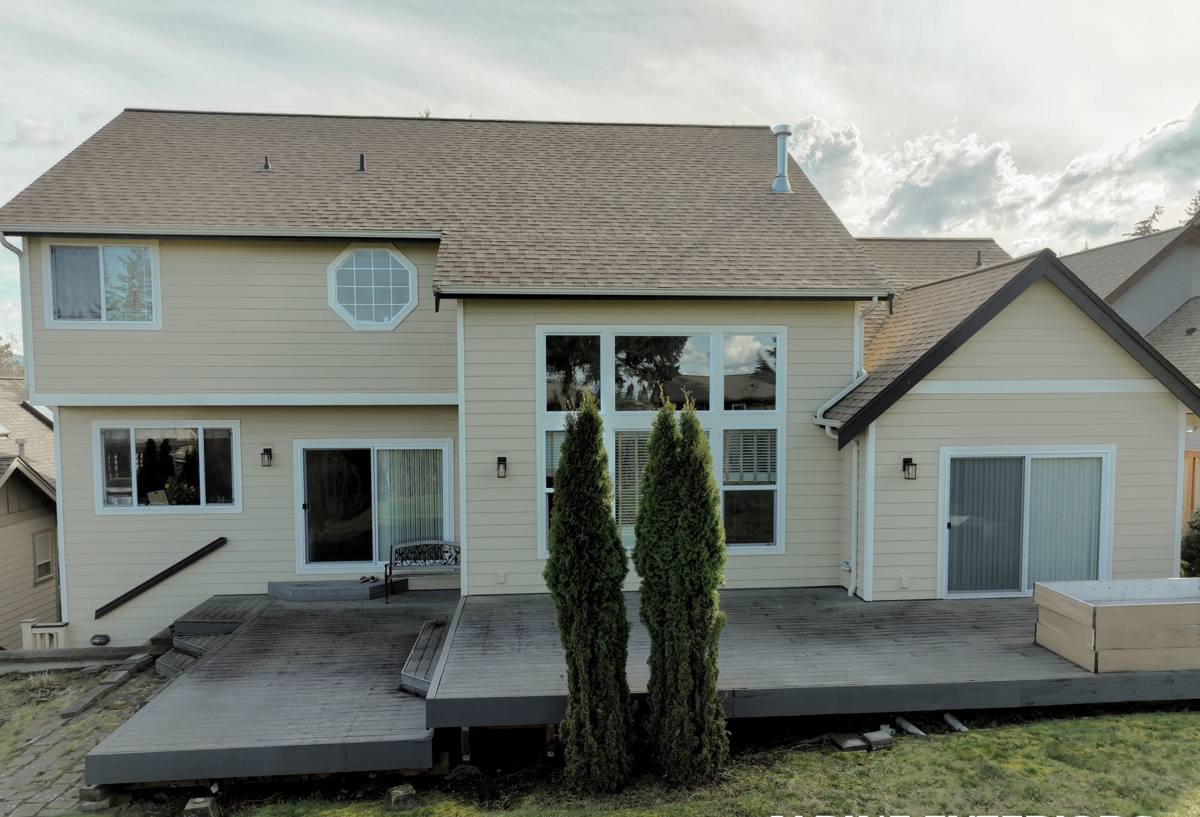
Edgemoor has a real mix of housing stock — older character homes from earlier decades sitting alongside newer construction, many designed to take advantage of bay and water views. Custom window work here often means one of two things: replicating a historic profile (true divided lites, deeper sightlines, period-appropriate trim) on an older home, or specifying large-format or unusually shaped units — picture windows, corner windows, tall casements — for newer homes built around a view.
Both jobs require different things from us. Matching an older home's look usually means simulated or true divided-lite options and careful trim replication so the new window doesn't look out of place next to original details. View-oriented custom windows usually mean larger glass units, which raises the stakes on structural support, glazing strength, and thermal performance because there's simply more surface area exposed to wind and weather.
Choosing the Right Frame Material
There's no single "best" window material — the right choice depends on exposure, budget, and how much upkeep you want to take on. Here's how the common options hold up specifically against salt air, driving rain, and a shaded, damp lot:
| Frame Material | Salt Air / Corrosion | Moisture Resistance | Upkeep |
|---|---|---|---|
| Vinyl | Not affected by corrosion | Good if properly flashed; won't rot | Low — occasional cleaning |
| Fiberglass | Excellent — dimensionally stable, won't corrode | Very good, holds paint well if refinished | Low to moderate |
| Aluminum | Vulnerable unless marine-grade or well-coated | Prone to condensation without thermal break | Moderate — watch for pitting near the bay |
| Wood-clad | Cladding protects exterior; interior wood needs care | Good if clad and flashed correctly | Higher — interior finish maintenance |
| Solid wood | No inherent corrosion risk | Highest maintenance need in a wet climate | High — regular painting/sealing required |
For most Edgemoor homes facing open exposure to the bay, we lean toward fiberglass or a well-detailed vinyl for the workhorse windows, and reserve wood or wood-clad for entry features and interior-facing elevations where upkeep is more manageable. Aluminum can still make sense for large, thin-profile view windows, but only with marine-grade hardware and a proper thermal break — otherwise condensation and corrosion show up early.
What a Correct Installation Actually Involves
The window unit itself is only part of the job. In a high-exposure setting like Edgemoor, the installation detailing matters as much as the product you choose. A correct job includes:
- Removing old units and inspecting the rough opening for hidden rot or prior water damage before anything new goes in
- Repairing or rebuilding any compromised framing — never installing a new window over a soft or wet opening
- Installing a proper drainage plane and flashing sequence so water is directed out and down, not trapped behind the trim
- Using sill pans on exposed elevations to catch and redirect any water that gets past the primary seal
- Sealing and insulating the gap between the window frame and rough opening with the correct materials — not just caulk
- Setting the window level, plumb, and square so hardware operates smoothly and seals compress evenly for years, not just at installation
- Finishing exterior trim and flashing details so water sheds away from the wall rather than pooling on horizontal surfaces
Skipping any one of these steps is how a good window ends up with a leak or rot problem within a few years — and it's usually the flashing and sill detail, not the window itself, that gets blamed.
Glazing and Performance Options
For a bay-facing home, glazing choice affects comfort, energy cost, and condensation control:
| Feature | What It Does | Why It Matters in Edgemoor |
|---|---|---|
| Low-E coating | Reflects heat while letting light through | Reduces heat loss during damp, cool Pacific Northwest winters |
| Argon or krypton fill | Improves insulating value between panes | Helps offset larger, view-oriented glass areas |
| Warm-edge spacers | Reduces heat transfer at the glass edge | Lowers condensation risk on cool, humid days |
| Laminated glass | Adds impact and sound resistance | Useful for storm exposure and reducing wind noise off the water |
| Tempered glass | Required by code near doors, floors, and certain heights | Applies to many large picture and corner window installs |
Our Process, Start to Finish
- On-site assessment: We look at existing windows, framing condition, sun and wind exposure, and how the home is oriented relative to the bay before recommending anything.
- Product and material selection: We walk through frame material, glazing, and style options based on your home's architecture, exposure, and budget.
- Detailed estimate: You get a written scope covering removal, framing repair (if needed), flashing detail, and finish work — no vague allowances.
- Installation: Careful removal, opening inspection and repair, correct flashing and sealing sequence, and precise setting of each unit.
- Finish and cleanup: Exterior trim finished, interior areas protected and cleaned, and job site left as we found it.
- Final walkthrough: We check operation, seals, and finish work with you before calling the job done.
Signs Your Current Windows Are Losing the Fight
On an exposed, wooded lot like many in Edgemoor, window problems often show up gradually. Watch for:
- Fogging or persistent condensation between the panes (a sign the seal has failed)
- Soft, discolored, or spongy wood trim around the frame
- Visible moss or algae buildup on sills or trim that keeps returning after cleaning
- Drafts or a noticeable temperature difference near the window even when it's closed
- Difficulty opening, closing, or locking a window that used to operate smoothly
- Paint or finish that's peeling or bubbling specifically around the window opening, not the wider wall
- Water staining on interior drywall or trim below or beside the window
Any one of these on its own might be minor. Two or more together, especially on a bay-facing wall, usually means the window and its flashing are due for a real look, not just a caulk touch-up.
Maintenance That Actually Matters Here
Even the right window in the right material needs some upkeep in a marine climate. Rinse salt residue off frames and glass periodically, especially after storms. Keep weep holes and drainage tracks clear of debris and moss so water can exit as designed. Check exterior caulk lines annually for cracking or separation, particularly after the first hard freeze-thaw cycle of the year. For wood or wood-clad units, plan on inspecting and refinishing exposed wood surfaces on a regular cycle rather than waiting until finish failure is visible.
Why Local Installation Experience Matters
A crew that regularly works waterfront and bluff properties around Bellingham knows which details actually hold up here versus which ones look fine on paper but fail against real Whatcom County weather. That shows up in small decisions — how deep the flashing lap needs to be on a bay-facing wall, which sealant products hold their flexibility through our wet-to-dry seasonal swings, and how to detail a sill on a shaded, moss-prone elevation so water doesn't sit. Those aren't things you learn from a manufacturer's install sheet; they're things you learn from doing the work on homes like yours, in this exact setting, season after season.
If your Edgemoor home has windows showing their age, or you're planning new construction or a remodel and want the glazing specified correctly from the start, we're happy to take a look and talk through honest options. Request a free, no-pressure estimate using the form below and we'll walk the property with you before recommending anything.