 Bellingham Siding
 Energy-Efficient Windows Built for Barkley's Climate
Barkley sits close enough to Bellingham Bay and the surrounding wetlands that homes here take a different kind of weather beating than houses further inland in Whatcom County. Salt-tinged air off the water, long stretches of driving rain, and a moss season that can run half the year all put extra stress on window frames, seals, and glazing. Energy-efficient windows are one of the few upgrades that address comfort, moisture control, and heating costs at the same time — but only if they're specified and installed correctly for this specific environment.
This page covers what actually matters for window replacement and installation in Barkley: the conditions your windows are fighting, what a correctly installed unit looks like, how our process works from estimate to final walkthrough, and why a crew that already works this neighborhood catches problems a generalist might miss.
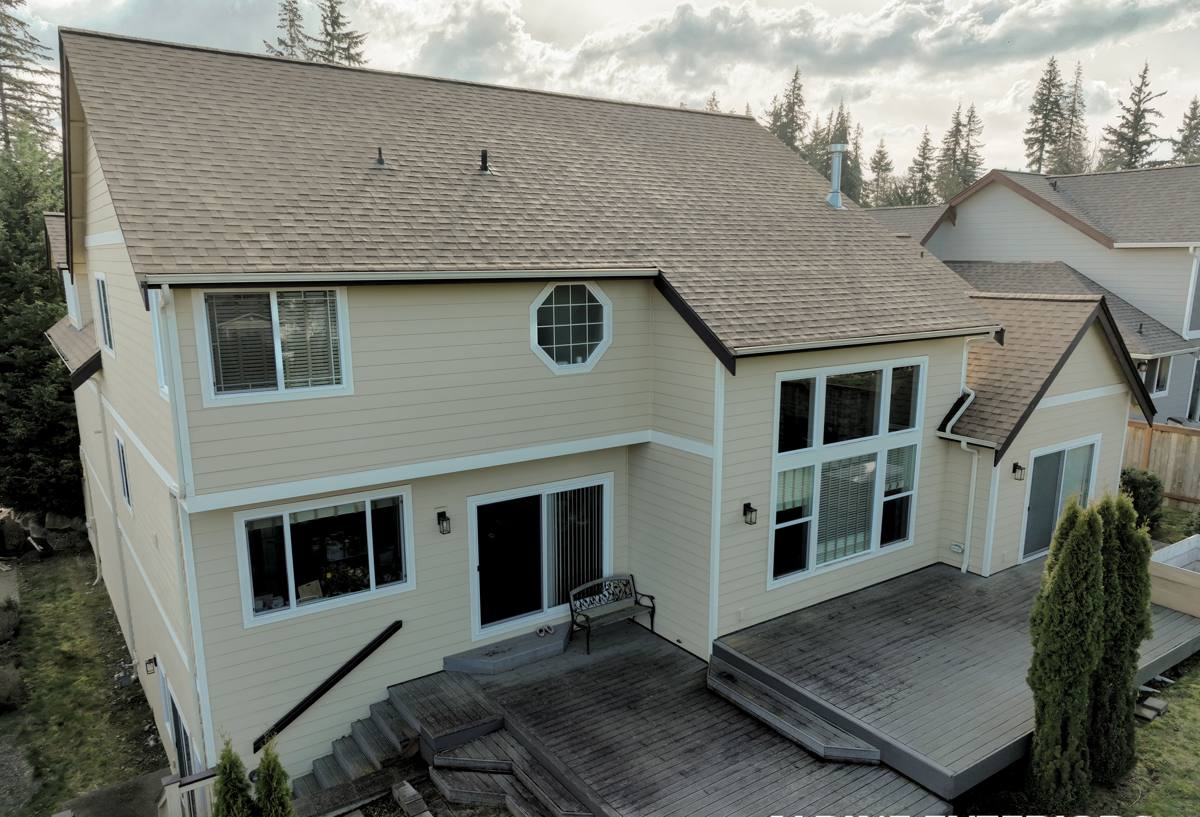
Why Barkley Homes Are Hard on Windows
Bellingham's marine climate is generally mild, but "mild" doesn't mean easy on building materials. A few local factors combine to shorten the useful life of older or poorly installed windows in Barkley specifically:
- Salt air: proximity to the bay means airborne salt can accelerate corrosion on lower-quality hardware, fasteners, and metal window components over time.
- Driving rain: wind-driven rain off Puget Sound doesn't just fall straight down — it pushes sideways into window frames and flashing, finding any weak point in the seal.
- Moss and organic growth: the same damp, shaded conditions that grow moss on roofs and siding also encourage mold and mildew buildup in window tracks, sills, and weep holes if they aren't detailing properly for drainage.
- Persistent humidity: Whatcom County's damp shoulder seasons mean condensation issues show up fast on windows with failed seals or poor thermal performance, often as fogging between panes.
None of this means Barkley homes need exotic materials. It means the details — flashing, sealants, drainage paths, and glass specification — have to be right the first time, because the climate will find any shortcut.
What "Energy-Efficient" Actually Means Here
Energy efficiency for a window isn't one number. In this climate, the meaningful factors are:
- U-factor: measures how well the window resists heat loss. Lower is better for our heating-dominated climate.
- Solar Heat Gain Coefficient (SHGC): matters less here than in sunnier climates, but still affects comfort on south- and west-facing rooms.
- Air leakage rating: arguably the most underrated number for this region — a window that leaks air also tends to leak moisture management, which matters more here than in a dry climate.
- Condensation resistance: a practical, everyday measure of how well a window handles our humidity without fogging or sweating.
We look at all four together rather than chasing a single spec, because a window that's excellent on paper but poorly sealed against wind-driven rain will underperform in practice.
Signs a Barkley Home Needs Window Attention
Homeowners often wait until a window is visibly failing, but there are earlier signs worth acting on:
- Fogging or a hazy film between panes of double-glazed units — a sign the seal has failed and the gas fill (or simple insulating air gap) has been compromised.
- Noticeable draft near the frame on a windy day, even with the window latched.
- Soft or discolored wood on the interior or exterior sill, often a sign water has been getting behind the frame.
- Difficulty opening, closing, or locking — frames can swell, warp, or settle out of square over time in a consistently damp climate.
- Visible moss, algae, or black staining building up in the window track or exterior trim.
- Rooms that feel noticeably colder near the window than the rest of the house in winter.
Any one of these on its own isn't necessarily urgent. Several together, especially on a home's north or west side where wind-driven rain hits hardest, usually mean it's worth having someone look before the damage spreads into the wall framing.
What a Correct Installation Involves
The window unit itself is only part of the job. Most premature window failures we see in this area trace back to installation shortcuts, not the product. A correct installation includes:
Removal and Opening Prep
Careful removal of the old unit without damaging the rough opening, followed by an inspection of the framing underneath. This is often the first time hidden water damage from a failed old window becomes visible, and it needs to be addressed before the new window goes in — sealing over rot doesn't solve anything.
Flashing and Drainage
Proper flashing integration with the home's existing water-resistive barrier (house wrap or building paper) so water is directed out and away from the wall assembly, not trapped behind the new window. Given how much wind-driven rain this area sees, this step matters more here than it does in drier climates.
Sealing and Insulation
The gap between the window frame and rough opening gets insulated and sealed with materials rated for exterior use — not just caulked shut on the visible seams. A window that's air-sealed on the outside but gappy underneath will still perform poorly.
Level, Plumb, and Square
A window installed slightly out of square will bind, won't seal evenly, and will wear unevenly at the corners — exactly where leaks tend to start. This is a basic step, but it's the one most often rushed on a fast job.
Final Weatherproofing
Exterior trim, sealant beads, and any cladding disturbed during the install get finished to shed water correctly, matching the drainage path the rest of the wall already relies on.
Our Process, Start to Finish
- Free on-site estimate: we look at existing windows, note any signs of water intrusion or framing issues, and discuss which performance factors matter most for the specific rooms involved.
- Product selection: we walk through frame material, glazing options, and performance ratings in plain terms, with honest tradeoffs — not a sales pitch toward the most expensive option.
- Written quote: a clear scope of work and price range before anything is ordered.
- Scheduling: we plan installation around weather where possible, since opening up a wall in the middle of a heavy rain event is never ideal in this climate.
- Installation: removal, framing inspection, flashing, insulation, and final weatherproofing as outlined above.
- Walkthrough: we operate every window with the homeowner present, check seals, and confirm everything closes and locks properly before calling the job done.
Frame Material Comparison for This Climate
| Frame Material | Moisture Performance | Maintenance | Notes for This Area |
|---|---|---|---|
| Vinyl | Good — won't rot, resists salt air well | Low | Common, cost-effective choice for coastal Whatcom County homes |
| Fiberglass | Very good — dimensionally stable in temperature and humidity swings | Low | Strong option where frames see a lot of wind load or temperature cycling |
| Wood (clad exterior) | Good if the cladding and seals are intact; vulnerable if compromised | Moderate to high | Interior warmth and appearance, but exterior seals need monitoring in a wet climate |
| Aluminum | Prone to condensation and corrosion risk near salt air without thermal breaks | Moderate | We generally steer homeowners away from non-thermally-broken aluminum this close to the bay, due to conductivity and corrosion exposure — not because the material is inherently bad, but because it's a poor fit for this specific climate |
We don't push one material for every project. The right choice depends on the home's exposure, budget, and how the existing walls are built — a west-facing wall catching direct wind-driven rain has different needs than a sheltered, tree-covered elevation.
Cost Factors Homeowners Should Know
Every window project is different, but the price is generally driven by a consistent set of factors rather than the brand name on the box:
- Number and size of openings being replaced.
- Frame material and glazing package — double vs. triple pane, gas fill, low-E coatings.
- Condition of the existing rough opening — if there's hidden rot or framing damage, repair adds to the scope.
- Access and story height — second-story or hard-to-reach windows take more time and equipment.
- Trim and exterior finish work needed to match the home's existing siding or trim profile.
We give a written range after seeing the actual openings in person, rather than a phone quote, because the framing condition underneath an old window is often the biggest unknown in the whole job.
Pre-Project Checklist for Homeowners
- Note which rooms feel drafty, cold, or noisy — this helps prioritize which windows matter most.
- Look for fogging between panes on any window that's more than 15-20 years old.
- Check exterior sills and trim for soft spots, staining, or moss buildup.
- Think through whether you want to match existing grid patterns and trim style or update the look.
- Ask about warranty coverage on both the product and the labor — they're often separate.
- Confirm whether the quote includes disposal of old windows and any incidental repair to framing or siding.
Why a Crew That Already Works Barkley Matters
Window installation looks similar on paper everywhere, but the details that prevent callbacks are local. A crew that regularly works Barkley and the surrounding Bellingham neighborhoods already knows how wind-driven rain tends to hit certain elevations, how moss and moisture show up in window tracks here faster than in drier parts of the state, and what flashing details hold up through a full Whatcom County winter. That familiarity shows up as fewer surprises during the job and windows that actually perform the way they're rated to, instead of underperforming because of a generic installation approach that wasn't built for this climate.
It also means straightforward communication — we're not guessing at what "typical" conditions look like here, because we see them on every project.
Get a Free, No-Pressure Estimate
If you're dealing with drafty, foggy, or hard-to-operate windows in Barkley, or you're planning ahead for a full replacement, we're happy to take a look and walk you through honest options for your home. Use the form below to request a free estimate — no pressure, no obligation.