 Bellingham Siding
 Metal Roofing Built for Barkley's Climate
A roof in Barkley works harder than it looks like it should. Salt air drifting in off the water spends years quietly corroding anything metal that isn't properly specified. Rain rarely just falls straight down here — it gets driven sideways and forced up under laps and seams during the wetter stretches of the year. And on shaded or north-facing roof planes, a long moss season settles in and holds on well past when drier parts of the state have dried out. Metal roofing handles that combination better than almost any other material available to a homeowner, but only when it's specified and installed correctly for these specific conditions, not treated as a generic panel job dropped onto a Bellingham roof the same way it would go on a house in a dry inland climate.
This page is about what a correct metal roofing install actually looks like for a Barkley home — the panel and fastening choices that matter here, how moss and salt exposure change the details, what our process looks like from first inspection to final walkthrough, and why it's worth hiring a crew that already works roofs in this specific part of Whatcom County.
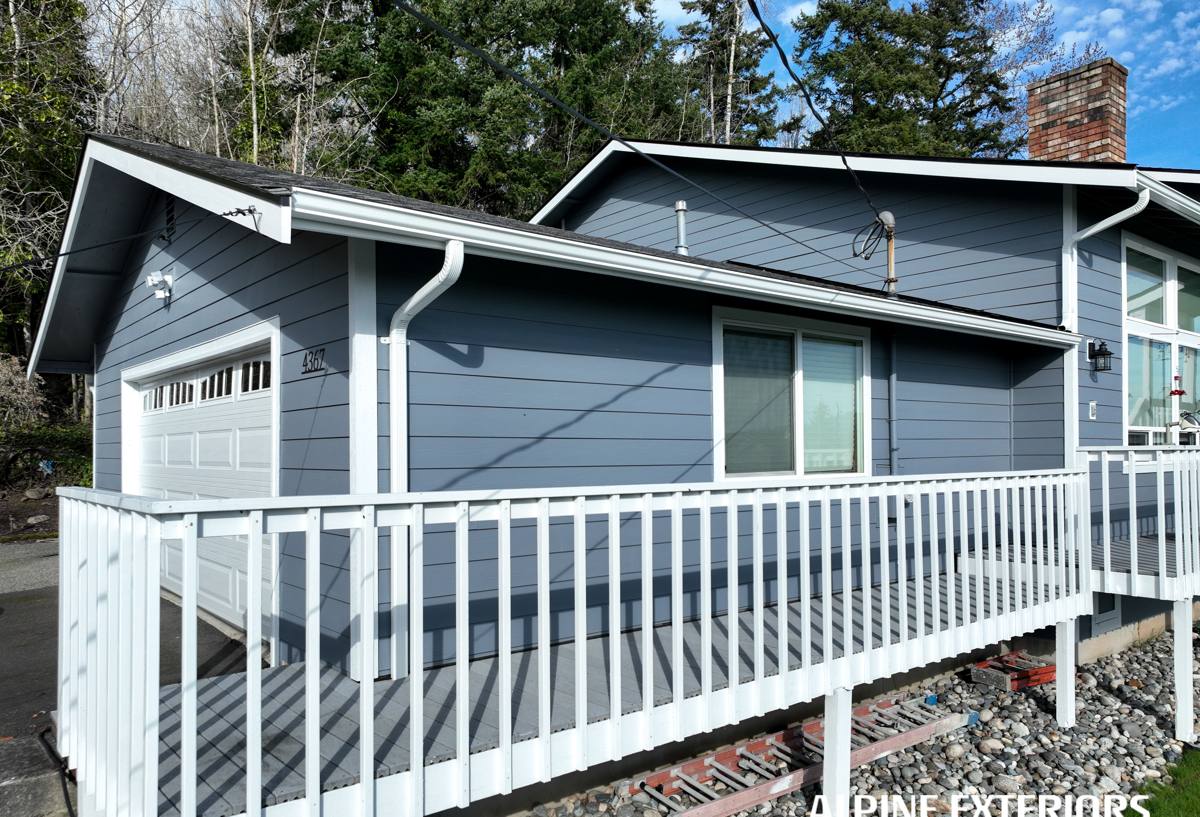
Why Metal Roofing Makes Sense for Barkley Homes
Homeowners come to us considering metal roofing for a handful of consistent reasons, and in this climate most of them hold up under scrutiny.
- Long service life: A correctly installed metal roof commonly runs 40 to 60+ years, well beyond what an asphalt shingle roof is rated for, which matters when you're weighing upfront cost against how many times you'll redo the roof over the life of the home.
- Sheds wind-driven rain efficiently: A continuous metal panel with properly lapped seams gives wind-driven rain far fewer entry points than a shingle field, where individual tabs can be lifted and worked at by sustained wind and moisture.
- Doesn't feed moss the way organic or absorbent roofing surfaces can: Moss needs a foothold to establish, and a smooth, hard metal surface gives it a much harder time taking root than a granulated shingle surface does, especially on shaded slopes.
- Fire resistance: Metal roofing is non-combustible, which is a genuine advantage regardless of climate.
- Lower long-term maintenance when installed correctly: No granule loss, no curling or cracking tabs, and less susceptibility to the kind of wind-lift damage that shortens a shingle roof's useful life here.
None of that means metal is automatically the right call for every home or every budget — asphalt shingle roofing remains a sound, proven option for plenty of Barkley properties. But for homeowners planning to stay put for decades, or who are tired of dealing with moss treatment and shingle repairs every few years, metal is worth a serious, honest look.
Standing Seam vs. Exposed-Fastener Panels
"Metal roofing" isn't one product — it's a category, and the two main systems homeowners run into behave very differently over time, especially in a wet, salt-exposed climate.
| System | How It's Fastened | Fit for Barkley's Climate |
|---|---|---|
| Standing seam | Concealed clips and fasteners hidden under raised, interlocking seams | Best fit — no exposed fastener heads for salt air to corrode, and the panels can expand and contract with temperature swings without stressing the fastening points |
| Exposed-fastener (screw-down) panels | Screws driven directly through the panel face into the substrate | Lower upfront cost, but every exposed screw and its rubber washer is a long-term maintenance point and a potential leak source as it ages |
Our professional standard is to recommend standing seam as the default for Barkley roofs, and to be direct with homeowners about why. Exposed-fastener systems rely on thousands of individual rubber washers staying sealed for the life of the roof, and in a climate with this much sustained moisture and temperature cycling, those washers are the first thing to fail — usually well before the panel itself would need replacing. That's not a claim that screw-down panels are junk; they have a legitimate place on lower-slope outbuildings, shops, and budget-driven projects. It's a trade-off we lay out plainly rather than let a homeowner discover it as a leak a decade in.
Panel Gauge and Finish
Two metal roofs can look identical on install day and perform very differently ten years later, and the difference usually comes down to two things that aren't visible from the ground.
- Panel gauge (thickness): A heavier-gauge panel resists denting, oil-canning, and wind flutter better than a thin, budget-grade panel, and it holds its shape better through repeated wet-dry and temperature cycling.
- Finish coating: A PVDF (Kynar 500-type) finish holds its color and chalk resistance far longer under sustained UV and moisture exposure than a lower-grade SMP or polyester paint system. In a climate that doesn't give a roof many fully dry weeks to recover, finish quality has a real, visible payoff over 15 to 20 years.
What a Correct Metal Roof Installation Involves
A metal roof performs the way it's supposed to only when the system underneath it is built correctly. The panel itself is the most visible part of the job, but it's rarely the part that determines whether the roof leaks.
Deck Inspection and Tear-Off
Metal roofing can sometimes go over an existing layer depending on the roof's condition and local code allowances, but we default to a full tear-off and deck inspection on most Barkley re-roofs. It's the only reliable way to find rot or moisture damage that's been developing quietly under the old roofing, and it's a mistake to seal that kind of damage under a new roof rather than address it directly.
High-Temperature Synthetic Underlayment
Metal panels get hot in direct sun and can drive standard felt underlayment past its rated temperature over time. A high-temperature synthetic underlayment holds up under that heat cycling while still giving the roof deck a real secondary water barrier against wind-driven rain that gets forced under seams and laps.
Flashing and Penetrations
As with any roofing material, most leaks don't start in the open field of the roof — they start at valleys, chimneys, vents, skylights, and wherever a roofline meets a wall. Metal roofing flashing has to be formed and integrated as part of the panel system, with proper laps and sealant placement, not caulked over as an afterthought once panels are already down.
Fastening and Thermal Movement
Metal panels expand and contract with temperature swings more than shingles do, and a correctly installed standing seam system uses floating clips that let panels move without tearing at fastener points. Fastening that ignores this — screwing panels down too tightly or in the wrong pattern — is a common cause of oil-canning and premature seam fatigue.
Ventilation
Balanced attic intake and exhaust ventilation matters just as much under a metal roof as under any other roofing material. Trapped moisture under the deck accelerates wood rot and undercuts the roof's performance from underneath, regardless of how well the panels above are handling rain and salt exposure.
Metal Roofing and Moss: What Actually Changes
Metal roofing doesn't eliminate moss risk entirely, but it changes the picture significantly compared to a shingle roof. Moss struggles to establish on a smooth, hard metal surface the way it does on the granulated texture of an asphalt shingle, so the widespread green staining that shows up across whole shingle roof planes in this climate is much less common on metal. Where metal roofs do still collect organic debris is in valleys, behind chimneys, and along any low-slope transition where leaves and needles can pile up and hold moisture against the panel. Left alone long enough, that debris buildup can still support moss or lichen growth in isolated spots, and standing debris against a panel seam is worth clearing before it becomes a bigger issue.
The practical takeaway: a metal roof in Barkley needs far less moss treatment than a shingle roof, but it isn't a zero-maintenance surface. Periodic debris clearing, especially heading into the wetter months, keeps the advantage metal has over other materials from eroding over time.
Cost Factors Worth Understanding
Metal roofing bids can vary widely, and the spread is almost always driven by real differences in scope and materials, not one contractor simply padding a number.
| Factor | What It Affects |
|---|---|
| Panel system (standing seam vs. exposed-fastener) | Upfront cost, long-term maintenance, and leak risk at fastener points over time |
| Panel gauge | Resistance to denting, oil-canning, and wind flutter over the roof's life |
| Finish coating grade | How long color and chalk resistance hold up under sustained UV and moisture exposure |
| Tear-off vs. install over existing roofing | Whether hidden deck damage gets found and repaired before new panels go down |
| Flashing and penetration scope | How thoroughly valleys, chimneys, vents, and wall transitions are addressed |
| Roof pitch, complexity, and access | Labor time, staging requirements, and panel fabrication complexity |
A written estimate that breaks these components out individually tells you far more than a single lump-sum number, and it's fair to ask any contractor to walk through exactly what's included before comparing two bids side by side.
How Our Process Works
- In-person inspection: We walk the existing roof and attic ourselves and document its actual condition rather than estimating from a photo or a rough guess.
- Written estimate: You get an itemized bid covering panel system, gauge, finish, underlayment, flashing scope, and cleanup — not a single vague line item.
- Scheduling around weather: We build reasonable flexibility into the timeline, since wet-season delays are a normal part of working in this region rather than an excuse we reach for later.
- Tear-off and deck repair: Old roofing comes off and any deck damage we find gets repaired before new underlayment or panels go down.
- Underlayment, flashing, and panel installation: Each layer goes on to manufacturer specification, with particular attention to valleys, penetrations, and clip spacing that allows for thermal movement.
- Final walkthrough: We review the finished roof with you in person, cover basic maintenance expectations, and do a full site cleanup before we consider the job done.
Why Hiring a Crew That Already Works in Barkley Matters
Metal roofing is less forgiving of installation shortcuts than asphalt shingles. A missed detail in fastening or flashing doesn't just shorten the roof's life gradually the way a weak shingle install might — it can show up as an active leak or a visibly warped panel much sooner. A crew that regularly works roofs in and around Barkley has already seen how salt air corrodes underspecified fasteners and flashing metal, how wind-driven rain finds gaps in a poorly lapped underlayment, and which roof planes hold moss and debris longest through the wet months. That's practical, earned knowledge that shows up in dozens of small decisions over the course of a metal roofing job — decisions a crew unfamiliar with this specific stretch of Whatcom County might not think to make at all.
It also matters after the job is finished. A workmanship warranty is only as good as the company standing behind it years later, and a contractor with an ongoing, established presence in the area is one you can actually reach if a question comes up down the road.
A Practical Checklist Before You Choose a Metal Roofing Contractor
- Do they specify standing seam vs. exposed-fastener panels clearly, and explain the trade-off rather than defaulting to whichever is cheaper for them to install?
- Does the estimate name panel gauge and finish coating type, not just "metal roofing"?
- Is flashing work at valleys, chimneys, and wall transitions explicitly written into the bid?
- Do they account for thermal movement with proper clip spacing rather than fastening panels rigidly?
- Do they carry current WA contractor licensing, liability insurance, and workers' compensation?
- Can they point to recent, real metal roofing work in or near Barkley or the surrounding area?
- Does the bid clearly separate the manufacturer's material warranty from the contractor's own workmanship warranty?
Signs a Barkley Roof Might Be a Good Candidate for Metal
Metal roofing tends to make the most sense for homeowners already dealing with recurring problems on their current roof, or planning far enough ahead that the higher upfront cost pays off over decades rather than years.
- You're replacing an asphalt shingle roof for the second or third time on the same house and want to stop repeating that cycle
- Moss keeps returning on shaded roof planes despite regular treatment
- You're planning to stay in the home long-term and want to minimize roofing maintenance going forward
- Your current roof shows granule loss, curling shingles, or wind-lift damage after storms
- You want a roofing material that won't need replacing again within your own timeline in the home
None of these on their own mean metal is the only right answer — it's a genuine, honest option worth weighing against a straightforward asphalt shingle replacement, and we'll walk through both with you rather than push toward whichever is the bigger job.
If you're considering a metal roof for your Barkley home, or just want an honest read on whether it makes sense compared to reroofing with shingles, we're glad to take a look. Reach out using the form below to schedule a free, no-pressure estimate.