 Bellingham Siding
 Why Birch Bay Decks Wear Differently Than Decks Inland
Birch Bay sits right on the water, which means every deck out here deals with a combination of stresses that a deck in a more sheltered part of Whatcom County simply doesn't face. Salt-laden air off the bay accelerates corrosion on any exposed metal fastener, bracket, or connector. Driving rain off the water finds its way into joints, end grain, and ledger connections that would stay dry on a more protected lot. And the long, wet moss season common to this part of Washington means organic growth gets a head start on wood surfaces and never really lets up between October and May.
None of this means a deck in Birch Bay is doomed — it means the deck needs to be built and maintained with those specific conditions in mind. When we go out on a repair call in this neighborhood, we're not just patching what's broken. We're looking at why it failed here, in this exposure, and making sure the fix doesn't just fail again in a year or two.
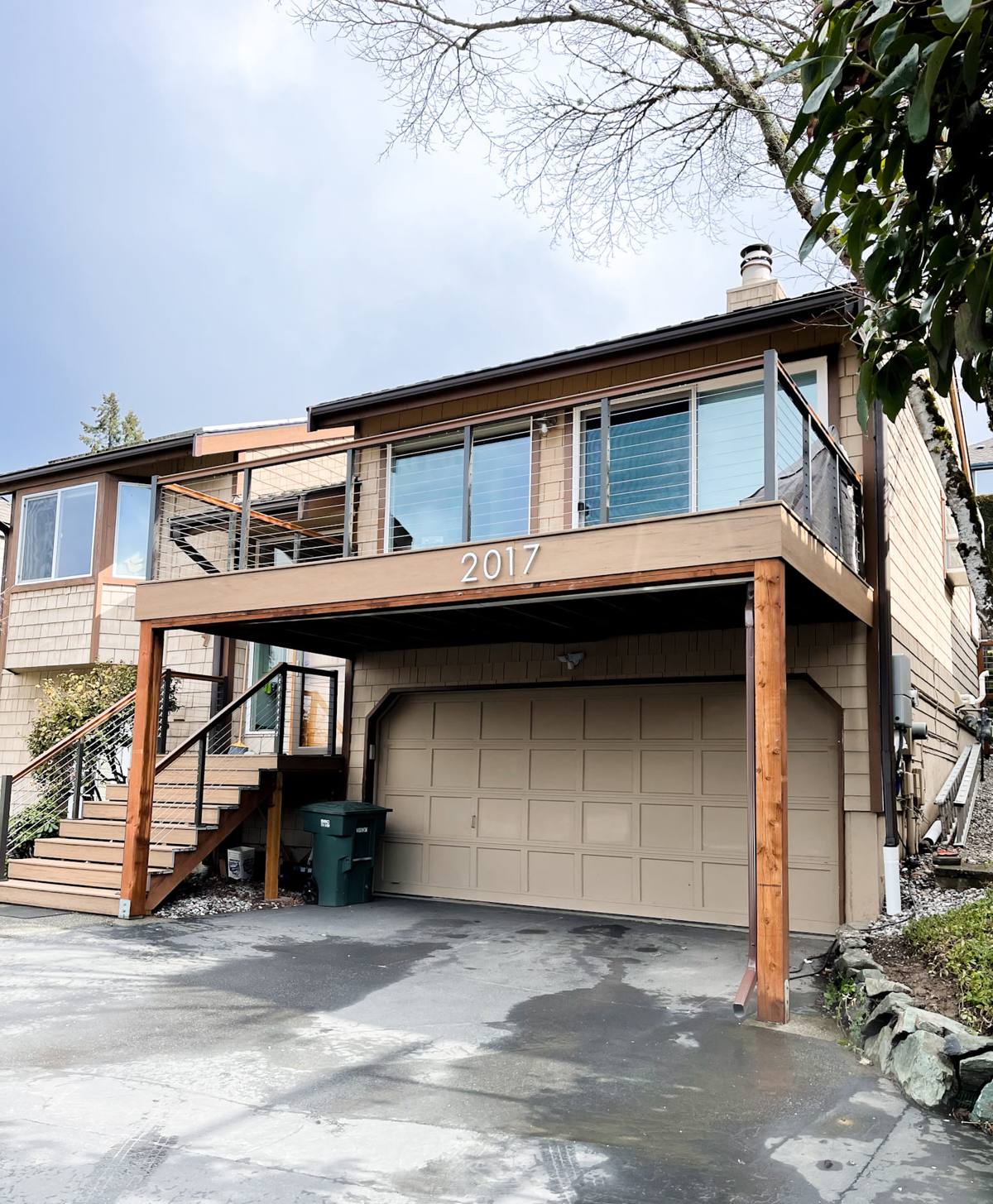
What a Proper Birch Bay Deck Inspection Covers
A lot of deck problems in this area start below the surface — literally. The decking boards you walk on are usually the last thing to show real damage; by the time boards are visibly cupping or soft, the structure underneath has often been absorbing moisture and salt exposure for years. A proper inspection works from the ground up.
- Ledger board attachment to the house — the single most common point of hidden rot and the most safety-critical connection on the whole deck
- Post bases and any wood-to-concrete contact points where moisture wicks upward
- Joist ends and joist hangers, checking for rust streaking, pitting, or hangers that have pulled away from wood
- Fastener condition — screws, bolts, and hardware showing corrosion, especially near the water-facing side of the structure
- Decking board ends and edges, where end grain soaks up water fastest and rot typically starts
- Railing posts and connections, since these take wind load in addition to moisture exposure
- Surface moss, algae, and lichen buildup, and whether it's just cosmetic or already breaking down the wood fibers underneath
- Drainage under and around the deck — standing water or poor grading that keeps the structure wet longer than it should be
We check all of this before quoting anything, because a deck that "just needs a few boards" sometimes needs a new ledger connection instead, and we'd rather tell you that up front than have you pay twice.
The Repairs We See Most Often in This Area
Structural Repairs
Ledger flashing failures are common on older Birch Bay decks, particularly ones built before flashing details around ledger boards were standard practice. Water gets behind the ledger, the house-side wood stays wet longer than it can dry, and rot sets in where you can't see it without pulling boards or probing with a screwdriver. Post bases and joist ends are the next most common structural issue — these sit low, catch splash-back from rain, and are often the first framing members to show soft or spongy wood.
Surface and Cosmetic Repairs
Individual board replacement, railing repair, and stair tread replacement make up a big share of our Birch Bay repair calls. Boards that have cupped, split, or gone soft at the ends usually get swapped rather than patched — trying to fill or seal a failing board rarely holds up through another wet season.
Fastener and Hardware Corrosion
This one is specific to coastal exposure. Standard galvanized fasteners and connectors that would last decades further inland can start showing rust streaking and pitting much sooner near the bay. When we're doing structural repair work in Birch Bay, we default to stainless steel or heavily coated, corrosion-rated hardware rated for coastal or treated-lumber contact — not because it's required everywhere, but because it's the right call for this exposure.
Repair or Replace? What Actually Drives That Decision
Homeowners often ask us to just give a straight answer on repair versus full replacement, and the honest answer is that it depends on where the damage is and how much of the structure it's touching. Here's how we generally think about it:
| Factor | Leans Toward Repair | Leans Toward Replacement |
|---|---|---|
| Ledger board condition | Sound, properly flashed | Rotted or improperly flashed at the house connection |
| Extent of framing damage | Isolated joists or posts | Widespread rot across multiple framing members |
| Age of the deck | Under 15-20 years, otherwise sound | Original structure well past typical service life |
| Decking material | A few damaged boards among sound ones | Most boards showing cupping, splitting, or soft spots |
| Fastener/hardware condition | Localized corrosion | Corrosion throughout connectors and hangers |
In a lot of cases the answer is a hybrid: keep and reinforce a sound structure while replacing the decking surface, or rebuild the framing while salvaging railings that are still in good shape. We'll walk you through exactly what we find and why we're recommending what we're recommending — no upsell, just what the wood and hardware are telling us.
Decking Material Considerations for a Bay-Front Exposure
Material choice matters more here than it does a few miles inland. Pressure-treated lumber remains a solid, budget-conscious option, but it needs consistent sealing and staining to hold up against the combination of salt air and Whatcom County's wet winters — skip that maintenance for a couple seasons and you'll see it in cupping and graying faster than you would elsewhere. Cedar has natural rot resistance and looks good on a coastal property, but it's a softer wood and needs the same maintenance discipline. Composite decking trades upfront cost for lower maintenance and better moisture resistance, which is worth weighing seriously for a Birch Bay property given how much of the year the wood stays damp.
There's no single "right" material for every deck — it depends on your budget, how much upkeep you want to do, and what the rest of the house looks like. We'll give you a straight comparison of what each option means for maintenance and expected lifespan in this specific location, not a sales pitch for whatever we happen to have on the truck.
How Our Deck Repair Process Works
- On-site inspection. We walk the full structure — top to bottom, not just the visible decking — and identify every point of concern.
- Written scope and estimate. You get a clear breakdown of what needs repair, what's optional, and what we'd recommend versus what you could reasonably defer.
- Repair work. Framing, ledger, and hardware repairs happen first, since everything else depends on a sound structure underneath. Surface and cosmetic work follows.
- Final check. We confirm fastener corrosion resistance, drainage, and structural connections before calling the job done.
We don't believe in surprise change orders. If we open something up and find more than expected — which does happen with hidden rot — we stop and talk to you before doing any additional work, not after.
Moss, Mildew, and Keeping a Repaired Deck From Needing Repair Again
Whatcom County's moss season is long, and a deck that sits shaded or under tree cover in Birch Bay can stay damp for weeks at a stretch during the fall and winter. Moss and algae aren't just cosmetic — left alone, they hold moisture against the wood surface and accelerate exactly the kind of decay that leads to the repairs described above. Regular cleaning, keeping gutters and downspouts directing water away from the deck footprint, and reapplying sealant on schedule for wood decks all go a long way toward avoiding a repeat visit. If we do a repair for you, we'll tell you honestly what maintenance schedule will actually keep it from becoming a recurring problem, given your deck's exposure and material.
Why It Matters That We Already Work in Birch Bay
A crew that only occasionally works this close to the water can miss things that are obvious to anyone who repairs decks here regularly — the specific way salt air chews through standard hardware, which parts of a bay-facing deck take the worst weather, how fast moss reestablishes itself on a north-facing deck under tree cover. Knowing the local exposure isn't a marketing line; it changes what materials and fasteners we reach for and where we look first during an inspection. We work throughout Bellingham and Whatcom County, and Birch Bay's coastal conditions are simply a known quantity for us at this point — not a special case we're figuring out on your dime.
If you've got a deck in Birch Bay that's showing soft spots, rust streaking on the hardware, boards that have started to cup, or you just haven't had it looked at in a few years, we're happy to come take a look. The estimate is free, there's no pressure attached to it, and you'll get a straight answer about what actually needs doing versus what can wait.