 Bellingham Siding
 Composite Decking for Columbia Homes
Columbia is one of Bellingham's older, tree-shaded neighborhoods, and that combination of mature canopy, proximity to the bay, and Pacific Northwest rain gives outdoor wood surfaces a rough life. If you're weighing a new deck or a replacement for one that's gone gray, cupped, or slick with algae, composite decking is worth a serious look. This page covers what Columbia's climate actually does to decking, what a correctly built composite deck involves, and how we approach the job when we work in this neighborhood.
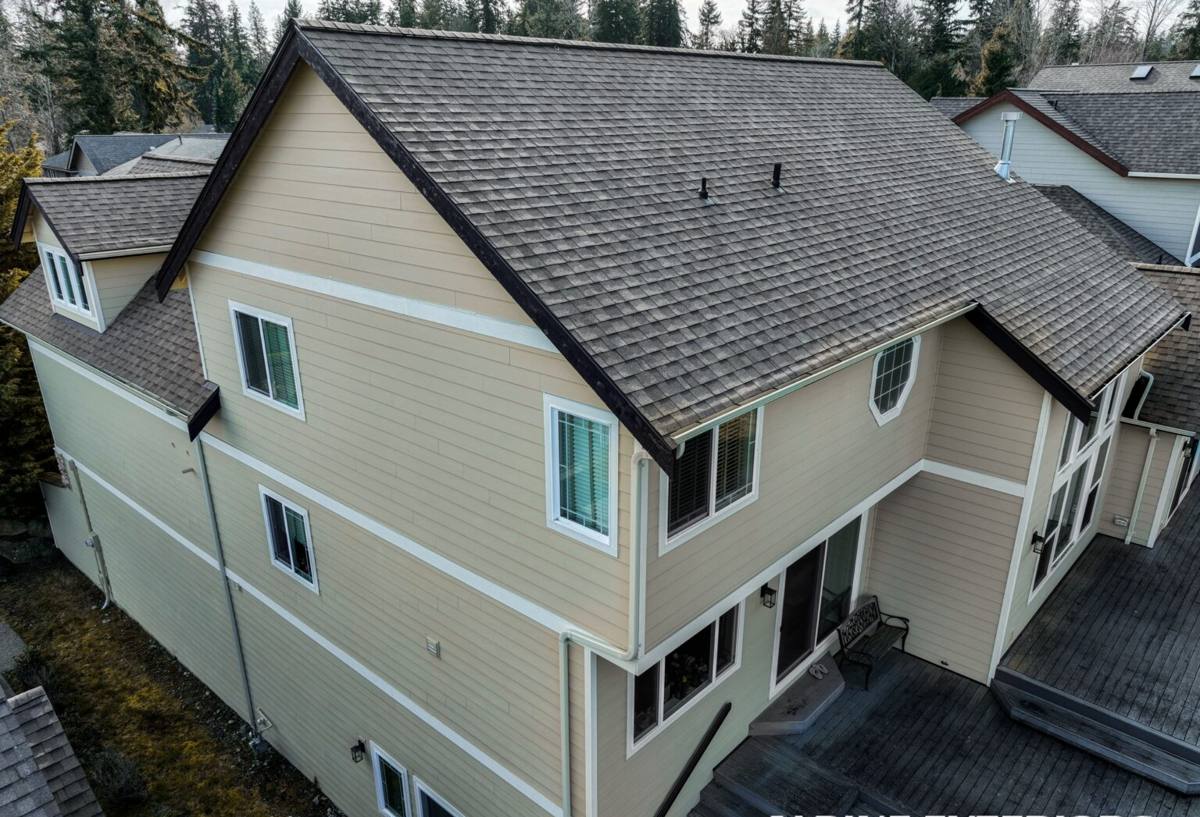
What Bellingham's Climate Does to a Deck
Whatcom County sits right on the water, and Columbia gets the full effect of that marine exposure. Three things wear decks down here faster than in drier inland climates:
Salt Air
Proximity to Bellingham Bay means a steady low-level exposure to salt-laden air, especially on west- and south-facing decks that catch weather off the water. Salt air accelerates corrosion on exposed metal fasteners and hardware, and it dries out and breaks down the surface fibers of untreated or under-sealed wood over time.
Driving Rain
Bellingham doesn't just get a lot of rain — it gets sideways rain, driven by wind off the Strait of Georgia and Bellingham Bay. That means water gets pushed into joints, fastener holes, and the underside of boards that a straight-down rain would never reach. Ledger connections, board end cuts, and any spot where two pieces of material meet are where driving rain does the most damage.
The Long Moss Season
Shaded lots and near-constant damp conditions from fall through spring make Columbia prime territory for moss, algae, and lichen growth on any horizontal wood surface. Beyond the slip hazard, moss holds moisture against the deck surface for weeks at a time, which is exactly the condition that leads to rot, splintering, and gray, weathered wood grain.
Why Composite Decking Makes Sense Here
Composite decking — a blend of wood fibers and recycled plastics, most of it now capped with a protective polymer shell — was built to resist exactly the conditions Columbia deals with. It doesn't mean a composite deck needs zero care, but the maintenance burden and failure points are fundamentally different from wood.
Moisture Behavior
Capped composite boards don't absorb water into the core the way wood does, so repeated wet-dry cycling doesn't cause the swelling, cupping, and splitting that shows up on wood decks after a few Bellingham winters. This matters most at butt joints, stair treads, and anywhere water tends to pool.
Moss and Algae Resistance
Moss and algae still land on composite boards — nothing outdoors in Whatcom County is fully immune — but they don't root into the surface the way they do on open wood grain. A composite deck sheds a seasonal moss wash-down far more easily, and doesn't develop the soft, spongy texture that heavily mossed wood decking gets over a few seasons.
Low Maintenance, Not No Maintenance
Composite decking skips the annual sanding, staining, and sealing that keeps a wood deck watertight. It still needs periodic cleaning to keep moss and organic buildup from staining the surface long-term, particularly under tree cover, which is common in Columbia's older, established lots.
Composite vs. Wood vs. PVC: An Honest Comparison
There's no single "best" decking material for every property — it depends on budget, sun exposure, tree cover, and how much upkeep you want to do. Here's how the three main options compare for a climate like this one.
| Factor | Cedar / Wood | Capped Composite | PVC / Cellular |
|---|---|---|---|
| Moisture resistance | Low — absorbs water, swells and checks | High — capped shell resists water intrusion | Highest — no wood fiber to absorb moisture |
| Moss/algae resistance | Poor — moss roots into open grain | Good — smooth cap sheds growth more easily | Very good — fully synthetic surface |
| Annual maintenance | Sanding, staining, or sealing | Periodic washing | Periodic washing |
| Upfront cost | Lowest | Mid-range | Highest |
| Feel underfoot | Natural wood grain | Wood-grain texture, warmer than PVC | Plastic feel, some products run hot in direct sun |
| Typical warranty | None from material itself | 25–50 year limited, fade/stain coverage varies | Lifetime limited, varies by manufacturer |
For most Columbia properties — shaded lots, damp winters, moderate summer sun — capped composite hits the best balance of moisture and moss resistance against cost. Full PVC decking is worth considering for decks with heavy direct sun exposure or minimal shade, since it handles UV and heat cycling a notch better, but it comes at a real price premium.
What a Correct Composite Deck Install Actually Involves
Composite boards are only as good as the structure underneath them, and this is where a lot of decking problems actually start — not in the board material itself. A correct install in this climate covers a few things that are easy to skip and hard to notice until years later.
Framing and Joist Spacing
Composite boards flex differently than wood and most manufacturers require tighter joist spacing than a traditional wood deck — commonly 16 inches on center, sometimes tighter for angled or diagonal board patterns. Using wood-deck spacing under composite boards leads to bounce and premature sagging.
Ledger Board Flashing
Where the deck attaches to the house, the ledger board connection is the single most common source of hidden water damage on any deck, composite or wood. Proper flashing — installed so water sheds outward and away from the house framing rather than behind the ledger — is not optional in a climate that gets driving rain off the bay.
Hidden Fasteners and Board Gapping
Most composite systems use hidden clip fasteners rather than face screws, which keeps water from pooling in screw heads and gives a cleaner look. Board gapping needs to account for both drainage and the material's expansion and contraction across Bellingham's temperature swings — too tight and boards can buckle, too loose and debris collects in the gaps.
Ventilation Underneath
Composite decking needs airflow beneath it just as much as wood does. Low-clearance or ground-level decks in shaded, damp Columbia yards need attention to under-deck ventilation and drainage so moisture doesn't just sit trapped under the structure year-round, which can affect the framing even if the composite boards themselves handle it fine.
Our Process
- On-site assessment: We look at sun exposure, tree cover, drainage, and the condition of any existing structure before recommending a board type or framing approach.
- Structural evaluation: If we're replacing an old deck, we check the ledger connection, footings, and framing — composite boards installed over a compromised structure just hide the problem, they don't fix it.
- Material selection: We walk through composite board options and grades with you, including realistic cost and warranty differences, so the decision fits your budget and how you actually use the space.
- Flashing and framing: Ledger flashing, joist layout, and any needed footing or framing work happen before a single composite board goes down.
- Installation: Boards go in per manufacturer spacing and fastening specs, with attention to drainage gaps and consistent, clean board runs.
- Final walkthrough: We go over basic care with you before we consider the job done.
Cost Factors to Expect
Composite decking costs vary more by project specifics than by brand alone. The factors below tend to move the price more than anything else.
| Factor | Why it affects cost |
|---|---|
| Deck size and shape | Angled or curved layouts increase board waste and labor time |
| Height off grade | Elevated decks need railing, stairs, and more substantial framing |
| Existing structure condition | Reusable framing lowers cost; rot or undersized footings add demo and rebuild work |
| Board grade and brand | Entry-level capped composite vs. premium or full PVC changes material cost significantly |
| Access to the site | Tight side yards or limited equipment access in older Columbia lots can add labor time |
| Railing and fascia choices | Composite or aluminum railing systems cost more than basic wood, but resist the same moisture and moss issues |
We'll always give you a written, itemized estimate before work starts — no vague lump-sum numbers, and no pressure to upgrade materials beyond what your project actually needs.
Keeping a Composite Deck in Good Shape
Low maintenance doesn't mean zero maintenance, particularly under the tree cover common in Columbia. A little seasonal attention keeps a composite deck looking and performing the way it should for the life of its warranty.
- Sweep debris and fallen leaves off regularly — trapped organic matter is what feeds moss and can stain the board surface
- Wash the deck surface at least once or twice a year with a soft-bristle brush and a composite-safe cleaner, more often under heavy shade
- Avoid pressure washing at close range or high PSI, which can damage the protective cap on composite boards
- Check that drainage gaps between boards stay clear so water isn't pooling
- Inspect railing posts and stair connections annually for movement, since these take the most structural stress over time
- Keep gutters and downspouts near the deck clear so runoff isn't dumping directly onto the deck surface or ledger connection
Why Hire a Crew That Already Works in Columbia
A lot of decking problems in this part of Whatcom County trace back to a design decision that worked fine somewhere drier — a flashing detail skipped, joist spacing borrowed from a wood-deck spec sheet, or a low-clearance deck built without enough ventilation underneath. None of those mistakes show up on install day. They show up two or three wet seasons later.
Working regularly in Bellingham neighborhoods like Columbia means we're building to the conditions that are actually here — the rain angle, the shade patterns from mature trees, the salt air off the bay — rather than a generic spec that happens to hold up somewhere else. We also know what local permitting and inspection expects for deck framing and railing height, so there are no surprises partway through the project.
Get a Straight Answer for Your Project
If you're deciding between repairing an aging wood deck or replacing it with composite, or you're planning a new deck from scratch, we're happy to take a look and give you an honest read on what your property actually needs. Reach out for a free, no-pressure estimate — we'll walk the site, answer your questions, and give you real numbers to work from.