 Bellingham Siding
 Deck Building in Cordata: Built for This Climate, Not Just This Season
Cordata sits close enough to the water and the lowland fog belt that a deck here takes a different kind of beating than one on the other side of Whatcom County. Salt-tinged air off the Sound, long stretches of driving rain through fall and winter, and a moss season that can run half the year all work on wood, fasteners, and footings in ways that show up slowly — until they don't. A deck built without that in mind might look fine for a year or two and then start showing soft spots, black streaking, or a spongy feel underfoot right around the time you'd expect to be enjoying it most.
We build decks in Cordata the way the site actually demands: framing that sheds water instead of trapping it, materials chosen for wet-climate performance rather than showroom looks alone, and details at the ledger board and footings that keep the whole structure sound for decades, not just for the warranty period.
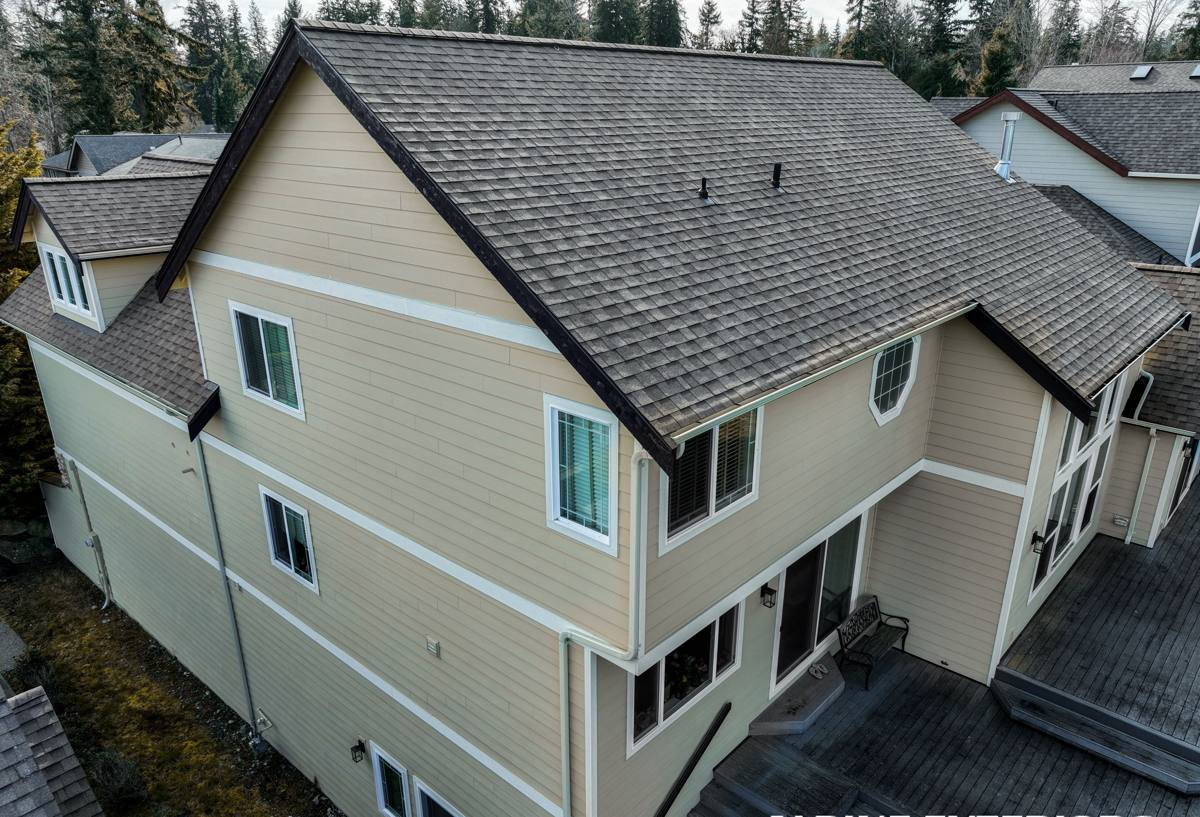
What Bellingham Weather Actually Does to a Deck
Moisture That Never Fully Leaves
Cordata doesn't get flash floods — it gets months of steady, low-intensity rain and heavy morning dew, which is arguably harder on wood. Lumber that's constantly damp but rarely dries out completely is where rot organisms thrive. The problem isn't usually the top of the boards, which get sun and airflow; it's the underside of joists, the tops of posts, and anywhere two pieces of wood sit face-to-face with no room for water to escape.
Moss, Algae, and Slippery Surfaces
Shaded lots and tree-lined yards, common around Cordata, keep decking surfaces damp longer after every rain. That's ideal growing conditions for moss and algae, which aren't just cosmetic — a mossy deck board is a genuinely slick, fall-risk surface, and moss holds moisture against the wood grain, accelerating decay underneath it.
Salt Air and Metal Fatigue
Whatcom County's proximity to Bellingham Bay means a low but constant level of salt in the air, even inland. Over years, that salt content accelerates corrosion in lower-grade fasteners, brackets, and hardware — which is why the fastener spec on a deck matters as much as the decking material itself.
Choosing Decking Material for a Cordata Lot
There's no single "best" decking material — there's a best material for your yard's sun exposure, your maintenance appetite, and your budget. Here's how the common options actually perform in this climate:
| Material | Moisture Behavior | Maintenance | Typical Lifespan Here |
|---|---|---|---|
| Pressure-treated pine | Resists rot with proper coating; can cup or check if left unsealed | Re-stain/seal every 1-2 years | 15-20 years |
| Western red cedar | Naturally rot- and insect-resistant; still needs sealing in this rainfall | Clean and reseal annually for best color and moss resistance | 20-25 years with upkeep |
| Composite decking | Doesn't absorb water or rot; can still grow surface algae if never cleaned | Occasional wash, no staining or sealing | 25-30+ years |
In a shaded, damp yard, composite often earns its higher upfront cost back in avoided maintenance. On a sunnier, more open lot, cedar can perform very well and gives a warmer, more traditional look many Cordata homeowners want to match with their siding and trim. We'll walk your specific lot's sun and drainage pattern with you before recommending one over the other — it's a real trade-off, not a sales pitch either direction.
A Note on Composite Brands and Hollow-Core Boards
Not all composite decking is built the same. Hollow-core boards are lighter and cheaper but can trap water internally if end caps aren't sealed properly, which becomes a real issue in a climate this wet. We favor solid or well-capped composite profiles with manufacturer-backed moisture warranties for exactly that reason — it's a maintenance and moisture-behavior decision, not a brand loyalty one.
Where Decks Actually Fail: Framing and Substructure
Homeowners tend to judge a deck by its surface boards, but the structure underneath is what determines whether it's safe and dry in ten years. The failure points we see most often on older Whatcom County decks all trace back to the same handful of details:
- Ledger board flashing — where the deck attaches to the house is the single most common source of hidden rot; it needs proper flashing and a water-tight seal, not just lag bolts and caulk
- Joist protection — unprotected joist tops absorb water through screw holes and end grain long before the joist looks damaged from below
- Footing depth and drainage — footings need to sit below frost depth and on soil that actually drains, not in a low spot that holds water against the concrete
- Post-to-beam connections — corrosion-resistant hardware here matters more in salt-air conditions than most people expect
- Airflow underneath — a deck built too low to the ground, or boxed in without vents, traps moisture and speeds up rot from below
Every one of these is invisible once the deck is finished and looks great in photos on day one. It's also exactly where a rushed or under-specified build costs a homeowner the most down the line.
Designing Around a Cordata Lot
Cordata's mix of newer residential development and mature tree cover means every lot has its own drainage and sun pattern. A few things we account for on-site rather than assuming:
Grading and runoff. Deck footings and ledger attachments need to work with how water actually moves across your yard, not just meet minimum code. If your lot slopes toward the house, that changes how we detail the ledger and where we route runoff.
Shade and moss exposure. A deck tucked under mature trees will need either a lower-maintenance material, wider board spacing for airflow, or both — versus a deck with more open sky exposure that dries out faster on its own.
Matching the home. Whether your siding is fiber cement, vinyl, or wood, we detail the deck's ledger and trim to tie in cleanly rather than looking like a bolted-on afterthought.
Our Deck Building Process
- On-site assessment — we look at sun exposure, drainage, existing structure (for replacements), and how the space will actually be used
- Material and layout discussion — honest trade-offs on decking material, railing style, and footprint based on your yard and budget
- Permitting — we handle the permit application and inspections required by the City of Bellingham or Whatcom County, depending on your address
- Footings and framing — built to proper depth and spec, with flashing and moisture protection at every connection point that matters
- Decking, railing, and finish work — installed to manufacturer spec so warranties stay intact
- Final walkthrough — we go over maintenance expectations specific to the material you chose so there are no surprises in year two
Permitting and Code Basics in This Area
Most decks above a certain height or attached to the house require a building permit, along with inspections at the footing and framing stages. Guardrail height, baluster spacing, and stair requirements are all set by code and aren't optional details — they're also exactly the things a home inspector or future buyer will check if you ever sell. We pull permits as part of the job rather than leaving that step to the homeowner, and we build to pass inspection the first time, not to scrape by.
Maintaining Your Deck After We're Done
The material you choose determines your maintenance schedule more than anything else. A basic seasonal routine that fits this climate:
- Sweep debris and standing leaves off the surface regularly, especially in fall
- Clean moss and algae off boards and stairs before they get slick, not after someone slips
- Check and reseal wood decking on the schedule appropriate to the product — don't wait until it's visibly gray and dry
- Inspect railing connections and stair stringers once a year for loose hardware
- Keep gutters and downspouts near the deck clear so runoff isn't dumping directly onto footings or ledger flashing
Why a Crew That Already Works in Cordata Matters
A deck built to a generic national spec sheet doesn't necessarily hold up to Whatcom County's rain totals, salt exposure, and moss season. Crews who work this area regularly know which fastener grades actually hold up, which drainage details matter on a given street's typical soil, and how to detail a ledger board so it doesn't become next decade's hidden repair. That local pattern recognition is the difference between a deck that needs attention in year three and one that's still solid in year twenty.
If you're planning a new deck or replacing one that's showing its age, we're happy to take a look and give you a straightforward, no-pressure estimate — just fill out the form below.