 Bellingham Siding
 Birch Bay Sits Right at the Edge of the Weather
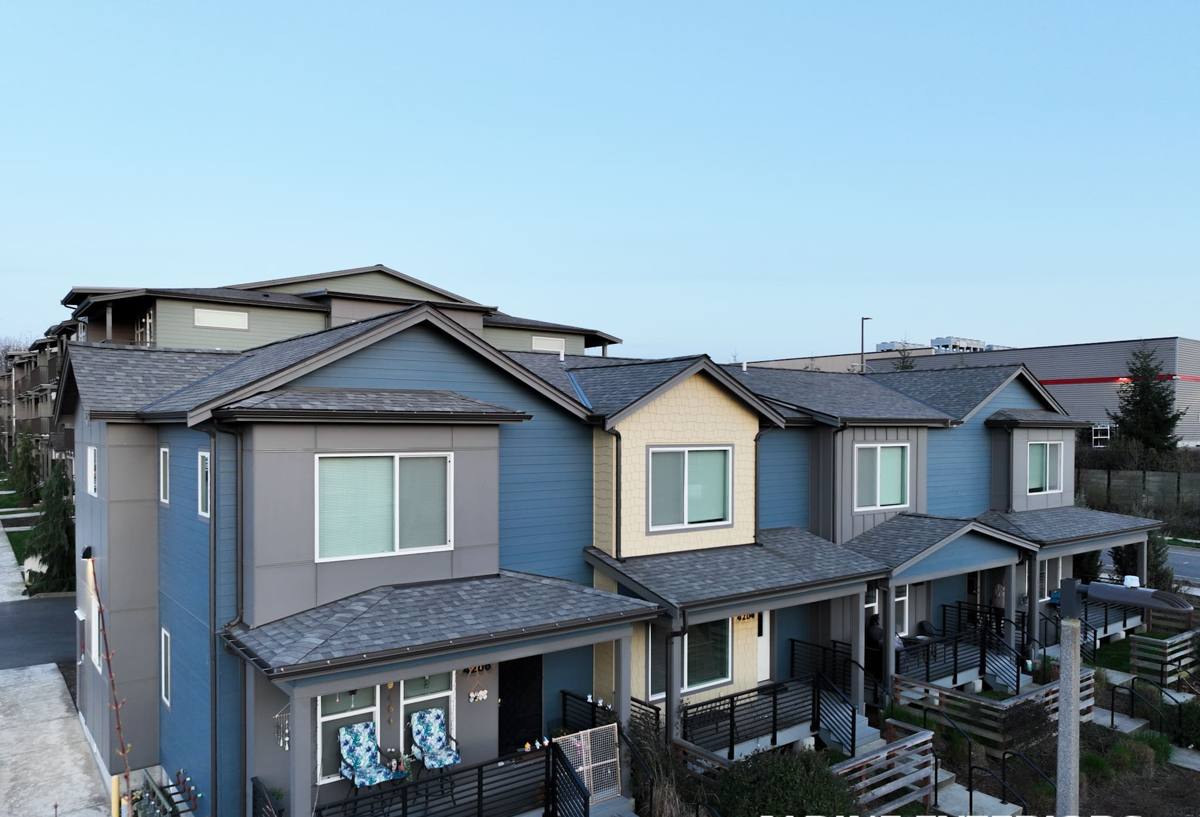
Birch Bay is one of the more exposed pockets of Whatcom County. Homes here face the water directly, which means wind, salt spray, and driving rain reach the exterior walls with more force and more frequency than they do a few miles inland in Bellingham. That exposure doesn't ruin siding overnight, but it accelerates every weakness a product has. A siding system that performs fine on a sheltered lot in town can fail years early on a waterfront or near-waterfront home in Birch Bay.
We install siding on homes throughout Whatcom County, and Birch Bay jobs get handled differently from the start — not with a different product, but with more attention paid to the details that matter most in a coastal microclimate: moisture control behind the cladding, fastener choice, and how the assembly handles constant damp-dry cycling.
What Salt Air and Coastal Wind Actually Do to Siding
Salt air isn't just a nuisance for metal fixtures and vehicle finishes — it affects siding too, mostly indirectly. Airborne salt holds moisture against exterior surfaces longer than plain rain does, keeps caulk and paint working harder, and speeds up corrosion on any exposed fasteners, flashing, or trim hardware that isn't rated for it. Combine that with wind-driven rain — which doesn't just fall, it gets pushed sideways into every seam, lap, and penetration — and you get a wall assembly that's wet more often and for longer stretches than a typical inland home.
Then there's moss. Western Washington's wet, mild winters already grow moss aggressively on any surface that stays damp and shaded, and Birch Bay's higher humidity and salt-laden air add to that. Moss and algae growth on siding isn't just cosmetic — sustained organic growth holds moisture against the surface, which is exactly the condition that causes coatings to fail and substrates to degrade over time.
None of this means Birch Bay homes need exotic materials. It means the materials and the installation details both have to be right for the exposure, because there's less margin for error here than there is a few miles inland.
Why We Only Install James Hardie Fiber Cement
We standardized on James Hardie fiber cement siding for every home we work on, including Birch Bay, and we don't install vinyl, LP SmartSide, Cemplank, Allura, primed spruce, or cedar. That's a deliberate line, not a brand preference, and it comes down to how each material actually holds up in this climate:
- Fiber cement doesn't feed moss and mildew the way wood-based products can. Hardie's board is cement-based, not wood fiber, so it doesn't provide organic material for growth to take hold in the same way engineered wood or untreated cedar can.
- It's dimensionally stable in wet-dry cycling. Constant damp-to-dry swings — normal for a Birch Bay winter — cause wood and wood-composite products to swell, shrink, and eventually cup or crack at the edges. Fiber cement moves far less.
- It's non-combustible. Not a coastal-specific advantage, but a real one anywhere, and it comes with none of the moisture trade-offs of the alternatives.
- The factory finish (ColorPlus) is baked on and warrantied, rather than relying on field-applied paint or stain to hold up against salt air and UV, which is where a lot of long-term siding problems actually start.
Vinyl has its own advocates, but in high-wind coastal exposure it's prone to rattling, warping in heat, and cracking in cold, and it can't be painted to refresh its appearance as it fades. Wood and wood-composite products need more diligent, more frequent maintenance to keep moisture out — caulking, painting, and inspecting joints on a schedule most homeowners don't want to keep up with, especially on a second home or a rental property, which Birch Bay has plenty of. We'd rather put one product on every home and stand behind it fully than juggle multiple systems with different weak points.
James Hardie's Climate-Engineered Line for This Region
James Hardie makes different formulations of its siding for different climate zones, called HZ5 and HZ10. HZ5 is engineered for regions with more moisture, freeze-thaw cycling, and cooler winters — which describes Whatcom County and the rest of the Pacific Northwest. HZ10 is formulated for hot, humid southern climates instead. We install the HZ5 line on Birch Bay homes because it's the version actually engineered for the weather that reaches this coastline, not a generic national product.
What a Correct Installation Involves
Moisture Management Behind the Boards
The siding itself is only part of the system. Correct installation starts with a weather-resistive barrier and properly integrated flashing at every window, door, and penetration, so any water that gets past the siding has a way to drain back out instead of sitting against the sheathing. On a wind-exposed lot like Birch Bay, this layer matters more than usual — wind-driven rain finds gaps that ordinary rainfall never reaches.
Fastening and Fastener Material
Fasteners need to be corrosion-resistant and driven to Hardie's specifications — not overdriven, not underdriven, and placed at the correct locations along the board. In a salt-air environment, fastener corrosion is one of the first things to go wrong on a poorly executed job, showing up as staining or loosening boards years before it should.
Clearances and Ventilation
Siding needs proper clearance from grade, roofing, decks, and other surfaces so water can't wick up into the bottom edge of the boards, and so the assembly can dry out between wet spells. On coastal lots where the ground stays damp longer, these clearances are non-negotiable.
Caulking and Joint Treatment
Every seam, corner, and trim joint is a potential entry point. Correct joint treatment and factory-matched caulking keep the system sealed without relying on paint alone to do the work — paint fades and chalks; a properly detailed joint keeps working underneath it.
Our Process, Start to Finish
1. On-Site Assessment
We walk the exterior, check the current siding and the condition of the sheathing underneath where accessible, and look specifically for signs of moisture intrusion, moss buildup, and wind exposure on each elevation — the water side of a Birch Bay home often needs different detailing than the sheltered side.
2. Tear-Off and Substrate Check
Old siding comes off and we inspect the sheathing and framing underneath before anything new goes up. Any rot or moisture damage found at this stage gets addressed before installation continues — covering over a compromised substrate just hides a problem that will resurface.
3. Weather Barrier and Flashing
House wrap and flashing get installed and integrated at every window, door, and penetration before a single piece of siding goes on. This step is where most long-term failures on windward coastal homes actually get prevented or created.
4. Hardie Installation
HZ5 boards, trim, and accessories go up to manufacturer spec — correct fastener spacing, correct overlap, correct clearances — with attention to the wind and water exposure specific to each side of the house.
5. Final Walkthrough
We review the finished work with the homeowner, including caulking, trim, and any transition points, before calling the job complete.
Comparing Siding Options for a Birch Bay Exposure
| Factor | James Hardie Fiber Cement | Vinyl | Wood / Cedar | Engineered Wood (LP-type) |
|---|---|---|---|---|
| Salt air / coastal wind resistance | Strong | Moderate — can warp, crack in temperature swings | Weak without diligent upkeep | Moderate — moisture-sensitive at edges |
| Moss / organic growth resistance | Strong — cement base doesn't feed growth | Moderate — growth sits on surface, doesn't penetrate | Weak — wood is an organic growth medium | Weak to moderate |
| Maintenance need | Low — factory finish, periodic cleaning | Low, but can't be refinished if faded | High — regular paint/stain and joint checks | Moderate to high |
| Fire resistance | Non-combustible | Not fire-resistant | Combustible | Combustible |
| Typical warranty structure | Long, transferable | Varies widely by manufacturer | Minimal, product-dependent | Limited, moisture exclusions common |
What Drives Cost on a Birch Bay Siding Job
Every estimate is specific to the home, but a few factors show up consistently on coastal Whatcom County jobs:
| Cost Factor | Why It Matters Here |
|---|---|
| Substrate condition | Homes with long-term moisture exposure sometimes need sheathing or framing repair discovered during tear-off |
| Home size and elevation count | Water-facing elevations often need more detailed flashing work than sheltered sides |
| Existing siding type | Removal complexity varies between old wood, vinyl, or previously patched systems |
| Trim and architectural detail | More corners, windows, and transitions mean more flashing and joint work |
| Site access | Waterfront and bluff-adjacent lots can have tighter or more limited equipment access |
Signs Your Current Siding Is Losing the Fight
- Persistent moss or dark streaking that comes back shortly after cleaning
- Soft spots, bubbling, or visible warping, especially on the side facing the water or prevailing wind
- Caulk that's cracked, shrunk, or pulled away from joints and trim
- Peeling or chalking paint that needs repainting more often than it used to
- Visible rust or staining around fasteners or trim hardware
- Soft or discolored sheathing visible at outlets, vents, or siding edges
Why a Crew That Already Works Birch Bay Matters
Siding installation isn't a one-size-fits-all trade, and a coastal wind-exposed lot in Birch Bay doesn't get treated the same way we'd treat a sheltered lot elsewhere in Bellingham. A crew that regularly works this stretch of coastline already knows which elevations tend to take the worst of the wind-driven rain, how much moss pressure to expect through the wet season, and where moisture problems typically start on homes with this kind of exposure. That familiarity shows up in the flashing details, the fastener choices, and the small judgment calls that don't appear on a spec sheet but decide whether a siding job holds up for decades or needs attention again in five years.
If you're planning a siding project on a Birch Bay home, we're happy to take a look and talk through what your specific home and exposure actually need. There's no cost and no pressure for an estimate — just a straight look at the house and an honest recommendation.