 Bellingham Siding
 Why Birch Bay Windows Wear Differently Than Windows Inland
Birch Bay sits right on the water, which means the windows on these homes deal with a different set of stresses than a house a few miles inland in Bellingham or Ferndale. Wind comes off the water with real force, driving rain sideways into the walls that face it. Salt is carried in that air and settles on everything outside, including window frames, hardware, and glass. Add Whatcom County's long, damp, low-light stretch of the year — moss season, as most homeowners here call it — and you get a combination that tests window seals, finishes, and flashing harder and faster than a typical suburban lot.
None of this means Birch Bay homes need exotic solutions. It means the material choices, installation details, and sequencing matter more here, and skipping a step that would be forgivable inland can turn into a callback a year or two later on a waterfront-adjacent property.
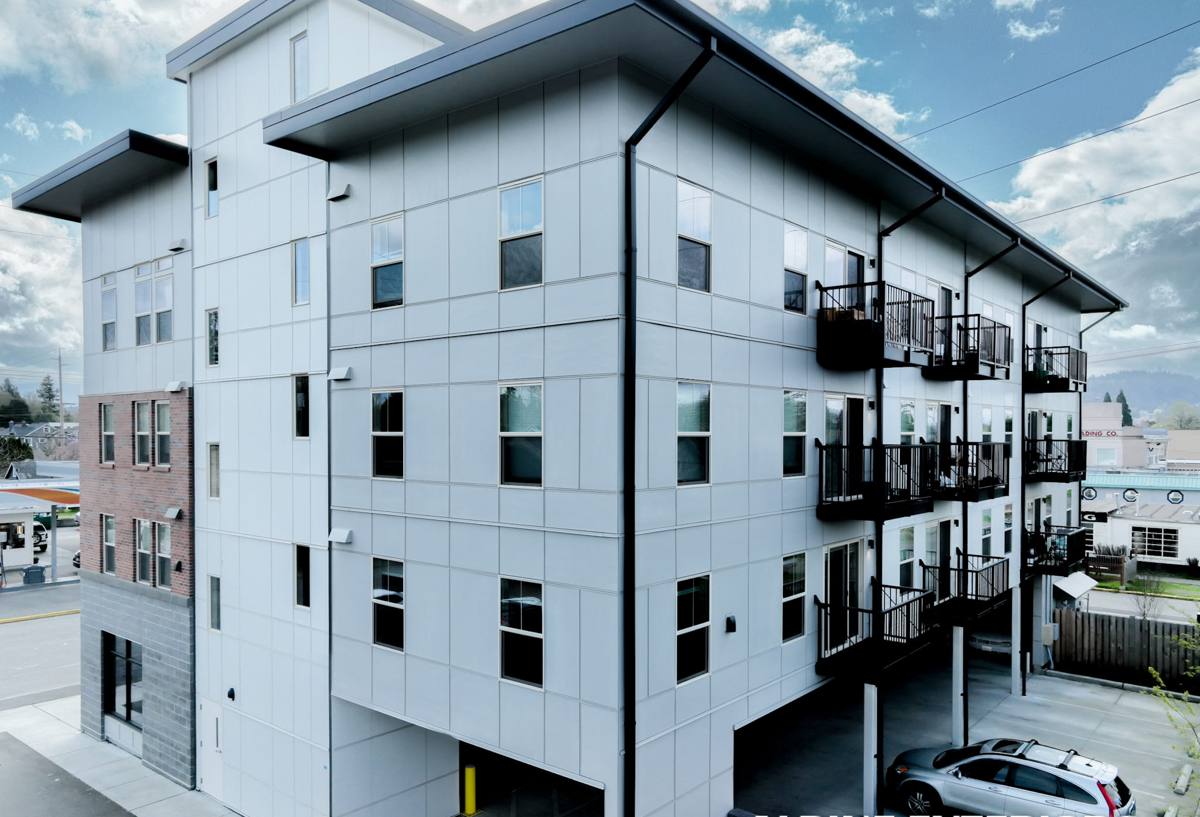
What Salt Air, Wind, and Moisture Actually Do to a Window
It helps to know what you're up against before you pick a replacement window, so the choice is based on the actual problem rather than a sales pitch.
- Salt air corrodes hardware. Locks, cranks, hinges, and balance systems made from lower-grade metals pit and stiffen faster near the water, even when the frame itself looks fine.
- Wind-driven rain finds gaps. On a still day, a marginal seal might never leak. In a wind-driven rain event off the bay, water is pushed sideways and upward into places gravity alone would never send it.
- Moss season keeps wood wet longer. Extended damp, low-sun periods slow drying time at sills and trim, which is exactly the condition wood rot needs.
- UV and salt spray accelerate finish breakdown. Paint, stain, and some lower-grade vinyl finishes chalk, fade, or crack sooner on exposure-facing walls.
The practical takeaway: the side of the house facing the water — usually west or south-facing here — often needs a different level of detailing than the more sheltered sides, even on the same home.
Signs a Birch Bay Home Needs Window Replacement
Not every window problem calls for full replacement, but these are the signals worth taking seriously in a coastal Whatcom County setting:
- Fogging or a permanent haze between panes — the seal has failed and the gas fill is gone
- Noticeable drafts you can feel with a hand near the frame on a windy day
- Windows that are hard to open, won't stay up on their own, or the lock doesn't line up anymore
- Soft, spongy, or visibly rotted wood at the sill or lower corners
- Paint or finish peeling and bubbling faster than it should, especially on the weather-facing side
- Rising heating bills or a room that stays noticeably colder than the rest of the house
- Corroded, pitted, or frozen-up hardware
- Visible daylight or a gap where the frame meets the wall
If you're only seeing one or two of these on a single window, a repair may still make sense. Several of them together, or the same symptoms showing up across multiple windows on one wall, usually points to replacement being the more honest recommendation.
Choosing a Frame Material for Salt Air Exposure
Frame material matters more here than it does a few miles inland. The table below reflects how the common options actually hold up in a marine environment, not just their price tag.
| Material | Salt Air Resistance | Maintenance | Relative Cost |
|---|---|---|---|
| Vinyl (quality, welded corners) | Good — won't corrode or rust | Low, occasional cleaning | $ |
| Fiberglass | Very good — dimensionally stable, resists pitting | Low | $$$ |
| Aluminum | Poor to fair — prone to pitting and corrosion near saltwater unless heavily coated | Moderate to high | $$ |
| Wood-clad | Fair — cladding helps, but any breach exposes wood to rot | High | $$$$ |
Vinyl
Modern vinyl frames with fusion-welded corners hold up well against salt air because there's no bare metal to corrode. The trade-off is hardware quality — cheaper vinyl windows often pair a decent frame with weak locks and balances, which is where the salt air problem sneaks back in. We pay attention to the hardware spec, not just the frame material.
Fiberglass
Fiberglass costs more but expands and contracts at close to the same rate as glass, which keeps seals tighter over years of temperature swings and coastal weather cycling. For a home that takes the brunt of the wind off the water, it's often worth the upgrade.
A note on aluminum and wood-clad
We're cautious about recommending bare or lightly coated aluminum frames directly on exposure-facing walls in a location like Birch Bay — pitting and corrosion show up faster there than the sales literature usually admits, and it's a maintenance burden we'd rather steer a homeowner away from up front. Wood-clad windows can look excellent, but the standard we hold ourselves to is being upfront that any gap in that cladding — from a ladder bump, a woodpecker, or just age — gives moisture a path into wood that's already living in a damp climate. That's a real trade-off, not a knock on any one manufacturer, and it's one we walk every customer through before they commit.
Glass and Glazing: What Actually Matters in Wind and Rain
The glass package affects comfort and durability as much as the frame does.
- Double-pane vs. triple-pane: Double-pane with a good Low-E coating and argon fill is adequate for most Birch Bay homes. Triple-pane adds sound dampening and a bit more thermal performance, which is worth considering on a wall that takes constant wind noise off the water.
- Low-E coatings: These reduce heat loss in winter and glare in summer without changing how clear the glass looks. Standard on any window we'd recommend here.
- Warm-edge spacers: The spacer between panes affects how likely a window is to develop interior condensation in a humid coastal climate. A quality warm-edge spacer costs little extra and reduces that risk.
- Impact and wind-load rating: On homes with direct exposure to the water, a higher wind-load rated unit resists flex and seal fatigue better over time than a standard-rated window of the same size.
Full-Frame vs. Insert Replacement
This decision matters more in a coastal setting than people expect.
An insert replacement fits a new window into the existing frame, leaving the surrounding trim and flashing in place. It's faster and less disruptive, and it's a fine option when the existing frame and the flashing behind it are still sound and dry.
A full-frame replacement removes the old unit down to the rough opening, which lets us inspect and fix the flashing, sill pan, and weather-resistive barrier underneath. In Birch Bay, where wind-driven rain has had years to test that hidden layer, we recommend full-frame replacement more often than we would inland — because an insert installed over a compromised flashing detail just seals a moisture problem inside the wall instead of fixing it.
We won't know which one your home needs until we look at the actual opening, and we'll tell you honestly if we find evidence the existing flashing needs attention rather than defaulting to the faster option.
Our Window Replacement Process
- On-site assessment. We check each window's exposure, look for existing moisture damage at the sill and framing, and note which walls take the brunt of the wind and rain.
- Measuring and product selection. We match frame material and glass package to each wall's actual exposure rather than specifying one window for the whole house.
- Careful tear-out. Removing the old unit is also when hidden rot or a failed flashing detail shows up — we address it before anything new goes in, not after.
- Flashing and moisture barrier integration. Sill pan flashing and proper lapping with the wall's weather-resistive barrier are non-negotiable, especially on exposure-facing walls.
- Setting, shimming, and sealing. The window is leveled, shimmed, and sealed with the correct sealant and backer rod for the gap size — not just caulk smeared over the joint.
- Trim and finish work. Exterior trim is finished to shed water, and interior trim is completed to match the rest of the room.
- Walkthrough and cleanup. We test operation and locks, clean up the work area, and go over warranty coverage before we consider the job done.
Why Local Experience in Birch Bay Actually Matters
A crew that only occasionally works this close to the water tends to treat every window the same way. A crew that works Birch Bay regularly knows which walls on a typical lot here take the real punishment, schedules installation around weather windows instead of fighting through a storm, and has seen firsthand what happens to the wrong frame material or a skipped flashing step after a few winters of driving rain off the bay. That experience shows up in fewer surprises during the job and fewer callbacks after it — which matters more here than it does on a sheltered inland lot in Whatcom County.
Local familiarity also means we're not guessing about Whatcom County permitting requirements or reasonable timelines for a coastal job, and we can give you a straight answer about what your specific home needs instead of a generic recommendation.
What Drives the Cost of Your Project
Every Birch Bay home is different, but the main cost factors are consistent:
- Frame material (vinyl, fiberglass, or wood-clad)
- Glass package — double vs. triple pane, coatings, and wind-load rating
- Full-frame vs. insert replacement
- Number of windows and how many require full-frame work
- Accessibility — second-story or hard-to-reach openings
- Any trim, siding, or hidden rot repair uncovered during tear-out
We'll walk you through these factors specific to your home so you're choosing based on what your windows actually need, not a one-size-fits-all package.
If your Birch Bay home is due for new windows, we're glad to take a look and give you a straightforward, no-pressure estimate — just fill out the form below and we'll get in touch.