 Bellingham Siding
 Siding in Birchwood Has to Answer to the Weather
Birchwood sits inside a part of Whatcom County where the weather doesn't do subtlety. Homes here deal with a steady mix of salt-laden air moving in off Bellingham Bay, long stretches of driving rain that comes in sideways as often as it falls straight down, and a shaded, damp climate that keeps moss and algae in business nearly year-round. None of that is exotic or rare — it's just the baseline. But it means siding in this neighborhood is doing more work than siding in a dry inland town, and it shows on the wrong product a lot faster than most homeowners expect.
This page is about one thing specifically: installing James Hardie fiber cement siding correctly on Birchwood homes, and why that combination of product and process matters more here than it would somewhere with a milder, drier climate.
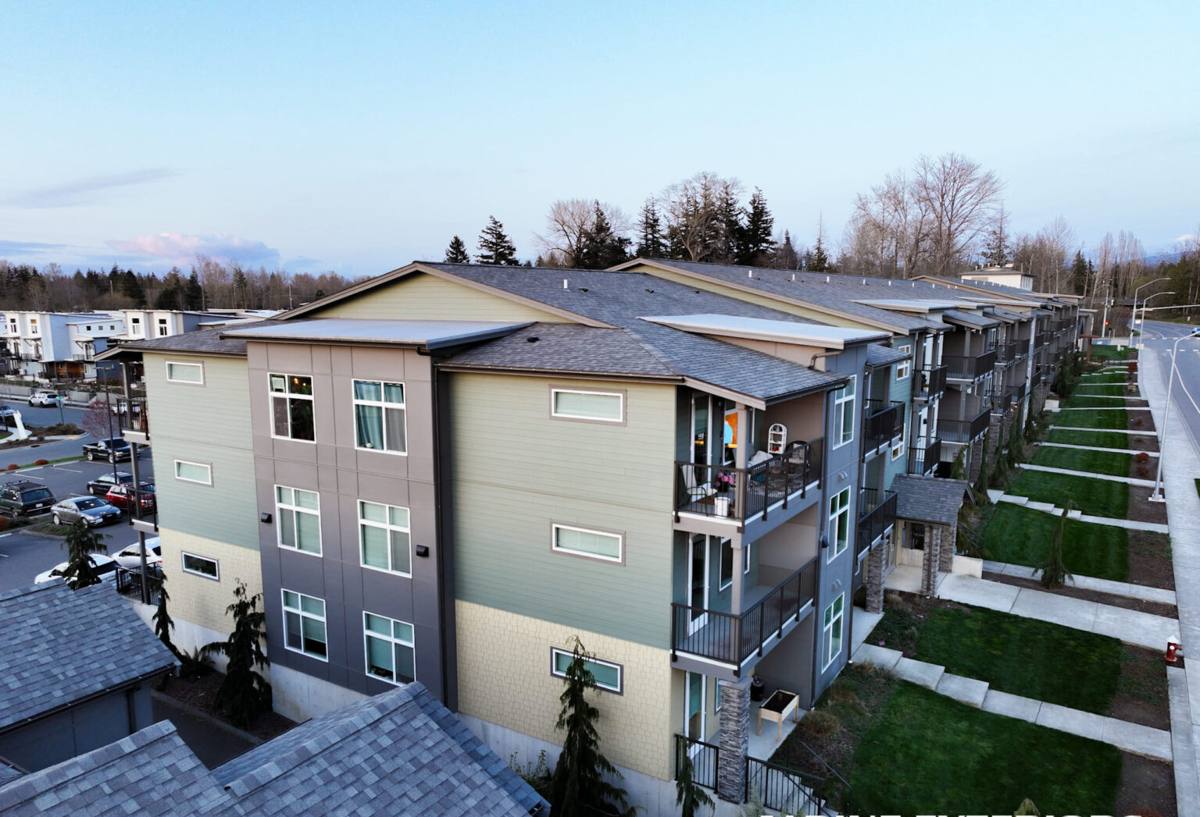
What Salt Air, Rain, and Moss Actually Do to a House
Salt Air
Proximity to the water means airborne salt settles on exterior surfaces continuously, not just during storms. Over years, that accelerates corrosion in exposed metal fasteners, trim, and flashing, and it degrades cheaper paints and coatings faster than inland exposure would. Siding materials and finishes that aren't built to handle that exposure fade, chalk, or corrode at their attachment points well ahead of schedule.
Driving Rain
Whatcom County storms frequently bring wind-driven rain, which pushes water sideways into laps, seams, and butt joints rather than letting it run straight down and off. Any gap in flashing, any shortcut in overlap, or any panel installed too tight to the ground becomes a water entry point. Once moisture gets behind siding, it doesn't dry out quickly in this climate — the same dampness that grows moss on a roof keeps wall cavities wet for longer than homeowners realize.
Moss and Algae
Shaded lots, tree cover, and consistent moisture give moss and algae exactly the conditions they need. On porous or poorly finished siding, that growth isn't just cosmetic — it holds moisture against the surface, which speeds up rot in wood-based products and breaks down lesser paint films over time.
Why This Company Installs Only James Hardie Fiber Cement
We don't install vinyl, LP SmartSide, primed wood, cedar, or other fiber cement brands. That's a deliberate standard, not a limitation of what we're capable of doing. After years of exterior work in this climate, we settled on James Hardie because it's the product that consistently holds up to the specific combination of conditions Birchwood homes face:
- Non-combustible core — fiber cement doesn't feed a fire the way wood-based products can.
- Engineered for Pacific Northwest exposure — Hardie's HZ5 product line is formulated for regions with significant moisture and moderate freeze-thaw activity, which describes Whatcom County well.
- ColorPlus factory finish — a baked-on finish that resists fading and holds up to salt air and UV exposure better than field-applied paint.
- Dimensional stability — fiber cement doesn't swell, warp, or cup the way wood and some composite products can when they take on repeated moisture.
- A strong, transferable warranty — backed by a large manufacturer with a long track record, which matters when a product needs to perform for decades, not years.
We're not going to tell homeowners that vinyl or LP SmartSide are bad products across the board — plenty of houses have them and get by fine in easier climates. What we will say is that in a neighborhood dealing with sustained salt exposure, wind-driven rain, and heavy moss pressure, we don't want our name on an installation using a product we don't think gives that house its best shot at the 30-plus-year mark. James Hardie is what we're willing to stand behind here.
What a Correct Hardie Installation Actually Involves
James Hardie siding performs the way it's rated to perform only when it's installed to the manufacturer's specification. A rushed or generic installation — even using genuine Hardie board — can still let water in, void the warranty, or shorten the siding's working life. Here's what we treat as non-negotiable on every Birchwood job.
Tear-Off and Substrate Check
Old siding comes off, and the sheathing underneath gets inspected for rot, soft spots, or existing water damage before anything new goes up. In a climate this wet, skipping this step means sealing an existing problem behind new siding instead of fixing it.
Weather-Resistive Barrier and Flashing
A code-compliant weather-resistive barrier goes on correctly lapped, and flashing is installed at every window, door, roofline, and penetration — not just where it's easiest. Given how much wind-driven rain this area sees, flashing details are where a lot of long-term failures start if they're done carelessly.
Fastening and Clearances
Hardie specifies exact fastener types, spacing, and minimum clearances from grade, roofing, and decks. We follow those specs precisely — not as a formality, but because those clearances are what keeps splash-back and ground moisture away from the bottom edge of the siding, which is usually the first place failure shows up.
Joints, Gaps, and Caulking
Butt joints and panel gaps are treated exactly per manufacturer detail, using the sealants Hardie approves. In a house getting hit with sideways rain regularly, a joint installed loose or caulked with the wrong product is a slow leak waiting to happen.
Finish Work
Cut edges get properly sealed, and any field touch-up matches the factory ColorPlus finish so the coating stays consistent and protective across the whole surface, not just where the factory finish was left untouched.
Choosing the Right Hardie Product Line for a Birchwood Home
James Hardie makes several distinct product lines, and the right combination depends on the home's style, exposure, and trim details. Most Birchwood projects use some mix of the following.
| Product | Best Use | Why It Fits This Climate |
|---|---|---|
| HardiePlank Lap Siding | Primary wall surface, most home styles | Traditional lap profile sheds wind-driven rain well when installed with correct overlap |
| HardiePanel Vertical Siding | Modern facades, accent walls, gable ends | Fewer horizontal joints reduces potential water entry points on exposed gables |
| HardieShingle Siding | Accent areas, craftsman-style detailing | Textured look without the moisture retention of real wood shingles |
| HardieTrim Boards | Corners, window and door trim, fascia | Matches the wall siding's moisture and finish performance at vulnerable edges |
We walk homeowners through which combination makes sense for their specific house rather than defaulting to one product across every job — a one-story rambler with wide eaves has different exposure than a two-story home with gable ends facing the prevailing weather.
How Our Process Works, Start to Finish
- Walkthrough and assessment — we look at the existing siding, sheathing condition where visible, trim, and problem areas specific to that property's exposure and layout.
- Product and color selection — we go over Hardie lines and ColorPlus color options that fit the home's style and the homeowner's preference.
- Written estimate — a clear scope of work and pricing before anything is scheduled.
- Tear-off and substrate repair — old siding removed, any damaged sheathing addressed before new material goes up.
- Barrier, flashing, and installation — installed to manufacturer specification, not shortcuts.
- Final inspection and cleanup — we check joints, fastening, and finish before calling the job done, and the site is cleaned up when we leave.
Cost Factors on a Birchwood Siding Project
Every home is different, so we don't publish blanket pricing, but the main factors that move a project's cost up or down are consistent across most jobs.
| Factor | Effect on Cost |
|---|---|
| Home size and number of stories | More surface area and access complexity increases labor |
| Existing siding removal and disposal | Tear-off adds labor and disposal cost versus new construction |
| Substrate repair needs | Hidden rot or water damage found during tear-off adds scope |
| Product line mix | Combining panel, plank, shingle, and trim details affects material and labor |
| Trim and architectural detail | More corners, gables, and window trim increases installation time |
| Color and finish choice | Factory ColorPlus finishes vary slightly in cost by color and product line |
We give homeowners a specific number after a walkthrough, not a rough guess — too much of the real cost depends on what's actually happening on that particular house.
Living With Salt Air and Moss: Maintenance That Actually Matters
Correctly installed James Hardie siding is low-maintenance, but "low" doesn't mean "none," especially in a climate this damp and salty. A short annual routine keeps it performing the way it should for decades.
- Rinse siding gently once or twice a year to clear salt residue and organic buildup, especially on shaded or north-facing walls.
- Keep gutters clear so overflow doesn't run down the face of the siding and feed moss growth at the top edges.
- Trim back vegetation and tree limbs that keep sections of the wall in constant shade and dampness.
- Check caulking at trim joints and penetrations every year or two, and re-caulk with a compatible sealant if it's cracked or pulling away.
- Watch the bottom few inches of siding near grade, decks, and walkways — this is the first place moisture problems tend to show up.
- Address any bare or chipped finish promptly with a matched touch-up rather than letting the substrate sit exposed.
Why It Matters That We Already Work in Birchwood
A crew that already works this neighborhood knows what its exposure actually looks like — which walls take the worst of the wind-driven rain, which lots stay shaded and damp long enough to grow moss faster than others, and where salt exposure tends to hit hardest depending on distance and orientation to the water. That's not something a crew coming from outside the region picks up on day one. It affects decisions as specific as where extra flashing attention is warranted, which walls might benefit from a different Hardie product line, and what maintenance schedule actually makes sense for that specific property rather than a generic recommendation.
It also means we're building a reputation in this specific community, job by job — which is a real incentive to install things correctly the first time rather than move on to the next town.
Signs Your Current Siding Is Already Behind
A few warning signs tend to show up on Birchwood homes before a full siding failure becomes obvious:
- Persistent moss or algae staining that comes back within months of cleaning
- Visible warping, cupping, or soft spots, particularly on wood-based or composite siding
- Peeling or chalking paint that no longer holds a fresh coat well
- Soft or discolored trim near windows, doors, or corners
- Visible fastener corrosion or rust streaking down the siding face
If any of that sounds familiar, it's worth having someone take a look before it turns into a sheathing problem.
If you'd like an honest look at your home's siding and what it would take to do it right with James Hardie, we offer a free, no-pressure estimate — just fill out the form below.