 Bellingham Siding
 Building a Deck for Blaine's Marine Climate
Blaine sits right on the water, close to Semiahmoo Bay and Drayton Harbor, and that location shapes what a deck needs to survive here. A deck built the same way you'd build one twenty miles inland in Whatcom County won't hold up the same way in Blaine. The salt-laden air off the water, the near-constant driving rain through fall and winter, and a moss season that can stretch six months or more all put extra stress on the wood, fasteners, and finishes that make up a deck. We build decks for homes throughout the Bellingham area, and Blaine's coastal exposure is one of the more demanding environments we work in.
A correctly built deck in this setting isn't about upgrading everything to the most expensive material. It's about understanding which parts of a standard deck design are the weak points in a salt-air, high-moisture climate, and addressing those specifically, while building the rest to solid, standard practice.
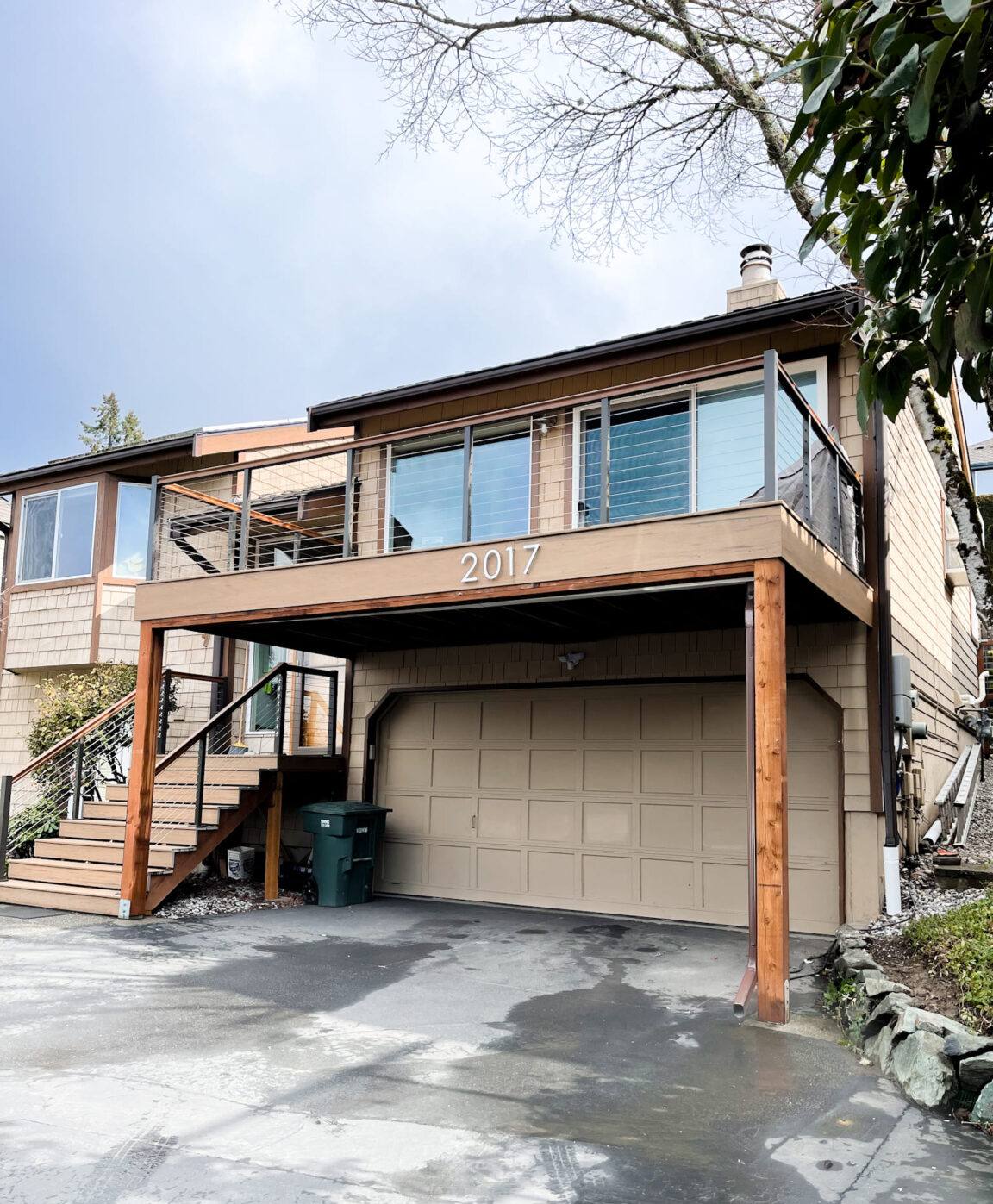
What Salt Air, Rain, and Moss Actually Do to a Deck
Salt air and metal fasteners
Airborne salt from the bay accelerates corrosion in ordinary fasteners and hardware. A deck screw, joist hanger, or bolt that would last decades further inland can start rusting and staining the wood around it much sooner near the water. Once a fastener corrodes, it loses holding strength, and the rust stain itself is a sign that moisture has found a way into the wood fiber around it.
Driving rain and wind-driven moisture
Rain in this part of Whatcom County doesn't just fall straight down. Wind off the water pushes it sideways and up under horizontal surfaces, into joints, and behind ledger boards and railing posts. Any gap in flashing or any seam that wasn't sealed with that in mind becomes an entry point for water that then has nowhere to dry out quickly.
Moss, algae, and prolonged dampness
Whatcom County's long wet season means decking surfaces, especially those in partial shade near trees or the north side of a house, stay damp for extended stretches. That constant moisture is exactly what moss and algae need to take hold. Beyond the slip hazard, moss holds water against the decking surface far longer than open air would, which speeds up wood decay and can trap moisture against fasteners and framing underneath.
Choosing the Right Decking Material
There's no single "correct" decking material for every home, but in a coastal, moss-prone climate like Blaine's, some options are a better match than others. Here's how the common choices compare when weighed against local conditions.
| Material | Moisture & Moss Resistance | Maintenance Needs | Typical Lifespan Here | Upfront Cost |
|---|---|---|---|---|
| Pressure-treated lumber | Moderate; needs sealing to perform well | Regular cleaning and re-sealing every 1-2 years | 10-15 years with upkeep | Lower |
| Cedar | Naturally decay-resistant but still absorbs moisture over time | Periodic staining/sealing to hold color and repel water | 15-20 years with upkeep | Moderate |
| Composite decking | Strong resistance to moss growth and moisture absorption | Occasional washing; no sealing or staining | 25-30+ years | Higher |
| PVC/capped polymer | Highest resistance to moisture, salt, and organic growth | Lowest; washing only | 25-30+ years | Higher |
For a deck that will see direct salt air and long stretches of shade, we generally steer homeowners toward composite or capped polymer boards when budget allows, simply because they don't give moss and algae the porous surface they need to grip. That said, well-built and properly maintained wood decks are a perfectly sound choice for plenty of Blaine homes, particularly where the deck gets good sun exposure and airflow.
Framing, Footings, and Fasteners: What You Don't See
Footings sized for this ground and climate
Footing depth and sizing need to account for local frost depth and soil conditions, not a generic number. Undersized or shallow footings are one of the more common causes of a deck that develops a wobble or uneven settling within a few years.
Ledger board flashing
Where a deck attaches to the house, the ledger board and its flashing are the single most important detail for keeping water out of the house's wall structure. In a climate with this much wind-driven rain, that flashing has to be layered correctly, not just caulked and hoped for.
Fastener selection
Given the corrosion risk from salt air, we use stainless steel or heavy hot-dip galvanized fasteners and connectors rather than standard coated screws, particularly on any deck within a mile or so of the water. It costs more upfront and saves the headache of rust streaks and failing connections years down the road.
Joist protection and board spacing
Covering joist tops with a protective tape barrier keeps standing water from soaking into end grain, which is where rot typically starts first. Correct gapping between deck boards also matters more here than in a dry climate — too tight, and boards can't shed water or dry between rain events, which is exactly the condition moss favors.
What a correctly built deck should include
- Footings sized and set to the depth appropriate for local soil and frost conditions
- Properly layered ledger flashing where the deck meets the house
- Stainless or heavy galvanized fasteners and structural connectors
- Joist tape or equivalent protection on all framing members
- Correct board spacing for drainage and airflow
- Decking material matched to the amount of shade and water exposure the site actually gets
- Railing and guardrail systems built to current code height and spacing requirements
Railings, Stairs, and Local Code Requirements
Any deck built to a meaningful height above grade needs a permit through the local building department, and that permit review checks guardrail height, baluster spacing, stair rise and run, and structural connection details. These aren't arbitrary hoops — a properly spaced guardrail and a stair built to consistent rise measurements are two of the most basic safety features a deck has. We handle the permit submission and inspection process as part of the job, so it's not something the homeowner has to chase down separately.
Our Deck Building Process
Site Assessment and Design
We start by walking the site and looking specifically at sun exposure, shade patterns, drainage, and how exposed the location is to wind off the water. That assessment drives the material and detailing recommendations, not a one-size-fits-all package.
Permitting
We prepare and submit the permit application with the structural details the building department needs, and we schedule inspections at the required stages of construction.
Construction
Footings and framing come first, with all the moisture-management details built in from the start rather than added afterward. Decking, railings, and stairs follow, finished to the manufacturer's or species' recommended fastening pattern.
Final Walkthrough
Before we consider a job finished, we walk the completed deck with the homeowner, point out any maintenance items specific to the material chosen, and answer questions about care and warranty coverage.
Maintaining a Deck Against Moss and Weather
Even the best-built deck needs some seasonal attention in this climate. A little routine care goes a long way toward avoiding the slippery, blackened surface that untreated moss growth causes.
- Sweep leaves and debris off the deck surface regularly, especially in fall
- Wash the surface at least once a year to remove early moss and algae growth before it establishes
- Check and clear gaps between boards so water and debris don't build up
- Re-seal or re-stain wood decking on the schedule appropriate to the product used
- Inspect fasteners and hardware periodically for rust staining or looseness
- Trim back overhanging branches to reduce shade and let the deck surface dry between rains
Repair or Replace: Knowing When It's Time
Not every aging deck needs to be torn out and rebuilt. Soft spots in decking boards, persistent moss that won't come clean, visible rot at the ledger connection, or a noticeable wobble in the structure are all signs worth having looked at. Sometimes the fix is targeted — replacing a section of decking or re-flashing a ledger board. Other times, especially with older decks that were never built with this climate's demands in mind, a full rebuild ends up being the more honest recommendation, and we'll tell you which situation you're in before any work starts.
Why Hire a Crew That Already Works in Blaine
Building a deck that holds up on the water in Whatcom County isn't the same job as building one on a dry, inland lot, and it shows in the details — fastener choice, flashing technique, board spacing, and material selection all shift when salt air and a long moss season are part of the equation. We work throughout the greater Bellingham area, including Blaine, and we build every deck with this region's climate in mind rather than treating it as an afterthought. That local familiarity means fewer surprises during construction and a deck that's set up to perform well for years, not just look good on installation day.
If you're planning a new deck or trying to figure out whether an existing one needs repair or replacement, we're happy to take a look and give you a straightforward assessment. Fill out the form below for a free, no-pressure estimate.