 Bellingham Siding
 Asphalt Shingle Roofing Built for Silver Beach's Climate
Silver Beach sits in one of the more weather-exposed pockets of greater Bellingham, and the roof over your head takes the brunt of it. Homes here deal with a marine-influenced climate that most other parts of the country never see in combination: near-constant moisture, long stretches of shaded dampness, salt-laden air drifting in off Bellingham Bay and the Salish Sea, and driving winter rain that doesn't just fall straight down — it gets pushed sideways under eaves and into anything that isn't properly sealed. An asphalt shingle roof that's installed correctly for this environment can go the distance. One that's installed the way it might be in a drier, calmer climate usually starts showing problems years ahead of schedule.
This page is about what a correct asphalt shingle roofing job actually looks like for a Silver Beach home — not a generic overview of shingles in general, but what matters specifically because of where this neighborhood sits.
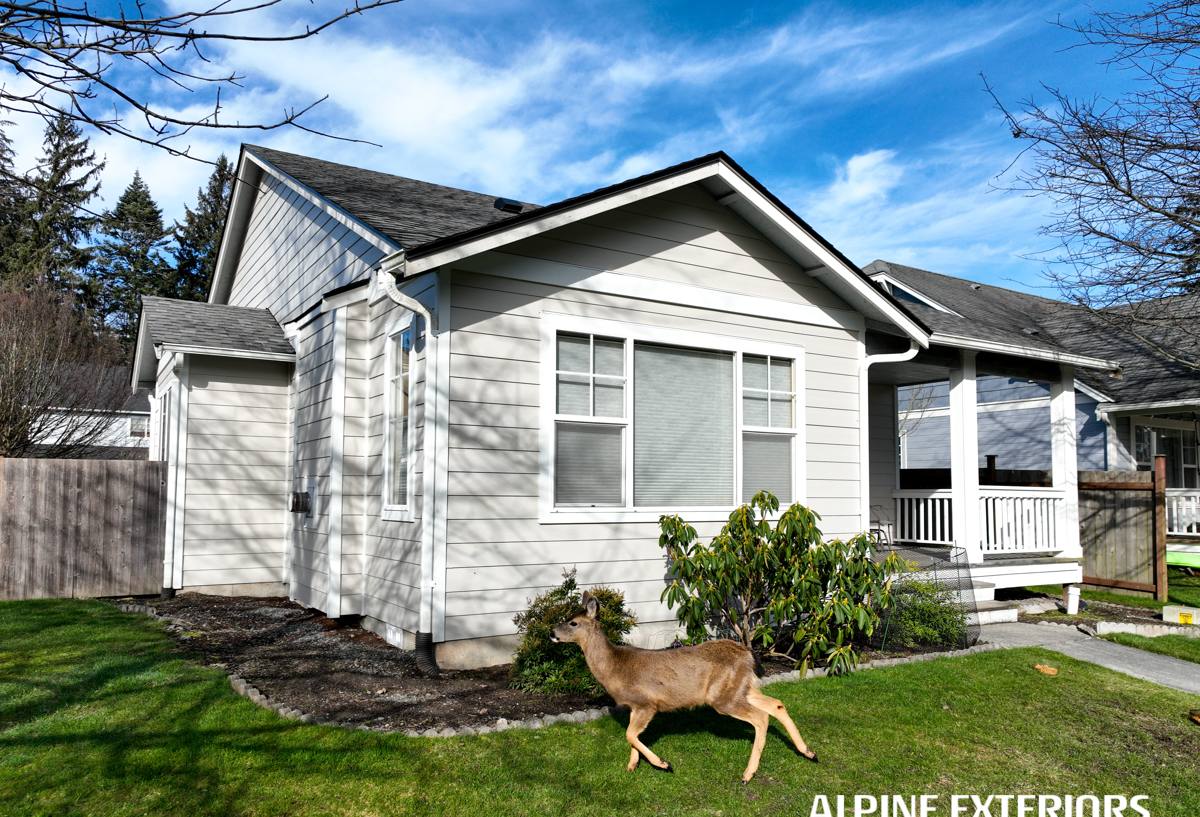
What Whatcom County's Climate Does to a Shingle Roof
Moss and Algae
Bellingham's wet season runs long, and Silver Beach's tree cover and lake-adjacent humidity keep roof surfaces damp well after the rain stops. That combination is exactly what moss and algae need to take hold. Moss doesn't just sit on top of shingles — its root structure works into the granule layer and lifts shingle edges, which opens a path for water to get underneath. Left long enough, it accelerates granule loss and shortens the life of the whole roof, not just the patch it's growing on.
Salt Air and Metal Components
It's not the shingles themselves that salt air usually damages first — it's the metal. Flashing, fasteners, vent caps, and drip edge are all vulnerable to accelerated corrosion when they sit in a marine air environment year after year. Cheap or mismatched metal components are one of the most common reasons a roof develops leaks around chimneys, valleys, and vent penetrations well before the shingles themselves are worn out.
Wind-Driven Rain
Storms moving through this part of Whatcom County frequently bring rain at an angle rather than straight down. That matters because it tests parts of the roof that vertical rain never touches — the undersides of shingle tabs, the laps in underlayment, and the seals around any roof penetration. A roof that would perform fine somewhere with calmer weather can leak here if those details were rushed.
What a Correct Installation Includes
A good asphalt shingle roof isn't just shingles nailed to plywood. In a climate like this one, every layer underneath the visible surface is doing real work, and skipping or shortcutting any of them is where premature failures start.
- Ice-and-water shield at eaves, valleys, and around penetrations — the backup layer that protects the roof deck if wind-driven rain or a shingle failure lets water past the surface
- Synthetic underlayment across the full roof deck as a continuous secondary moisture barrier
- Balanced attic ventilation (intake at the eaves, exhaust at the ridge) so moisture doesn't get trapped under the deck and rot it from beneath — this is often the difference between a shingle roof that lasts and one that doesn't
- Corrosion-resistant flashing and fasteners at chimneys, walls, valleys, and vents, sized and installed to shed water rather than rely on sealant alone
- Proper nailing pattern per the manufacturer's specification — this affects both wind rating and warranty validity
- Algae-resistant (AR) shingles where moss and algae exposure is a known issue, which this neighborhood generally is
Signs a Silver Beach Roof Needs Attention
Most roof problems here don't start as a dramatic leak — they start small and get worse through a wet season or two. Worth checking for, or having a roofer check for:
- Moss growth, especially on north-facing or shaded slopes
- Dark streaking or discoloration across shingle surfaces (algae, not just dirt)
- Granules collecting in gutters or at downspout outlets
- Curling, cupping, or lifted shingle edges
- Rust staining around flashing, vent boots, or fasteners
- Soft spots or sagging when walked (or visibly, from the ground)
- Water stains on interior ceilings, especially near chimneys or skylights
- Daylight visible through the attic roof deck
Any one of these on its own might be minor. Several together usually mean it's time for a real inspection rather than a wait-and-see approach.
Choosing Shingles That Hold Up Here
Not every asphalt shingle product is a good match for a damp, shaded, salt-influenced climate. The table below reflects how the main options generally compare for a home in this kind of environment — it's not a ranking of brands, just a straightforward look at trade-offs.
| Shingle Type | Typical Lifespan | Moss/Algae Resistance | Best Fit For |
|---|---|---|---|
| 3-tab (standard) | 15–20 years | Low unless AR-treated | Budget-conscious re-roofs, secondary structures |
| Architectural / dimensional | 25–30 years | Good with AR granules | Most Silver Beach homes — the standard recommendation |
| Impact-resistant (Class 4) | 25–30+ years | Good with AR granules | Homes wanting extra durability and possible insurance premium credit |
| Premium / designer laminate | 30+ years | Good with AR granules | Homeowners prioritizing appearance and longevity together |
Our standard recommendation for this area is a mid-to-upper-tier architectural shingle with algae-resistant (AR) granules built in. It's not the cheapest option on the shelf, but given how much moss and algae exposure this climate delivers year after year, it's the option that actually holds up to it rather than fighting a losing battle against it.
Our Process for a Silver Beach Roofing Job
1. On-Site Inspection and Honest Assessment
We look at the whole roof system — decking condition, existing ventilation, flashing condition, and any moss or moisture damage — not just the shingles. If a full replacement isn't actually needed, we'll say so.
2. Clear Scope and Written Estimate
You'll know what's being replaced, what materials are being used, and what the ventilation and flashing plan looks like before any work starts. No vague line items.
3. Tear-Off and Deck Inspection
Old roofing comes off down to the deck so we can actually see the plywood or plank sheathing underneath. Any soft or rotted decking gets replaced before new roofing goes down — covering damaged decking with new shingles just hides a problem that gets worse.
4. Underlayment, Flashing, and Ventilation
This is where most of the climate-specific work happens: ice-and-water shield at vulnerable areas, full synthetic underlayment, corrosion-resistant flashing, and ventilation balanced for intake and exhaust.
5. Shingle Installation to Manufacturer Spec
Correct nailing pattern, exposure, and alignment — done right, this protects both wind performance and your manufacturer's warranty.
6. Final Walkthrough
We walk the job with you, cover care and maintenance specific to this climate, and make sure gutters and downspouts are clear before we leave.
Living With a Shingle Roof in a Moss-Prone Climate
Even a well-installed roof benefits from some upkeep in a place like this. A few habits go a long way toward getting the full lifespan out of your investment:
- Keep overhanging branches trimmed back to reduce shade and debris on the roof surface
- Clean gutters at least twice a year so water isn't backing up under the shingle edge
- Have moss physically removed (not power-washed, which can strip granules) rather than left to spread
- Consider zinc or copper strips near the ridge on moss-prone slopes as an ongoing, low-maintenance deterrent
- Schedule a roof check after major windstorms, especially if debris hit the roof
What Affects the Cost of a Roofing Job Here
Every roof is priced based on its own specifics, but these are the factors that most commonly move the number up or down for homes in this area:
| Factor | Why It Matters |
|---|---|
| Roof pitch and complexity | Steeper slopes and more valleys/dormers mean more labor, safety equipment, and material waste |
| Number of existing layers | Tear-off of multiple old layers takes longer and costs more in disposal than a single-layer removal |
| Deck condition | Rotted or soft plywood found during tear-off requires replacement before new roofing can go down |
| Ventilation upgrades | Adding or correcting intake/exhaust ventilation is an upfront cost that pays back in roof lifespan |
| Shingle tier selected | 3-tab, architectural, and impact-resistant products carry different material costs and warranties |
| Access and site conditions | Tree cover, steep lots, and limited staging space near the water can affect labor time |
Why Local Experience in Silver Beach Matters
A roofing crew that regularly works this specific stretch of Whatcom County already knows how moss behaves on shaded, lake-influenced lots, what kind of wind exposure to plan for, and which flashing and fastener choices actually hold up against the marine air here instead of corroding early. That's not something you get from a national checklist — it comes from working the same conditions job after job. It also means straightforward answers about permitting, realistic timelines around this area's wet season, and a crew that isn't learning the local climate on your roof.
If you're weighing a repair against a full replacement, or just want a straight answer on what condition your roof is actually in, we're happy to take a look. Reach out for a free, no-pressure estimate using the form below.