 Bellingham Siding
 Windows Built for Blaine's Coastal Climate
Blaine sits right on the water at the top of Whatcom County, which means homes here deal with a combination of weather stresses that inland neighborhoods simply don't face as often. Salt-laden air off the bay works its way into aluminum hardware and unprotected wood over time. Driving rain, pushed sideways by wind off the Strait, finds its way into any gap in flashing or caulking that a lesser installation leaves behind. And the long gray stretch from fall through spring that blankets most of Whatcom County keeps north-facing siding and window trim damp long enough for moss and mildew to take hold if the details aren't right.
None of that is unique to any one house — it's just what building envelopes deal with this close to the water. Energy-efficient windows done correctly are one of the more effective ways to push back against all three of those pressures at once: they seal out moisture, resist the corrosive effects of salt air on hardware and seals, and stop the slow heat loss that makes furnaces and heat pumps work overtime through a long Pacific Northwest winter.
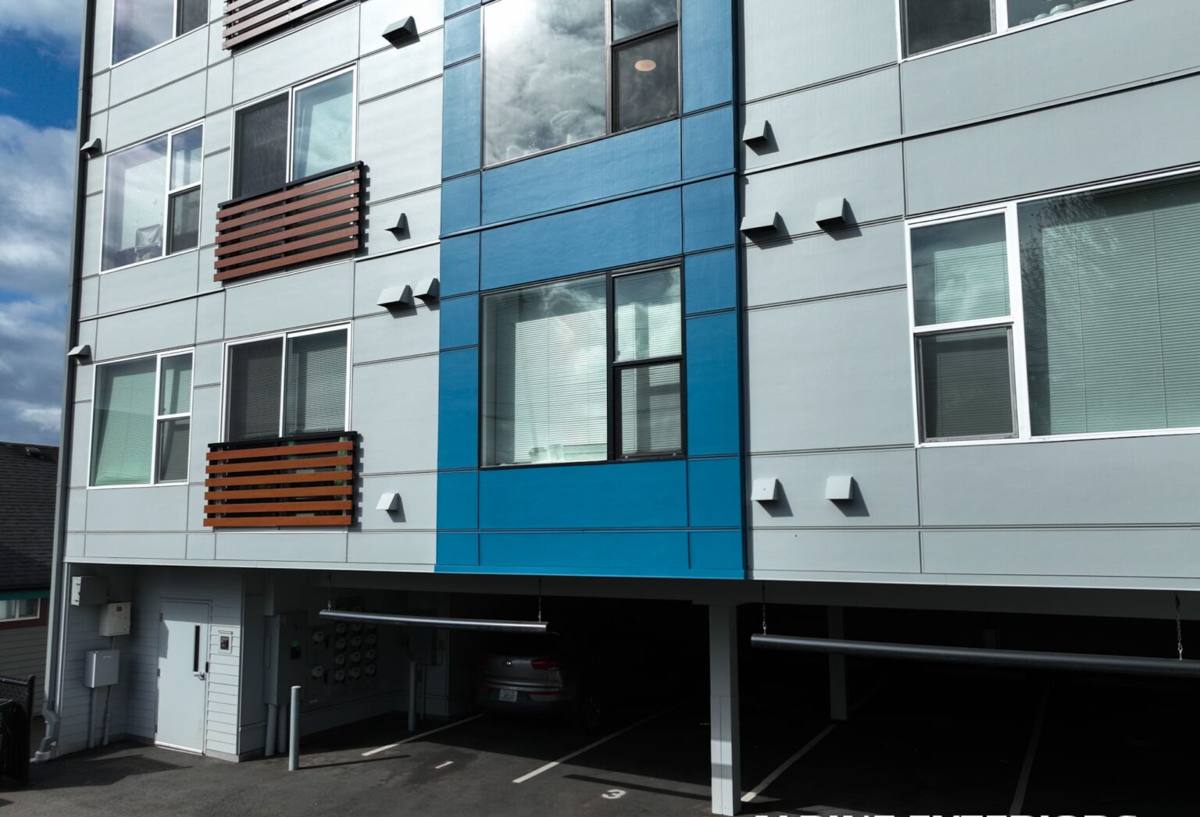
What "Energy-Efficient" Actually Means Here
The phrase gets used loosely in this industry, so it's worth being specific about what actually matters for a Blaine home rather than treating it as a marketing label.
Two numbers that matter more than the rest
Every code-rated window carries a U-factor and a Solar Heat Gain Coefficient (SHGC), both set by independent testing rather than the manufacturer's own claims. U-factor measures how much heat escapes through the window — lower is better, and it's the number that matters most for a marine climate like ours where the fight is against heat loss, not heat gain. SHGC matters less here than it would in a sun-heavy climate, but it still affects comfort on the bright days we do get, especially on west- and south-facing walls.
Why insulated glass isn't automatically "efficient"
A double-pane window with a poor low-E coating and a cheap spacer bar can perform worse than people expect, especially once the seal starts to fail — which happens faster in coastal air than it does further inland. The glass package, the spacer material, the gas fill between panes, and the frame material all affect the real-world performance of the window, not just the pane count. This is why two windows that look identical in a showroom can perform very differently once they're installed on a house that faces the bay.
Signs Your Current Windows Are Costing You Money
Most homeowners don't replace windows on a schedule — they replace them once the signs get hard to ignore. Here's what those signs typically look like on homes in this area:
- Condensation or fogging between the panes — a sign the seal has failed and the gas fill is gone
- Visible daylight or a draft you can feel around the frame on a windy day
- Wood trim or sills that stay damp, discolor, or have soft spots after wet stretches
- Windows that are difficult to open, close, or lock — often a sign the frame has shifted or swollen
- A noticeable temperature difference near the window compared to the rest of the room
- Rising heating bills that aren't explained by anything else changing in the house
Any one of these on its own isn't an emergency. Several of them together, especially on a wall that takes the brunt of the weather off the water, usually means the windows are past the point where caulking and weatherstripping will fix the problem.
What a Correct Installation Actually Involves
The window unit itself gets most of the attention, but in a climate like ours the installation details are what determine whether that window performs well for fifteen years or starts failing in five.
Flashing and moisture management
Proper installation means integrating the window into the wall's water management system — flashing tape or pan flashing at the sill, correctly lapped house wrap, and a drainage path for any water that does get behind the cladding. Skipping this step is the single most common reason a "new window" still leaks a couple winters later. It's invisible once the trim is back on, which is exactly why it's worth asking about.
Air sealing, not just caulk
A quality install seals the gap between the window frame and the rough opening with low-expansion foam or backer rod and sealant, not just a bead of caulk around the outside trim. This is what actually stops drafts and keeps the assembly performing at its rated U-factor.
Squaring and shimming
A window that isn't shimmed level and square in the opening will bind, won't lock tightly, and puts uneven stress on the seals — which shortens their life. This matters more on older Whatcom County homes where the original framing has settled or shifted slightly over the decades.
Frame and Glass Options We Work With
There's no single "best" window for every house — the right choice depends on the home's exposure, budget, and existing trim. Here's how the common options compare for a coastal Whatcom County property:
| Frame Material | Coastal / Salt-Air Durability | Maintenance | Typical Lifespan |
|---|---|---|---|
| Vinyl | Good — won't corrode or rot | Low — occasional cleaning | 20–30+ years |
| Fiberglass | Very good — dimensionally stable, resists salt and moisture | Low | 30+ years |
| Wood (clad exterior) | Fair — depends heavily on cladding and detailing quality | Higher — interior wood needs upkeep | 20–30 years with maintenance |
| Aluminum | Poor without thermal breaks — prone to corrosion and heat loss | Moderate | Varies widely |
For most homes in this area, we steer people toward vinyl or fiberglass frames for anything facing prevailing wind and rain, simply because they don't give salt air and moisture a foothold the way bare or poorly clad wood and aluminum can. That's a practical trade-off recommendation based on how these materials behave in this specific climate — not a knock on wood-framed windows generally, which can work fine in more protected locations with the right upkeep.
How Our Process Works
We keep the process straightforward because most of the value is in the details, not in the sales pitch.
- Walkthrough and assessment — we look at each window individually, note exposure, existing damage, and any framing or trim issues that need addressing along the way.
- Honest recommendation — we tell you which windows actually need replacing now versus which can wait, and explain the trade-offs between options for your specific walls and budget.
- Written estimate — clear pricing with no vague allowances, so you know what's included before work starts.
- Installation — proper flashing, air sealing, and shimming on every unit, not just the ones that are easy to see.
- Final walkthrough — we test every window with you before calling the job done, including locks, operation, and a visual check of interior and exterior trim.
What Affects the Cost
Every home is different, so we won't quote a number without seeing the job, but these are the factors that typically move the price up or down:
| Factor | How It Affects Cost |
|---|---|
| Number of windows | Larger jobs generally reduce the per-window cost of mobilization and setup |
| Frame material and glass package | Fiberglass and upgraded glass packages cost more upfront, less over time |
| Access and height | Second-story or hard-to-reach windows take more time and equipment |
| Condition of the rough opening | Rot or framing damage found during removal adds repair work |
| Trim and siding integration | Matching existing trim or repairing siding around the new unit adds labor |
| Full-frame vs. insert replacement | Full-frame costs more but is often the right call on older or water-damaged openings |
We'll walk through which of these apply to your house during the estimate, and flag anything — like suspected rot behind the trim — before it becomes a surprise mid-project.
Why a Crew That Already Works in Blaine Matters
A window installer who mostly works drier, more inland areas can still do competent work, but they're not always thinking about salt exposure, wind-driven rain, or the moss and mildew cycle the same way a crew that works this stretch of Whatcom County every week does. We've seen firsthand which details matter most on homes facing the water versus homes tucked further back, and we bring that judgment into every estimate — not just a standard install checklist. Being a Bellingham-area crew also means we're not far away if a question comes up after the job is done, and we're familiar with the permitting expectations and typical construction of homes throughout this part of the county.
Keeping New Windows Performing Long-Term
Good windows still need basic upkeep, especially in a climate this wet. A little attention once or twice a year goes a long way:
- Clean weep holes and drainage tracks so water doesn't pool at the sill
- Wipe down hardware periodically to keep salt residue from building up on locks and hinges
- Check exterior caulking annually and touch up any spots that have cracked or pulled away
- Keep gutters and downspouts clear so overflow doesn't run down onto window heads
- Watch for moss or algae starting on nearby trim and address it before it spreads to the window itself
- Test locks and operation each season — a window that's hard to close is often trying to tell you something
If you're dealing with drafty, foggy, or hard-to-operate windows on a Blaine home, we're happy to take a look and give you a straight answer about what's worth fixing and what's worth replacing. Reach out for a free, no-pressure estimate using the form below.